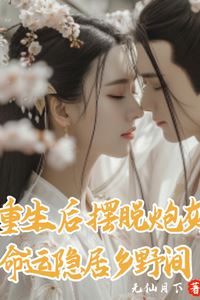
Reborn to Escape: A Quiet Life Beyond the Capital
Novel Info

Summary

... Read More

Gu Qingqing spent ten years of her previous life serving her young mistress with unwavering loyalty, helping her rise to become the esteemed wife of a marquis in the imperial capital.

When her mistress was unable to bear children, she coldly sent Qingqing to the marquis’s bed. After enduring countless hardships and risking her life, Qingqing gave birth to two sons—only to have them taken away and raised as her mistress’s own.

When her mistress discovered that Qingqing was pregnant for the third time, she feared the truth would one day come to light. Without hesitation, she ordered Qingqing to drink a cup of poisoned wine, killing both mother and unborn child.

Filled with hatred and regret, Qingqing never imagined she would be granted a second chance at life.

This time, she refuses to remain anyone’s pawn.

Determined to change her fate, Qingqing carefully plans her escape from the woman she once served so faithfully. After finally reclaiming her freedom, she leaves the treacherous capital behind, taking only her contract of emancipation and the silver she has saved.

Far from the schemes and power struggles of the noble families, she searches for a secluded haven where she can begin again—and live the peaceful life she was once denied. There, a completely different destiny awaits her.

Novel Items

More
Poison
A cup of poisoned wine that Qiao Shilian's mother Madam Qiao poured and offered to her daughter. Qiao Shilian's father Qiao Qingsong forcibly held her, bound her to a chair with a sash, pinched her jaw open, and violently poured the poisoned wine down her throat. The poison caused agonizing pain, reduced her voice to broken gasps, and ultimately killed her, causing her consciousness to scatter and fade.
Materials
A packet of medicine hidden by Hu Feng in a crack in the rafters. It survived a previous search and was used to drug Liu Xiu in an enamel mug. Intended to knock him out and plant him at Zeng Yan's house to frame her.
Clothing
A yellow short-sleeved top with matching skirt that Li Mocheng picked for Wanwan. She looked like a dancing little daisy wearing it after her bath.
Event
A banquet held at the Princess's Mansion where noble young ladies attend in splendid brocade gowns. It appears to be an event for choosing a daughter-in-law. Feng Qianqian attends with Feng Chenyu and Zhenzhu.
Poison
Wine drugged by Chen Wanrou at the Chunri Banquet a year ago, which she gave to Wen Lingyi to force her into sleeping with Chen Wenli.
Item
Gifts exchanged for the engagement between Su Xiaoyin and Lin Tianyang. Mother Lin mentioned they had already been returned to Yuan Songzhi.
Latest Release
DateGroupRelease
2026-08-11shanghai fantasy c8
2026-08-11shanghai fantasy c7
2026-08-11shanghai fantasy c6
2026-08-11shanghai fantasy c5
2026-08-11shanghai fantasy c4
2026-08-11shanghai fantasy c3
2026-08-11shanghai fantasy c2
2026-08-11shanghai fantasy c1

Community Reviews

Rating(0 / 5.0, 31votes)
5 stars
0(0%)
4 stars
0(0%)
3 stars
0(0%)
2 stars
0(0%)
1 stars
0(0%)

Popular reviews

... Read More
Okay, let's talk about Lin Heng for a second because my heart is literally breaking for him. This man has been through absolute hell—poisoned, mute, injured, pretending to be unconscious—and yet the moment Qingqing lies down beside him, his entire world shifts. The text says: "A feeling he had never experienced before surged through him. It was panic. It was a fluttering of the heart. And it was an overwhelming reluctance to let her go." GIRL. He's lying there with a wound on his back and he's still noticing her eyelashes quivering in the moonlight. That's not just romance, that's a man who has spent his whole life surviving and suddenly doesn't want to just survive anymore. But what really got me is how Qingqing treats him. She doesn't coddle him or treat him like glass. She literally says "You can't speak, can you? It's all right" and then just... keeps talking. She chatters away about the house, the village head, the silver—and through all of it, she's making sure he knows he has a place. She washes his back, applies his medicine, shares one bed because that's all they have. And the best part? She falls asleep in his arms and doesn't even realize it until morning. The power dynamic here is so interesting because on paper, she's the caretaker, the one with the money and the plans. But emotionally? He's the one completely undone. I also love that he can't speak. It forces this beautiful tension where everything has to be communicated through action and presence rather than words. He writes down his name and birth date on a piece of paper and she fans it dry. That's intimacy without a single romantic line being spoken.
... Read More
I started reading this at like 11 PM and now it's 2 AM and I'm still here. What is wrong with me. The pacing in these first seven chapters is absolutely ruthless in the best way possible. Let me break down why it works so well because I think a lot of authors could learn from this. Chapter 1-2: Murder + Rebirth in under 2000 words. That's it. Most novels would spend an entire chapter on the rebirth setup alone. Here, we get the emotional beats—the betrayal, the death, the confusion, the realization—and we're already moving forward. No filler. No 'and then she fell asleep and dreamed about her past life' nonsense. The transition from the murder scene to the rebirth is seamless. One moment she's being forced to drink poisoned wine, the next she's waking up in her younger body. The author doesn't waste time explaining the mechanics of time travel or whatever. It just happens, and we accept it because the emotional truth is solid. Then we get the banquet setup, the carriage ride, the conversations with Mo Xiang—all of it building toward that moment where Xiao Qi sees Mo Xiang by the lake. And the chapter ends right there, with him approaching, with Qingqing watching, with everything set in motion. It's a perfect cliffhanger because we know what's supposed to happen, but we're also wondering: will it? Can it go differently now that Qingqing is aware? The pacing never drags. Every scene advances either plot or character. There's no wasted dialogue, no meandering descriptions. When the author describes the garden or the dancers, it's always in service of the mood or the upcoming confrontation. I respect this so much.
... Read More
Here's what strikes me about the conflict in this passage—it's almost entirely internal, and that's what makes it so effective. Lin Heng's external conflict (his past catching up to him, his muteness, his wounded back) is always present as background radiation, but the real tension is psychological. He's a man who has spent his entire life in a shadow camp, trained to be a weapon, sentenced to death for failing. And now he's sitting in a courtyard eating apricots while a woman he barely knows takes care of him. The stakes aren't about whether he'll survive the next battle—they're about whether he'll ever feel safe enough to just… live. Every moment of peace is a victory he doesn't know how to process. Qingqing's stakes are different but equally real. She was a servant who feared punishment, feared being sold, feared living by other people's moods. Now she has a home, a garden, a man to care for. The text says 'She finally had a home of her own. She would never again have to fear punishment from her masters.' That's not just comfort—that's the fulfillment of a survival-level need. The suspense here isn't 'what bad thing will happen next' but 'can these two people actually sustain this peace?' Because we know Lin Heng's past exists. We know the shadow camp doesn't just let people walk away. The author is building dread through contrast—the sweeter the present moment, the more we fear its loss. And that's far more effective than any chase scene could be.
... Read More
Let me tell you about stakes because this chapter raises them to a WHOLE NEW LEVEL. On the surface, the conflict is simple: Mo Xiang wants to marry the Heir and gain her freedom. She succeeds. Problem solved, right? WRONG. Because the moment she gets what she wants, three new conflicts explode: 1. Mo Xiang's secret is exposed to the Marquis. The Marquis knows the affair was orchestrated by Miss Mo, not by the Heir's own efforts. This means Mo Xiang has now made an enemy of the most powerful man in the story before she's even married into the family. 2. Lin Heng is dead. Or dying. He took fifty strokes and poisoned wine, and he went to the mass grave. But Qingqing saw the carriage return. Is he actually dead? The text says "Let him live or die as fate decides" — so maybe he survives. And if he does, he knows Mo Xiang's secret. He knows she manipulated his heir. That's a loose end that could cut deep. 3. Qingqing is heading toward the mass grave. In her previous life, she was complicit in murders there. Now she's going back to the scene of the crime. What is she planning? Revenge? Investigation? The stakes for her are enormous — if she's discovered, she dies. The internal conflict is just as intense. Mo Xiang is playing a dangerous game. She's using the Heir's love as a weapon, but she's also walking into a lion's den. The Marquis already suspects something. And Lin Heng — the one person who might have sympathy for her — is being beaten to death. Every character in this story is standing on a knife's edge. One wrong move and they're dead. And the author makes you FEEL that tension in every scene.
... Read More
Let me just say — the dialogue in this chapter is deceptively simple. On the surface it's all polite formalities and sweet nothings, but read between the lines and every conversation is loaded. The Heir and Mo Xiang's conversation is almost comically sweet: "Xiang'er... I've come to marry you." "I know, Heir. I've finally been waiting for this day." But we KNOW from the Lin Heng scene that Mo Xiang orchestrated this. So when she says "I've finally been waiting for this day," is she being genuine or is she performing? The dialogue works on two levels and that's what makes it brilliant. Then there's Mo Xiang's exchange with Qingqing. The kindness feels real — the thousand taels, the indenture contract, the gentle instructions about a simple carriage. But then: "As for what happened between us... I expect you to keep it secret forever. If you ever betray me, I will not spare you." One moment she's a generous mistress, the next she's issuing a death threat. The shift is so abrupt it's chilling. And Qingqing's response — kneeling, kowtowing, swearing on her life — shows how deeply ingrained her subservience is. Even when freed, she still speaks like a servant. The Marquis's dialogue is all thunder and violence. Short, sharp commands. "Repeat it." "Take him away!" No elaboration, no explanation. He doesn't need to — his authority is absolute. And Lin Heng's silence speaks louder than any dialogue could. He barely speaks at all. When he does, it's just "It was my fault." Three words that carry the weight of a man accepting his fate.
... Read More
There's something incredibly atmospheric about how the author builds this world through small, domestic details. The stone table in the courtyard. The firewood neatly stacked in rows. The steamed buns and porridge left warm in the pot. These aren't just set dressing—they're emotional anchors. The contrast between the bright, hopeful morning when they sell the game and the eerie silence of the courtyard the next day is stunning. 'No lamp burned in the eastern room. Shrouded in darkness, it looked especially lonely.' That single line does so much work. The house itself becomes a character, reflecting the emotional state of its inhabitants. I also love how the world feels lived-in. The village head bringing official documents, the restaurant manager who buys their game, the grain shop, the bamboo hat—every detail grounds us in this rural, historical setting without ever feeling like an info dump. The author trusts us to understand the world through action and interaction rather than exposition. And the dream sequence—Qingqing reliving her past life, the loneliness of giving birth, being forced to drink poisoned wine—this adds such a haunting layer to the physical setting. Her bedroom becomes a space where past trauma and present fear collide. The darkness of the eastern room mirrors the darkness of her memories. Brilliant use of environment to reflect internal state.
See all reviews

Characters

See all characters

Custom lists

Oops…There is nothing here.