Summary

... Read More

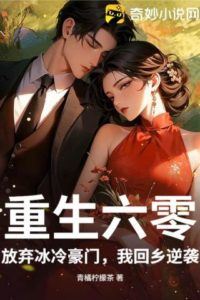
Xu Zhitao has been reborn. In her previous life, she was tormented relentlessly by her biological mother, who trampled her into the dust for the sake of a stepdaughter. That stepdaughter, meanwhile, used the Jinshouzhi bestowed by Xu Zhitao’s biological father to soar to success and live a brilliant life!

In this life? Not a chance. What belongs to me, no one else shall touch.

As for what doesn’t belong to me—well, if it belongs to my enemy, it’s mine too.

“Mom, I caught a thief for you!” she cried, while turning around to loot her mother’s private treasury.

“Mom, you’re so kind,” she whispered, secretly planting a “landmine” for her mother before she left.

“Mom, I’m going back to the countryside so I won’t embarrass you anymore.”

In reality: Time to slip away fast before I get dragged down by your mess.

Honestly, wouldn’t it be better to return to the village, bond with her biological father and grandparents, be the pampered darling of her older brothers, and make a tidy little fortune? As for your “good life,” who cares? Without my father’s Jinshouzhi, what are you even worth?

Novel Items

More
Storage Divine Skill
A storage divine skill that creates an internal space containing an endless expanse of black soil, a well, and a small stream. It can be used to hide and retrieve items. When Xu Zhitao entered it with Young Master Shen, she discovered he lost his consciousness inside and behaved like a puppet following her commands. The effect persisted even outside the Kongjian.
Arcane Treasure
A wooden tablet that serves as the key to accessing the Kongjian. Xu Zhitao found it in the storeroom, pressed it against her wound on her shoulder to enter the Kongjian, and discovered its power to control others inside the space like puppets. A faint white light emanated from it when activated.
Arcane Treasure
A plaque left by Xu Yongze (Xu Zhitao's father). Qin Tingting used it to accidentally unlock the Kongjian storage divine skill in the previous life, enabling her to steal all of the Qin family's assets.
Item
A potent drug administered to Xu Zhitao by Guo Hongying to make her weak and compliant, so she could be framed with Young Master Shen. The medicine caused her body to burn hot and her willpower to erode.
Tool
Scissors that Shen Qingci had prepared and used to cut Shen Lan's long pants into boxer shorts at the wedding venue as punishment for his disrespectful behavior.
Item
A telegram received by Gu Yizhi from the army ordering him to return to duty as soon as possible. His marital matters were now settled so it was time to go back.
Latest Release
DateGroupRelease
2026-08-11shanghai fantasy c10
2026-08-11shanghai fantasy c9
2026-08-11shanghai fantasy c8
2026-08-11shanghai fantasy c7
2026-08-11shanghai fantasy c6
2026-08-11shanghai fantasy c5
2026-08-11shanghai fantasy c4
2026-08-11shanghai fantasy c3
2026-08-11shanghai fantasy c2
2026-08-11shanghai fantasy c1

Community Reviews

Rating(0 / 5.0, 15votes)
5 stars
0(0%)
4 stars
0(0%)
3 stars
0(0%)
2 stars
0(0%)
1 stars
0(0%)

Popular reviews

... Read More
Let me just say this: the dialogue in this book is so naturally funny that I laughed out loud multiple times and had to check if I was reading the right text. The whole Xu Yongze and Xu Zhitao dynamic is built on dialogue that sounds exactly like how an older brother and younger sister would actually talk. Not scripted. Not polished. Just... real. "Uncle, come quick! This is saved for you—the yellow peaches you like." That's it. That's the line. Three seconds of dialogue and you know these two have been sneaking snacks together for years. The canned peaches aren't just food—they're a love language. And Xu Yongze's response, pulling over a cloth and sitting down like he owns the place, tells you everything about his character without a single description. Then there's the provocation sequence that had me wheezing: "Hey, just tell me, am I amazing or not?" Xu Yongze, "…" "Amazing, you're absolutely amazing! Your mom is such a penny-pincher, yet you managed to squeeze so much out of her." The silence after "am I amazing or not?" is comedy gold. You can literally hear his internal screaming. And then she turns it around so smoothly—flattering him while also roasting his mom in the same breath. That's a kid who learned to navigate a dangerous household and came out with sharp tongue and sharper instincts. "Are you an adult? You're only three years older than me!" "Even if it's just three years older, Changlin is older than me, and he still has to call me uncle." This exchange is everything. It's petty. It's childish. It's perfect. Xu Yongze is three years older and already playing the authority card, and Xu Zhitao immediately calls him out on the absurdity. The fact that she then chases him from the west wing to the main gate and only manages to hit him once before tattling to Grandma is peak sibling energy. And the narration itself has this warm, slightly wry voice that matches the tone perfectly. When Xu Yongze is described as "so angry he laughed, picking up one child in each hand and running toward the house," you can see the scene. It's cinematic without being overwrought. The Old Lady's dialogue is different—measured, warm, carrying the weight of someone who's seen everything. But even she cracks when she says "You two, when you're apart, you miss each other, but when you're together, you cause trouble." That's not scolding. That's affection disguised as exasperation. What I love most is that no character sounds the same. The cousins have their own rhythms. Xu Yongze has his teasing cadence. Xu Zhitao shifts from childlike to surprisingly sharp depending on who she's talking to. The author isn't just writing dialogue—they're writing personalities.
... Read More
Okay, so I need to talk about Zhang Zhaodi because this is the thing that's been haunting me since I finished this chapter. Like, she literally used to sleep beside Xu Zhitao every night. The kid thought she was her mom. And now? Polite smiles, distant words, like she's looking at a stranger. That's not just awkward—that's devastating when you're a child who just got dragged back to the only family she knew. But here's what actually got me: the Old Lady's explanation. Zhang Zhaodi lost a pregnancy at six months, and since then her mind hasn't been right. She's not cruel—she's broken. And Xu Zhitao, who literally died and came back as a ghost for five years, still says "she always gave me her treats, held me often." That's not naive. That's the kind of grace that comes from someone who has suffered enough to recognize suffering in others. The cousins are another whole thing. Changsheng, Changsong—they brought her wild berries like nothing happened. Just... remembered she liked them. And then when they left the room, their faces dropped. They knew something was wrong. They're protective without being asked. That's the kind of sibling energy you don't find everywhere. And Xu Yongze—three years older and already acting like a dad. The whole hair-ruffling, canned-fruit-sharing, "you're amazing" dynamic between them is so natural it made me want to yell at my screen. He's the uncle who's basically a cool older brother, and she's the niece who finally has someone to tease back. Their banter isn't forced. It's the kind of relationship that built itself over years of shared snacks and secret mountain trips. But the real relationship pivot is the Old Lady. She's impartial, busy, runs a whole family—but when Xu Zhitao hugs her arm and says "Grandma treats me the best," there's this moment where the matriarch softens in a way that feels earned. Not favoritism. Just... recognition. This child is carrying too much for ten years old, and Grandma sees it. The question that keeps spinning in my head: can Zhang Zhaodi remember again? Or is this permanent? And if she does remember, will she be able to face what she's done? Because that's the real conflict here—not the obvious Guo Hongying villainy, but the quieter, more complicated hurt of someone who loved you and then forgot you existed.
... Read More
Can we just take a moment to appreciate how natural the dialogue is in this chapter? Because I'm genuinely impressed. The Old Lady's voice is instantly recognizable. 'Get out of here! I was part of the Niangzijun back in the day. Did you think I was like those people who cling to every penny they have?' This is a woman who doesn't mince words, who throws shoe soles as a form of communication, who can go from scolding her son to giving a profound speech about education in the same breath. Her dialogue has texture — it's sharp, warm, authoritative, and funny all at once. Xu Yongze's lines are perfect for his character too. 'Old Lady, you're even bolder than I am!' — this is the carefree, slightly irresponsible uncle who nonetheless has enough self-awareness to recognize when he's been outmatched. And his response to his mother's threat about splitting the household? Just spreading his hands and saying 'See? Did they really think the child was foolish?' He's amused, affectionate, and completely unfazed. This is someone who knows his place in the family hierarchy and is perfectly comfortable in it. But the dialogue that really got me was Taotao's interaction with Zhang Zhaodi. It's so simple: 'Second Aunt!' and then 'I want to go, I want to go! I'll go get the basket. Second Aunt, wait for me a moment.' There's nothing fancy here — just a child's genuine excitement, the kind that comes out in repetition and exclamation marks. And Zhang Zhaodi's response is equally understated: 'Taotao, I'm going up the mountain to dig for some wild vegetables. Do you want to come along?' No grand speech, no emotional declaration. Just an invitation. But coming from someone who hasn't sought Taotao out in who knows how long, it carries so much weight. The narrative voice is also worth discussing. It's omniscient but deeply anchored in Taotao's perspective, with moments where the narrator knows things Taotao doesn't (like the daughters-in-law's true motivations) and moments where we're limited to just her experience. This selective omniscience creates this wonderful sense of dramatic irony — we know more than Taotao, which makes her moments of naive joy even more poignant.
... Read More
Okay so let me just say this out loud—Guo Hongying is the most exhaustingly mundane villain I have ever encountered. And that is somehow worse than any dramatic evil. She's not some scheming mastermind. She's not plotting world domination or secretly running a crime ring. She's just… a shitty person. She takes money, she abandons a child, she frames people, she lets her own daughter suffer, and then she casually gives Xu Zhitao some ration coupons before she leaves like she's doing her a favor. The banality of it made my skin crawl. "Guo Hongying was a contradictory person. One moment, she could destroy her own daughter for having no use, and the next, she could let her go simply because she knew her place and yielded." That line right there? That's the whole character in one sentence. She's not complex. She's not layered. She's just cruel when it suits her and generous when it costs her nothing. And Xu Zhitao knows this. She doesn't romanticize her. She doesn't try to understand her. She just… moves on. But what really got me is the contrast with the Xu family. The grandfather who throws a cloth shoe at his youngest son. The grandmother who immediately starts tidying up a room for a granddaughter she hasn't seen in five years. The brothers who pretend not to notice she's in pain because they're too afraid of what they might find. Xu Yongze, who had basically raised her, seeing her and immediately bursting into tears because she's so thin—that hit me like a truck. And then there's Zhang Zhaodi. Oh god, Zhang Zhaodi. The woman who lost her own child because of a fight with Guo Hongying, who had her uterus removed, who went mad with grief and kept trying to take Xu Zhitao, and then somehow… recovered? Completely? As if the trauma just vanished? That's not a character arc, that's a plot convenience dressed up as healing. The family dynamics here are genuinely compelling though. The way the brothers talk about Taotao behind her back, the way they protect her without her knowing, the way they're all walking on eggshells around the Zhang Zhaodi situation—it feels real. These are people who love each other but don't know how to show it except through food and silence and pretending everything is fine. I just wish the Guo family wasn't so cartoonishly awful. Even a cartoon villain has more personality than Old Mrs. Guo sitting at their doorstep with her paralyzed husband and crying children. It's like the author needed an obstacle and just… made one that exists solely to be annoying. But the Xu family? They're the real deal. And I'm here for them.
... Read More
There's a symbol in this text that I keep coming back to, and it's the fabric. Over two thousand kilometers, Xu Zhitao's mother sent her... fabric. Not food. Not money. Not a letter. Fabric. And Xu Zhitao's first thought isn't anger. It's: "roughly twenty years later, when many factories couldn't pay wages, they would also use the fabric produced in the factories to offset salaries. It was exactly the same. The thought alone made me want to laugh." This is such a layered moment. On the surface, it's funny—her mom sent a mountain of useless cloth across the country. But underneath, it's about transactional love. Guo Hongying doesn't know how to give affection, so she gives things instead. Fabric. Goods. Material substitutes for emotional presence. And Xu Zhitao, who has spent five years as a ghost watching her mother from afar, recognizes the pattern immediately. She's been observing this woman's love language her entire spectral existence. The fabric becomes a metaphor for everything that's wrong and right about this family. It's excessive but harmless. It's practical but impersonal. It's what you send when you want to fulfill an obligation without actually showing up. But then Xu Zhitao reframes it: "She's finally being generous for once, so it's basically all free." She takes the cold transaction and turns it into a windfall. That's not just optimism—that's the mindset of someone who has learned to find value in neglect because the alternative is starvation. And the wild berries the cousins bring? Those are the opposite symbol. They cost nothing. They're not useful for anything practical. They're just... love. Remembered. Sought out. Brought by hand. The mountain itself is another symbol. Every time Xu Zhitao talks about going up the mountain—climbing trees, catching fish, picking mushrooms—she's talking about freedom. The mountain is where she was herself before the world broke her. It's where the cousins are still children. It's where ghosts can't follow because the living don't see what's already dead. "Having been a ghost for so many years... I could remember everything she read in books after just one glance. By that measure, I could be considered an intellectual. That was probably the only benefit of being a ghost." This line is devastating in its casualness. Being a ghost gave her knowledge but took away her life. She can read a book once and never forget it, but she can't sit in a classroom with other children. She's brilliant and alone, and the text treats this like a matter-of-fact observation rather than a tragedy. That's the narrative voice at its most powerful—understated grief that hits harder because it's not dressed up in melodrama.
... Read More
I need to talk about Zhang Zhaodi because WOW. This woman appears out of nowhere and completely derails my emotional stability. Let me explain. For eight years of Taotao's childhood, Zhang Zhaodi was basically her second mother — the text literally says her significance was 'on par with Guo Hongying's, perhaps even greater.' And then what? She just... disappears from Taotao's life? And now, a week after Taotao returns, Zhang Zhaodi comes looking for HER.主动的. The initiative. And the description of Zhang Zhaodi's reaction when Taotao grabs her arm is absolutely devastating: 'she froze on the spot.' This woman is dazed, confused, feeling this urge to draw close that she can't even explain to herself. She doesn't remember this child clearly, but her body remembers. Her heart remembers. That's the kind of writing that makes you put the book down and just stare at the wall for five minutes. But let's also talk about the Old Lady because this woman is an absolute LEGEND. 'I was part of the Niangzijun back in the day. Did you think I was like those people who cling to every penny they have?' She's throwing shoe soles at her son, threatening to split the household, demanding respect for her granddaughter — this is a woman who has zero patience for nonsense and everyone around her knows it. Xu Yongze's reaction of just smiling helplessly and saying 'alright, alright' tells me everything I need to know about their relationship. She's the only person who can leave him at a loss, right alongside Taotao. Two generations of unstoppable women. And the daughters-in-law! Feng Cuilian, who married in when Xu Yongqing was ten and grew up with Taotao — that bond feels genuinely deep. Zhu Hehua, who envied Guo Hongying for having a daughter and now feels even closer because her son Changping joined the military through Xu Yongqing's connections. These women aren't villains. The text explicitly says 'none of them harbored ill intentions.' They're just... complicated. Real. Human. The first, second, and third branches being 'much more genuine' because they grew up with the child — that's such a specific, honest observation about how family relationships actually work.
See all reviews

Characters

See all characters

Custom lists

Oops…There is nothing here.