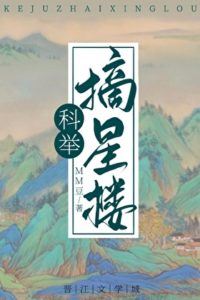
Reborn as the Eldest Legitimate Grandson in a Scholar's Rise to Power
+Add to Custom List
Genres:
Novel Info
  • Author:
  • Mm豆
  • Status:Ongoing

Summary

... Read More

Born into a world ruled by merit and ambition, Pei Shaojin, the male lead, may be of concubine birth—but his brilliance cannot be hidden. Gifted, disciplined, and relentless in his studies, he rises step by step through the imperial examinations, ultimately claiming the coveted title of Top Scholar, basking in unmatched glory.

In stark contrast stands the family’s legitimate eldest grandson, Pei Shaohuai—a notorious wastrel. Indulgent, reckless, and driven by jealousy toward his talented half-brother, he squanders his days in excess and disgrace, becoming nothing more than a drunkard and a disappointment.

Faced with such an absurd “script,” Pei Shaohuai can only respond:

“…What?”

His brother is kind, learned, fortunate, and upright—so why should he be jealous?

Refusing to follow his doomed fate, Pei Shaohuai decides to change everything. He abandons his reckless ways, devotes himself to study, and walks the same grueling path of the imperial examinations—determined to restore the family’s honor alongside his brother.

And then… during the exams—

Everyone is stunned:
“The Pei brothers are unstoppable—they’re dominating the rankings every single time!”

In the imperial court, the two stand side by side, supporting one another and achieving great feats.

The officials sigh in envy:
“How fortunate the Earl of Jingchuan is—to have not one, but two outstanding grandsons!”

Even the Emperor himself praises them:
“Two shining stars from one family—reward them!”

Novel Items

More
Novel
A novel that Li Nian once read, which describes the world he transmigrated into. It tells the story of a declining noble household where an overlooked illegitimate son (Pei Shaojin) rises through the imperial examinations to restore his family's honor. Li Nian became the character of Pei Shaohuai, the spoiled legitimate eldest grandson who squanders the family fortune and meets a miserable end in the original story.
Item
A decorative sachet shaped like a tiger's head, hanging above Pei Shaohuai's cradle. The infant tries to grab it with his tiny hands.
Item
An embroidered ball hanging above Pei Shaohuai's cradle as a toy. The infant waves his hands trying to grab it.
Food
A precious food item carried by maid Qinghe when she accompanied Nurse Shen to Lady Lin's room. Nurse Shen questioned why Lady Lin sent this to Concubine Shen's residence, hinting at hidden dangers.
Exam
An imperial examination that Pei Bingyuan passed at age sixteen, once considered the hope of the Pei family. However, his subsequent attempts to advance failed and his career stagnated.
Gift
Made by Grandma Zhao early in the morning. Brought to the celebration and placed on the kang. Made extra so kids could wear them during New Year too.
Latest Release
DateGroupRelease
2026-08-11shanghai fantasy c18
2026-08-11shanghai fantasy c17
2026-08-11shanghai fantasy c16
2026-08-11shanghai fantasy c15
2026-08-11shanghai fantasy c14
2026-08-11shanghai fantasy c13
2026-08-11shanghai fantasy c12
2026-08-11shanghai fantasy c11
2026-08-11shanghai fantasy c10
2026-08-11shanghai fantasy c9
2026-08-11shanghai fantasy c8
2026-08-11shanghai fantasy c7

Community Reviews

Rating(0 / 5.0, 33votes)
5 stars
0(0%)
4 stars
0(0%)
3 stars
0(0%)
2 stars
0(0%)
1 stars
0(0%)

Popular reviews

... Read More
There's a line in Chapter 1 that hit me like a truck: "As for the noble title? In Pei Shaohuai's eyes, it was already hollow." This is the thesis statement of the entire novel, isn't it? The Pei family has a title—Earl of Jingchuan—but it's empty. They have the appearance of nobility without the substance. Grandmother Pei can complain about servants and marriage prospects, but she can't actually secure a good match for her granddaughter because the family's wealth and influence have declined. The rosewood cradle is another symbol I can't stop thinking about. Passed down through generations, polished smooth, dignified. It represents the family's history, their legacy, the weight of expectation. And inside it lies the child who is supposed to either uphold that legacy or destroy it. In the original story, Pei Shaohuai destroys it. But now there's an adult mind in that body, and the question becomes: can he change the trajectory? The tiger-head sachet hanging above the cradle is interesting too. Tigers are symbols of power, of protection, of ferocity. But this is a sachet—a small, decorative item. It's the tiger as ornament, not as living creature. Just like the Pei family's nobility is now decorative rather than functional. And then there's the urine scene. A baby peeing on his grandfather as an act of rebellion. It's funny, yes, but it's also symbolic. The eldest grandson, the heir, the future of the family—asserting his autonomy in the only way he can. He can't speak, he can't act, but he can make his grandfather wet. It's a tiny act of defiance that says: I am not just a vessel for your expectations. The novel is really about what happens when legacy becomes a burden, and whether a person can escape the story they were born into.
... Read More
The pacing in this section is actually really clever when you step back and look at it. The author takes us from the most intimate, tender moments—Shaohuai learning to speak, his first birthday preparations—and gradually widens the lens until we're watching a full-blown family power struggle play out at a banquet. Chapter 14 starts with a baby. Just a baby. Making 'Mm-mm' sounds at his father, stealing books, being adorable. The pacing is slow, warm, almost lullaby-like. You could read this and think it's a domestic slice-of-life story. And then Lin Shiyun arrives and suddenly we're getting a full economic and social backstory about the Lin family's rise from cloth shop to substantial merchant house. The author uses the uncle's visit as an excuse to dump exposition, but it works because it's delivered through family conversation, not narration. Then Chapter 15 hits us with the birthday ceremony itself—the guests, the titles, the slow realization that someone important isn't coming. The pacing here is deliberate. The author makes us wait alongside the characters. 'Wait another fifteen minutes,' the old count says. We wait. The carriages arrive. And with each arrival, the social dynamics become clearer and more painful. The transition to Ruolian's coming-of-age setup at the end of Chapter 15 and into Chapter 16 is where the pacing really shifts. We go from celebration to calculation in two paragraphs. The countess's 'entrustment' to Lin Shi lands like a punch after all that warmth. And that ending—Nurse Shen whispering 'this is a foolish task'—perfect cliffhanger. The author knows exactly when to cut.
... Read More
There is one scene in this passage that I keep coming back to, and it's not the big dramatic moments—it's the quietest one. Late afternoon. The sun is stretching shadows outside, casting them into the classroom where Huai and Jin are copying the Analects. Every stroke deliberate and careful. And then—they notice their father's shadow outside the window. Tall and upright. Hands behind his back. Just watching them study. That's it. That's the entire scene. No dialogue, no drama, just a father watching his sons from behind a window as the light changes. And then the text says: "It was as if he were seeing his sons as he once was, learning as a child." I got chills. Actual chills. Because in that single image—shadow on the wall, afternoon light, a man who has spent twenty years failing exams standing outside a classroom watching his children succeed where he couldn't—you have the entire emotional weight of Pei Bingyuan's arc compressed into one visual. The author doesn't over-write this. There's no melodrama. Just: "Father," the brothers stood and greeted him. "I hope I haven't disturbed your studies." "Not at all." The restraint is what makes it powerful. And then there's Yingjie's herb garden—this detail about how it's far more time-consuming and laborious than tending ordinary flowers, how the herbs don't flower or attract butterflies or give off fragrance, how at first glance they're hardly distinguishable from ordinary wild plants. The mansion has this entire hidden world in its backyard that most characters (and readers) would walk past without noticing. But the author spent time on it. She made us see it. The coming-of-age ceremony for Ruolan is described as "grand and elegant, on par with Ruolian's" but honestly I found myself more drawn to the small scenes—the tea Yingjie brews, the seeds in cloth bags, the bare branches in the courtyard. These are the moments that make the world feel lived-in rather than staged.
... Read More
I cannot stop thinking about the character '門' and what it represents in this entire passage. Bingyuan explains it to Shaohuai: 'On the left is one household, on the right is another. When the two households come together, that forms 門.' Think about what's happening thematically right now. Lin is marrying her stepdaughter Ruolian into the Xu family—two households becoming one through marriage. She's building connections between the Pei and Lin families for Shaohuai's future. The maternal uncle is explaining how a single scholarly connection 'can reach hundreds.' Every relationship in this story is about gates, thresholds, connections between separate houses. And then there's the Book of Songs itself—the text opens to 'Chen Feng – Heng Men' which is literally about lingering under a grand gate. The original story had Shaohuai and Bingyuan as enemies, separated by the Grand Matriarch's interference. Now they're literally standing at a threshold together, learning characters. The 'gate' is both physical (the estate's main entrance Bingyuan draws) and metaphorical (the passage from ignorance to knowledge, from estrangement to bonding). Even the structure of the chapter mirrors this: we move through different 'gateways'—from the gossip in one room to the Lin family home, from the study to the matriarch's quarters. And the ultimate gate is the civil examination system itself, which Bingyuan hopes will bring honor to the family. Shaohuai can't tell his grandmother he wants to study for exams—he just says 'because I like it.' But the reader knows: the gate he's trying to walk through is the one to officialdom, to securing his family's future, to preventing the tragic ending of the original story.
... Read More
Okay so this is genuinely brilliant plot work. The protagonist is a baby—like literally an infant who can't even walk properly—and he's already running tactical operations to prevent family destruction. Let me just... process that for a second. The core conflict is set up perfectly: Grandmother wants to take Huai Ge'er from Lin Shi, which in the original story would spiral into Lin Shi becoming bitter and obsessed, Grandmother spoiling the boy rotten, and the whole Pei marquisate collapsing. But our MC? He's like 'nah, I've got a better idea.' So he stages these calculated crying fits—perfectly modulated, apparently—where he's sweet during meals but absolutely loses it when Grandmother tries to put him down for naps. The doctor gets called in, plays along, and suddenly Grandmother just... backs off. No family war. No drama. Just a baby who weaponized cuteness. And then the sister subplot hits different. Ruolian's marriage arrangement is this whole mini-arc where Grandmother worries about the Xu family's uncertain status in Kyoto, Pei Bingyuan explains his reasoning patiently, and we get this quiet moment where Shaohuai realizes the family's decline is already visible—the fact that disreputable suitors were even being considered for the legitimate eldest granddaughter says everything. The plot moves in these quiet, deliberate waves. Nothing explodes, but everything is constantly shifting beneath the surface. I love that the stakes feel enormous (the entire family's fate) but the battles are fought through baby tantrums and marriage negotiations.
... Read More
Okay so this whole section is basically one giant plot device wrapped in a baby's birthday party and I am HERE for it. The author is playing 4D chess with family politics and I can barely keep up. Let's talk about the Lin family's arrival, because this is where the plot starts tightening. Lin Shiyun showing up the day BEFORE the birthday instead of on the day itself? That's not just 'being considerate'—that's strategic. Lin Shi immediately understands: her merchant family arriving on the same day as the noble guests would complicate things for her husband. The author doesn't even need to spell it out. One line and suddenly you're seeing the whole board. But then the real plot bomb drops with the Minister Pei household's arrival. They're late. Obviously late. And the excuses? 'Called to the palace,' 'busy with new posts.' Come on. The old count knows it. Pei Bingyuan knows it. We know it. The silence where family loyalty should be is deafening. And then—the grabbing ceremony. Shaohuai picks books and a brush. Of course he does. He's a reincarnated adult in a baby's body. But the grandmother's comment about his 'bright forehead' made me laugh out loud because this kid is internally screaming while externally being adorable. Classic. The Ruolian coming-of-age setup at the end is the real plot twist though. The countess 'entrusting' Lin Shi with the preparations while clearly expecting her to foot the bill? That's not a task assignment—that's a trap. And Nurse Shen seeing it immediately? Meanwhile Lin Shi is still processing the honor. The author is setting up a financial crisis that's going to hit hard. I need to know what happens next. Is Lin Shi going to fall for this? Or does she have someone smarter guiding her?
See all reviews

Characters

See all characters

Custom lists

Oops…There is nothing here.