Summary

... Read More

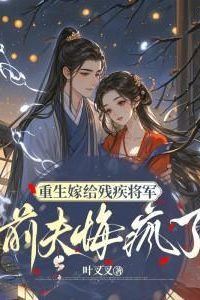
In her previous life, Xue Wanyi’s identity was swapped by a concubine.

She became a concubine-born daughter whom everyone in the household ignored, while the concubine’s daughter became the legitimate daughter of the Vice Minister’s Residence. Raised with doting affection since childhood, the sister was vibrant and radiant, beloved by all.

She even married the Duke of Zhen, becoming a First-Rank Duchess and enjoying inexhaustible wealth and honor! Meanwhile, Xue Wanyi took the place of her legitimate sister, who had reneged on her engagement, and married the destitute son of the Chu family, Chu Yuan.

For years, she stayed by Chu Yuan’s side as he rose from a struggling scholar to the Grand Secretary of the dynasty.

Unexpectedly, on the night she was conferred the First-Rank Imperial Decree Title, the husband she had shared a bed with for ten years secretly imprisoned her. He severed her limbs and stuffed her into a vat, turning her into a Human Pig.

All because he hated Xue Wanyi for interfering and ruining his marriage with the legitimate sister, which he believed led to the sister’s tragic death.

Amidst endless regret, Xue Wanyi died a wretched death.

When she opened her eyes again, she had been reborn on the day the Imperial Family bestowed the marriage decree.

This time, the legitimate sister chose Chu Yuan.

Xue Wanyi knew that her sister had been reborn as well.

Novel Items

More
Document
An imperial decree declaring the execution of the Imperial Concubine, issued alongside the guards dragging away Shi Ronglan. It was part of Emperor Zhaoyuan's punishment order.
Event
The horrific method of execution Xue Wanyi suffered in her previous life. Her limbs were severed and her body was stuffed into a vat, turning her into a Human Pig. This was carried out by a body double personally trained by Chu Yuan.
Item
A rare, deadly poison that afflicted Ye Zhuo after he defeated the Southern Yuan. A divine physician managed to save his life but the toxins concentrated below his waist, leaving him crippled and unable to father children.
Event
Xue Wanyi's staged attempt to drown herself in a pond after confronting Concubine Qiu. The drowning was fake, and her real goal was to expose Concubine Qiu's malicious intentions and have her punished. Feicui's testimony led to Concubine Qiu being placed under house arrest.
Item
A decree that Jiang Yuzhou offered to obtain from Bixia (Murong Yao) for her father Jiang Xun's potential remarriage. It would bring honor to the family and give the new bride ample dignity.
Event
The central plot event where Concubine Qiu maliciously switched Xue Wanyi (the legitimate daughter) with Xue Mingfei at birth, allowing her own daughter to live as the favored di-daughter while Xue Wanyi suffered neglect.
Latest Release
DateGroupRelease
2026-08-11shanghai fantasy c10
2026-08-11shanghai fantasy c9
2026-08-11shanghai fantasy c8
2026-08-11shanghai fantasy c7
2026-08-11shanghai fantasy c6
2026-08-11shanghai fantasy c5
2026-08-11shanghai fantasy c4
2026-08-11shanghai fantasy c3
2026-08-11shanghai fantasy c2
2026-08-11shanghai fantasy c1

Community Reviews

Rating(0 / 5.0, 16votes)
5 stars
0(0%)
4 stars
0(0%)
3 stars
0(0%)
2 stars
0(0%)
1 stars
0(0%)

Popular reviews

... Read More
Okay, let me just say this — Xue Wanyi playing with fire like this is absolutely brilliant. She literally lets Concubine Qiu try to strangle her, knowing full well her father will walk in at the perfect moment. That's not just brave, that's calculated to the bone. And the best part? She doesn't even flinch when she's being choked. She just whispers the right things to make Concubine Qiu lose control completely. The line where she says 'Concubine Qiu, you and that man are growing more alike by the day' — chills. Absolute chills. It's like she's deliberately goading her into a confession without even saying it outright. The plot twist about the baby switch is starting to surface here, and honestly, it's so well planted. In her past life, Xue Wanyi had no idea any of this was happening. She just suffered through it. But now? She's turning the tables in real time. The fact that Feicui already found the midwife in Jingdu and has intel on the whole family — son, daughter-in-law, even a grandson — this is methodical. This is someone who's been planning this for years in her head before even opening her eyes in this new life. What I love most is how the author handles the 'sacrifice' angle. The imperial decree isn't just a marriage arrangement — it's basically a death sentence. The Zhenguo Gong Mansion is described as a 'dragon's den and tiger's lair.' Xue Chong himself knows this. So sending his concubine-born daughter there is supposed to be acceptable collateral. But Xue Wanyi flips it: she makes Concubine Qiu's attempt on her life look like a threat to the entire family's survival. Suddenly, the 'sacrifice' becomes untouchable. Genius.
... Read More
I need to talk about this breakfast scene because it absolutely wrecked me in the best way. Madam Jiang looking at Xue Wanyi and thinking "she looks just like me when I was young"—that hit different. Like, the reader knows the truth (or suspects it), but Madam Jiang is sitting there feeling this inexplicable pull toward the daughter she's been treating coldly, and she has no idea why. And Xue Wanyi! She's playing this careful game, curtsying and being perfectly polite, but there's this undercurrent of everything she's carrying—the knowledge of her real identity, the memories of a past life, the weight of what she's about to do. When she asks Nanny Lin for a midwife's contact, she's not just being practical. She's building a case to prove who she really is. That moment where she smiles faintly and doesn't push when Nanny Lin avoids the topic? That's a woman who knows when to wait. The relationship between Xue Wanyi and Feicui is also really sweet. Feicui is worried, pouting, saying "we'll miss the wedding if we wait too long"—but Xue Wanyi just chuckles and explains the bigger picture. There's genuine affection there, a bond forged through shared hardship. And Feicui's relationship with Wang Yuan, the guy waiting outside the carriage? That's a whole other soft thread I'm here for. But the real emotional gut-punch is Madam Jiang's inner turmoil. She loves Xue Mingfei as her own, and the thought that she might not be blood-related is tearing her apart. "A thorn lodged in her heart"—what a perfect description. I'm already dreading the confrontation when the truth comes out.
... Read More
Okay so let me just say this: the author dropped the most casually chilling detail in the entire chapter and I am STILL thinking about it. On the surface, this is a rescue arc. Xue Wanyi hears rustling, investigates, finds two men kidnapping the little princess, Wang Yuan fights them off, they return the girl, everyone's happy, Princess Consort Mu gives some gifts, done. But then—right when you're settling into that warm fuzzy feeling—Princess Consort Mu's matron mentions: "the guards who found the young lady said it didn't seem so" when asked if Miss Xue killed the kidnappers. And earlier, the matron reports: "the guards found two people dead in a mountain hollow about three li behind the back hill." Two men. Dead. Not by Xue Wanyi's hand (presumably). Not by Wang Yuan's (he only "drove them off" according to her cover story). So WHO killed them? This is the kind of detail that sits in the background like a quiet thunderstorm. The author doesn't dwell on it. Doesn't explain it. Just drops it and moves on, as if it's no big deal. But it's EVERYTHING. It tells you that this world has players you haven't even met yet, operating in the shadows, and Xue Wanyi clearly knows more than she's letting on. Also—the fact that she immediately lies to the Princess Consort about only "driving them off" instead of whatever actually happened? That's not the action of a naive young lady on a temple stroll. That's someone who knows exactly how to navigate dangerous situations and protect herself. The cover story is clean, rehearsed, and suspiciously convenient. I keep going back to that line: "If she didn't kill them, then who did?" Princess Consort Mu asks it internally and the author refuses to answer. That's not a gap in the narrative—that's a promise. The author is telling us: pay attention, more is coming. And honestly? I'm here for it. This is how you build a mystery without making it feel like a mystery. You just let the pieces sit there and wait for the reader to connect them.
... Read More
The author really understood the assignment with this setting. Lingyun Temple is introduced as "one of the top temples in the Jingdu outskirts" with vegetarian cuisine "highly praised by the nobility." So right away we know this is a place where wealth and spirituality intersect—it's not some remote mountain hermitage, it's a fashionable destination for the elite. That's important because it explains WHY the Princess Consort would bring her family here, and why kidnapping could happen in plain sight. But then the description shifts. The path gets rough. Scattered rocks. Overgrown weeds. A small stream. And suddenly this polished, aristocratic outing has a wild, untamed edge. The temple grounds aren't just a backdrop—they're a liminal space where the sacred and the dangerous overlap. "This is a sacred Buddhist site. What are you trying to do?" Wang Yuan's shout echoes in that space between the manicured temple grounds and the wild back hills. And it's in that exact space that the two dead bodies are found—"about three li behind the back hill." Not in the temple. Not in the city. In the in-between. The contrast between Princess Consort Mu's opulent interior—"a woman in splendid attire, noble in bearing, seated at the head of the room"—and the rough, weed-choked path where the kidnapping actually happened is striking. The author is constantly reminding us that this world has layers: the polished surface of aristocratic life, and the dangerous, messy reality underneath. Even the tea scene at the end feels deliberate. After all that tension—the fight, the rescue, the confrontation with the guards—everything settles into the quiet intimacy of Feicui pouring tea. The warmth of the cup, the casual conversation about the princess's background. It's a masterclass in using setting to control mood.
... Read More
The atmosphere in this section is absolutely *chef's kiss*. Let me start with the very first image: Xue Wanyi tapping rainwater from her palm and saying "for me, it's a peaceful life for the rest of my days." She's walking into what everyone else fears—a dragon's den, a tiger's lair—and she's not afraid. The rain motif throughout these chapters is doing so much work. The gloomy sky, the misty rain, the oil-paper umbrella—everything feels damp and heavy and charged with tension. Then you've got Ye Zhuo in the hot spring room. The steam, the medicinal herb scent, the purplish-black legs with bulging veins. This is such a vivid, almost uncomfortable image. It tells you everything about his condition without a single exposition dump. And the masked elderly man doing acupuncture—his heavier breathing, his hidden face. The Duke's Manor feels like a place of secrets and shadows, and I love it. The Lingyun Temple scene is where the worldbuilding really shines. "Distant green pines and emerald bamboo, with thin mist lingering halfway up the mountain and the lingering echoes of morning bells and evening drums." This is cinematic. I could see this as a film. The temple isn't just a location—it's where fate intersects. In the previous life, a young princess died there in horrific circumstances. Now Xue Wanyi is going there intentionally, deliberately, to change that outcome. Every setting in this passage serves the mood. The oppressive rain, the steamy hot spring, the serene but haunted temple. The world feels alive and layered.
... Read More
I have to appreciate how this author controls the rhythm. The chapters open with a bang—Nanny Lin delivering devastating news to Qingtan, the identity swap hanging in the air like smoke. Then it cuts to Ye Zhuo burning a letter, which immediately raises the stakes. Who is he protecting? Why is he involved? We get answers in fragments, which is exactly the right approach. The middle section slows down with the breakfast scene, and this is where I think a lesser author would lose me. But the tension never drops. Madam Jiang's suspicion builds quietly, almost imperceptibly. She's eating her meal, noticing things, connecting dots. The scene feels calm on the surface but is vibrating underneath. Then Xue Mingfei enters and everything spikes again—her condescending dialogue, Xue Wanyi's calculated weakness, the unspoken war between the sisters. The transition to Xue Wanyi bathing and revealing her plans to Feicui is a great structural choice. It's a private moment, intimate and strategic, and it reminds us that while the family drama plays out upstairs, our protagonist is playing a completely different game. The Lingyun Temple reveal at the end is the kind of cliffhanger that makes you immediately open the next chapter. Prince Mu's daughter died horribly. Xue Wanyi is going to the temple. What's going to happen? The pacing is deliberate but never slow. Every scene has a purpose.
See all reviews

Characters

See all characters

Custom lists

Oops…There is nothing here.