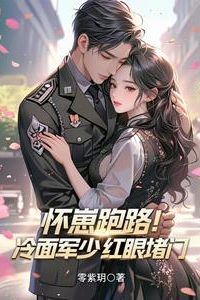
Pregnant and on the Run! The Cold-Faced Military General’s Red-Eyed Blockade
Novel Info

Summary

... Read More

[1970s Era + Military Marriage + Spatial Spirit Spring + Adorable Baby + Gaokao + Chasing Wife]

Su Nianqiu, the pampered daughter of a production brigade leader, accidentally encountered He Lin, a special forces officer on a secret mission who had been heavily drugged by enemies in the mountains. After a wild night, the male lead left a token and hurried back to his unit due to an emergency military situation.

Over a month later, the original host discovered her period was late and she was frequently retching. While secretly seeking medical help, she was spotted by a village scoundrel who spread malicious rumors about her. Unable to withstand the gossip and judgment of the entire village, the original host threw herself into the river in shame. Modern top designer Su Nianqiu transmigrated into her body, inheriting this mess.

Pulled from the river by villagers, Su Nianqiu expected a “hell-mode” beginning while facing the insults of the village gossips. Fortunately, her father and mother were fiercely protective. Grabbing a shoulder pole, they beat the rumor-mongers until they wailed in pain: “Even if my daughter never marries for the rest of her life, I can afford to support her!”

Su Nianqiu awakened her Spatial Spirit Spring. Using the resources and the spirit spring, she nurtured her weak body until it was radiant and charming, bringing her family a life of prosperity. While pregnant, she reviewed her high school studies. When the Gaokao was reinstated the following year, she became the provincial top scorer, gave birth to the child prodigy “Tuantuan,” and went to North City to attend university with her baby.

Meanwhile, the “Cold-faced Yama” He Lin, who had escaped death after his mission, returned to the village filled with guilt and responsibility to find his wife. However, he found only an empty house, and his token had vanished.

Three years later in North City, He Lin looked at the stunning female college student holding a mini-version of himself. With bloodshot eyes, he pinned her backstage: “Su Nianqiu, you’re carrying my child; where do you think you’re going?”

Novel Items

More
Arcane Treasures
A jade pendant with a dragon pattern left behind by the mysterious feverish man Su Nianqiu encountered. It serves as the key to the Spirit Spring Space, glowing and emitting scorching heat when activated. The original host kept it close to her chest. It is the source of Su Nianqiu's golden finger ability.
Materials
Water from An Ruoyan's space that made her skin white and tender as a peeled egg after drinking it.
Weapons
A polished nanmu shoulder pole carried by Li Xiulan. She uses it to strike Zhao Dazhuang when he spreads rumors about her daughter, hitting him on the back and threatening anyone who dares speak against her family.
Materials
A steaming bowl of brown sugar ginger water prepared by Li Xiulan to help Su Nianqiu ward off the chill after being pulled from the icy river. It symbolizes maternal care and comfort.
Manual
A yellowed silk scroll found in a hidden compartment of the bamboo hut. It contains instructions in clerical script on how to use Spirit Spring Water: shortening crop growth cycles, doubling medicinal herb efficacy, and strengthening the body with long-term consumption.
Material
Expensive nourishing ingredients that Qi Mingyu's father spent five taels on to stew with chicken for his mother and elder sister-in-law's treatment.
Latest Release
DateGroupRelease
2026-08-11shanghai fantasy c12
2026-08-11shanghai fantasy c11
2026-08-11shanghai fantasy c10
2026-08-11shanghai fantasy c9
2026-08-11shanghai fantasy c8
2026-08-11shanghai fantasy c7
2026-08-11shanghai fantasy c6
2026-08-11shanghai fantasy c5
2026-08-11shanghai fantasy c4
2026-08-11shanghai fantasy c3
2026-08-11shanghai fantasy c2
2026-08-11shanghai fantasy c1

Community Reviews

Rating(0 / 5.0, 9votes)
5 stars
0(0%)
4 stars
0(0%)
3 stars
0(0%)
2 stars
0(0%)
1 stars
0(0%)

Popular reviews

... Read More
The sensory details in this chapter are INSANE. Let me just start with the opening image: deep inside an abandoned textile factory, dim light, collapsed concrete pillars, waist-high weeds. Su Nianqiu leaning against a moss-covered pillar, looking like a cautious old farmer. You can literally feel the dampness, the decay, the danger of that space. It's not just a backdrop—it's a character. This is a world where black market deals happen in ruined buildings, where people hide in shadows and speak in whispers. Then there's the ginseng reveal. 'The overpowering, rich scent of ginseng, carrying the fragrance of soil and vegetation, wafted out.' Even in a dim dead corner, that smell cuts through everything. It's almost magical how the author uses scent to make the ginseng feel alive and precious against the dead, decaying environment. But the scene that really blew my mind is the transition back to the spatial dimension. She leaves the black market, winds through alleyways, slips into a half-collapsed dilapidated temple with rampant weeds and spiderwebs—and then she's IN the Spirit Spring Water. Crystal clear. Cool. Icy. The contrast between the dirty, dangerous outside world and this pristine inner sanctuary is *chef's kiss*. And then the transformation: ten minutes, that's all it takes. The withered old man is gone, replaced by a charming village belle with fair skin and bright eyes. The spatial dimension isn't just a plot device—it's her safe house, her dressing room, her sanctuary. It makes the world feel so much bigger and more layered. You have the gritty reality of the black market, the decaying temple, and then this hidden spiritual space that exists parallel to it all. The worldbuilding here is seamless—every location feels alive and purposeful.
... Read More
I need to talk about this ending because it absolutely wrecked me in the best way. After all that tension—the disguise, the negotiation, the black market danger—she slips into her spatial dimension, washes off the soot, changes back into her female clothes, and then... she touches her belly. The baby moves. And she says: 'Let's go, baby. Mom's taking you to spend money.' I literally gasped. This woman just pulled off a high-stakes black market deal disguised as an old man, out-negotiated a hospital logistics worker, and walked away with eight hundred yuan and enough coupons to be considered wealthy. And her first thought isn't about the money or the danger or even her own survival. It's about taking her unborn child shopping. The tenderness of that moment is so unexpected after everything else. She's been so hard, so calculating, so willing to get dirty for survival. But the second she's alone, safe in her spatial dimension, all that armor drops and she's just a mother talking to her baby. 'We're heading to the supply and marketing cooperative'—like they're going on a little date. Like she's already imagining what they'll buy together. And that line about the baby sensing its mother's joy and moving ever so slightly? I'm not okay. This is the emotional core of the whole story, isn't it? Everything she's doing—the disguises, the deals, the danger—is for this tiny life growing inside her. She's not just surviving for herself. She's building a future. And honestly, that's way more powerful than any romance subplot could ever be. This mother-child bond is the real love story here.
... Read More
There's a reason the original host kept that dragon-patterned jade pendant pressed against her chest like a secret. It's not just a plot device to give the protagonist a golden finger—it's a symbol of connection to someone she doesn't even know yet. The pendant is warmth in the cold, protection in vulnerability, destiny waiting to unfold. Every time it glows, it's like the story is whispering: this woman was never alone, even when she thought she was. The Spirit Spring itself is rich with symbolism. Water in Chinese literature has always been about purification, rebirth, transformation. Su Nianqiu literally drowns in river water at the beginning—cold, violent, almost fatal. Then she drinks from the Spirit Spring—warm, sweet, life-giving. The contrast is deliberate. She dies to her old life and is reborn through this water. Her body heals, her nausea vanishes, her strength returns. It's a baptism scene disguised as a spatial ability. And then there's the pregnancy itself as symbol. In a society that would destroy a woman for being unmarried and pregnant, Su Nianqiu carries life while the village throws death. The child in her belly becomes a symbol of hope versus shame, creation versus destruction. When her mother says "The child in her belly is our Su family's own grandchild! Whoever dares to say a single word against it, I'll split them open first!"—that's not just maternal protection, that's a declaration that life itself is worth fighting for. The recurring theme I'm picking up on is: what we carry inside us defines us more than what others project onto us. The pendant. The child. Su Nianqiu's own sense of self. All of these are hidden, private, internal things that ultimately become her greatest sources of power. The village can gossip, but they can't touch what's inside her. That's the thesis, isn't it?
... Read More
I need to talk about Su Nianqiu's speech in Chapter 2 because it is PERFECTION. Let me just quote the full thing because it deserves to be memorized: "I am indeed pregnant. However... does the child in my belly have even the slightest connection to a piece of scum like you, who isn't even worthy of being called a human?" Then she goes on to declare that the father is "a hero who stands tall between heaven and earth" and that she'll settle the score with Zhao Dazhuang to the very end. This woman just woke up in a new body, in a new century, with no plan and a pregnancy scare, and she DELIVERS this like she's been doing it her whole life. The dialogue is sharp, controlled, and absolutely devastating. She doesn't stutter. She doesn't cry. She looks a terrified gossip in the eye and dismantles him with words alone. And the parents' voices are equally distinct. Li Xiulan's dialogue is all action and fury—"I'll split them open first!"—short, punchy sentences that match her carrying-pole energy. Su Jianguo speaks in authority—"Anyone who dares spread another rumor today will be charged with undermining collective unity!"—formal, measured, the voice of a man who's spent decades commanding respect. Even the gossiping villagers have distinct voices. You can hear the different women in the crowd, each adding their own venomous commentary. The dialogue never feels like everyone's just saying the same thing in different words. The narrative voice itself is also really good—Su Nianqiu's internal monologue has this perfect blend of modern sarcasm ("Starting off in hell mode! How is this even playable!") and genuine emotional vulnerability. It never feels like two different voices fighting each other. The transition from her modern designer mindset to her 1970s circumstances feels natural, not jarring.
... Read More
Okay so let me just start by saying—Li Xiulan with that carrying pole? I am NEVER recovering from that scene. The woman literally swings a wooden pole at a grown man because he dared to gossip about her daughter. And I was sitting there like... I need this woman in my life. Like, adopt me, please. But honestly the part that wrecked me wasn't even the action scenes—it was the quiet stuff. When Su Nianqiu is lying in her mother's arms, breathing in that faint scent of soapberries and warmth, and the text just says: "Was this… the feeling of having a mother?" And then later, when she's watching her parents stand protectively in front of her and thinks "Was this unconditional favoritism and protection? It felt so good." This woman spent her entire first life as an orphan. She never had a mother. And then she wakes up in this body—pregnant, humiliated, about to die in a river—and the FIRST thing that happens is a fierce woman with a carrying pole throws herself between her daughter and the entire village. I literally gasped out loud. The way the narrative contrasts her cold, lonely previous life with this sudden, overwhelming flood of family love... chef's kiss. Absolutely devastating in the best way. And Su Jianguo! The man who was probably terrified of losing his reputation as brigade leader—his first instinct isn't to protect his name, it's to cover his daughter with his own jacket and say "come home." The scene where he's sitting on the kang smoking pipe after pipe while his wife cries... you can feel the weight he's carrying. He's not angry at her. He's heartbroken that she suffered alone. The CP hasn't even appeared yet and I'm already emotionally invested in this family dynamic. If the male lead shows up and doesn't deserve this, I will personally write the author a very strongly worded letter.
... Read More
The opening scene on the riverbank is absolutely cinematic. Like, I could see it frame by frame—the muddy ground, the freezing river water filling her lungs, the cluster of villagers with their judgmental eyes and sharp tongues. The author doesn't just tell us it's the 1970s countryside, they MAKE us feel the damp cold, the earthy smell of mud, the physical agony of drowning. And then the transition from that brutal opening to the warm kang in her bedroom? The contrast is everything. But the scene that really stuck with me is the Spirit Spring Space. This is where the worldbuilding gets genuinely interesting. It's not just a generic "magic space"—there's a bamboo hut, a bubbling spring with white steam rising, crystal-clear water that smells sweet, and a stone tablet with ancient seal characters carved into it. The sensory details are so specific: the water tastes cool and sweet, it transforms into a warm current through her limbs, her fatigue vanishes. I could literally feel the relief radiating from that description. What I love is how the 1970s setting isn't just backdrop—it actively shapes every conflict. The work points system. The brigade leader title. The militia. The fact that gossip spreads faster than wildfire in a closed village community where everyone's survival depends on collective reputation. When Su Jianguo threatens to cut off Zhao Dazhuang's work points, that's not a empty threat—that's literally how you starve someone in that system. The worldbuilding is doing heavy lifting here. The village itself feels alive. You've got the river entrance where the drama unfolds, the Su family courtyard that shuts out the outside world, the kang where the emotional confessions happen. Each location has its own mood and function. The author clearly understands that setting isn't just decoration—it's narrative engine.
See all reviews

Characters

See all characters

Custom lists

Oops…There is nothing here.