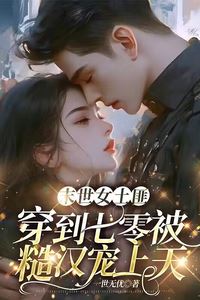
Post-Apocalyptic Female Bandit Reincarnates in the ’70s and Is Pampered by a Rough Man - Reviews

Post-Apocalyptic Female Bandit Reincarnates in the ’70s and Is Pampered by a Rough Man
+Add to Custom List
Sort
Add review
... Read More
Let me just say this clearly: Ling Yu is the most misunderstood man in fiction and I am exhausted that nobody is talking about it. On the surface, he's the stingy husband who won't let his wife eat a chicken leg. But read the actual text—HE NOTICED her stomach was fragile. He saw her eat meat the night before, watched her suffer through the night, and the NEXT MORNING he cooked porridge instead of reheating the chicken. That's not stinginess. That's someone who pays attention and acts on it, even if he's terrible at communicating it. And the bathing scene? He's teasing her, sure, but he's also literally trying to build intimacy with a woman who just told him she wants to divorce him. He says 'I'll make sure you live well and you'll always have enough to eat' and she immediately thinks he's lying because of ONE CHICKEN LEG. The miscommunication between these two is honestly painful. Then there's Ling Zixiao, who's just... sweet? He comes home early specifically because his brother told him to check on his sister-in-law. The family dynamics here are actually really warm underneath all the friction.
... Read More
Okay so let me just say this — the nightmare sequence in Chapter 16 is genuinely one of the best plot devices I've read in a while. The author doesn't just dump exposition about Ye Wuyou's past; they FORCE us to experience it through her trauma. The way she relives the moment before her awakening — the hunger, the fear, the men trying to assault her — it's brutal and it completely recontextualizes everything about her character. What's clever is how the plot mirrors itself. In her past life, she hit rock bottom, awakened her powers, and then became a plunderer herself — the very thing she hated. Now in this new timeline, she's starting from zero again, and the author is setting up this beautiful tension: will she repeat the same cycle, or will something different this time? The dream itself acts as a pivot point. And then there's the subplot with Old Lady Wang. Ye Wuyou staring at their big tiled-roof house with such venomous jealousy — that's not just petty resentment, that's the plot planting seeds for her future revenge arc. The author is telling us: this girl remembers every slight, and she WILL make them pay. The line about wanting lightning to strike their house? Chilling. It shows how far her moral compass has drifted from her original self. The broken bowl scene is also doing heavy plot lifting. It's not just comedy relief — it's a symbol of her inability to function in this new world. She's a powerhouse in the apocalypse but can't even wash dishes without shattering something. The plot is carefully showing us that her journey back to strength starts from absolute zero again.
... Read More
There's this one detail that kept nagging at me after I finished this section, and I can't stop thinking about it: the hands. Ye Wuyou's hands were damaged—not just superficially, but the nerves were injured. She hides this truth from everyone, including Ling Yu, because in her previous life she used her wood-type ability and crystal nuclei to heal her feet but kept the hand injury secret. The hands become this symbol of everything she's hiding, everything she can't let people see. And then there's the water. So much water in this passage. The rain that traps them on the road, the basin of hot water for her bath, the ginger soup she has to drink, the water Ling Yu pours for his own bath. Water is both danger and care—it's what threatens to make her sick and what saves her from catching a cold. It's the medium through which Ling Yu shows his tenderness (helping her bathe, making soup) and also the source of her deepest humiliation. The author is weaving this motif throughout without being heavy-handed about it. The personal space is another symbol I can't ignore. It's Yuyou's domain, obsessively clean, filled with neatly arranged shelves. But Ye Wuyou half-heartedly organizes a few shelves and then decides to just let it be messy because "Yuyou will clean it sooner or later." There's something almost pathetic about this—her taking responsibility for exactly zero things in that space while simultaneously feeling entitled to use it. And Yuyou, the little beast, senses danger from the one person she trusts most. The space represents everything Ye Wuyou had in her previous life (security, supplies, order) and everything she's still not ready to fully claim in this life. The nightmare at the end ties all these symbols together. Water, hands, the apocalypse—her trauma is literally drowning her even in sleep. The author is building this layered thematic structure beneath what表面上 looks like a simple reincarnation romance, and it's brilliant.

Leave a comment

You must be logged in to leave comments. or