Pawned Wife for Three Years: The Rough Husband Refuses to Let Her Go
+Add to Custom List
Genres:
Novel Info

Summary

... Read More

[Rough Man + Mature Romance + Both Not Pure + Sweet Pampering + Rural Life + Family Drama]

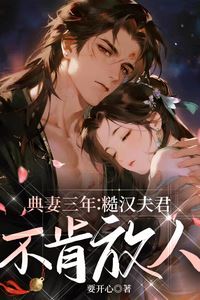
To save her sick daughter, Lin Suier pawned herself to Jiang Liao, the fiercest traveling cook in Xinghua Village.

The whole village waited to see her suffer under that cold-faced, ruthless man.

Who would have thought—

The man who could scare children into silence during the day spent every night trying to pull her onto the kang.

“Good Suier… does it feel comfortable?”

Everyone thought she came to endure hardship, but little did they know she had fallen into a nest of blessings, doted on and thoroughly cherished.

Her scholar ex-husband, filled with regret, came to take her back:
“You are, after all, the wife I married properly!”

Before he could finish, a bone-chopping knife flew over and lodged into the door panel.

Jiang Liao pulled her into his arms, his gaze chillingly cold:

“She eats…”

Novel Items

More
Item
A heavy chest slung over Jiang Liao's shoulder that he carries when heading to neighboring villages for cooking work. It contains his cooking tools and equipment.
Item
Brought by Aunt Zhang the previous day as a gift. Half a block was given to the Chen family. Chen Wenqi finished it the night before, which caused Madam Zhou to angrily scold Lin Suier for not saving it for her husband's studies.
Item
An oil lamp that was not to be lit in the cave where Chi Yu was sleeping, as part of the arrangement to keep the area dark and private.
Item
A reward for successfully creating fire by friction for the first time in the beta. Moke Moke stores it carefully in her backpack as a valuable treasure.
Item
Lin Suier's tools for fetching water from the old well. She carries empty buckets to the well and fills them with clear water, then hoists the pole onto her shoulders to carry the heavy load back home.
Furniture
A heated brick bed where Xie Chen rests and recovers. Jiang Tian cleans it and spreads double bedding for him.
Latest Release
DateGroupRelease
2026-08-11shanghai fantasy c13
2026-08-11shanghai fantasy c12
2026-08-11shanghai fantasy c11
2026-08-11shanghai fantasy c10
2026-08-11shanghai fantasy c9
2026-08-11shanghai fantasy c8
2026-08-11shanghai fantasy c7
2026-08-11shanghai fantasy c6
2026-08-11shanghai fantasy c5
2026-08-11shanghai fantasy c4
2026-08-11shanghai fantasy c3
2026-08-11shanghai fantasy c2

Community Reviews

Rating(0 / 5.0, 5votes)
5 stars
0(0%)
4 stars
0(0%)
3 stars
0(0%)
2 stars
0(0%)
1 stars
0(0%)

Popular reviews

... Read More
The stakes in this story are devastating because they're so quietly devastating. On the surface, nothing dramatic is happening—no wars, no assassinations, no grand betrayals. But if you actually pay attention, EVERYTHING is at stake for Lin Suier. Her mother-in-law's words echo like a death sentence: "A hen that can't lay eggs—gave birth to a useless girl who can't carry on the family. What a waste of food!" Four years of marriage and she's already being evaluated as a failed investment. In this world, a woman who can't produce a son isn't just disappointed—she's disposable. That's the external conflict and it's suffocating. But the internal conflict is where it really gets intense. Lin Suier is a woman who has accepted her lot—endure, serve, hope her husband passes the exams someday. And then Jiang Liao exists. He represents everything her life isn't: physical, passionate, alive. The moment their hands touch at the well, her entire carefully constructed world of acceptance cracks. She's not just attracted to him—she's terrified of herself. "Lin Suier, have you lost your mind?!" she thinks. This isn't just about desire, it's about the terror of wanting something she has no right to want. The stakes escalate subtly. If she gives in to this feeling, she risks everything—her daughter's stability, her place in the household, her own survival. But if she doesn't, she's already dying inside. The author makes you feel this impossible position with every scene. Even the mother-in-law's cruelty isn't cartoonish villainy—it's the cruelty of a system that has taught her to see Lin Suier as less than human. What keeps me hooked is that the author never lets up. Every moment of tenderness with her daughter is followed by an reminder of how precarious her position is. Every spark with Jiang Liao is followed by her own shame. The tension never resolves—it accumulates. And by the end of Chapter 3, with the husband finally appearing after all this buildup, I need to know what happens next. Because something is going to break. It has to.
... Read More
I need to talk about how the author controls tension across these chapters because it's masterful. Chapter 1 starts with sound—just sound. You don't see anything, you hear everything. The moans through the wall, the creaking bed, the man's breathing. It's like the author is building a scene entirely through auditory hallucination and it's incredibly effective. Then it cuts to Lin Suier's perspective and suddenly you're inside her head, feeling that same confusion and disappointment. The structure here is brilliant because we get BOTH sides of the same moment—Jiang Liao hearing it and thinking it's inadequate, and Lin Suier experiencing it and feeling empty. Then Chapter 2 shifts to dawn, to the well, to the first real encounter between them. The pacing slows down intentionally—this is a quiet scene, just two people at a water source. But the tension is so thick you could cut it. Every brush of fingers, every glance, every internal thought is loaded. The author doesn't rush this. They let the silence between words do the work. Chapter 3 immediately undercuts any romantic momentum with the mother-in-law scene. It's like—here's this charged moment between two people, and then BOOM, reality crashes in. Madam Zhou doesn't care about desire or tension or anything. She cares about water and porridge and whether her son ate enough. This is such a smart structural choice because it reminds us that Lin Suier's internal life exists inside a cage of daily oppression. What I love most is how the author uses perspective shifts as a pacing tool. We go from Jiang Liao's hungry frustration to Lin Suier's quiet endurance to the mother-in-law's cruel indifference. Each shift changes the emotional temperature of the story. It never lets you settle into one mood for too long, which keeps you reading. And the chapter endings? Chapter 1 ends with Lin Suier pulling her daughter close. Chapter 2 ends with Jiang Liao cursing and walking away. Chapter 3 cuts off mid-scene with the husband appearing. Each one is a different kind of hook.
... Read More
"The kitchen was dark and cold. By habit, Lin Suier found the flint—click—and lit the oil lamp." I keep coming back to this moment. Just one word—click—and suddenly I'm there in that cold dark kitchen with this woman who has been up before dawn every single day of her life. The author builds this entire world through sensory details that feel so real I can almost smell the porridge and the damp earth. Let me just say—the worldbuilding here is not about grand descriptions of castles or magic systems. It's about the texture of daily survival. The thin porridge "enough to reflect a person's face." The three sweet potatoes she almost doesn't take because she's calculating who gets fed and who goes hungry. She's the one who goes hungry. Of course she is. And then there's the mother-in-law scene, which is one of the most vividly written power dynamics I've read. Madam Zhou shuffles out in old cloth shoes, rubs her lower back, and immediately starts criticizing. The porridge tastes off. The water is insufficient. The fermented bean curd is gone. Nothing is ever enough because Lin Suier's entire existence is about being found lacking. "A hen that can't lay eggs"—that line from earlier just echoes through every interaction. The village itself feels alive too. The old locust tree at the entrance. The paper-pasted windows with dim yellow light seeping through cracks. The creaking kang bed. The well with its swirling clean water. These aren't just decorations—they're the bones of this world. Every detail reinforces how confined Lin Suier's life is. She moves between the kitchen, the well, the courtyard, and the east room. Her world is small and every corner of it has someone judging her. The contrast between the intimate domestic scenes and the vast oppressive social structure around her is what makes this setting work so well. It's not just a backdrop—it's a character that's constantly pressing down on Lin Suier.
... Read More
There are so many symbols layered into these chapters that I can't stop thinking about them. Let me start with water—it's everywhere. Lin Suier fetching water, the well, the porridge thin enough to reflect a face, the mother-in-law criticizing how she draws water. Water is life in this story but it's also a measure of her worth. She can't produce an heir, so she can barely produce enough water. The symbolism is almost cruel in how consistent it is. Then there's the body—specifically Lin Suier's body as a site of failure and desire. Her mother-in-law calls her a hen that can't lay eggs. Her husband can't satisfy her. And then Jiang Liao looks at her body the way a starving man looks at food. Every part of her existence is filtered through what her body can or cannot do. The red bellyband on her daughter—another symbol of the reproductive anxiety that haunts this household. Xiao Cao is the only child who was accepted, and even then, she's just a girl. The kang bed is another symbol I can't shake. That creaking bed in Chapter 1 represents everything wrong with Lin Suier's marriage—it's old, it's strained, it can barely hold what's happening on top of it. And then the damp sticky feeling afterward, the unfinished wave, the ground suddenly gone beneath her feet. The bed is a metaphor for her entire marriage: inadequate, hurried, leaving her wanting something she can't name. Food is its own language here. The thin porridge, the three sweet potatoes, the fermented bean curd that's already gone. Hunger is constant and it's not just about food. Lin Suier is hungry for everything—for satisfaction, for attention, for a life that isn't defined by her inability to produce a son. Even Jiang Liao's hunger is described in culinary terms: "what a waste of good ingredients!" The author keeps returning to this language of consumption and consumption's failure. And the scholar's hands versus the cook's hands—that's not just about physical attraction, it's about two different kinds of power. One is intellectual and socially valued but personally useless. The other is physical and socially looked down upon but viscerally alive. Lin Suier is caught between two worlds and neither one truly sees her.
... Read More
Okay so I need to talk about Jiang Liao because this man is a whole vibe and I am not okay. The way the author writes him—first we hear his perspective in Chapter 1, standing outside that wall, and you can literally feel the frustration radiating off the page. He's this rough, physical man who just watched something that set him on fire and now he's walking around with it. Then in Chapter 2 he runs into Lin Suier at the well and the tension is INSANE. "Her collar was slightly loose, a few strands of silky hair resting against her fair neck." That's it. That's the sentence. The author doesn't even need to do anything dramatic—just this one detail and suddenly Jiang Liao is completely undone. And Lin Suier? She's not some naive village girl. The text says she's no innocent girl—she's borne a child. She KNOWS what that look means. And she's terrified of it because part of her is afraid she might want it too. The most devastating part is when she thinks about her husband's hands—clean, scholar's fingers—and then Jiang Liao's rough, veined hands. She slaps herself mentally for even thinking it. This woman is trapped in every direction. Her mother-in-law treats her like a broken appliance, her husband is absent-minded and apparently inadequate in the bedroom, and now this physically imposing man is looking at her like she's the most delicious thing in the world. And what's crazy is that Jiang Liao isn't just some generic hot neighbor. The author gives him this moment where he thinks: "If that voice last night had been calling his name—Jiang Liao… Would it have sounded the same?" That's not just lust. That's something deeper. He's wondering if she could want him the way she clearly isn't able to want her own husband. It's almost tender in a twisted way. Their dynamic is electric because neither of them is innocent. They both understand exactly what's happening between them and neither can stop it. That's what makes it so good—this isn't a sweet romance, it's something raw and dangerous and both of them know it.
See all reviews

Characters

See all characters

Custom lists

Oops…There is nothing here.