Summary

... Read More

Synopsis

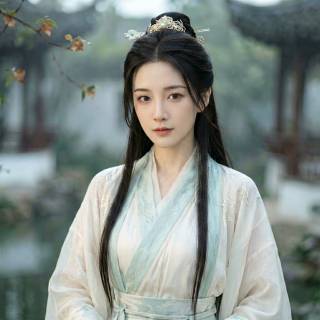
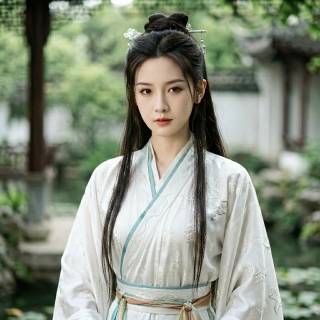
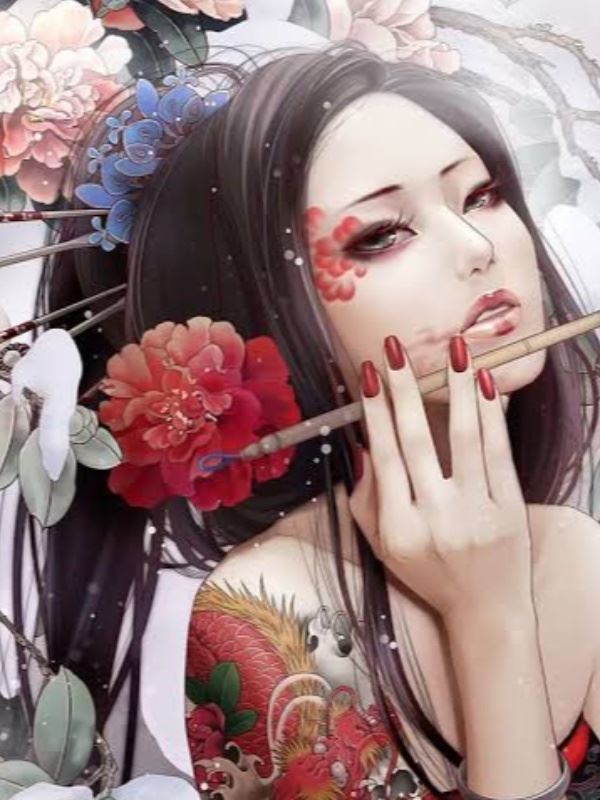
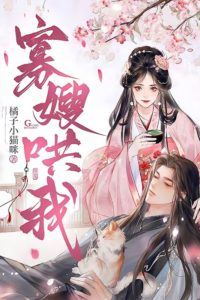
That winter night, Shen Lingyi pulled ten-year-old Wei Chengyi out of a pile of corpses. From then on, as a sister-in-law acting as a mother, she thought she would watch him take the imperial examinations, take a wife, have children, and live out a peaceful life.

Yet, he insisted on tearing all of this apart.

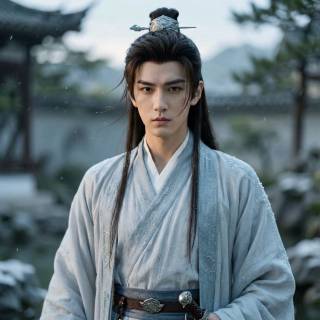
He cast aside the books of the sages and took up the sword of slaughter, returning as a young general with illustrious achievements.

Inside the ancestral hall, before all the civil and military officials, he respectfully knelt and bowed, expressing his gratitude for the grace of his widowed sister-in-law in raising him.

In a secluded place, however, he pinned her against the veranda, his scorching breath turning the tips of her ears red:

“Sister-in-law, from now on, I will protect you.”

Novel Items

More
Jewelry
A crystal clear and flawless white jade hairpin with a lotus-shaped carving at the top, worth a thousand taels. Gu Nanyin bought three of them — one for Qin Xue, one for Qiuzhi, and one for Baishao. It was the first time Qin Xue ever received a personal gift, deeply moving her.
Weapon
Half a broken arrow planted firmly in Wei Chengyi's ribs during battle. Blood flowed continuously from the wound. The military surgeon extracted the barbed arrow while Wei Chengyi remained motionless.
Armor
Wei Chengyi's dark iron armor, which he wore during battle. After removing it, his wheat-colored chest was exposed with the broken arrow wound. He later threw on his blood-stained dark armor to lead the night raid.
Item
A pouch embroidered with the character Tao, carried by Chun Tao inside her clothes containing the prescription. It was stolen by a man in a bamboo hat at Wutong Lane but Chun Tao recovered it from amidst a pile of withered leaves.
Item
Brought by a maid to calculate the value of Luo Zhen's dowry items when the Old Madam requested conversion to silver. Two older servants used it to deliberately undervalue items initially.
Item
A red ribbon worn around Li Qinghe's neck during his male ghost cosplay confession. He later puts it around Lin Xiaoyu's neck and gives it to her as a symbol of surrender, like a knight yielding to her.
Latest Release
DateGroupRelease
2026-08-11shanghai fantasy c5
2026-08-11shanghai fantasy c4
2026-08-11shanghai fantasy c3
2026-08-11shanghai fantasy c2
2026-08-11shanghai fantasy c1

Community Reviews

Rating(0 / 5.0, 15votes)
5 stars
0(0%)
4 stars
0(0%)
3 stars
0(0%)
2 stars
0(0%)
1 stars
0(0%)

Popular reviews

... Read More
I need to talk about Wei Chengyi's memories because I am not okay. The passage where he remembers that night — fifteen-year-old Shen Lingyi tying her hair into a man's topknot with a red ribbon, trembling but shielding him with her own body, giving him her only outer garment — I actually had to put the book down for a second. This is not a romantic love story, at least not yet, but the emotional bond between these two is so deeply rendered that it hits just as hard. "To make a living, she sold the white jade hairpin left behind by her mother to buy him winter cotton-padded clothes and food. To protect him, she would charge out without a care in the world, brandishing a brick with the desperate, crazed look of someone willing to fight to the death." She sold her last keepsake. She fought with a brick. For a boy who wasn't even her blood. And Wei Chengyi knows this. Every battle he fights, every wound he takes, it all circles back to her. "Because all of his thoughts and longings were right here." The pouch he risked his life to retrieve — I have a feeling that's connected to her in some way, and I'm dying to find out what it is. But here's what's also getting me: Shen Lingyi's side of this. She's been through hell — her entire husband's family massacred on her wedding night, abandoned by her own father, forced to raise a child that isn't hers, building a life from nothing. And yet when she hears the news of Wei Chengyi's victories, her heart beats wildly. Seven years. Seven years of waiting, of wondering, of sending letters that barely come. And then there's Lu Yunqi. The failed scholar who speaks unusually well, who knows the legal code, who stood up to Mrs. Wang without hesitation. He's clearly not who he says he is, and the way he looks at Shen Lingyi — the "subtle ripple" in her heart when he leaves — suggests something more is building here. I'm not ready to speculate too much, but the romantic tension is simmering. What I do know is that this story understands sacrifice. It understands that love doesn't always look like romance — sometimes it looks like a fifteen-year-old girl dragging a ten-year-old boy through snow while crying silently.
... Read More
I need to talk about the father-daughter scene because my hands are literally shaking. Shen Wenyuan shows up after SEVEN YEARS — not to see his daughter, not to apologize, but because his precious concubine's getting sent to penal servitude and he needs Shen Lingyi to fix it. And his first words? "You were born under an ill star... how could we keep you?" THE AUDACITY. The way he reduces her entire existence to a bad omen, like she's some cursed object he stored away instead of a child he abandoned. But the real gut-punch isn't the anger — it's when Shen Lingyi asks, voice so faint, "Am I your daughter? Am I your flesh and blood?" That's not a challenge. That's a wound that never healed, seven years old and still bleeding. And then she picks up the sickle. One slash. The cloth falls. "From this moment on, we are no longer father and daughter!" I cried. Not dramatic sobbing, just those two streams of tears she wiped away while feeling "immensely relieved — as if congested, stagnant blood had finally begun to flow freely." That metaphor. That is the most precise description of emotional liberation I have ever read. She wasn't being cruel. She was finally letting herself breathe.
... Read More
Okay so the memorial scene. Let me just say this: I read that part three times and I am STILL not over it. Wei Chengyi dropping to his knees, forehead hitting the floor, blood seeping out — and then he turns and kowtows BEFORE SHEN LINGYI. "Er-lang is willing to pledge his life to repay you!" My god. The power dynamic in this relationship is so beautifully complicated. On the surface, she's his sister-in-law, his elder, the one who raised him. But look at how he grips her wrist, how his gaze is "painted with the hazy, enchanting glow of the moonlight" — this isn't just gratitude. This is something far more dangerous simmering underneath. And Shen Lingyi? She's holding back SO MUCH. She knows there's more on that blood-stained cloth — "Stay away from the imperial family!" — but she hides it because she'd rather be the sharp sword than watch him destroy himself. That's not just loyalty. That's love wearing the disguise of duty. The line that wrecked me: "They were simply two people driven to a dead end, leaning on each other for warmth." Two broken people. That's the whole relationship in one sentence. No grand romance declarations, no dramatic confessions — just two survivors who refuse to let the other fall.
... Read More
The pacing in these chapters is absolutely relentless and I am HERE for it. Let's talk structure. Chapter 27-28 open with the courtroom scene—high tension, public confrontation, Wei Chengyi revealing his true identity. It's fast, sharp, almost breathless. The author doesn't waste a single word. Madam Wang's accusations, Wei Chengyi's rebuttal, Lu Yunqi's corroboration—it's a three-act play within a chapter and it lands perfectly. Then Chapter 9 (Taking a Bath) shifts gears completely. We go from the public sphere to the private, from legal confrontation to domestic intimacy. The pace slows down, becomes more languid, more sensory. Wei Chengyi arrives home with red bean soup, Shen Lingyi fusses over him, the bath scene unfolds slowly. This isn't filler—it's emotional breathing room after the courtroom explosion. But then—BAM. Chapter 10 opens with Shen Lingyi's nightmare. The pacing snaps back to high gear. Flashbacks, trauma, blood, ice, running. The author uses the nightmare to compress years of pain into a few paragraphs and it hits like a truck. What's brilliant is how the author uses Wei Chengyi's question—"Will you come with me to the capital?"—as a structural pivot. It hangs in the air unanswered at the end, creating a cliffhanger that propels us into the next chapter. The emotional question becomes a plot question. Will she go? What will she tell him? What happens when they reach the capital and the Shen family confronts them? The chapter transitions are seamless. Courtroom → home → bath → nightmare → confession → tension. Each scene flows into the next, building momentum like a river gathering speed.
... Read More
The dialogue in this text is doing SO MUCH heavy lifting and I need to talk about it. Wei Chengyi's voice is distinctive—formal when he needs to be (in court, with strangers) but soft and almost boyish with Shen Lingyi. Watch how he shifts: "Lord Chen, I am a crude man" in the courtroom vs. "Sister-in-law, I didn't expect that sweet soup shop... to still be open!" at home. The same person, two completely different registers. And that moment when he says "I really was craving that flavor"—so faint, so vulnerable. You can hear the ten-year-old boy underneath the general. Shen Lingyi's dialogue is equally layered. She's always caring, always practical—"The water is all ready"—but there's this underlying current of fear, of someone who's been running for decades. When she asks "Will you be going to the capital?" her voice is casual but her thoughts are racing. The subtext is screaming. The most powerful dialogue is actually the silence. Wei Chengyi calling the water "cold" when it's not—that's not about temperature, that's about stalling, about not wanting the moment to end. And Shen Lingyi fleeing because she saw too much? No words needed. The action speaks louder than any dialogue could. Magistrate Chen's lines are perfect comic relief—"You are the magistrate, don't ask me. I only know how to wage war and kill people." Wei Chengyi's refusal to play the court game is both funny and devastating. He's a soldier, not a politician, and he's tired of pretending. The author's narrative voice is restrained but incredibly precise. No purple prose, no over-explanation. Just clean, sharp sentences that let the emotions speak for themselves. It's the kind of writing that trusts the reader to feel without being told how to feel.
... Read More
The stakes in this story just went from personal to existential and I am TERRIFIED for everyone involved. Let's break down the conflicts. On the surface: Madam Wang vs. Shen Lingyi over property and identity. Simple, right? Wrong. Because underneath that is the Wei family massacre—a crime so powerful that it required erasing an entire family from history. The Shen family knew. They participated. And now Wei Chengyi is alive, and he's investigating, and he's getting closer to the truth. The external stakes are clear: if Wei Chengyi reveals who he is in the capital, the people who destroyed his family will try to kill him. Again. But the INTERNAL stakes are what make this hurt. Shen Lingyi is torn between protecting Wei Chengyi and telling him the truth. She knows the truth could consume him—"Would he disregard his own life to drag the culprit down into mutual destruction?" She's seen that fire in him. She knows what he's capable of. And then there's the romantic conflict—the most dangerous one of all. Wei Chengyi loves Shen Lingyi, but not just as a sister-in-law. Shen Lingyi loves him too, but she's terrified of what that love means. She chose to save him over her husband. She's been living with that guilt for years. And now the lines are blurring. The climax of these chapters isn't a battle or a revelation—it's Wei Chengyi asking "Will you come with me to the capital?" and Shen Lingyi forgetting to answer. That moment of silence? That's the sound of everything falling apart. The stakes aren't just life and death anymore. They're about what happens when the people you love become the people you can't have.
See all reviews

Characters

See all characters

Custom lists

Oops…There is nothing here.