Summary

... Read More

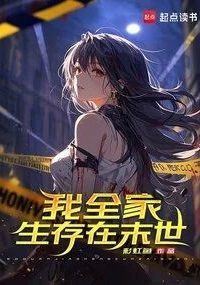
At the sound of gongs and drums, the Apocalypse begins. Mommy becomes a zombie, Daddy has a supernatural ability, and the baby has both parents.

No food? Clear the wilds, reclaim the land, and seek out seeds.

No water? Slay beasts, claim territory, and build a reservoir.

The Apocalypse is not the end; it is a new beginning. Life has no finish line, and happiness resides in the heart.

(Watch how the female zombie matriarch and her “delicate” husband with supernatural abilities overcome every obstacle and brave every storm in the Apocalypse.)

Novel Items

More
Item
A virus that turns people into Zombies. Jiang Yi deliberately infected herself with it as a gamble to awaken an ability. Dou Dou's mother turned into a Zombie after being infected.
Supplies
Items distributed to households containing substances that repel the Infected. A specific scent tested on people of different ages, blood types, body types, and body odors causes the infected to actively avoid those carrying it. Factories are producing at maximum capacity for distribution.
Supplies
Supplies guaranteed to be delivered to every household by authorities during the pandemic. The government promises scheduled supply distribution as shops and supermarkets close.
Item
Messaging app used by Qin Ya and Shi Jianchuan. Qin Ya found that Shi Jianchuan had deleted her and put her on his blacklist. Her messages showed a red exclamation mark indicating she needed to be added as a friend first. Later Shi Jianchuan removed her from his blacklist in front of her.
Document
Required by property management for every household to report the number of people at home, take temperatures, and note any abnormalities. There is also a section for reporting relatives in other cities who can apply to return home via emergency railway and highway routes.
Event
Television and phone announcements broadcasting government notices about the zombie virus outbreak. All channels show the same content. The internet comes under control with only official propaganda being uploaded. Users can no longer post or upload new content.
Latest Release
DateGroupRelease
2026-08-11shanghai fantasy c10
2026-08-11shanghai fantasy c9
2026-08-11shanghai fantasy c8
2026-08-11shanghai fantasy c7
2026-08-11shanghai fantasy c6
2026-08-11shanghai fantasy c5
2026-08-11shanghai fantasy c4
2026-08-11shanghai fantasy c3
2026-08-11shanghai fantasy c2
2026-08-11shanghai fantasy c1

Community Reviews

Rating(0 / 5.0, 14votes)
5 stars
0(0%)
4 stars
0(0%)
3 stars
0(0%)
2 stars
0(0%)
1 stars
0(0%)

Popular reviews

... Read More
Okay so let me just say this right out: Feng Qingyue is the kind of protagonist I want to be. Like, she reads apocalypse novels and when the real thing hits, she doesn't panic—she immediately starts calculating. The scene where she's breaking down the government's news broadcast one point at a time? Chef's kiss. She's not just surviving, she's analyzing. And Shu Hanguang? He's not a weak husband or anything. He's genuinely trying. He goes out, he negotiates, he buys hardware, he learns to install security doors. The moment where he shows his hand with the price and she pretends to stay calm while internally cursing? That's a married couple for you. That's real. But what really got me is how Feng Qingyue treats Shu Dabao. When her daughter asks if they're going to war, Feng Qingyue says 'there's no hurdle in life that can't be overcome' and then sighs inwardly because she knows her kid has never experienced real hardship. She wishes she could stuff everything in her mind into her daughter's. That line hit me hard. It's not just a mother being protective—it's a mother who knows exactly how brutal the world is about to become and feels guilty that her child is sheltered. And then there's the extended family dynamics. Shu Hanguang calling his sister with advice but getting shut down by his brother-in-law? Feng Qingyue's brother Feng Qingyang being restricted from posting on social media? The whole web of relationships feels lived-in. They're not just a nuclear family floating in a void—they're connected to parents, siblings, in-laws, and those connections matter. When the elderly keep asking when they can return and Feng Qingyue can only say they're waiting, you feel the helplessness. One thing that bugs me though: does Shu Hanguang ever get a moment to show his own depth beyond being the 'supportive husband who follows her lead'? He's competent, sure, but I want to know what HE would do if Feng Qingyue wasn't there to guide him. What's his instinct? I guess we'll find out.
... Read More
I need to address the absolute comedy gold that is Shu Hanguang's dialogue throughout this entire arc, because the author has given him this one very specific voice and I am here for it. Half-fevered, possibly infected, and his first coherent thought is: "Hungry… want meat." Not "I love you." Not "take care of our child." Not even "I'm scared." Just straight-up: I want meat. And the parents on the other end of the video call are like, okay, well, at least he's alive then. Able to eat and sleep—clearly a healthy, living person. This is how you write a character who stays human in inhumane circumstances. While everyone else is having existential crises, Shu Hanguang is worried about his dietary needs. It's dark humor, sure, but it's also deeply humane. The fact that he can still joke, still want things, still be himself—even while lying in bed with a fever that might kill him—makes him feel real in a way that no amount of heroic dialogue ever could. And Feng Qingyue's voice is equally distinct. She's sharp, practical, occasionally exasperated. "Just wait until you're better—I'll deal with you then" to her sick child. She rolls her eyes at her husband's dramatic gestures but cups his face instead. Her dialogue is never flowery. It's functional, sometimes snappy, always loving underneath. The parents' dialogue is where it gets interesting. Father Feng and Mother Feng are patient, quiet, watching their granddaughter stare blankly at a tablet. "The child is still feeling unwell. Don't scare her." They're walking on eggshells in their own daughter's crisis. And the Shu parents? They go from worried to embarrassed to almost deferential—"speaking to Feng Qingyue in gentle, pleading tones, even sounding somewhat deferential. After all, their son was in her care." The dialogue across all these characters never sounds the same. Each family has their own rhythm, their own way of expressing love under pressure. The author isn't just writing dialogue—she's writing personalities.
... Read More
There's this one detail that keeps haunting me: the property management hands out vegetable seeds and tells everyone to grow food on their balconies. In the middle of an apocalypse narrative, this is the author's way of saying 'life goes on.' It's not a grand gesture—no speeches about human resilience, no dramatic speeches about the indomitable spirit. Just... seeds. And the family exhausting themselves carrying soil, filling garbage bags, planting on their balcony while the world outside is turning into a horror show. It's domestic apocalypse survival, and that's the whole point. The story keeps coming back to this idea that ordinary people doing ordinary things is what actually matters. Feng Qingyue's conclusion: 'the protagonists of this world are not the arrogant, all-powerful heroes but the masses. Only when everyone is united can a truly peaceful world be created.' That's not just a plot statement, that's the thesis. The recurring motif of doors and barriers—reinforcing them, locking them, worrying about who can get in and who can't—mirrors the emotional barriers too. The grandparents can't visit, the couples are far from their families, Shu Hanguang is terrified of infecting his own daughter. The virus exposes every distance, every separation, every unspoken fear. And yet they stay. They lock the doors but they don't lock each other out.
... Read More
Okay so let me just say this right away—the way the government handles information in this story is actually terrifyingly realistic. Day Three they're pumping out 'how to protect yourself' content all day to keep people locked down and panicked, then BAM, night hits and they drop the revelation that infection isn't automatically a death sentence. Some people get antibodies, some get enhanced abilities, some mutate into zombies. The classic 'suppress first, uplift later' tactic. Feng Qingyue literally calls it out: 'This tactic of suppressing first and uplifting later... I'm speechless.' And she's right. It's manipulative, sure, but also... smart? The author clearly understands how information control works in a crisis. The plot doesn't just throw zombie tropes at you—it builds a logical progression from 'something weird is happening' to 'oh god the neighborhood is infected' to 'our kid has a fever and we can't go to the hospital.' Each escalation feels earned. The fact that Shu Hanguang was the first to get infected last time and is now so convinced he'll be next? That's not just drama, that's character-driven plot motivation. He's reinforcing doors because he thinks he's doomed. The plot threads are tight.
... Read More
Let me start with something that bothered me and then I realized it's actually brilliant: the title of Chapter 3 is 'Controlling Public Opinion.' Not 'The Outbreak' or 'The Emergency.' The chapter is literally about information control. And that's the theme, isn't it? This isn't just a zombie story. It's a story about what happens when the narrative of reality is controlled by those in power. The emergency kit itself is a symbol. It's supposed to save you, but it contains mosquito repellent. The instructions are absurd but potentially life-saving. It represents the gap between what the government tells you and what you actually need to survive. And Feng Qingyue—the novel reader—understands this gap because she's consumed similar stories before. She knows the tropes. She knows that the official narrative is always incomplete. Then there's the muted group chat. The fact that residents' messages stopped appearing while property management notifications continued is a chilling detail. It's not just 'the internet is down.' It's selective silencing. The government controls what people can see and say. Feng Qingyue realizes this immediately and panics because she's isolated from the informal networks that matter. The rule against killing Infected is another layer. On the surface, it's about preserving human life. But Feng Qingyue's interpretation cuts deeper: 'This means there's still hope. It might even mean a vaccine is close to being developed.' She reads the subtext. The government isn't just managing a crisis—they're managing the story of the crisis. And the story they're telling is 'we're handling this, don't panic, don't kill the Infected, wait for help.' But the real question the book keeps asking is: what happens when the story falls apart? When the narrative control fails? That's the tension underneath everything. The family reinforcing their doors isn't just physical preparation—it's preparation for the moment when the official story no longer matches reality.
... Read More
I need to talk about Shu Hanguang for a second because this man is absolutely unhinged in the best way. He's the type who will hammer steel bars into your bedroom door 'just in case' while also being the guy who 'usually requires Feng Qingyue's scolding to get near water.' The contrast is everything. And then there's the moment when Dabao gets sick—he just sits there on a stool, face grim, wishing he could take her place. That's not action-hero energy, that's just a dad who's terrified and powerless. Meanwhile Feng Qingyue is the calm one giving orders: 'You lock both doors. If you hear anything unusual, don't open them.' She's planning for the worst while he's already there. Their dynamic is so grounded. They're not some perfect couple—she calls him out, he grumbles, they bicker about whether to go to the hospital—but when it matters, they're a unit. The scene where both sets of grandparents video call and immediately know something's wrong? 'If not for the screen separating them, Feng Qingyue felt they could have crawled through and torn her apart.' That line made me laugh and wince at the same time. Parents. Every parent.
See all reviews

Characters

See all characters

Custom lists

Oops…There is nothing here.