Summary

... Read More

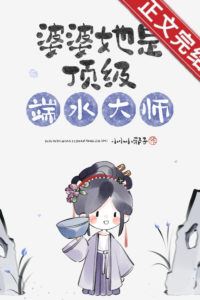
Zhao Xian transmigrated into two novels written by the same author. The two novels were sister stories; one was a tragic novel, and the other was a sweet one.

The tragic novel told the story of the Jiang family’s eldest son and eldest daughter-in-law, a tale of misunderstandings, false accusations, miscarriage, digging out heart’s blood, and a series of other heart-wrenching and physically abusive events, followed by a “Chasing Wife Crematorium” arc.

The sweet novel told the love story of the Jiang family’s youngest son and youngest daughter-in-law, who were “Joyful Enemies” in a sweet, loving, “Two-way Rush.”

The author had a habit of writing a tragic novel that left readers heartbroken and then rewarding them with a sweet one, making people both love and hate her.

Zhao Xian was one of these victimized readers, but now, she had transmigrated.

The good news was, she didn’t transmigrate as the tragic female lead; the bad news was, she wasn’t the sweet female lead either.

She was the mother-in-law of both female leads, Jiang Zhao-shi.

Novel Items

More
Item
A token or pass used to allow servants to leave the estate. Shaoyao needed it to send Chilan out to fetch a midwife for Li Lianniang's labor.
Item
A sedan chair positioned in the courtyard of Ningxiang Hall when Gao Bin arrived to escort Luo Fu to meet the Emperor. Four unfamiliar eunuchs stood beside it.
Item
A gleaming bronze mirror that Leng Yaoda sat before after her afternoon nap, gazing at her unfamiliar yet stunningly beautiful transmigrated face.
Item
A card used by Zhao Xian to summon an imperial physician, specifically requesting a master of gynecology, to help with Li Lianniang's difficult childbirth.
Item
A rope made of long silk that Zhao Xian attempted to use to hang herself after realizing she had transmigrated into the evil mother-in-law role of an abusive novel. She hadn't even managed to put her neck through it before being discovered.
Pills
A medicine prescribed by Cui Tingyue's father's physician when she was at home, and later by the female physician Liu at Jiang Jia. Cui Tingyue claimed to have been taking these pills for her supposed illness. In the original story, it was later revealed that Cui Tingyue was pretending to be sickly.
Latest Release
DateGroupRelease
2026-08-11shanghai fantasy c10
2026-08-11shanghai fantasy c9
2026-08-11shanghai fantasy c8
2026-08-11shanghai fantasy c7
2026-08-11shanghai fantasy c6
2026-08-11shanghai fantasy c5
2026-08-11shanghai fantasy c4
2026-08-11shanghai fantasy c3
2026-08-11shanghai fantasy c2
2026-08-11shanghai fantasy c1

Community Reviews

Rating(0 / 5.0, 16votes)
5 stars
0(0%)
4 stars
0(0%)
3 stars
0(0%)
2 stars
0(0%)
1 stars
0(0%)

Popular reviews

... Read More
Okay so let me just say this misunderstanding between Zhao Xian and Jiang Heng is absolutely peak fiction. The guy comes back furious because he heard rumors about incompatible horoscopes and wants to move out after marriage to protect his future wife, and his MOM thinks HE doesn't want HER moving into HIS room. They are not even speaking the same language and neither is correcting the other because of course they're not. This is the kind of plot device that could either make or break a story and honestly I'm invested. The horoscope rumor itself is interesting too — someone deliberately planted it, which means there's an antagonist out there trying to sabotage this marriage. And Zhao Xian's internal panic about whether she's reading a pirated version of the novel? That's such a clever meta layer. It raises the stakes because if the plot has been altered, nothing is guaranteed anymore. The original story was supposed to be a sweet romance and now it's turning into something else entirely. I want to know who's behind this and what else has been changed.
... Read More
I have so many feelings about Jiang Heng right now. On one hand, he's genuinely devoted — he heard rumors about incompatible horoscopes and his immediate reaction isn't to abandon her, it's to find a way to protect Lu Zhaoying from his mother's interference. That's actually really sweet when you think about it. He's willing to live separately, to sacrifice proximity to his family, just so his wife doesn't have to deal with drama. But then he's also completely blind to the fact that his mother has no idea what he's talking about. 'Why on earth would I move into your room?' and Zhao Xian just... sits there. The contrast between him and his brother Jiang Wei is also worth noting — Jiang Wei is described as expressionless and rigid, while Jiang Heng is handsome, carefree, full of heroic spirit. But now that same heroic spirit has curdled into this stubborn anger directed at the wrong person. And Zhao Xian, meanwhile, is trying so hard to play the role of the supportive mother while internally screaming because she remembers the original plot and this isn't in it.
... Read More
The stakes in this passage operate on three different levels and they're all escalating simultaneously. First, there's the interpersonal conflict between Jiang Heng and Zhao Xian — a son accusing his mother of trying to invade his marital space, a mother who has no idea what's happening. Second, there's the romantic conflict between Jiang Heng and Lu Zhaoying — rumors of incompatible horoscopes threatening their engagement, and someone actively working to sabotage them. And third, and this is the most interesting one, there's the meta-conflict between Zhao Xian's knowledge of the original plot and the altered reality she's now living in. If this really is a pirated or tampered version of the novel, then every outcome is uncertain. The horoscope slip is the physical evidence of this altered plot — it's something that shouldn't exist in the original sweet romance but now exists in Zhao Xian's reality. Who planted it? Why? And what other changes might be lurking? The suspense here isn't just about whether the couple will end up together, it's about whether Zhao Xian can even trust the story she thought she knew.
... Read More
The way this novel builds its world is so subtle and effective. We're firmly in a wealthy aristocratic household, but the author never stops to explain the social hierarchy or the estate layout. Instead, we learn everything through movement and sensation. Yunzhu Yuan is the central location, and it functions as both sanctuary and battlefield. It's where Li Lianniang recovers, where Zhao Xian moves in to protect her, where the baby learns to trust. But it's also where the original plot's poison seeps in—Jiang Wei's absences, Cui Tingyue's fainting spells, the way a second-class maid's injured hand can shatter an entire day's peace. The sensory details are what make this world feel alive. The brocade box with pearl-wrapped hairpins, rubies as stamens, sapphires adorning wings. The medicinal meals prepared in a small kitchen. The snow melting into spring, requiring funds for new clothes. The dustpan filled with shattered porcelain, edges stained with blood. These aren't decorative details—they're the texture of daily life in this household, and they ground the emotional drama in something tangible. But the most powerful worldbuilding moment is almost invisible. When Zhao Xian thinks about how the original host disliked Li Lianniang the most, but now she's repeatedly slighting the eldest young master for Li Lianniang's sake, the reader understands the entire transformed social ecosystem in a single observation. The power structures haven't changed—there are still masters and servants, concubines and wives, mothers-in-law and daughters-in-law—but the emotional currents have reversed. And the author keeps reminding us that this world has its own logic. Jiang Wei buying gifts for Cui Tingyue with household funds isn't just romantic favoritism—it's a financial arrangement that affects the entire household economy. Zhao Xian notices this while reviewing the account books, which shows how the personal and the political are inseparable in this world. Every scene is a window into a fully realized society where a single act of kindness or cruelty ripples through everyone connected to it.
... Read More
The pacing in this batch is absolutely masterful, and I want to talk about how the author controls the emotional temperature like a conductor. We start in Chapter 27 with something almost cozy—Zhao Xian amusing the baby, the household running smoothly, Li Lianniang recovering. There are gifts, jewelry, family moments. Jiang Wei even addresses Zhao Xian as "Mom" instead of the colder "Mother," which signals a genuine shift in the family dynamic. The prose feels warm, the scenes flow naturally, and you almost want to settle in for a comfortable read. Then Chapter 7 hits like a truck. The chapter title alone—"The Closed Loop of Three in an Abusive Story"—is a structural pivot. We go from domestic warmth to the brutal mechanics of how abuse operates in this world. The scene with the kitten, the shattered vase, the blood, the fainting—it all happens in quick succession, and the pacing accelerates until you're breathless. What's remarkable is how the author uses the baby as a pacing device. Jiang Shuxiu's crying and silence mark the emotional beats of each scene. When Zhao Xian holds her, the baby cries. When Li Lianniang holds her, she's calm. When Jiang Wei holds her, she cries again—until Zhao Xian reframes the situation and the baby settles. The baby's reactions are the metronome of the entire chapter. And that ending—Zhao Xian arriving at Zhuqin Yuan to hear Jiang Wei's cold reprimand, the maid with the bloody hand, the shattered porcelain stained with blood—this is where the pacing becomes almost claustrophobic. Every detail is sharp, every image is visceral, and the reader is left with the same sense of injustice that Zhao Xian feels. The chapter doesn't resolve; it accumulates. And that's what makes me need to read the next batch immediately.
... Read More
Okay so I just finished this batch and I am SHOOK. The whole premise of this story is so cleverly subversive—normally in these transmigration novels, the protagonist tries to avoid the plot, but here Zhao Xian is actively REWRITING it from the inside. Remember how in the original book, Li Lianniang was blamed for everything, ended up depressed, vomiting blood, while Cui Tingyue fainted at the sight of a spilled vase? That entire trajectory is being dismantled chapter by chapter and I cannot stop watching it happen. The most brilliant plot move Zhao Xian makes is moving into Yunzhu Yuan herself. On the surface, it looks like a mother-in-law causing trouble, but it's actually the opposite—she's creating a protective bubble around Li Lianniang during her most vulnerable time. And the baby! Jiang Shuxiu recognizing her grandmother instead of her own father is such a small detail but it signals the entire power dynamic has shifted. The child is literally choosing who deserves her trust. But then—AND THIS IS THE KILLER MOMENT—when Jiang Wei runs off because Cui Tingyue fainted, Li Lianniang's expression turns bitter and Zhao Xian feels like a punctured balloon. That single sentence about the vitality she'd nurtured deflating instantly? Chills. Absolute chills. It's not just plot mechanics; it's the emotional core of the story right there. The original novel's tragedy wasn't just about bad things happening—it was about a woman's spirit being systematically crushed, and Zhao Xian is fighting that current with everything she has. The author also dropped this line that changed everything for me: "The Closed Loop of Three in an Abusive Story." That's the chapter title and it's not just a label—it's the thesis. The abuse isn't random; it's a system, a circuit that keeps feeding itself. And breaking it requires more than kindness; it requires dismantling the entire architecture of how these characters relate to each other. I'm obsessed with where this is going.
See all reviews

Characters

See all characters

Custom lists

Oops…There is nothing here.