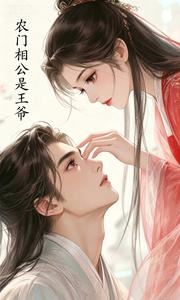
My Farmer Husband Is a Prince
+Add to Custom List
Genres:
Novel Info

Summary

... Read More

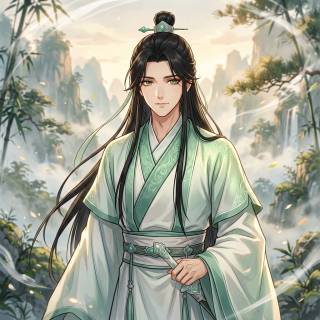
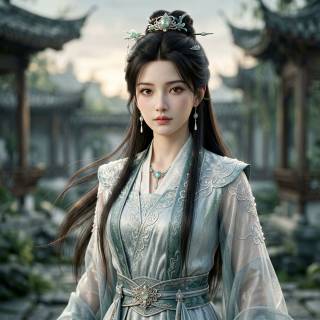
[A ruthless prince disguised as a country farmer vs. a reborn concubine’s daughter] In her past life, Xiao Guiwan cured Prince Ning’s incurable illness but was trapped in the deep palace, dying alone. Reborn, her elder sister vies to marry Prince Ning, forcing her to marry Ye Daniu, a farmer in the countryside. Xiao Guiwan smiles: farming, raising chickens, a spiritual spring in her spatial realm—away from palace intrigue, carefree and unrestrained. On her wedding night, she’s drugged and forced to consummate her marriage with her farmer husband. Fine, this man is handsome, strong, and physically capable; she’s not at a loss. But she gradually discovers—this “Ye Daniu,” who only knows how to plow, can write military strategies, set up battle formations, and the calluses on his fingers aren’t from hoeing at all. Until one day, the general’s banner descends, and thousands of soldiers kneel in welcome: “Welcome, Prince Zhenbei!” Xiao Guiwan: ??? What happened to the peasant girl? Even more devastating—this man is also reborn; in his past life, he was the war god killed by her elder sister. The two reborn drama queens looked at each other in bewilderment: So in this marriage, who is lying to whom?

Novel Items

More
Documents
Two bright yellow imperial marriage decrees delivered by Eunuch Li. One from Prince Zhenbei Mu Hanhe and one from Prince Ning Mu Hanzhao, both requesting a daughter of the Xiao family. The Emperor allowed the Xiao family to decide and permitted the daughters to decline.
Treasure
A jade bracelet left by Grandmother specifically for Guan Xuxu. It is the only keepsake Grandmother gave her and holds deep sentimental value. Guan Ruirui is wearing it and refuses to return it, claiming it belongs to all daughters of the Guan family. Guan Xuxu prophesied that she would make Guan Ruirui return it with her own hands.
Arcane Treasures
A mystical world hidden inside the jade bracelet. Contains two mu of spirit farmland, one spirit spring, and one thatched cottage. Level One with potential to upgrade by accumulating spiritual energy through planting, harvesting, and completing space missions. The spirit spring water has healing properties, as demonstrated when it relieved the pain from Xiao Guiwan's cut. The soil is loose, fertile, and infused with spiritual energy.
Item
A plaque hanging on the edge of a wooden bed in the stone chamber with the name 'Yun Niang' written on it, revealing the madwoman's name.
Materials
Water from An Ruoyan's space that made her skin white and tender as a peeled egg after drinking it.
Treasure
A bracelet with a subtle line on the inside that Xiao Guiwan discovered. It has the ability to vanish from her hand and reappear on a table inside the thatched cottage when she wills it.
Latest Release
DateGroupRelease
2026-08-11shanghai fantasy c15
2026-08-11shanghai fantasy c14
2026-08-11shanghai fantasy c13
2026-08-11shanghai fantasy c12
2026-08-11shanghai fantasy c11
2026-08-11shanghai fantasy c10
2026-08-11shanghai fantasy c9
2026-08-11shanghai fantasy c8
2026-08-11shanghai fantasy c7
2026-08-11shanghai fantasy c6
2026-08-11shanghai fantasy c5
2026-08-11shanghai fantasy c4

Community Reviews

Rating(0 / 5.0, 10votes)
5 stars
0(0%)
4 stars
0(0%)
3 stars
0(0%)
2 stars
0(0%)
1 stars
0(0%)

Popular reviews

... Read More
The title of this chapter alone is a masterclass in narrative voice. A wild pigeon plucked its own feathers so you could roast it. Who says that? Only someone who is simultaneously affectionate, amused, and completely unimpressed by their husband's terrible lies. The dialogue between Mu Hanhe and Xiao Guiwan is so deceptively simple. Look at this exchange: Are you asleep? Not yet. Her finger slid from his arm to the back of his hand before slipping between his fingers, intertwining them. Her hand was much smaller than his. Soft. Cool. Mu Hanhe tightened his grip around her hand, gently stroking the back of it with his thumb. She hummed in satisfaction and inched even closer until her whole body nestled against his. That is not exposition. That is not narration telling us they are in love. That is action and sensory detail doing all the work. And then the pigeon scene. Do we raise pigeons now? A wild pigeon. It flew in last night. I roasted it. Was it good? Not bad. Next time you roast one, save me a bite. I would like to taste wild pigeon too. All right. The feather was spotless. No blood. No singed edges. What kind of considerate wild pigeon would pluck out its own feathers before flying in so you could roast it? Yeah, right. This is the kind of internal monologue that makes you laugh out loud. The author lets us in on the joke while the characters play their roles. The narrative voice shifts seamlessly between intimate third-person limited and that sharp, knowing internal commentary. And Xiao Shuwan's section? Her dialogue is almost entirely internal—calculating, ambitious, cold. The people I have sent to spy on Xiao Guiwan had reported that the couple had already consummated their marriage. Good. The wife of a mud-legged peasant would spend the rest of her life buried in the dirt. The contrast in narrative voice between the two women is staggering. One lives in warm domesticity with hidden depths. The other lives in gilded ambition with hidden rot.
... Read More
Let me just say this upfront: the stakes in these chapters are TERRIFYING and I couldn't look away. On the surface, the external conflict is clear—Xiao Shuwan vs. Prince Ning's estate, vs. Nanny Lu, vs. the Empress, vs. the servants who gossip about her. She's been stripped of her wedding ceremony, her husband, her dignity, and her status. Every institution around her is working against her. But the real conflict—the one that keeps me up at night—is internal. Xiao Shuwan knows something we don't fully understand yet. She has memories of a previous life where Xiao Guiwan married Prince Ning and eventually became Empress. She's convinced that if she can just replicate Xiao Guiwan's path—cure his illness, wait patiently, care for him well—she'll achieve the same outcome. But the text keeps showing us that things are DIFFERENT now. The prince's mother is dead. Nanny Lu treats her differently. The Emperor won't even see her. The foundation she's building her entire strategy on is already cracking. What does she stand to lose? Everything. Her reputation, her family's political standing, her own sense of self. If she fails, she's not just a failed princess consort—she's a woman who stole someone else's destiny and lost. The maids' gossip captures this perfectly: "Who told her to insist on marrying into this estate?" She chose this. She fought for this. And now she has no one to blame but herself. But here's what makes the suspense so gripping—Xiao Shuwan isn't backing down. That final mirror scene where she tells herself "you'll be the one who wins" isn't hope, it's a declaration of war. She's not just fighting for the throne now, she's fighting for her right to exist in this world. And the fact that we don't know if she'll succeed or fail, if her previous-life knowledge will save her or doom her, keeps every chapter turning. The question isn't whether she'll win—it's what she'll become in the process.
... Read More
I need to process what I just read. The wedding night scene. THE WEDDING NIGHT. Xiao Shuwan sits on that beautifully decorated bed—dragon and phoenix candles, embroidered quilt with blessings for countless descendants, mandarin ducks on the pillows—and she waits. And waits. And waits. An entire hour. The candles burn halfway down. Her legs go numb. Her neck throbs from the phoenix crown. And then Nanny Lu shows up with a tray of PLAIN RICE PORRIDGE like this is some kind of joke. "Where is His Highness?" she asks, and the desperation in her voice just— I can't. The image of her sweeping that bowl onto the floor, the porcelain shattering, her veil slipping to the ground where a shard slices a long tear through it. That torn veil. That's the moment everything breaks for her, isn't it? The red veil that was supposed to symbolize her new life, her new status, her future as Empress—ripped apart by a piece of broken china on the floor of an empty bridal chamber. And then she lies alone on that massive bed, the space beside her empty, the quilt soft as clouds but cold as ice, and she repeats those words over and over like a prayer: "He'll be grateful to me... He'll treat me well... He'll make me Empress..." It's so heartbreaking because you can feel her trying to convince herself. She's not just lying to Cui'er or the servants—she's lying to herself. And that final image of her smiling at her own reflection in the bronze mirror, described as "strangely sinister" beneath the candlelight—that's when you realize something has shifted inside her. This isn't just a woman wronged on her wedding night. This is a woman who's decided that no matter what it costs, she will win.
... Read More
There's so much going on beneath the surface of these chapters, and I want to talk about the symbols because they're carrying the real weight of the story. The empty wedding bed is the most obvious one. Dragon-and-phoenix candles, embroidered quilt with blessings for countless descendants, mandarin ducks playing upon the water—all of these symbols of marriage, fertility, partnership, and future prosperity are present, but the bed is EMPTY. The symbols are there but the reality is absent. It's a visual representation of everything Xiao Shuwan expected versus everything she actually got. The props of a happy marriage are set on stage, but the actors never show up. The torn red veil is even more specific. In Chinese wedding tradition, the red veil symbolizes the bride's transition from her family to her husband's family, her new identity, her modesty and her future. When it slips to the floor and gets sliced by a shard of broken porcelain, it's almost prophetic—her new identity is being destroyed before it even begins. The veil that was supposed to protect and conceal her is now ruined, and she's exposed. The gold hairpin from the Empress is another loaded symbol. It's described as having "decent enough" craftsmanship but an "utterly ordinary" design—obviously something taken casually from the palace storerooms. Compare this to the full crimson-gold jewelry set Xiao Guiwan received. One hairpin versus a complete set. It's not just a gift—it's a statement about Xiao Shuwan's worth in the eyes of the imperial family. And then there's the bronze mirror at the end. Xiao Shuwan looks at her own reflection and sees a young, beautiful woman consumed by ambition. The mirror reflects not just her face but her transformation. The smile described as "strangely sinister" beneath the flickering candlelight suggests that something has already changed inside her. She's not the same woman who arrived at the estate half a month ago. The ambition that drove her to steal this marriage from Xiao Guiwan is now consuming her entirely, and the mirror is the first place we see the cost of that consumption.
... Read More
The pacing in these chapters is absolutely masterful and I need to talk about how the author builds tension through what I can only describe as a systematic dismantling of Xiao Shuwan's hopes. Let me break it down because it's too good. Chapter 11 starts with the sedan chair arrival. Already wrong—the matchmaker's awkward laughter, the understated excuse about the prince being unwell. Then the hall: eerily quiet, no guests, no banquet, just servants watching with expressionless faces. The wedding ceremony is skipped entirely. Nanny Lu presides instead. This is the first layer of humiliation. Then the bridal chamber. The empty bed. The hour-long wait. The porridge. The shattered bowl. The torn veil. This is the second layer, and it's brutal because it's so intimate—this is supposed to be the most personal night of a woman's life, and she gets nothing. Chapter 12 escalates it further. The next morning, she goes to the palace ALONE. No husband by her side. The Empress gives her a single, plain gold hairpin instead of the full crimson-gold jewelry set Xiao Guiwan received. Less than half the welcome. And the dismissal—less than the time it takes to drink a cup of tea. Chapter 13 adds the gossip. The maids talking behind her back. "What a joke." "Poor thing." "Who told her to insist on marrying into this estate?" Each chapter peels back another layer, and by the end of the third chapter, Xiao Shuwan is completely isolated—no husband, no status, no allies, just her own ambition keeping her going. The author controls reader engagement like a surgeon. Every scene is worse than the last, but it never feels rushed because each moment is given space to breathe. The repetition of "in her previous life" acts as a structural anchor, constantly reminding us of what Xiao Shuwan expected versus what she's actually getting. And that final mirror scene—"Xiao Shuwan... you'll be the one who wins"—is the perfect cliffhanger because it transforms her from victim to something far more dangerous.
... Read More
The dialogue in this text is so sharp I kept stopping to appreciate it. Let me just highlight a few moments that made me sit up straight. First, Nanny Lu's line: "Since you've only recently arrived and are unfamiliar with the rules of the estate, it naturally falls to this old servant to teach you." The word "teach." That's not hospitality, that's domination wrapped in polite language. And Xiao Shuwan's response—she just grinds her teeth and says nothing. The silence speaks volumes. Then there's the Empress, who is honestly scarier than Nanny Lu in a different way. Her voice is "warm, yet unmistakably distant." She says "Take good care of Prince Ning. Once his health improves, come together to pay your respects to His Majesty." Sounds caring, right? But Xiao Shuwan hears the hidden meaning: the Emperor has no desire to see you. Come back only when your husband is fit enough to be presented before him. That's not warmth—that's a door being closed in her face while smiling. And the maids! "The princess has been here for half a month, and His Highness hasn't even seen her once. What a joke." "I heard she spent her wedding night alone. Poor thing..." "Poor? Who told her to insist on marrying into this estate?" The casual cruelty here is devastating because it's so everyday, so normal. These women aren't even being malicious—they're just stating facts, and the facts are brutal. Xiao Shuwan's own internal monologue is where the real voice shines though. The repetition of "He'll be grateful to me... He'll treat me well... He'll make me Empress..." reads like a mantra, and you can hear the cracks forming in it. The author's narrative voice stays locked in Xiao Shuwan's perspective the entire time, which means every insult, every slight, every moment of isolation hits us directly. There's no buffer, no distance. We're trapped in her head with her, and that's what makes the dialogue so powerful—it's not just what's said, it's what's left unsaid.
See all reviews

Characters

See all characters

Custom lists

Oops…There is nothing here.