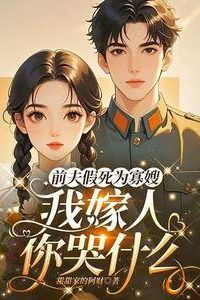
“My Ex-Husband Faked His Death for His Widowed Sister-in-Law—Now That I’ve Married Someone Else, Why Are You Crying?” - Reviews

“My Ex-Husband Faked His Death for His Widowed Sister-in-Law—Now That I’ve Married Someone Else, Why Are You Crying?”
+Add to Custom List
Sort
Add review
... Read More
"Jiaojiao, remember this. From now on, anything Mom buys belongs to you. No one is allowed to take it. And if anyone dares to, Mom will beat them with the fire poker!" I need to sit down. I literally need to sit down right now. This is the moment. This is the moment where everything changes for Su Jiuyue and her daughter. Because before this, she was just surviving—just trying to keep her head above water in a life that had been systematically stripped from her. But here, holding her daughter's hand at the supply cooperative, buying fruit and cake and candy and fabric, she's making a declaration. Not just to the world, but to herself. The detail about Jiaojiao's question—"If we buy food… will Uncle and Brother Tao Tao come and take it away again?"—hit me like a truck. This poor child has been conditioned to believe she doesn't deserve anything. That her brother gets everything, that she has to give it up, that her own father's family treats her like an afterthought. And Su Jiuyue hearing this, feeling that needle in her heart, vowing to protect her daughter—this is pure, unfiltered maternal love. I also loved the scene where Su Jiuyue squats down and wipes Jiaojiao's tears after the whole Li Yanchuan incident. She forces a smile even though she's shaking. She tells her daughter "the bad man is gone" like she's shielding her from something even more terrifying than she is. And then Jiaojiao's response—"When Jiaojiao grows up, I'll help you beat up all the bad guys!"—made me ugly cry into my pillow. The mother-daughter bond in this story is everything. It's not romantic, it's not the typical love story setup, but it's arguably more powerful. Su Jiuyue's entire motivation isn't revenge—it's Jiaojiao. Revenge is only half of it. The other half is making sure her daughter grows up healthy, happy, and safe. That line at the end—"As long as Mommy is here, no one will ever take what's ours"—is the kind of thing that stays with you. And honestly, the fact that Su Jiuyue can be this fierce and ruthless to Li Yanchuan but so tender with her daughter? That contrast is what makes her character so compelling. She's not just a victim who got her revenge. She's a mother who finally found her voice.
... Read More
Let me just talk about the doorway for a second because I think the author is doing something really intentional here. The entire confrontation between Su Jiuyue and Bai Lili happens at a threshold. Su Jiuyue inside, blocking the way. Bai Lili and Taotao outside, performing their script. Then Li Yanchuan arrives and stands on the other side of that same doorway. "A single doorway now separated them by a gulf that could never again be crossed." That line. That. Line. The military compound setting is so vividly rendered too—the rationing era, the fabric coupons, the kitchen duty starting at four in the morning, the black and grey and white children's clothes. It's not just background, it's pressure. Every detail reminds you that resources are scarce, that every piece of cloth matters, that survival is a daily calculation. When Su Jiuyue considers throwing away Li Yanchuan's old clothes and then decides against it because "throwing it away would be such a waste"—that's the era speaking through her. The nighttime scene in Bai Lili's house is equally atmospheric. Hard wooden beds, thin clothing between bodies, the darkness amplifying every sensation. The cold river water Bai Lili describes, the freezing winters, the physical ache of poverty that shaped her body. It's all sensory and specific. And then Su Jiuyue's house at dawn—quiet, domestic, the smell of preparation, the mundane ritual of getting children ready. It's a different kind of atmosphere entirely. One of resilience and routine, not manipulation and darkness.
... Read More
There's so much symbolism packed into these early chapters. The urn itself—holding the ashes of a man who is actually alive—is the central symbol of deception. Li Yanchuan holds his own ashes while pretending to be his brother, a literal representation of his false identity and stolen life. The gold bars hidden under the bed are fascinating too. They represent the brother's foresight and love, a safety net left for his sister when he couldn't be there. The fact that Li Yanchuan complained about the bed being given to Jiaojiao instead of his own son, and Su Jiuyue had to buy Li Tao a new bed to keep the peace—that irony is brutal. He thought he was being generous but was actually rejecting the very protection meant for his family. The password Su Jiuyue chooses—770623, the date she died in her previous life—is a powerful symbol. She's marking her death and rebirth, carrying that trauma with her as she fights for a new future. The blue handkerchief with white flowers used to wrap her valuables is another nice touch—something beautiful protecting something precious, just like Su Jiuyue herself.
... Read More
The pacing in these chapters is absolutely relentless in the best way. Let me walk through the rhythm: Chapter 21 opens IN MEDIO RES—we're already past the fight, right into Yunsheng's panic spiral. No exposition dump, no "here's what happened." Just raw emotion. Then Su Jiuyue enters and immediately pivots the energy with food. The candied sweet potato scene is pure warmth, almost saccharine, and that's the point—it's the calm after the storm, and the author lets us BREATHE here. But then—night falls. The mood shifts. Yunsheng can't sleep. The fever hits. And suddenly we're back in tension territory, except this time it's a different KIND of tension. It's not external danger; it's the terrifying vulnerability of a child's body failing while his mind runs through old nightmares. The transition to Chapter 22 is where I want to really praise the structure. We go from the most intimate scene (Su Jiuyue holding a feverish child all night) to a completely different tone—the military compound gossip mill, the matchmaking Aunt Fang. It's jarring, and that's intentional. The author is telling us: peace is temporary. The world keeps coming. What's clever is that the Aunt Fang scene doesn't feel tacked on—it's the natural consequence of everything that came before. Huo Tingxuan's public support changed the social dynamics, which means Su Jiuyue is now visible in a new way, which means now she's a target for matchmakers. Every plot beat earns the next one.
... Read More
There's something really fascinating about how the author uses the military family compound as a setting. It's not just a backdrop—it's practically a character in itself. The way doors fly open, the way neighbors gather, the way everyone knows everyone's business—it creates this incredibly vivid sense of community life in a military residential area. I keep thinking about the opening scene at the post office, with Su Jiuyue holding that brand-new passbook. The afternoon sun is "dazzling"—and that word choice is so deliberate. After everything she's been through, after living in darkness and fear, the sun is literally blinding because she's been so used to the shadows. And then she walks out of the post office with Jiaojiao, heading to the supply cooperative, and the whole world feels different. Brighter. More possible. The supply cooperative scene itself is so rich with period detail. Two cans of fruit, malted milk powder, sponge cakes, milk candies, red corduroy fabric with tiny white flowers. The sales clerk's judgmental stare—"Her husband just died, and she's already spending money so lavishly?"—this is such a sharp observation about how society treats widows, especially young ones who are supposed to be grieving quietly and modestly. And then the return to the compound. The courtyard is "fairly quiet" because most people are at work, but that quiet is immediately shattered by Su Jiuyue's scream. The way the author describes the doors flying open, the military wives coming out of their afternoon naps, the children stopping their games—it's cinematic. You can literally see this unfolding like a film sequence. The visual of Li Yanchuan standing there with his hand still suspended in midair, face alternating between pale and flushed, is one of the most vividly described moments of humiliation in recent memory. And Political Commissar Zhang arriving with his grim expression and two administrative officers behind him—this is the kind of detail that makes the world feel alive and real. Even the ending image of Huo Tingxuan in that olive-green military jeep, gold stars on his shoulder boards gleaming in the afternoon sun, is so carefully composed. It's like the author is painting each scene with deliberate attention to light, color, and movement.
... Read More
So here's the thing about this book that I didn't expect to happen—I found myself absolutely devastated by a sneeze. "Achoo!" Su Jiuyue sneezes seven or eight times in a row and her first thought is: Who's talking about me? And I just... fell apart. Because we KNOW it's Li Yanchuan. We KNOW he's lying there in the dark, holding Bai Lili, thinking about Su Jiuyue's cold hands. He can't even admit it to himself, but his body is reaching for her across the distance. The scene between Li Yanchuan and Bai Lili in that dark room is so emotionally complicated I can barely process it. He's moved by guilt, by a sense of debt, by her manufactured suffering. But when he feels her body trembling and presses close to warm her, there's this electric moment where he realizes—this isn't brotherly warmth anymore. This is something else. And the fact that he immediately thinks of Su Jiuyue's hands being cool too, then FORCES himself to stop thinking about her? That's not just denial, that's self-preservation. "The only thing he should be thinking about now was how to repay the debt he owed the woman in his arms." I'm sitting here like—DEBT? She's manipulating you and you're calling it DEBT? Meanwhile Su Jiuyue is up at 4 AM packing for kitchen duty, making clothes for children from her dead husband's old garments, and she's the one who gets treated like an afterthought in someone else's love story. The emotional whiplash of this book is unreal.
... Read More
The stakes in this story are incredibly high and they escalate fast. Su Jiuyue has already lived through a tragedy where she lost everything—her reputation, her mental health, her daughter, and her life. Now she's back with a second chance, and the conflict is immediate: Li Yanchuan and Bai Lili are actively trying to steal her money and manipulate her. But the stakes go beyond just money. It's about survival, about protecting her daughter from the same fate, about exposing the truth without getting herself institutionalized again. The scene where someone searches the drawers while Su Jiuyue pretends to sleep is pure tension—what if they find the empty boxes? What if they realize she's onto them? And then there's the larger conflict: Li Yanchuan is living under his brother's identity, which means he's committing fraud, possibly desertion, and he has a whole new family (Bai Lili and Taotao) depending on him. If his past catches up, everyone falls. Su Jiuyue knows this, and she's playing a dangerous game. The compensation money, the bank accounts, the gold bars—all of it is both literal and symbolic currency in her fight for justice.
... Read More
The dialogue in this passage is absolutely vicious and I love it. Su Jiuyue's voice is so distinct—cold, precise, economical. "If I'm not mistaken, Political Commissar Zhang already told us this afternoon that our two families are not to have any further contact." That's not just dialogue, that's a legal document. She's citing authority, setting boundaries, ending the conversation before it begins. And then the birth weight line—"he weighed eight jin when he was born. Our Jiaojiao was only four jin!"—that's the kind of line that gets quoted in book clubs for months. Bai Lili's voice is almost more impressive because it's so deliberately performative. "Sister-in-law, he's just a child—you've watched him grow up. He was born prematurely, remember?" The parenthetical reminders, the feigned vulnerability, the way she modulates her voice to sound wronged: "Please, just take pity on the child, will you?" This woman is an actress and the stage is her entire life. Li Yanchuan's dialogue is the most interesting because it changes. Early on he's vague, almost absent: "What do you think? How did I treat Jiuyue and Jiaojiao before?" But by the end, his words carry weight—he's asking real questions, even if he's asking them wrong. "Then why does Jiaojiao always hide when she sees me?" That line breaks my heart because it's genuine confusion from a man who's been blind. The narrative voice itself is sharp and observant, never sentimental. It describes Li Yanchuan's complicated emotions without judging them, which makes the judgment land harder.
... Read More
I need to talk about Yunsheng because THIS boy. Oh my god. The way the author writes him—every physical detail is a window into his trauma. His lips pressed white from biting them. His hands turning ice cold. The way he instinctively tries to pull away from Su Jiuyue's touch like she's electric. This isn't a child who's had bad luck; this is a child who has been systematically taught that affection equals danger. And then Su Jiuyue does the most powerful thing: she doesn't ask him to speak. She doesn't demand gratitude. She just holds his hand and says "you did the right thing." Two sentences. That's it. But for a kid whose entire existence has been built on being a burden, being told his protective instinct was RIGHT—no, that it was HEROIC—that shatters something open in him. The fever scene is where it really hits me. He's mumbling "Mom, don't leave" in his sleep, and Su Jiuyue holds him all night. But here's the thing that got me—she moves him slightly farther from Jiaojiao afterward. "Call her selfish if they want." That single line tells us everything about Su Jiuyue. She's not a perfect saint; she's a mother making hard choices, and she KNOWS it. She won't let anyone make her feel guilty for prioritizing her own child. And Jiaojiao! The way she automatically puts the biggest piece of candied sweet potato in Yunsheng's bowl—"Big Brother, eat this one! This one has the longest sugar strings!" She doesn't see him as a burden. She sees him as HER brother. That's the family they're building, piece by piece.

Leave a comment

You must be logged in to leave comments. or