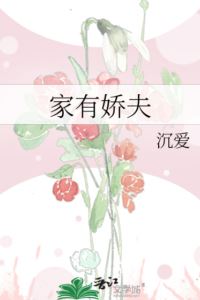
My Delicate Husband
Novel Info
  • Author:
  • 沉爱
  • Status:Ongoing

Summary

... Read More

When Wen Lan woke up, she discovered that she had somehow crossed into a bizarre world where the roles of men and women were completely reversed. To make matters worse, her memories were hazy and incomplete. After spending several days in a luxurious mansion listening to the household gossip, she finally learned that she had been married for years, and her lawful husband was a masked CEO.


They said the CEO was cold-hearted and ruthless, a domineering man who could ruin others with a single word.


They said they even had a baby together.


They also said… the CEO was the one who gave birth.


A few days later, Wen Lan looked at the tall man standing before her, a baby in his hand. Suppressing the shock in her heart, she hesitantly asked,


“My husband?”


Lu Zhixing: …


“Yes. Good morning, Wife.”


A gentle, beautiful heroine with overwhelming alpha energy × A deeply devoted, patient, and calculating CEO.


A different kind of romance, a modern alternate-world matriarchal story with a female lead and male love interest.


Content Tags: Devoted Love, Sweet Romance, Modern Alternate World, Mysticism

Main Characters: Wen Lan, Lu Zhixing

Novel Items

More
Item
Medicine that Cheng Youyou brought to treat Mu Yu's wounds. She intended to apply it to the bite marks and burns covering his body. She had not brought any herbs specifically for burns, so she relied on her healing powers instead.
Food
Ling Yu obtained some candy and gave it to Ye Wuyou while they were working in the fields. It helped melt away much of her fatigue.
Garment
A black cloak-like garment found in the wardrobe, hidden under Wen Lan's pillow. She uses it to disguise herself at night to sneak out of the mansion.
Container
A glass bottle filled with colorful folded paper stars, sealed with a wooden cork, and a triangular tag hanging from its neck. It sits on the study desk in the pale blue children's room. The tag bears the name Wen Wu and a childish heart drawn by the child.
Tag
A small triangular tag attached to the glass bottle, with Wen Wu written in Wen Lan's handwriting and a tiny childish heart drawn beneath it. Indicates the child's affection for Wen Lan.
Flowers
A type of rose bouquet with delicate pink-tinged blooms that men in this world seem especially fond of. Wen Lan considers buying them as a gift.
Latest Release
DateGroupRelease
2026-08-11shanghai fantasy c7
2026-08-11shanghai fantasy c6
2026-08-11shanghai fantasy c5
2026-08-11shanghai fantasy c4
2026-08-11shanghai fantasy c3
2026-08-11shanghai fantasy c2
2026-08-11shanghai fantasy c1

Community Reviews

Rating(0 / 5.0, 37votes)
5 stars
0(0%)
4 stars
0(0%)
3 stars
0(0%)
2 stars
0(0%)
1 stars
0(0%)

Popular reviews

... Read More
Can we just take a moment to appreciate Uncle Xiao because this man is a national treasure? He shows up with a fruit platter and immediately becomes the most emotionally intelligent person in the entire novel. His dialogue is so distinct from everyone else — he speaks in this warm, slightly fussy, deeply affectionate register that makes him feel like a real person and not a plot device. The scene where he tells Wen Lan about Little Miss also liking strawberries? "Little Miss likes strawberries too, just like you." Said with the energy of a man who is genuinely trying to set up a friendship between a mother and daughter like he's playing matchmaker for a kid's playdate. And then he adds, "You can play with Little Miss. You two can be friends," in this coaxing, doting tone that made me laugh out loud. The man is out here trying to engineer maternal bonding like it's a science experiment and I respect it. But the dialogue that really got me was Lu Zhixing's. His lines are deceptively simple. "What would Wife like for dinner?" On the surface it's just a question. But the narrative frames it as a test — "The truth was that he had no idea what his wife liked to eat anymore. He had only been testing her." That's dialogue doing double duty. He's performing normalcy while internally panicking, and the reader is the only one who knows. The narrative voice itself is also worth mentioning — it's close third person, drifting between Wen Lan and Lu Zhixing's perspectives, and it has this quiet, lyrical quality that never feels overwrought. The author trusts the reader to feel things without spelling them out. Which is rare. So rare.
... Read More
On the surface, this chapter has almost no conflict. It's a husband and wife in a bedroom, applying medicine, being awkward. But the underlying stakes are enormous and I want to talk about why. Wen Lan's external conflict is clear: she's in a world that's "absurd and bizarre," her parents might not be who she remembers, and there's this Leng Feng character who seems to hold some kind of key to understanding this place. Su Qing's arrival raises the stakes immediately—who is he, why is he desperate, and what does he know about Leng Feng? But the real conflict is internal, and it's happening on two levels. For Wen Lan, it's the conflict between her old self and her new reality. She doesn't trust her own strength anymore. She had a nightmare that felt like it belonged to someone else. For Lu Zhixing, the conflict is even more painful—he's clearly deeply in love with his wife but he's also timid, hesitant, almost afraid to take up space. When he comes to her room at midnight, what is he risking? Rejection? Her noticing how different he is? The chapter makes you care about these outcomes not through grand drama but through the accumulation of tiny, aching moments. That's how you build real stakes.
... Read More
The visual storytelling in these chapters is actually insane when you stop to appreciate it. Let me just start with the opening image: Wen Lan telling a story to Wen Wu, the little girl falling asleep on her lap, and Wen Lan stopping mid-sentence just to watch her breathe. The detail about the blanket being tucked securely and Wen Lan's fingertips hovering near the girl's reddened eyes—this is cinematic. You can literally see the lighting, the quiet, the tenderness. Then you cut to Lu Zhixing in his office, and the atmosphere shifts completely. The 'white glow of the computer screen' reflecting on his face, the 'rhythmic tapping of keys,' the 'flashes of blue light.' This is a man surrounded by technology and surveillance, isolated in darkness. The contrast between Wen Lan's warm domestic scene and Lu Zhixing's cold digital lair is not accidental—the author is building two worlds that are about to collide. And that sofa scene! The sunlight falling through the window, the book forgotten in Lu Zhixing's hand, the way the memory overlays onto the present. The author writes: 'A book rested in his hand, long forgotten as his fingers held it loosely.' That detail about the forgotten book is everything—it tells us this man has sat in this exact spot before, in this exact light, with this exact woman, and the memory is so vivid it physically overlays the present moment. The worldbuilding detail about multiple husbands being legal for women but the system still being 'backward' is also fascinating. It's a society that has technically advanced but culturally hasn't caught up, and that tension between civilization and tradition is woven into every scene.
... Read More
Let me just say — the opening scene where Wen Lan is standing outside the servants' kitchen in the freezing cold, listening to men gossip about clothes and makeup, is one of the most atmospheric passages I've read in ages. The night chill seeping into her body, her stiff legs, the way she presses herself against the window like a ghost. And then the reversal of gender norms hits you through the dialogue itself. These are MEN talking about the mistress's beauty, her clothes, her makeup — and Wen Lan is just standing there in the dark, taking it all in. The author doesn't explain the worldbuilding through exposition dumps. You LEARN about this reversed-gender society by overhearing conversations, by noticing the Adam's apple concealed beneath Lu Zhixing's collar, by watching a petite man get swept into a princess carry on a third-rate romance drama. The villa itself is described with this eerie perfection — the towering trees, the broad lawns, the gigantic fountain bubbling ceaselessly day and night. It's beautiful but also slightly suffocating, like a gilded cage. And the bedroom scene where Wen Lan watches the television past midnight, surrounded by gray and black clothing, feeling that oppressive heaviness in her chest — it's so visually striking. The contrast between the warm golden bedside lamp when Lu Zhixing puts Dudu to sleep versus the cold moonlight in Wen Lan's room tells you everything about who belongs where in this house.
... Read More
Let me tell you about the stakes in this chapter, because on the surface nothing happens and underneath EVERYTHING is on fire. The external conflict is almost invisible. Su Qing is staying at the villa. He's thin, nervous, smells like mist roses. That's it. But the INTERNAL conflict? Oh, the internal conflict is a whole ecosystem. Lu Zhixing's wrist is injured—he can't even carry his daughter properly without Wen Lan noticing. "Your wrist hasn't healed yet. Don't carry her anymore." He hides it under a silver cuff button. He hides his emotions behind thick lashes. He hides his jealousy behind a composed expression. This man is a vault and every door is locked. But the real stakes are in that rose scene. Wen Lan picks mist roses. She keeps them. She plans to give him something better next time. And Lu Zhixing sees the vase and his mood darkens. Why? Because Su Qing smelled like the same flowers. Because his wife went into the garden that early morning and came back with flowers she didn't give him. Because something about this situation feels like betrayal, even though nothing has actually happened. "Threads of gloom quietly gathered within them, hidden so deeply that no one could glimpse what lay beneath." And then Wen Wu—this child who has already lost something we don't fully understand—asks the question that unravels everything: "Do you love Daddy?" And Wen Lan can't answer. Not because she doesn't know, but because the answer is complicated in ways a six-year-old shouldn't have to process. The stakes here aren't about life and death. They're about whether two people who clearly care about each other can ever figure out how to actually be honest. The cliffhanger isn't an action beat. It's a child crying. And that's somehow more devastating than any explosion could be.
... Read More
There's this one moment where Wen Lan looks up at the 'luxurious crystal chandelier overhead' and suddenly feels like 'a kept husband living off someone else's wealth.' That single image does SO much work. It's not just describing the house—it's capturing her entire emotional state in one glance upward. The contrast between the two families is painted so clearly. The Wen family of Wujiang City: 'nothing more than an ordinary wealthy family,' built over decades, mom started from scratch. Then the Lu family: 'one of Shang City's most prestigious old families,' spanning real estate, finance, entertainment, medical, education. 'Strongly supported by the state.' The gap isn't just money—it's generations of entrenched power vs. new money. And Wen Lan is sitting in THEIR house, under THEIR chandelier, trying to process that her legal husband is basically a CEO-tier patriarch. The toy room scene is also gorgeous in its simplicity. Wen Lan watching Wen Wu play, the child 'drenched in sweat,' the quiet villa, Uncle Xiao replacing flowers like it's just another Tuesday in this enormous house. It feels lived-in. Not like a set, but like a real home where people actually exist. The cartoon channel playing in the background while Wen Lan searches Qiandu—those small details make the world breathe.
See all reviews

Characters

See all characters

Custom lists

Oops…There is nothing here.