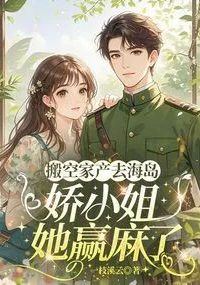
Moving All Her Assets to a Remote Island, the Pampered Young Lady Won Big
Novel Info

Summary

... Read More

The fair-skinned and beautiful Qiao Yu transmigrated into a book, unexpectedly becoming the “cannon fodder” daughter of a capitalist in a period novel. In the original story, her stepsister steals her fiancé, and her scumbag father plans to empty the family assets and flee to Hong Kong with his wife and other daughter, leaving Qiao Yu behind to take the fall. Familiar with the plot, Qiao Yu sends a report letter to expose the affair between her stepsister and her fiancé, sending them both to the Great Northwest for reform! When her scumbag father and stepmother try to empty the family fortune, Qiao Yu beats them to it, opening her Spatial Dimension to sweep the old mansion and Western-style house clean!

Due to her status as a capitalist’s daughter, she is forced to head to an island to fulfill a marriage agreement. People look down on her, thinking she is too delicate to do any labor? She outwits the wicked rascals, tears down the “green tea” and “white lotus” pretenders, and amazes everyone by catching fish and beachcombing with her bare hands! When natural disasters strike, she becomes the hope of the entire village by relying on the food stored in her Spatial Dimension! She originally thought her cold-faced, tough-guy husband would dislike her because of her identity, but to her surprise, the man dotes on her to no end after their marriage.

Novel Items

More
Treasure
A jade bracelet left by Grandmother specifically for Guan Xuxu. It is the only keepsake Grandmother gave her and holds deep sentimental value. Guan Ruirui is wearing it and refuses to return it, claiming it belongs to all daughters of the Guan family. Guan Xuxu prophesied that she would make Guan Ruirui return it with her own hands.
Arcane Treasures
A vast open space inside the Jade Pendant with pleasant temperature, fresh air, a flowing spring with mist, and fertile land. The spring water has rejuvenating and healing properties. Meng Yao can enter it at will and bring objects like pillows into it. She plans to use it to improve her life and her parents' lives.
Document
A detailed record of Xia Xing'er's dowry brought by Chunliu. Shows that over three years, 45,843 taels, 2 mace, and 45 wen in cash alone were used to subsidize the General's Manor. The shops, estates, and items her parents privately gave her remain untouched. Xia Xing'er uses this to plan reclaiming her belongings.
Materials
Coupons used to purchase food items during this era. Xu Xi received them from her mother and used them at the supply and marketing cooperative to buy flour and rice.
Item
Coupons left by Jiang Tian's father, totaling five feet, which she used to buy cloth at the supply co-op.
Coupons
Ration coupons for oil in 1970s China. Qiao Zhenhua gave Qiao Yu fifty jin of oil coupons as part of her dowry.
Latest Release
DateGroupRelease
2026-08-11shanghai fantasy c16
2026-08-11shanghai fantasy c15
2026-08-11shanghai fantasy c14
2026-08-11shanghai fantasy c13
2026-08-11shanghai fantasy c12
2026-08-11shanghai fantasy c11
2026-08-11shanghai fantasy c10
2026-08-11shanghai fantasy c9
2026-08-11shanghai fantasy c8
2026-08-11shanghai fantasy c7
2026-08-11shanghai fantasy c6
2026-08-11shanghai fantasy c5

Community Reviews

Rating(0 / 5.0, 20votes)
5 stars
0(0%)
4 stars
0(0%)
3 stars
0(0%)
2 stars
0(0%)
1 stars
0(0%)

Popular reviews

... Read More
I need to talk about the pacing in these chapters because the author absolutely knows how to build tension, and the train station sequence is a masterclass in it. Let's trace the structure: we start with Qiao Yu at the neighborhood office, which is relatively calm — lots of dialogue, paperwork, emotional beats. Then we cut to the train station, and the tempo immediately shifts. The clerk's warning — "Comrade, be careful at night" — is a tiny detail but it's the author's way of priming us. Something bad is coming. And then it hits fast. The trafficker approaches, she ignores him, he signals his accomplice, and suddenly we're in action mode. The sentence structure itself changes here — shorter sentences, quicker cuts. "The man pulled a handkerchief from his pocket, intending to cover Qiao Yu's mouth and nose from behind while she was distracted." That's a full paragraph of rising tension in a single sentence. And then she crouches, the man lunges into empty air, and the scene explodes into chaos. What I love about this sequence is how the author uses the crowd to raise the stakes. The trafficker's lie — "She's my niece! She actually dared to elope with some man" — is brilliant because it exploits the era's social attitudes. The crowd immediately turns against Qiao Yu, and suddenly she's not just fighting one man, she's fighting an entire room full of hostile onlookers. That's a layer of tension that most authors would skip, but the author includes it, and it makes the scene so much more desperate. Then the resolution comes almost too quickly — she kicks him, the staff member arrives, the accomplice flees, and she's on the train. It's efficient, but I wonder if it's almost too efficient? The confrontation is over in a few paragraphs when it could have stretched longer. But then again, Qiao Yu isn't a helpless victim — she's prepared, she's skilled, and the author makes that clear. The quick resolution actually reinforces her competence rather than undermining it. The chapter transitions are also worth noting. We jump from Qiao Yu on the train to Gu Shaoyuan receiving the telegram, and that cut is perfectly timed. It gives us a breather after the train station intensity and pivots to a completely different emotional register — quiet, restrained, almost mundane. Then we cut back to Qiao Zhenhua's meltdown, which is pure chaos again, and then finally to Qiao Yu's arrival on the island, which is a softer, more atmospheric scene. The pacing overall feels like a rollercoaster with deliberate dips. High tension, breath, high tension, breath. I found myself wanting to stay up late reading because the transitions between scenes always left me wanting more. The only part that felt slightly rushed was the boat journey — fifteen hours compressed into a few lines — but honestly, that's probably intentional. The author is telling us this is just transit, not the story itself. Did anyone else notice how the author uses physical space to control pacing? The cramped train station versus the open island shore — the settings themselves seem to breathe differently.
... Read More
I went into these chapters expecting the usual romance setup — arranged marriage, stoic male lead, pretty female lead — and while that's all there, what actually stayed with me are the quiet emotional beats that have nothing to do with romance. Let me start with the scene that wrecked me: Qiao Yu at the neighborhood office, talking about her dead mother. "A child without a mother is like a blade of grass." She says this while performing for the officials, yes, but I think the author means for us to feel that even the performance is rooted in truth. She IS like a blade of grass — blown wherever the wind takes her, vulnerable, easily stepped on. The fact that she's using that vulnerability as a weapon doesn't make the pain any less real. And then there's the moment she finishes the donation paperwork and "finally let out a sigh of relief." Just that. No dramatic monologue, no triumphant speech. She's riding her bicycle, humming a cheerful tune, heading to the train station. The relief is so understated but it's enormous. She's been carrying this house, this family, this injustice for years, and in one afternoon she's set it all down. The humming is the most honest part of the scene — you can't fake that kind of lightness. The train station encounter is intense, sure, but the emotional core for me is the clerk's warning. "Comrade, be careful at night." It's a small thing, a stranger's kindness to another stranger, and it stands in such sharp contrast to everything else in Qiao Yu's life. Her father exploits her. Her stepmother schemes against her. Her sister steals her fiancé. And this random clerk at a ticket counter takes a moment to worry about her safety. It's tiny, but it matters. "Qiao Yu felt a warmth in her heart and smiled at the clerk." That warmth is the whole novel in miniature — the world is harsh, but kindness exists in unexpected places. Gu Shaoyuan's emotional arc in these chapters is subtler but I think it's equally important. He receives the telegram and his reaction is almost... disappointed? Not angry, not upset, but something quieter. "His eyes darkened slightly." He's been waiting for this marriage arrangement to resolve, and now that it has, it's been changed without his input. The fact that he rubs the telegram letter unconsciously tells me he's not as indifferent as he pretends. He cares about honor, about being treated as a person rather than a transaction. And the Qiao family just treated him like one again. The most emotionally complex scene is probably Qiao Zhenhua and Liu Shuhong being carried out of their house. Liu Shuhong's "freshly permed hair from the morning was now a mess. At this moment, she looked nothing like a lady of high society." There's something almost tragic about that image — a woman who has spent her life performing elegance, brought low by her own greed. And Qiao Zhenhua, fuming about selling warehouse items and renting a bigger villa, is so blind to his own downfall that it's almost funny. But it's not funny-funny. It's the kind of humor that makes you sigh. I also want to talk about the island arrival scene and how it shifts the emotional tone entirely. Qiao Yu steps off the boat and everyone stares at her — "Look at her skin—it's even fairer and smoother than a peeled egg!" — and for the first time, she's not being judged by people who know her history. She's a blank slate on this island. Auntie Li's warmth, the curiosity of the islanders, the fact that no one here knows about her father or her sister or the marriage swap — it's almost liberating. The emotional register changes from constrained and tense to open and hopeful, and I think that's intentional. The island represents a fresh start, and the prose reflects that. The romance between Qiao Yu and Gu Shaoyuan hasn't really started yet — they haven't even met — but I find myself emotionally invested in the possibility of it. Not because of physical attraction (though the description of Gu Shaoyuan's sweaty tank top is not unnoticed), but because both of them seem like people who deserve someone who sees them as human beings. Qiao Yu, who has been treated as property her whole life, and Gu Shaoyuan, who has been treated as a bargaining chip in a political arrangement. Two people who have never had agency, about to be forced into an arrangement together. It's a setup that could go very wrong or very right, and the emotional tension of that uncertainty is what keeps me turning pages. I keep thinking about that image of Qiao Yu on the bicycle, humming, with the honorary certificate in her pocket. She's alone, she's going to an island she's never seen, she's marrying a man she's never met. And she's humming anyway. That's the emotional thesis of these chapters, isn't it? Resilience isn't about not feeling pain — it's about finding a tune to hum while you carry it.
... Read More
The dialogue in these chapters is doing a lot of character work without the author having to explain anything. Gu Ling's entrance is pure comedy gold. She comes back from fishing, hears the commotion, and immediately fires off: "So you're the eldest daughter of the Qiao family from Shanghai? Hah, it took you years to come find my brother. Our family doesn't want you!" That's three sentences and you immediately know everything about her — she's defensive, prejudiced, protective of her brother, and has zero chill. But she's also a teenager who just came in from working and saw her brother about to marry some city girl. She's not evil, she's just loud and unfiltered. Qiao Yu's response is equally sharp but controlled: "First, I'm not Qiao Xiang... Second, I've severed ties with the Qiao family... It wasn't me who dragged your brother into marriage, so don't pin the blame on me, thank you." The "thank you" at the end is the mic drop. It's polite on the surface but absolutely devastating. Gu Ling is left speechless. That's dialogue as weapon. Gu Shaoyuan's lines are sparse but telling. "I can only submit the marriage report tomorrow. You should rest well for now." Practical, responsible, not romantic but not cold either. He's a man who speaks in actions, not words. When he asks "Still tired?" it's the closest he gets to showing concern, and it lands because it's so understated. Liu Cuicui's dialogue is the most interesting voice in the room because there's a gap between what she says and what she thinks. She calls Qiao Yu "fiancée" with a stare that makes Qiao Yu uncomfortable, but internally she's having a full existential crisis about her reborn plans falling apart. The contrast between her sweet exterior and frantic interior is where the real voice lives.
... Read More
I need to talk about ONE specific moment because it wrecked me in the best way. Gu Shaoyuan sits down at the table after Qiao Yu had already claimed the seat. He's standing there, awkward, not knowing where to go. And then Qiao Yu — this girl he's literally just met for the first time — reaches over and brushes dirt off his sleeve. Just casually, like it's the most natural thing in the world. "There was some mud on your sleeve. I brushed it off." She was just being neat. That's it. But Gu Shaoyuan's face stays expressionless while his throat goes dry. The author doesn't even dramatize it. No internal monologue, no dramatic pause. Just: his throat felt dry. And somehow that understatement made it so much more intense. Compare that to how Gu Shaoyuan treats Liu Cuicui — he doesn't even glance at her when she positions herself between them at the table. He walks straight past her like she's furniture. Meanwhile he lets Qiao Yu touch his arm after two hours of knowing her. The physical description when they first meet also does a lot of emotional heavy lifting. She's 165cm, he's 190cm — a full head taller. He shields her from the sun without thinking about it. These are small gestures but they're the kind that build chemistry better than any love confession could at this point. Also can we appreciate that Qiao Yu's first thought comparing him to her ex is "Far better than that weakling Zhang Yu"? She's not even romantically invested yet and already she's ranking him above her past. That's the kind of casual comparison that makes you smile while reading.
... Read More
Okay so let me just say this opening is actually really smart. The whole premise of swapping marriages isn't new, but the way the author sets it up here is tight. Qiao Yu gets transmigrated right at the moment of maximum crisis—locked in her room, being pressured by her stepmother, and the original host would've thrown a tantrum and ended up dead. But our girl? She immediately calculates, assesses, and turns the tables. That's the kind of protagonist I can get behind. What I found most interesting is how the plot layers the stakes. On the surface it's a family drama about marriage swaps and inheritance, but underneath there's the political tension of 1971 Shanghai—capitalist families being investigated, the threat of sending people to remote islands for re-education. The author doesn't over-explain this; it just hangs in the background like a loaded gun. And then there's the spatial dimension reveal, which basically turns this from a survival story into a power fantasy. I'm curious whether the author will keep the spatial element balanced or let it become a cheat code that removes all tension. The plot also sets up a great ticking clock. Qiao Zhenhua is already planning to flee to Hong Kong, the authorities could investigate any day, and Qiao Yu is being shipped off to a remote island. Everyone thinks they're manipulating her, but she's the one holding the cards. That reversal is satisfying.
... Read More
I need to talk about this one moment where Gu Shaoyuan looks at Qiao Yu after she comes out of her room in that white lace nightgown. The text says his "dark eyes deepened slightly" and his "throat felt dry involuntarily." BOY. BOY. BOY. And then he just says "It's late. Go back to your room and rest." Like a man who is literally fighting for his life. Qiao Yu even notices it — she thinks he's treating her like one of his soldiers. But Yang Zhongcheng, standing behind him, sees it ALL. The narrative literally tells us: "This was serious—the regiment commander had fallen in love." I'm not even mad about the love at first sight implication. Three days and he's already this gone? Fine. I'll accept it because the way he defended her without even thinking about it — "I can only enter her room" — that's not just duty, that's devotion disguised as bluntness. And the fact that he had ALREADY told Qiao Yu he wouldn't cancel the engagement when she mentioned the Qiao family troubles? That's the real romantic move. He was protecting her before anyone else even knew there was a problem. Meanwhile Qiao Yu is over here like "he takes care of me because I'm his fiancée, it's just a sense of responsibility." GIRL. NO. You have no idea what you're sitting on. The dramatic irony is KILLING me because the reader knows he's already fallen and she's still playing it cool. Auntie Li even notices — "Commander Gu has you in his eyes" — and Qiao Yu still doesn't see it. The slow burn is real and I am HERE for it.
See all reviews

Characters

See all characters

Custom lists

Oops…There is nothing here.