Summary

... Read More

[Era + Time Travel + Space + Alternate History + Lovestruck Male Lead + Mutual First Love + Daily Family Life]

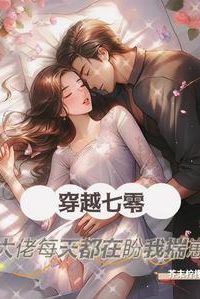
Jiang Tian, heiress to billions, accidentally transmigrates into the body of a foolish cannon-fodder girl.

The problem? Just days ago, this silly girl had nearly kissed the fragile young master of the Xie family to death, forcing them into a marriage of convenience.

On their wedding night, the original novel’s heroine is reborn. She tricks Jiang Tian into abandoning the sickly man at a mass grave in the back mountain.

But Jiang Tian refuses—she has to save this deeply devoted “male second lead” and hold tight to his powerful thigh instead.

Step by step, she goes further down the road of clinging to her man…

Until one day, the villagers of Dayang Village suddenly realize:
the “fool” isn’t foolish anymore, and the sickly young master has turned into a strong, rugged man.

Together, the two embrace a new life year after year…

Novel Items

More
Cheat Item
A personal space Jiang Tian discovered before transmigrating. It contains a spiritual spring and stored modern supplies from her previous life. The space travels with her to the new world and provides healing water and other items.
Pills
Water from a spiritual spring within An Ruoyan's space. After drinking a cup of diluted spiritual spring water, her injuries began to heal, though she felt dizzy and did not want to overdo it for fear of someone noticing her recovery.
Container
A sack used to carry Xie Chen when he was thrown into the back mountain. He was stuffed inside and clinging to life.
Crop
Profitable crop replanted after initial harvest.
Daily Item
A bar of soap from Jiang Tian's modern supplies. Considered precious in this era. Used for bathing Xie Chen and Jiang Er.
Item
A reward for taking the first bath in the beta. Moke Moke receives it after restoring her cleanliness to 100/100 by bathing in the stream.
Latest Release
DateGroupRelease
2026-08-11shanghai fantasy c30
2026-08-11shanghai fantasy c29
2026-08-11shanghai fantasy c28
2026-08-11shanghai fantasy c27
2026-08-11shanghai fantasy c26
2026-08-11shanghai fantasy c25
2026-08-11shanghai fantasy c24
2026-08-11shanghai fantasy c23
2026-08-11shanghai fantasy c22
2026-08-11shanghai fantasy c21
2026-08-11shanghai fantasy c20
2026-08-11shanghai fantasy c19

Community Reviews

Rating(0 / 5.0, 18votes)
5 stars
0(0%)
4 stars
0(0%)
3 stars
0(0%)
2 stars
0(0%)
1 stars
0(0%)

Popular reviews

... Read More
Okay so this setup is genuinely clever. You've got the female lead Jiang Ying who's reborn—she comes back to the day she first goes to the countryside, which is also the day she marries Xie Chen. Classic rebirth trope, right? She thinks she knows the script. She knows Xie Chen is supposed to be the second male lead who pines for her. She knows how the story goes. But then BAM—Jiang Tian transmigrates. She arrives an hour before Jiang Ying shows up at the mass grave, grabs the poisoned Xie Chen out of a snakeskin sack, and decides he's hers. The line that sold me was: "Why should rebirth mean she had to give way? Her husband was her husband—no one could take him." That's the core conflict right there. It's not just "female lead vs rival," it's literally rebirth versus transmigration. The original story had Jiang Ying dying miserably and being collected by Xie Chen, then getting a second chance. But Jiang Tian isn't playing by those rules. She's not even really trying to be nice—she's pragmatic to the bone. She sees Xie Chen as a "big shot" she can cling to for wealth and security. "If I raise him for a while, maybe our family will get rich." What I love is how the plot sets up Jiang Ying as the antagonist without even making her a villain. She's just... trying to follow the story she remembers. But Jiang Tian has information Jiang Ying doesn't—she knows about the rebirth itself. That's a massive advantage. The scene where Jiang Ying gets splashed with cold water while trying to spy through the door crack? Chef's kiss. It's both funny and symbolic—she's literally getting washed out of this story. And I'm already curious about the subplot with Jiang Er. The text mentions he's actually a swapped young master from the capital, and the author never explained the details. That feels like a landmine waiting to go off later.
... Read More
I keep thinking about what Jiang Tian's special space represents. On the surface it's a survival tool—food, water, medicine, a place to hide from scrutiny. But it's also her secret self, the part of her that belongs entirely to her. In a world where everything is controlled (coupons, rations, gossip, political labels), her space is the one thing no one can touch or take away. Even Xie Chen doesn't fully know its boundaries. And the ginseng root she pulls out for the chicken soup? That's not just an ingredient, that's hope made tangible. The target she builds for Jiang Er—concentric circles, a bullseye—this feels symbolic too. She's giving him something to aim for, a future worth shooting toward. Meanwhile, the poisoning mystery is this dark undercurrent, a reminder that not everything hidden is safe. Some secrets are weapons. The story keeps asking: what do we hide, and why? And more importantly, who gets to keep their secrets in a world that demands transparency?
... Read More
Okay I need to talk about Xie Chen and Jiang Tian because this author knows how to write domestic tenderness and it is devastating in the best way. Let me just say: the scene where Xie Chen pulls her into his arms after she helps him bathe? I literally stopped reading and just stared at the page for a full minute. That's how good it was. Here's the thing — this isn't some over-the-top romantic drama with dramatic confessions and stuff. It's so much better because it's built on tiny, almost invisible moments. Like when Jiang Tian kisses his cheek after asking if he minds her cousin moving in. Just a simple kiss on the cheek. But it carries so much weight because you can feel how much she genuinely considers his feelings, even though she's the one holding the household together. That's not submission, that's partnership. And then there's the bath scene. Jiang Tian brings out body wash and a bath towel from her secret space — items that don't exist in this era — and Xie Chen sniffs it and catches "the same fragrance that lingered on his wife." I mean. Come on. The author didn't even need dialogue for that moment. Just that sensory detail and I was completely wrecked. What also got me was Jiang Ying's entire emotional arc in these chapters. Her realization that Xie Chen was the one who truly cared for her — boiling water every morning, hunting meat, adding firewood at night — while she was too blind to see it because of Lin Muyu's manipulation. The regret radiating off every paragraph. "The one who had truly cared for her all along was Xie Chen." Oof. That line hit like a truck. The CP chemistry between Jiang Tian and Xie Chen isn't built on grand romantic gestures. It's built on him asking if she's sure about everything, her making sure he eats well after bathing, the way they move around each other like they've done this a thousand times. It's domestic intimacy as love language and honestly? I prefer it over any dramatic confession scene ever.
... Read More
Let's talk about Xie Chen for a second because this guy is sitting on a kang bed barely conscious and he's already doing mental detective work. While Jiang Tian is busy stripping him down to his shorts and planning how to trap him with kids, Xie Chen is over there thinking: "This Jiang Tian clearly carried secrets." He notices she's not stupid anymore. He notices the water tastes different—spiritual spring water, obviously healing him. He notices Jiang Er just... accepts all of this without question. The guy's a puzzle solver by nature, and he's already three steps ahead even though he can barely stand. But what's really interesting is the dynamic between Jiang Tian and Jiang Er. This kid is six years old, he's been through some stuff (swapped at birth, raised by a sister everyone calls simple-minded), and yet he's sharp as a tack. His skepticism toward Xie Chen feels genuine—he's protective of his sister in this tiny, grumpy way. "Using his water, eating his sweet potatoes—what a burden." That's a six-year-old's internal monologue and it's hilarious. The sibling relationship is the emotional anchor here. Jiang Tian threatens to force herself on Xie Chen and have kids to keep him tied down, and Jiang Er's response is to prop his chin in thought and go "seemed reasonable enough." That kid has seen things. Meanwhile, when Jiang Tian smacks his butt and tells him to call Xie Chen "Brother-in-law," he complies but rubs his sore backside. Perfect. And Xie Chen himself—frail, poisoned, suspicious, but clearly intelligent. The way he watches Jiang Tian, trying to figure out who she really is, while she's completely oblivious to his observations? That's tension. That's the beginning of something. He's not just a prize to be won; he's a person who notices everything.
... Read More
Okay so I just finished this chunk and I have to say—the plotting here is genuinely impressive. The author doesn't waste a single scene. Let me break down what I love. First, the main plot thread: Jiang Tian's family is preparing for winter. Simple on the surface, right? But the way the author layers it is brilliant. They're not just 'preparing for winter'—they're building a shed, making quilts, getting the marriage certificate, receiving mysterious parcels from the capital. Each small action pushes the narrative forward AND reveals character. The shed-building scene, for example, does triple duty: it shows Jiang Tian's resourcefulness, Lu Shili's connections, and Xie Chen's willingness to contribute despite his illness. That's efficient storytelling. Then there's the subplot with Jiang Ying, and honestly? It's so satisfyingly set up. She moves into the Xie family's house thinking it'll be a win, and within two days she's eating worse than before. The author drops this almost casually—Jiang Ying 'barely stepped through the door when she saw Madam Xie and Chen Meiling standing in front of her room'—and it's clear the trap has already sprung. Jiang Ying walked right into it because she's greedy and short-sighted. Classic. I love how the author uses her as a narrative mirror: every bad decision she makes highlights how smart Jiang Tian is. The marriage certificate scene is another plot gem. It's not just 'they got married'—it's woven into the winter preparation, the food distribution, the postman arriving with parcels. Everything connects. And that ending with Jiang Cheng 'plotting to find a chance to get close to Lu Shili'? The author is clearly setting up future conflict. Jiang Ying is isolated and bitter, Jiang Cheng is ambitious and scheming, and Lu Shili is sitting there completely unaware. I can already feel the tension building for the next arc. One thing that really struck me: the pacing. The author doesn't rush. Winter settles in gradually—first snow falls, then grain distribution, then New Year's preparations. It feels organic, like you're actually living through the seasons with these characters. That's rare in web novels, where everything tends to happen at maximum speed. Here, the slow burn is the point. The plot isn't just about what happens—it's about how life accumulates, day by day, until suddenly you're married, your family is warm, and your enemies are eating rat food in someone else's house. The only thing I'd note is that some transitions feel a bit abrupt—like jumping from the shed-building straight to the marriage certificate without much breathing room. But honestly, that's a minor complaint. The story knows what it wants to do, and it does it well.
... Read More
I have to stop and appreciate the atmospheric writing in this section because it's genuinely exceptional. The opening image of the first snow falling 'that very night' after they finish building the shed—this is cinematic. The author has been building toward this moment for chapters. We see them gathering materials, discussing plans, working through the day, and then BAM: snow. It's not just weather; it's narrative punctuation. The snow marks the end of one phase (preparation) and the beginning of another (survival). And the celebration dinner that follows—four dishes and one soup, sauerkraut noodles, scrambled eggs, spicy rabbit, frog stewed with potatoes, bone broth, steamed buns and flower rolls—is so vividly described that I could practically smell it. This isn't just 'they had dinner.' This is a feast that says: we made it. We're warm. We're together. The food distribution scene is another standout. 'Villagers were already lined up.' 'Food distribution day was when the whole village gathered, so this was Jiang Tian's first public appearance before everyone.' The author uses this scene to paint the entire social landscape of the village in a few strokes. We see who's watching, who's gossiping, who's envious, who's resentful. The plastic greenhouse mention, the cured pork exchange, the way people's eyes follow the three parcels—these details make the world feel lived-in and real. And the educated youth dorm scene! 'Chen Xiaocao snorted. 'There's barely any firewood. Of course we have to save it.'' The cold is almost palpable here. You can feel the shivering, the huddling, the desperation. It contrasts sharply with Jiang Tian's warm kitchen and thick quilts. The author is using temperature as a narrative tool—warmth equals safety and community, cold equals isolation and suffering. The scene where Lu Shili receives the parcels from his grandparents is quietly devastating. 'These are your packages.' 'Sis, these are from Grandpa. Let's take them home.' Three oversized parcels, delivered by postman, carrying the weight of a family that never stopped caring. The author doesn't over-dramatize it. No tears, no speeches. Just three people carrying heavy boxes home through the snow, and the reader's heart swells anyway. One detail that really stuck with me: the plastic sheeting. It's mentioned repeatedly—as a coveted resource, as a symbol of status, as something the village cadres have at their homes while ordinary villagers don't. It's a small object but it carries enormous thematic weight. In this world, a sheet of plastic isn't just material; it's survival. It's warmth. It's the difference between a family that thrives and a family that suffers. The visual contrast between the Xie family's house (once envied, now decaying) and Jiang Tian's home (once cold and bare, now warm and full) is also worth noting. The author uses setting to tell the story of who deserves what.
See all reviews

Characters

See all characters

Custom lists

Oops…There is nothing here.