Summary

... Read More

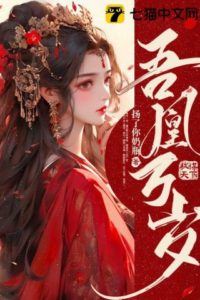
Yu Ange, the daughter of a prestigious military family, was tortured to death by enemy forces, only to discover in her final moments that she was merely cannon fodder in a book.

The female protagonist of that book claimed to be a transmigrator. With her borrowed verses and eccentric behavior, she not only stole Yu Ange’s fiancé and caused the death of the brother who doted on her most but also colluded with the enemy and betrayed the nation. Through a “romance that toppled a kingdom,” she threw the world into chaos, leaving the land drenched in blood.

Living her life over again, Yu Ange disguises herself as a man. Treading over the corpses of the transmigrator and her enemies, she carves her path into the imperial court one step at a time. Finally, she sets foot upon the dragon throne, looking down at the assembled ministers: “This seat—I want it.”

The officials kneel and cry out in unison: “Long live my Empress—”

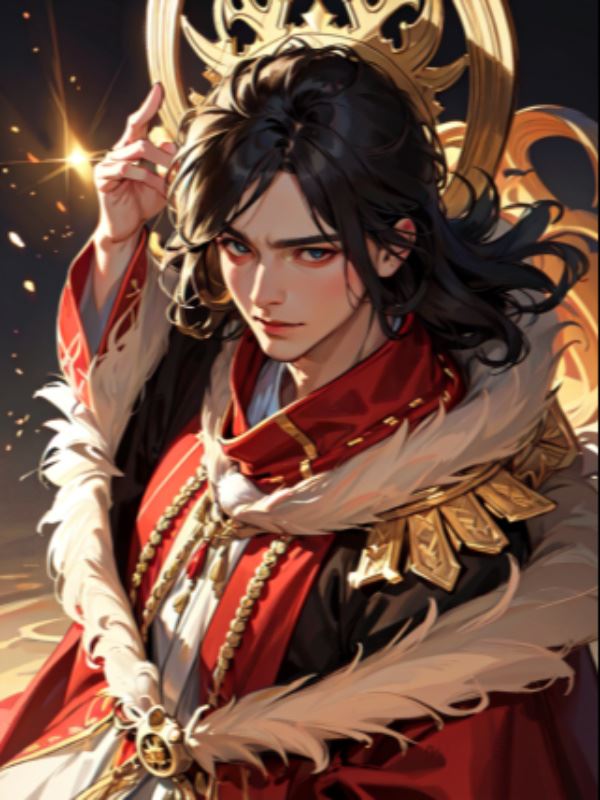
Everyone says the deposed crown prince is indifferent and detached from worldly desires, always carrying a string of Buddhist beads and dressed in white, as cold and distant as a fallen immortal.

But no one knows how many dark and windy nights he climbed through Yu Ange’s window, pinning her against the bed in a lingering embrace.

Only when the prayer beads scattered and his white robes were in disarray did he ask with bloodshot eyes: “You want the world to be at peace, you want the seas to be calm and the rivers clear… could you also want… me?”

[Cool and Capable ‘Big Bad Wolf’ Female Lead vs. Cunning ‘White Fox’ Male Lead]

Novel Items

More
Item
A mysterious book that appeared in Yu Ange's mind after her rebirth. It described the events of her past life, including how she stubbornly defended Wangchuncheng, was killed by the Liangbing under Song Jin'er's direction, and how the tragedy was summarized as 'A Love That Toppled a Kingdom.'
Weapon
Shayi's weapon in Lei Nan's team. She is described as a sexy-type single-target attacker.
Event
A past incident involving the Cen family that nearly resulted in their execution. Yu Ange's father petitioned on their behalf, remembering the noble character of the late Cen patriarch, which spared the Cen family from disaster.
Event
Cen Jiashu deceived Yu Ange's father into divulging military intelligence and sent it as a secret letter to Liangguo. This betrayal led to the deaths of seventy thousand Shenweijun soldiers and turned Wangchuncheng into a living hell.
Ornament
A delicate golden phoenix crown inlaid with kingfisher feathers and two pigeon-blood rubies for eyes. Part of the late Empress's dowry. It was her most cherished possession, reserved for the day Zhaohua would need it most.
Treasure
A string of twenty-seven white jade Bodhi prayer beads belonging to Shang Qingyan. They were personally Kaiguang (consecrated) by Master Wanshui, making them priceless and not ordinary objects. Shang Qingyan had worn them for many years and grown attached to them. The bracelet snapped during the carriage collision, scattering the beads into the mud and puddles. Yu Ange had to search through the mud to find them as compensation.
Latest Release
DateGroupRelease
2026-08-11shanghai fantasy c9
2026-08-11shanghai fantasy c8
2026-08-11shanghai fantasy c7
2026-08-11shanghai fantasy c6
2026-08-11shanghai fantasy c5
2026-08-11shanghai fantasy c4
2026-08-11shanghai fantasy c3
2026-08-11shanghai fantasy c2
2026-08-11shanghai fantasy c1

Community Reviews

Rating(0 / 5.0, 18votes)
5 stars
0(0%)
4 stars
0(0%)
3 stars
0(0%)
2 stars
0(0%)
1 stars
0(0%)

Popular reviews

... Read More
There's something deeply unsettling about how water functions in this passage. It's supposed to be purifying—Concubine Fang burns those Huangfu talismans in water to expel the demon, right? That's the whole logic. But what actually happens is the water becomes a weapon, a tool of violence. Song Jin'er is forced to swallow it, retching, tasting incense ash, wishing for death. The water that should cleanse is what nearly kills her. And then later, Yu Ange's Bulaochun wine—also a liquid, also shared at a table—becomes the instrument of her dominance. Wei Yuanming drinks it and becomes disoriented while she remains sharp. Even the sobering soup Chazi prepares becomes part of a scheme rather than actual relief. Water and liquid in this text never just do what you expect them to do. They're always carrying something else—poison, power, deception. The talisman water that fails to expel the demon is the most devastating symbol though. Because maybe Song Jin'er wasn't possessed at all. Maybe the real demon was Concubine Fang all along, and the real exorcism is Song Jin'er planning her escape. When she quietly gets up and starts taking stock of her valuables, that's the moment the ghost leaves her body. The girl who was crawling on the floor crying is gone, replaced by someone who sees the madness around her clearly and is already plotting her way out.
... Read More
The pacing in these chapters is absolutely relentless and I have zero complaints. You go from a tense family confrontation where Yu Ange nearly comes to blows with her third uncle, to a quiet moment of sisterly warning in a closed courtyard, to Shang Qingyan receiving oranges and making cryptic remarks about transactions, and then — BAM — Chapter 50 drops us into a dark room where Concubine Fang is threatening Song Jin'er. The transition from the Yu family's internal politics to the Song Jin'er subplot is handled so smoothly. One moment you're invested in whether Yu Ange will survive her family's schemes, and the next you're wondering what Concubine Fang knows that makes her scream "You are not my daughter. Give my daughter back to me!" I think what works best is how the author uses short, sharp scenes that each end on a note that propels you forward. Yu Ange walks out of Shouchuntang victorious but the chapter doesn't let you rest — immediately we're told Yu Ying is already plotting. Shang Qingyan agrees to help Yu Ange get into the yaji, but then a palace messenger arrives and his smile vanishes. And the final scene with Concubine Fang and Song Jin'er is basically a cliffhanger that makes you immediately want to read the next chapter. The Kongshan Yaji is clearly being set up as a major event, and the author is doing that careful buildup where you can feel it coming but can't quite predict how it will unfold. Ten days from now. That's the countdown ticking in the background. One thing I will say — the shift from Yu Ange's POV to Shang Qingyan's POV to the Concubine Fang scene creates a nice variety. It keeps the narrative from feeling like it's stuck in one head for too long. But I do wonder if the Song Jin'er subplot is being introduced fast enough. We only get a glimpse of Concubine Fang's threat at the end, and I'm already desperate to know what's going on.
... Read More
Okay so let me just say — the way this plot is moving is genuinely impressive. Shang Qingyan didn't even break a sweat and already took out Wei Shuimei while simultaneously damaging the Third Branch's standing with the Second Prince. That's not just clever, that's like playing three moves ahead in a game where everyone else thinks they're just watching. The whole Wei Shuimei incident is a perfect example of how this story works. She opens her mouth, says something careless about the Empress being a concubine-born daughter's daughter, and suddenly she's being beaten half to death. But the real damage isn't physical — it's political. The Second Prince is now furious at the Third Branch, and Yu Qing is scrambling to contain it. Shang Qingyan walks out of there looking like a benevolent prince who merely enforced propriety, while secretly orchestrating a family fracture. And then there's the Kongshan Yaji subplot. Yu Ange needs an invitation, uses oranges as a bargaining chip with Shang Qingyan, and the whole exchange is dripping with unspoken tension. Shang Qingyan's line — "Some transactions aren't simple exchanges of goods" — is genuinely chilling because you know he's not just helping her. He's watching her, waiting to see what she'll do. The Song Jin'er reveal about the plagiarized poems is another masterstroke. The reader knows the truth, Yu Ange knows the truth, but the entire capital thinks she's a genius. That dramatic irony is going to make the yaji scene absolutely explosive when it happens. One thing I'm curious about though — Shang Qingyan's remark about delaying Yu Ange's marriage. Is he just being vindictive over something from childhood, or is there more to it? The text says he felt "desolation" on his face before the carriage curtain fell. That's not just petty revenge energy. There's something underneath that I can't quite place yet.
... Read More
The author excels at using setting to reveal character and atmosphere. Old Madame Yu's introduction is a masterclass in visual storytelling. She wears a deep red pleated skirt with scattered flowers, her half-black half-white hair slicked with osmanthus oil, a solid gold auspicious cloud hairpin in her bun—exuding wealth but lacking grace. The description immediately tells us she is ostentatious, aging, and morally hollow. Her physical appearance mirrors her personality: ornate but harsh, with drooping eyelids and downturned mouth corners that suggest both illness and ill temper. The contrast between Xiang Yi's quiet dignity and Wei Shuimei's calculated provocation is also rendered through physical detail. Xiang Yi is plain, suppressed, financially independent through her dowry, while Wei Shuimei is beautiful, pregnant, and arrogant. The Yu residence itself feels like a pressure cooker—Old Madame Yu waiting impatiently, the wives trading veiled insults, and then Yu Ange and Shang Qingyan arriving like storm clouds. The scene where Yu Ange overhears Wei Shuimei's insult and turns to deliver her chilling question—born with a mother but raised without one—who did you say that about?—is cinematic. The timing, the positioning around the corner, the silence before the confrontation—all of it creates a scene that feels alive and immediate.
... Read More
There's something really interesting about the oranges in this story. Yu Ange sends a basket of oranges to Shang Qingyan as a bargaining chip for an invitation to the Kongshan Yaji. And Shang Qingyan is sitting there, eating a segment of orange, saying "Some transactions aren't simple exchanges of goods." The orange becomes this symbol of everything that's unspoken between them — the favors, the debts, the hidden agendas that can never be put into words. Then there's the swing in Canwei Yuan. Moss has grown on its ropes. Yu Ange stands beside it and can't remember why she built it as a child. The swing is a symbol of everything she's lost — not just memories, but the simple, innocent childhood that her brother apparently shared with her. The fact that she doesn't dwell on it because he told her those forgotten things weren't important is devastating. It shows how even her grief has been minimized, how even her most personal memories have been dismissed. The title of Chapter 19 — "Unworthy Descendants!" — is deeply ironic. Old Madame Yu calls Yu Ange and her brother unworthy, but the real unworthiness belongs to the Second and Third Branches who betray their own family for political gain. The Third Branch beats a pregnant woman half to death over a careless remark. Yu Ying plots against his own nephew. And they're the ones who consider themselves the worthy heirs? The recurring theme of disguise and identity runs through everything. Yu Ange disguises herself as a man. Song Jin'er disguises herself as a talented poet. Shang Qingyan presents himself as a benevolent prince while secretly manipulating everyone. Even the Empress's dignity is treated as a mask that can be offended or defended depending on who's watching. And the most powerful symbol might be the simplest: the teacup Yu Ange smashes in Shouchuntang. It's the moment she stops performing the role of the foolish younger brother and reveals the warrior beneath. The water splatters everywhere, the porcelain shards scatter — it's chaos, but it's also liberation.
... Read More
The pacing in these chapters is absolutely ruthless and I love it. Let me walk you through what just happened because the author does not give you a single moment to breathe. We open with assassins storming an inn at noon, searching room by room. Tension is already at eleven. Then — BAM — we cut to Yu Ange's dream sequence and suddenly we're in full-on historical tragedy mode with her corpse hanging from the city gate and soldiers raping young girls at a victory feast. This is the kind of content that makes you put the book down and stare at the ceiling for twenty minutes. But then the dream transitions seamlessly into Shang Qingyan arriving with tens of thousands of troops like some kind of silver-armored savior from the heavens, and you're like wait what is happening and then he's carrying her dead body and crying and saying "I'm sorry, I came too late" and your heart is absolutely destroyed. And then — and this is the genius part — he wakes her up and the scene shifts from epic tragedy to intimate cellar conversation in ONE breath. No chapter break, no pause, just straight into Shang Qingyan's face hovering over hers and the entire tone changes from grand historical tragedy to two people playing deadly chess with each other. Then within the next chapter you're suddenly in a political negotiation with a local magistrate and Yu Ange is laying out a three-point plan to save everyone's ass. The story moves from life-or-death action to emotional vulnerability to political strategy without ever losing momentum. The only slight drag I'd point out is the transition between Zhu Ying overhearing the conversation and Shang Qingyan's internal reaction — it's a tiny beat that could have been tighter. But honestly, the author knows exactly when to speed up and when to let a moment breathe, and these chapters are a masterclass in that balance.
See all reviews

Characters

See all characters

Custom lists

Oops…There is nothing here.