Summary

... Read More

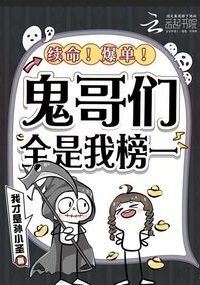
A handsome man suddenly appeared in Yu Miaomiao’s rental house, claiming the property belonged to him. He even revealed his identity as a “Soul Ferryman” who guides the dead, informing her that her Life Span would end tonight. Looking at her hungry pet dog, Yu Miaomiao clung to the Soul Ferryman’s leg, tearfully begging for just a few more days to find her beloved pet a new home.

Helpless, the Soul Ferryman offered a suggestion: she could “borrow” more Life Span by fulfilling the final wishes of wandering souls. Though she only intended to survive for a few more days, she never expected a never-ending stream of souls to seek her help. Yu Miaomiao became so busy she barely had a moment to rest. Not only did she manage to stay alive, but she also made a fortune.

Meanwhile, the Underworld “corporate slave’s” performance metrics skyrocketed, and the two became the perfect cohabiting partners. As their daily routine of fulfilling wishes unfolded with both tears and laughter, the cold Yellow Spring Road was unexpectedly transformed into a new path to riches by her!

Novel Items

More
Concept
A metaphysical concept representing a person's remaining lifespan. Yu Miaomiao borrowed three days of Life Span from a recently deceased grandmother by fulfilling her unfinished wish. The Soul Ferryman mentioned that if you don't die on the scheduled day, you will die the next day.
Currency
Currency used in the underworld. The Soul Ferryman has a monthly mortgage of 200,000 Hell Bank Notes for the house he bought. Yu Miaomiao offered to burn some for him but he declined.
Treasure
Heavy, gleaming gold jewelry left by the deceased grandmother to Yu Miaomiao. The grandmother could not take worldly possessions with her and did not want to leave them to her unfilial son. Yu Miaomiao sold the gold for 5,000 yuan.
Document
The document the Soul Ferryman showed Yu Miaomiao proving he bought her house. Yu Miaomiao initially thought the landlord sold the house without telling her.
Item
An electric scooter that Lu HuaiChuan rode to the market to buy eggs while staying at Shen Simo's home in Meilong Village.
Item
A black bag containing the ashes of the Wen family's eldest daughter (Wen Yue). Cheng Yong'an delivered it to Gong Chen on behalf of Gong Hengye. Gong Hengye claimed it was according to Wen Yue's final wish to scatter her ashes into the sea.
Latest Release
DateGroupRelease
2026-08-11shanghai fantasy c12
2026-08-11shanghai fantasy c11
2026-08-11shanghai fantasy c10
2026-08-11shanghai fantasy c9
2026-08-11shanghai fantasy c8
2026-08-11shanghai fantasy c7
2026-08-11shanghai fantasy c6
2026-08-11shanghai fantasy c5
2026-08-11shanghai fantasy c4
2026-08-11shanghai fantasy c3
2026-08-11shanghai fantasy c2
2026-08-11shanghai fantasy c1

Community Reviews

Rating(0 / 5.0, 11votes)
5 stars
0(0%)
4 stars
0(0%)
3 stars
0(0%)
2 stars
0(0%)
1 stars
0(0%)

Popular reviews

... Read More
I cannot stop quoting lines from this book because the dialogue is genuinely funny. 'That woman is busy setting up the venue right now'—said about leaking scandalous videos like it's a wedding. 'I think you're just a liar!' 'I didn't lie to you. I thought when you said take care of it, you just meant feeding it...' The comedic timing in these exchanges is perfect. And Yu Miaomiao's internal voice is so relatable. Her thought about the deceased woman's explicit videos: 'It made this unmarried young woman blush and her heart race.' She's dead already but still embarrassed. The AI-generated theme song lyrics are unhinged in the best way: 'If the original wife kicks the bucket, even better / Yo yo / The mistress gets promoted.' Who wrote that? Yu Miaomiao apparently, and I respect it. The dialogue never feels staged or overly dramatic even in the emotional moments. When she's talking to Maodou on the bench, it's just a girl saying sweet things to her dog, and that's more powerful than any monologue. The narrative voice matches Yu Miaomiao's personality—quick, observant, slightly sarcastic, but with a soft center.
... Read More
Let me just say this: the opening chapter is a masterclass in how to establish stakes immediately. A man in her house, her dog not barking at him, a mirror that doesn't reflect him—three paragraphs and I already know something is profoundly wrong. Then he drops "your Life Span ends today" and I was hooked. The electrocution-by-water-heater detail is terrifyingly mundane. This isn't some dramatic death by dragon or assassination—this is a faulty appliance in a rental apartment. The banality of it makes it so much worse. But what really keeps the tension alive is the ticking clock. Three days. Four hours to dig a grave at midnight. The grandmother's sons buried her with her abuser "to save trouble." Every task Yu Miaomiao undertakes has real consequences—if she fails, she dies. If she succeeds, she gets three more days and maybe a gold bracelet. The stakes are always clear and always immediate. The external conflict is obvious (survive!), but the internal conflict is what makes me genuinely care. Yu Miaomiao isn't afraid of death itself—she's afraid of what happens AFTER death. Not to her, but to Maodou. She's already accepted her fate and is just trying to make sure her dog is okay. That shift in perspective is brilliant because it raises the emotional stakes even higher. We're not just watching someone try to survive; we're watching someone who has already stopped fighting for herself and is fighting for someone else. And the Soul Ferryman's own conflict—stuck in a job he hates, pressured by underworld bureaucracy, unable to help her scatter her own ashes because "against the rules"—this adds another layer. He's bound by the same system that's killing her. The rules that protect him also prevent him from giving her the one small kindness she asks for at the end of Chapter 2. That moment where he smiles faintly and says "Don't worry—you'll have some soon enough" when she says she has no money... chills. Absolute chills. Because you know he's right, and you know it's not going to be easy, and you're already desperate to read the next chapter.
... Read More
The pacing of this section is wild. One minute you're watching Yu Miaomiao carefully plan a corporate exposure operation with the precision of a heist movie, and the next she's on a plane she's never been on before heading to a remote mountain village. There's no filler, no dragging. Each chapter ends on a note that makes you want to keep going. Chapter 7 ends with the revenge succeeding and the deceased finally reincarnating—satisfying closure. Chapter 8 immediately undercuts that with the Maodou problem, then pivots to the next mission. Chapter 9 is basically a travel montage that ends with her arriving at the destination. The author knows exactly when to speed up and when to slow down. The morning with Maodou in the park, eating soy milk and fried dough sticks—that's the only scene where the story actually breathes. Everything else moves at a clip. I think that's why it reads so fast. There's no scene that exists just for atmosphere without also advancing something. Even the flight and bus and tuk-tuk journey feels purposeful because it shows how far Yu Miaomiao will go for five extra days with her dog.
... Read More
What I keep coming back to is how this book uses the supernatural as a lens to examine something deeply human: the absurdity of modern work life and the search for meaning in ordinary existence. The underworld isn't some grand cosmic judgment system—it's a workplace with performance metrics, monthly bonuses, smiling service requirements, and employees who just want to quit but can't because they spent thirty years studying for that position. Sound familiar? The gold bracelet and necklace the grandmother left behind is such a rich symbol. On one level, it's literally wealth transferred from the dead to the living—Yu Miaomiao sells it for 5,000 yuan and can finally afford hotpot. But on another level, it represents the grandmother's final act of defiance. She couldn't control her life—forty years of abuse, her sons ignoring her last wish—but she controlled what she left behind. The gold goes to the kind stranger who helped her, not to the unfilial sons who treated her like an inconvenience even in death. Then there's the whole concept of "borrowing life span." The idea that you can extend your own existence by helping others complete their unfinished business is beautifully paradoxical. Yu Miaomiao is literally dying, yet through helping the grandmother, she gains more time. The dead give life to the living. The grandmother's ashes scattered at sea represent freedom—she was confined at home her whole life and now she gets to travel the world, even if only in metaphor. The sea itself is such a powerful image of vastness and possibility versus the cramped, confined life she led. And Maodou—the dog. He's this tiny, fragile thing in a world that seems indifferent to his existence. Yu Miaomiao's desperate search for someone to adopt him mirrors her own search for meaning. Neither of them wants to be abandoned. The fact that she considers the stray dog shelter and can't bring herself to do it shows how deeply she understands what it means to be vulnerable and unwanted.
... Read More
The stakes in this story are deceptively simple. Yu Miaomiao has a countdown on her life and every mission she takes is a gamble—she could fail, she could run out of time, she could get caught by the Investigation Bureau. But the real emotional stakes are smaller and more intimate: how many more days can she spend with Maodou? The college student's grandmother with Alzheimer's who doesn't recognize anyone anymore but still waits for her granddaughter to come home—that story broke me a little. The deceased girl was willing to give Yu Miaomiao more than five days, she wanted her to visit every year, but the rules won't allow it. That's the kind of tragedy that doesn't need dramatic music, it just sits there and aches. And Yu Miaomiao's own conflict—she's kind to a fault, she can't say no to someone suffering, even when she barely has time for herself. The external conflict (exposing the cheating husband, dealing with the Underworld Bureau's rules) is fun, but the internal conflict (how much more can one person give before they're empty) is what keeps you reading. Every mission costs her something, and she pays it anyway.
... Read More
The dialogue in this book is genuinely exceptional, and I want to talk about why. First off, every character has a completely distinct voice. The Soul Ferryman speaks in this dry, slightly exasperated but fundamentally polite way—he's a bureaucrat trapped in a supernatural job, and it shows in how he phrases things. "Against the rules, I'm afraid" when she asks him to scatter her ashes later. "You absolutely must die tonight" like he's reading from a script he hates. His lines are short, practical, and always tinged with this underlying weariness. Yu Miaomiao's voice is the complete opposite—more emotional, more reactive, full of exclamation points and self-deprecating humor. "I'm only twenty-two, why do I have to die so young?!" vs his calm "Miss Yu, there's no need to dwell on that." The contrast is comedic gold but also reveals everything about their personalities. And the text messages! The author included actual WeChat-style messages and they feel SO real. "【I'm quitting】【Don't ask why. If you must know, it's because I don't want to do it anymore】" This is how actual people communicate. The casual brutality of it. And then her desperate adoption pleas with the Buddhist reference about building a seven-story pagoda—"Saving a dog's life is worth building a seven-story pagoda"—that's such a specific, culturally grounded detail that makes the character feel fully realized. The narrative voice itself is this perfect blend of casual observation and sudden emotional depth. The author can go from "Two cans of dog food were all it took?" to a genuinely moving moment about a woman who just wants to see the ocean before she dies, and it never feels jarring. The tone is consistently warm, slightly ironic, but never cynical. Which is impressive for a story about death.
See all reviews

Characters

See all characters

Custom lists

Oops…There is nothing here.