Journey to the Capital to Find Her Family, Spoiled by Her Brother’s Archrival
+Add to Custom List
Genres:
Novel Info

Summary

... Read More

[Ancient China | 1V1 | Double Clean | Lighthearted Sweet Romance | Open Communication, No Misunderstandings | No Time Travel or Rebirth]

A naturally airheaded, delicate heroine × an arrogant, ruthless, powerful minister

Jiang Yihuan’s older brother is an official in the capital, while she survives in the countryside digging wild vegetables, often going hungry.

One day, her brother’s sworn enemy, Wei Zhao, abducts her.

“Your brother has been exiled. From now on, you’re coming with me.”

Terrified, she bursts into tears.

Wei Zhao threatens, “Cry again, and I’ll sell you.”

Sniffling, she replies, “That’s fine. Just spend one night with me first, and I’ll give you all the money from selling myself.”

Someone warns her, “Wei Zhao is cruel and heartless. Whatever you do, don’t fall in love with him.”

Jiang Yihuan sighs sadly. “I know. People in my line of work should never fall in love with their clients.”

Wei Zhao is the most powerful minister in the imperial court—overbearing, ruthless, and feared by all. After exiling his political rival, he even kidnaps the man’s younger sister.

The clueless little girl has no idea she’s supposed to be a hostage. Every day, she openly admires his handsome looks while cheerfully demanding:

“Wei Zhao, I want a big mansion! Pretty clothes! Giant pearls!”

Wei Zhao fumes. “You’re a hostage! How can you keep asking me for things?”

Then she cries so hard it seems the heavens themselves might collapse.

“Give me back my brother!”

With a pounding headache, Wei Zhao weighs his options: kill her… or give her everything she wants.

In the end, he chooses the latter.

To indulge Jiang Yihuan, he makes enemies everywhere. Everyone waits eagerly for his downfall.

Instead, he rises even higher—placing Jiang Yihuan at the very pinnacle of honor.

Years later, her exiled brother returns.

“Wei Zhao! So you really did rebel! Where’s my sister?”

Grinding his teeth, Wei Zhao replies,

“Why do you think I rebelled? I had to keep up with her ever-growing ambitions!”

Novel Items

More
Weapon
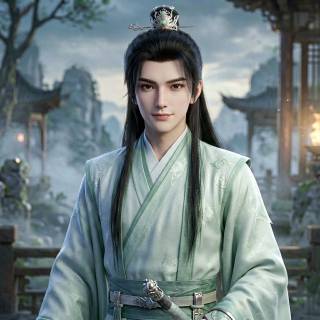
A jade sword that Wei Zhao idly turns over in his hand while sitting in the main hall. It appears to be a decorative or ceremonial item rather than a functional weapon.
Item
A quilt that covered Qiao Shilian while she slept. Su Zhuoguang noticed she had been restless during the night, throwing off the brocade quilt several times, and he returned to the room each time to cover her up, which may have caused her to catch a chill.
Event
A banquet hosted by the Old Madam (Wei Zhao's grandmother) the day after Jiang Yihuan arrives. Many daughters of distinguished families have been invited, and the Old Madam hopes Wei Zhao will attend as part of her matchmaking efforts.
Item
A hat Chi Qiao made for Chi Dahu when she was in town, intended for him to wear to cover his newly shaved bald head.
Event
An arson attack set by Jiang Qianli's accomplices who claimed they were eliminating the traitorous Wei Zhao to cleanse the emperor's court. Most accomplices had been captured but a few remained at large. Jiang Yihuan was nearly burned alive during this attack while under house arrest.
Item
Wei Zhao's outer robe that he draped over Jiang Yihuan after realizing she was wearing only a thin undergarment. It provided her warmth and covered her after the fire incident.
Latest Release
DateGroupRelease
2026-08-11shanghai fantasy c30
2026-08-11shanghai fantasy c29
2026-08-11shanghai fantasy c28
2026-08-11shanghai fantasy c27
2026-08-11shanghai fantasy c26
2026-08-11shanghai fantasy c25
2026-08-11shanghai fantasy c24
2026-08-11shanghai fantasy c23
2026-08-11shanghai fantasy c22
2026-08-11shanghai fantasy c21
2026-08-11shanghai fantasy c20
2026-08-11shanghai fantasy c19

Community Reviews

Rating(0 / 5.0, 31votes)
5 stars
0(0%)
4 stars
0(0%)
3 stars
0(0%)
2 stars
0(0%)
1 stars
0(0%)

Popular reviews

... Read More
I've been turning over some of the deeper patterns in these chapters and I think the author is playing with water as a recurring symbol in really interesting ways. First there's the lake—cold, deep, dangerous. It's where Jiang Yihuan proves her heroism but also pays for it physically. She saves people who don't deserve it and nearly drowns for the privilege. Then there's the rain, which acts as both a barrier and a connector. It's during the rain that Jiang Yihuan reveals the truth about Wei Zhao's family, and it's also during the rain that Wei Zhao makes his decision to protect his mother. Water as truth-teller, almost. But the most powerful symbol in this batch might be silence. Wei Zhao's mother endures her mother-in-law's bullying in silence. She tells Wei Zhao everything is fine when it isn't. Jiang Yihuan notices this pattern and calls it out, but even she can't fully break through the silence that Wei Zhilan has built around herself. The shopkeeper's silence about Jiang Yihuan's authority until it's almost too late is another variation. And Old Madam Wei's scolding—her noise is almost a defense mechanism, a way of filling the space so nothing painful has to be said. The Crown Prince subplot adds another layer to this theme of silence. Sun Junchen and his wife faked their deaths. They stayed silent about their survival. The child they took is living in silence, unknown to the world. The Emperor can't sleep because of what he doesn't know. Silence as survival, silence as oppression, silence as love. Wei Zhao's mother stays silent to protect her son. Jiang Yihuan stays silent about how much she cares until she can't anymore. There's a scene where Wei Zhao stands outside his mother's door and just listens, and he chooses not to announce himself. That moment of choosing silence instead of confrontation is so rich with meaning.
... Read More
Let me just say this: the conflict in these chapters operates on at least four different levels simultaneously and the author never lets you forget any of them. On the personal level, you have Jiang Yihuan vs. the shopkeeper who thinks she's just a child playing dress-up. That's funny and satisfying. On the family level, you have Wei Zhao vs. his grandmother's treatment of his mother. That's the emotional core. On the political level, you have the Crown Prince vs. the possibility that a rival faction's heir is still alive. That's the ticking clock. And on the romantic level, you have Wei Zhao vs. his own inability to express care without sounding like he's yelling. 'You little fool!' he says, and what he really means is 'I was terrified and I love you.' The stakes keep escalating too. It starts with a social slight at a banquet and ends with the possibility of a political rebellion. Jiang Yihuan risks her life for people she doesn't even like, and the consequence is that she nearly dies. Wei Zhao discovers his mother's suffering and his first instinct is to confront his grandmother, but he's stopped by the realization that his mother fears him. That's a conflict with no easy resolution. And then there's the shopkeeper scene where the stakes are comically low but somehow still feel important. If Jiang Yihuan backs down, she loses face and her confidence. If she escalates, she might lose the opportunity entirely. The author makes you care about all of these conflicts simultaneously, which is no small feat. The most tense moment for me was when Wei Zhao overhears his mother saying 'even I feel a little afraid of him.' That line hit me like a truck because it reframes everything about their relationship. He's been trying to protect her from afar, but she's been living in fear of him the whole time. The gap between his intention and her perception is where all the drama lives.
... Read More
'What a person loses in childhood... They spend the rest of their life trying to reclaim.' This line hit me like a truck. It explains EVERYTHING about Wei Zhao. The coldness, the need for control, the way he tolerates no disrespect. His grandmother poisoned his childhood—made his own sister believe he was illegitimate, that he was a disgrace. Wei Zhilan threw stones at him. She joined in the bullying. And by the time she wanted to make amends, it was too late. The estrangement remained even after the misunderstanding disappeared. That's the tragedy. Wei Zhao could forgive ignorance but not the years of betrayal. And now look at him—this feared general who lies helpless beneath a girl pawing at his chest, whispering 'get up' like a broken record. The relationship between Wei Zhao and Jiang Yihuan is so layered. On the surface, he's her captor, her hostage-taker. But he believes her when everyone else accuses her. He stands between her and the entire Wei family. He gets assassinated protecting his route home and still thinks about the brocade she wanted. And Jiang Yihuan—she's not stupid. She knows exactly what she's doing. When she says 'Wei Zhao, you're really hot. Let me loosen your collar so you'll feel better,' is that genuine concern or calculated manipulation? Probably both. She's playing a dangerous game with a man who kills without mercy. But she's also the first person who's ever treated him like he's worth caring for. The sister dynamic is heartbreaking too. Wei Zhao tells Wei Zhilan 'I don't have a sister.' That's not cruelty—that's grief. He's protecting himself from ever being hurt like that again. And Jiang Yihuan? She sees all of this. She's the only one who can make him laugh, who can make him lose his composure, who can turn a life-or-death situation into a comedy of errors. Zhu Xian is the perfect observer—she watches her master get completely defeated by a girl who just wants pretty fabric. The relationship dynamics here are incredible. Everyone has their role: the loyal servant, the betrayed sister, the dangerous hostage, the broken general. And they're all circling each other like planets in a unstable orbit.
... Read More
There's a lot going on beneath the surface of these first seven chapters and I want to unpack some of it. The green hat is the most obvious symbol. In Chinese culture, a green hat means your partner is cheating on you. When Wei Zhao tells Jiang Yihuan he'll hang one outside when she's "working" and take it down when she's his wife—it's cruel, yes, but it's also layered. He's mocking the very idea that she'd ever be anything but a pawn to him, while simultaneously planting the seed of what she COULD become. That tension between humiliation and possibility runs through everything. Then there's the fire. The guest quarters—where she's literally being held captive—catch fire on her first night. Is this symbolic of her old life burning down? Of Wei Zhao's controlled world being disrupted by the chaos she represents? Or is it something darker—someone trying to eliminate the leverage he's holding? The text doesn't say yet, but the ambiguity is deliberate. The clothes tearing is another detail that stuck with me. Her undergarments are "spotless but washed countless times, sleeves so thin they're nearly transparent." This girl has nothing, and what she has she's maintained with obsessive care. When Wei Zhao rips her collar and sleeve apart without thinking, it's almost like he's destroying the last remnants of her dignity without even realizing it. He's powerful enough to break things—clothes, people, promises—and he hasn't learned yet that some things matter. And Jiang Qianli's confession—that he tried to kill Wei Zhao because he wanted him—this backstory hangs over everything like a ghost. It explains why Wei Zhao is so cruel (he feels manipulated) and why Jiang Yihuan is so loyal (her brother's obsession shaped her worldview). Both characters are reacting to the same trauma from opposite sides.
... Read More
Okay so I need to talk about Wei Zhao because this guy is a walking contradiction and I am HERE for it. On one hand, he brings a literally starving girl into his house under false pretenses and threatens to kill her by tomorrow. On the other hand—spoiler alert—he carries her out of a burning building wrapped in a quilt and yells at his servants to look away so she doesn't get embarrassed. The man is a mess. And Jiang Yihuan?? She just waltzes in, gets told her brother tried to assassinate her guardian, hears she might be sold to a brothel, and her first reaction is to ask if she can pay Wei Zhao to sleep with her as an overnight fee. That is either the most unhinged survival instinct I've ever read or she's genuinely just that naive. Either way, I'm obsessed. The sibling dynamic is what really got me though. When she's crying on the floor and muttering "Brother, wait for me"—that hit me hard. This girl has been alone, digging wild vegetables, raising chickens that got confiscated, and her entire emotional anchor is this brother who calls Wei Zhao a scoundrel and tries to murder him repeatedly. She's clinging to him like a lifeline while he's exiled three thousand li away. Meanwhile Wei Zhao is like "I'm keeping her here as leverage" but you can tell already that leverage is the last thing on his mind. The chemistry is simmering under all this chaos and I'm not sure whether to root for them or just scream at both of them to communicate for five seconds.
... Read More
I've been thinking about this book way too much since I finished these chapters, and the thing that keeps coming back to me is food. Not in a cute 'she likes snacks' way but in a deeply thematic way. Jiang Yihuan's entire relationship with Wei Zhao is mediated through sustenance. She stays because 'he feeds me three meals every day, plus a midnight snack.' That's not shallow—that's the language of someone who grew up starving and whose body remembers what her mind is just now beginning to accept. The cherry biluo pastries at the banquet are a perfect symbol. She's there for the food, yes, but the pastries also represent everything she's been excluded from—refined social rituals, elegant conversation, the performance of nobility. She grabs two pastries and skips away like a child, and the noble ladies judge her for it. But the author isn't asking us to judge her. The scene is asking us to notice how her innocence exposes the absurdity of their world. Then there's the recurring motif of the brother. Jiang Qianli appears in these chapters like a ghost—mentioned, invoked, weaponized by Young Master Cui, but never actually present. He's the absence around which everything orbits. Jiang Yihuan dreams about him. Wei Zhao references him with a wry comment about their similar 'mouths that can drive people to death.' The brother is both a real person and a symbol of everything Jiang Yihuan has been separated from, and the novel keeps asking: can you build a new family when the old one is broken? The Wei residence itself feels symbolic—Wei Zhao bought out every neighboring house so his family occupies the entire street. Isolation as power. Protection through separation. It's the same instinct that makes him keep Jiang Yihuan close.
See all reviews

Characters

See all characters

Custom lists

Oops…There is nothing here.