Summary

... Read More

[Rebirth + Revenge + Power Struggle + Strong Female Lead + Multiple Male Leads]

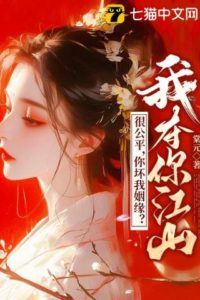
The Ji family was originally the wealthiest merchant clan in Anzhao Guo, and their daughter, Ji Ruyue, was known as the kingdom’s greatest beauty.

Upon Ji Ruyue reaching her coming-of-age, the Ji family set up a stage for a “silk ball marriage recruitment,” cordially inviting eligible young talents to participate. Unexpectedly… her silk ball was snatched away by a woman.

This woman was incredibly willful. After playing with the ball until she was satisfied, she casually tossed it into the arms of a passing poor scholar.

With the words, “Do not look down on a youth for being poor; you must marry him whether you like it or not,” she sent the Ji family step by step toward the total extermination of their clan.

…Then, she was reborn! Ji Ruyue returned to the day of the silk ball marriage recruitment.

When she saw that familiar figure again, her heart was filled with cold clarity. This person was the future Empress of Anzhao Guo, who was currently still Changle Gongzhu, Murong Jing! And that seemingly unremarkable poor scholar was the heartless husband who had stayed by her side for eight years—the enemy who had personally strangled her to death with a white silk cord.

Her father’s tragic death, her entire household slaughtered—how could she let such an irreconcilable blood feud rest? If imperial power viewed the common people as mere blades of grass, then she would become a seeker of power and let those sitting high above taste its true flavor.

What if she was a woman? What if she was a mere merchant? Ji Ruyue plotted meticulously, strategizing her way to prominence.

She gathered the world’s talents, protected the peace of the people, and stabilized the nation. Every step was a calculation; every person was a chess piece.

In the end, she stood at the pinnacle of power, looking down at her enemies.

“You were indeed difficult to deal with; it took a great deal of effort. Do not look down on a woman for being weak—you must die whether you like it or not!”

Novel Items

More
Item
An embroidered ball used in the marriage recruitment event. Murong Jing caught it and then tossed it to the poor scholar Chen Shujin, forcing him to marry Ji Ruyue. It is the central plot device that triggered the tragic events of the previous life.
Item
A prop used by Feng Qianqian while impersonating Jiang Yao's ghost. She held it to simulate a ghostly appearance and intended to use it to strangle Second Concubine.
Item
A token held up by Murong Jing's attendant to declare her identity as Changle Gongzhu, causing everyone present to kneel in respect.
Event
A grand marriage recruitment event held by the Ji family on the Lantern Festival. It involved multiple rigorous tests including catching the embroidered ball, literary competition, and martial competition. Murong Jing interfered and forced the match between Chen Shujin and Ji Ruyue, setting in motion the tragic events of the previous life.
Item
A traditional matchmaking item used by Princess Murong Jing to bestow a marriage arrangement. The princess disposed of it at her pleasure to force Ji Ruyue into marriage with Chen Shujin, turning what was meant to be son-in-law recruitment into a full marriage.
Festival Items
Needed for children during Lantern Festival celebrations.
Latest Release
DateGroupRelease
2026-08-11shanghai fantasy c10
2026-08-11shanghai fantasy c9
2026-08-11shanghai fantasy c8
2026-08-11shanghai fantasy c7
2026-08-11shanghai fantasy c6
2026-08-11shanghai fantasy c5
2026-08-11shanghai fantasy c4
2026-08-11shanghai fantasy c3
2026-08-11shanghai fantasy c2
2026-08-11shanghai fantasy c1

Community Reviews

Rating(0 / 5.0, 16votes)
5 stars
0(0%)
4 stars
0(0%)
3 stars
0(0%)
2 stars
0(0%)
1 stars
0(0%)

Popular reviews

... Read More
The stakes in this section are NOT subtle and I love it. Let's talk about what everyone is risking. Chen Shujin: his hand is injured, his reputation is on the line, and he's playing a dangerous game. He's using the wedding to expose the Ji family, to make them look cruel in front of the princess and the entire guest list. If it works, he wins. If it fails, he's a man whose mother cut up his wedding robe and who got himself locked in a courtyard—he looks pathetic either way. The Ji family: Master Ji has a reputation for kindness, a vast business, and now a princess with a blade is threatening to arrest everyone. Their wealth, their status, their daughter's marriage—all of it could collapse in a single afternoon. Ji Ruyue herself: she's the central figure holding everything together, and she's doing it with nothing but words and composure. She's risking everything on her ability to outmaneuver a princess who literally has guards with swords. And Murong Jing—what's her stake? She's the one with all the power, but she's also the one who's losing control. Every calm response from Ji Ruyue makes her angrier. Every polite deflection feels like a slap. She went from amused to murderous in two chapters, and that escalation is terrifying because it's unpredictable. The moment the blade touches Ji Ruyue's neck and draws blood, the conflict crosses a line. This is no longer about wedding etiquette or family honor. It's about life and death. And the guests kneeling on the floor, terrified of being implicated, remind us that everyone in this room is collateral damage. The author makes you feel the weight of every decision, every word, every silence. You're not just watching a confrontation—you're holding your breath through it.
... Read More
Okay, let me just say this out loud: the tension between Ji Ruyue and Murong Jing is absolutely electric and I am here for it. Like, think about it. The princess shows up at a wedding, dressed in men's clothes, casually fanning herself, and the FIRST thing she does is lift Ji Ruyue's chin with her folding fan and say "What a pity for such a lovely face." That is not a greeting. That is a power move wrapped in flirtation wrapped in threat. And Ji Ruyue? She just takes it. Bows. Smiles. Says nothing. But then—oh, then—when Murong Jing demands to see the groom, Ji Ruyue starts dismantling her argument with this devastating calm politeness. "Your Highness, although you are of royal status... interfering with the ancestral traditions of the Ji family is likely improper." She's basically telling the princess she has no business here, and she's doing it while kneeling and calling herself "this common woman." The subtext is SCREAMING. And Murong Jing's reaction? She goes from annoyed to absolutely FURIOUS. She wants a blade at Ji Ruyue's throat. That's not just anger at defiance—that's personal. Something about this woman gets under her skin in a way that goes beyond royal pride. I keep wondering: does Murong Jing actually want Chen Shujin, or does she want to WIN something, and Ji Ruyue is just the obstacle? Because the way Ji Ruyue keeps provoking her without technically breaking any rules... it's like she knows exactly how to push buttons. And the worst part? I think she might be enjoying it.
... Read More
The dialogue in this text is absolutely chef's kiss and I need to dissect why. Ji Ruyue has this incredible double voice — she speaks in two registers simultaneously. On the surface, she's using the self-deprecating, deferential language of a lowly commoner: "This common girl does not know..." "This humble girl..." But underneath every single sentence is a blade. When she says "This common girl does not know what she did wrong to anger the Princess so, that you would humiliate me in public," she's not actually apologizing. She's publicly documenting the princess's abuse while making it sound like confusion. That is some next-level verbal jujitsu. And Murong Jing's dialogue is equally distinctive. She's blunt, imperious, and completely unaware that she's being played. "How dare you, lowly commoner, speak such insolence!" — she slaps Ji Ruyue and then can't believe the reaction. Her voice is all authority and zero self-awareness, which makes her such a perfect antagonist. She genuinely believes she's the hero of this story. The scholar Chen Shujin is another gem. His dialogue is full of hesitation — "This... this..." — and when he finally speaks, it's performative. He bows and thanks the princess, but the text tells us his eyes flicker with something else. He's a man who knows he's being used and is too cowardly to resist. The most brilliant dialogue moment though is when Ji Ruyue says to Murong Jing: "Since Mr. Chen has gained your favor, I hope you will support him in the future. High official positions and generous salaries are surely not far off..." She's literally setting up the princess to make a promise she can't take back, and she's doing it while sounding like the most grateful daughter-in-law in history. The author's command of subtext through dialogue is exceptional.
... Read More
This chapter is fundamentally about who gets to decide what counts as important—and the answer always depends on who's holding the token. The central symbol is that little token Wang Yu'an pulls from his sleeve. It's small, unassuming, and it stops an execution. In one gesture, it transforms a merchant's life from 'worthy of death' to 'too important to touch.' The token represents institutional power, and its effectiveness depends entirely on the viewer's recognition of its authority. Murong Jing recognizes it immediately and backs down. She doesn't question it. She doesn't demand to see it up close. She just... yields. That's the whole system in miniature. But the deeper symbolism is in the merchant class itself. Murong Jing's entire attitude rests on the assumption that merchants are inherently inferior—'The Ji family is merely a merchant household.' Yet Wang Yu'an points out that his family started as merchants too. The hypocrisy isn't just personal; it's structural. The aristocracy needs the merchant class for money and labor but refuses to acknowledge their worth. And the Jis are caught in this contradiction—they're wealthy enough to donate a hundred thousand taels for a river embankment but still considered 'lowly' by someone with a fancy title. The river embankment itself is a symbol worth examining. It's infrastructure—a thing that protects people, that holds back chaos (literally, in the case of flooding). The Ji family is funding something that benefits the public good, and yet the princess wants to execute them for 'disrespect.' The irony is almost too clean: the people doing the actual good work are the ones under threat, while the 'noble' princess is there to punish them for not showing proper deference. What kind of society values ceremony over substance? Then there's the wedding itself as a symbol. A wedding is supposed to be a joyous union, a coming together. Instead, it becomes a battlefield. The princess arrives not to celebrate but to destroy. Wang Yu'an enters not to fight but to negotiate. The wedding hall becomes a space where different kinds of power collide—imperial authority versus institutional influence versus economic power. And the fact that the celebration is interrupted, that the guests flee, that swords are drawn at a wedding—this is the author telling us that in this world, joy is always fragile, always vulnerable to the ambitions of the powerful. Chen Shujin's imprisonment is another layer. He's locked in Mulan Yuan, a courtyard that might as well be a prison cell. The door clicks shut. His mother wails. This is the domestic consequence of political maneuvering—the people who aren't players but get caught in the game. The 'funeral' atmosphere the author describes is significant: Chen Shujin's ambitions are dead, his relationship with Ji Ruyue is dead, and he's lying in a courtyard like a man who's already been mourned. And the final image—Ji Ruyue walking toward Wang Yu'an as Chen Shujin watches from behind a locked door. The visual composition is almost symbolic: the door separates the two worlds, the light and the dark, the future and the past. Chen Shujin is on the wrong side of that door.
... Read More
I need to talk about Wei Zizhang because this character is doing something VERY interesting and I think the author is planting seeds for a major relationship arc. He appears, he helps, he doesn't over-explain himself, and then he leaves. Just... walks away like it was no big deal. But Ji Ruyue notices him. Master Ji notices him. The NARRATOR notices him. When the text says "He was, in truth... just passing by" with that ellipsis, I literally gasped. That is not just passing by energy. That is main character energy disguised as a background character. And the dynamic between Ji Ruyue and Chen Shujin? Disgusting in the best way. In her previous life, he moved into HER family's house, flaunted his scholarly status, and treated her like garbage. Now she's forcing him to be a son-in-law — taking a husband, not a wife — and she's doing it with a straight face while he's sweating bullets. The power reversal is so satisfying. She asks him directly: "Are you truly willing to become the son-in-law of the Ji family?" and his face goes pale. He knows exactly what this means. He's trapped, and she KNOWS he's trapped. But the most fascinating relationship here is between Ji Ruyue and Murong Jing. This isn't just princess vs. commoner. This is two incredibly smart women who see right through each other. Murong Jing thinks she's the predator. Ji Ruyue lets her think that. The text says Murong Jing harbors a "deep hatred" and a "murderous intent" by the end — and Ji Ruyue probably calculated every single one of those emotions. This is going to be a cat-and-mouse game and I am not okay with how much I'm going to enjoy it.
... Read More
Let me just say this chapter is a masterclass in controlled chaos and the way the author builds tension is genuinely impressive. We open with the princess already having made her decision—guards are moving, guests are fleeing, swords are at necks. In the first few paragraphs, we're already in full crisis mode. And then—BAM—Wang Yu'an appears with that 'Congratulations to the Ji family on this joyous union' line. The contrast between his calm entrance and the surrounding chaos is so well-staged. It's like a film cut: one second it's mayhem, the next there's this perfectly dressed man walking through the doorway like he's entering a tea house. The pacing of the confrontation between Wang Yu'an and Murong Jing is what really sold it for me. Notice how the author doesn't rush their exchange. Wang Yu'an deliberately answers a different question first—'Your Highness, what is this?'—while Murong Jing is already fuming. That deliberate deflection builds tension because we're waiting for the real confrontation to land. And when he finally reveals the token? The author gives us a beat of silence. 'Murong Jing: …' Just three dots. That pause is doing so much work. It's the narrative equivalent of a drumroll. Then the retreat—'The guards moved in unison, stepping back in orderly formation. The blades that had been pressed against the necks of the Ji father and daughter were sheathed one by one.' This image of swords being slowly sheathed is gorgeous. It's the visual counterpart to the tension release, and the author clearly understands that pacing isn't just about what happens—it's about how you make the reader feel the release. But here's where I think the chapter gets really clever: the Chen Shujin subplot. After the big confrontation resolves, instead of ending on a high note, the author pivots to Chen Shujin being dropped and locked away. This is the structural equivalent of a curveball. You've just had this epic standoff, and now we're watching a minor character get physically manhandled and imprisoned. It's almost anti-climactic in the best way—it undercuts the triumph of the main confrontation and reminds us that while the big players are playing chess, smaller pieces are getting swept off the board. The transition from the wedding hall to Mulan Yuan is also worth noting. We go from a public, crowded scene to a private, locked room. The atmosphere shifts from tense spectacle to isolated vulnerability. Chen Shujin's mother wailing, the door clicking shut—these are intimate details that ground the political maneuvering in human consequence. And that ending? Chen Shujin already plotting his next move while lying on the floor with a head injury? The author is telling us this character is not done yet. He's not a victim—he's a survivor. And that means the conflict isn't over. The pacing here is setting up the next wave of tension without explicitly stating it. Brilliant.
See all reviews

Characters

See all characters

Custom lists

Oops…There is nothing here.