Imperial College Student (Food)
+Add to Custom List
Novel Info

Summary

... Read More

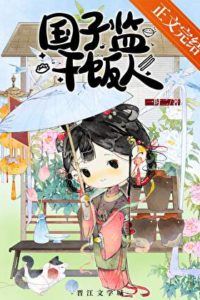
Shen Mingtang wakes to find herself reborn into a wealthy dynasty.

Her father is an Erudite at the Imperial Academy, and her mother was once the daughter of a prosperous merchant. But their family fortunes have fallen, and with so many siblings to feed, life has suddenly become tight.

Shen Mingtang rolls up her sleeves, grabs her spatula, and sets out to make her own way.

Right—breakfast is the perfect place to start!

Soy milk and fried dough sticks, layered flatbreads, crispy crepe wraps, eight-treasure congee, grain noodles, Chinese hamburgers…

The Imperial Academy, where her father works each day, lies just down a narrow alley from their home. Every morning, he is spoiled with a rotating feast of his daughter’s cooking. Before long, the academy students catch wind of the delicious smells, and soon they’re flocking over, mouths watering:

“Delicious!”
“One must fill one’s belly well, if one is truly to understand the way of Confucius and Mencius!”

Zhao Yu is the most notorious ne’er-do-well at the Imperial Academy—skipping class and brawling are second nature to him.

Then one day, he notices something strange: his fellow students have suddenly turned studious, showing up before dawn to huddle over the *Analects*.

Curious, he grabs one for “interrogation,” and learns the truth:
Score top marks in the monthly exam, and you win a specially prepared meal from that Miss Shen.

Zhao Yu snorts and waves the thought away. “Hmph—you think a few bites of food can sway me…?”
He’d rather starve than fall for such a trick!

The others see he remains unmoved. They keep their noses to the grindstone, while praising him: “Brother Yu, you truly rise above base desires—what an extraordinary man!”

That is, until word spreads that Miss Shen is taking a suitor…

Shortly after, Zhao Yu aces every exam in a row, takes first place in the imperial examinations, and parades through the streets on horseback, adorned with flowers.

His classmates beat their chests in regret: “Turns out Brother Yu was our greatest rival all along!”

Novel Items

More
Pills
A nourishing soup made by Shen Mingtang for her mother Jiang Shi after childbirth. It contains red beans, peanuts with skins on, red dates, wolfberries, and brown sugar. It is designed to be easy to digest and help the mother regain her strength quickly. The soup turns a rich glowing red color when the brown sugar dissolves.
Materials
Traditional items prepared for the baby's third-day feast, mentioned by Mingtang as an unavoidable expense. They are part of the family's budget calculations for the new arrival.
Materials
Volume after volume from Father Shen's personal collection that he carefully wraps in soft cloth to sell. These are his most prized possessions, and the sight of him preparing to sell them fills Mingtang with a heavy ache. Selling them is only a temporary fix for the family's financial troubles.
Item
Common cooking equipment in the Great Yin Dynasty that has spread across the whole empire in just a few years. Mingtang notes their prevalence as she considers her culinary career options, realizing that stir-frying technology is already well established.
Item
A snack that Jiang Heng bought for Ning Qiao during their tea house meeting the day before. Ning Qiao fondly remembered this when recalling their encounter on the train.
Currency
Chi Dahu gave thirty taels to Chi Ye (ten to repay Qin Mu, twenty for supplies). Chi Qiao took two hundred taels for preparations. Chi Yu kept seventy taels from the Qi Family compensation. A pound of refined rice costs twelve wen.
Latest Release
DateGroupRelease
2026-08-11shanghai fantasy c8
2026-08-11shanghai fantasy c7
2026-08-11shanghai fantasy c6
2026-08-11shanghai fantasy c5
2026-08-11shanghai fantasy c4
2026-08-11shanghai fantasy c3
2026-08-11shanghai fantasy c2
2026-08-11shanghai fantasy c1

Community Reviews

Rating(0 / 5.0, 31votes)
5 stars
0(0%)
4 stars
0(0%)
3 stars
0(0%)
2 stars
0(0%)
1 stars
0(0%)

Popular reviews

... Read More
"Brother Shuoqing, I've only just arrived and don't know Bianjing well at all. Since we're both from Jiangnan, would you mind if I stayed at your place for a while?" Du Lang. I don't know whether to laugh or cry. This guy is so transparently scheming but also so genuinely desperate that I can't even be mad at him. Yes, he wants the food—don't get me wrong, he devoured three meat buns and then immediately started planning his full-time residence at Shen Qingsong's house—but there's something underneath that. He's a boarder at this Academy, far from home, and Shen Qingsong is the first person who's shown him any warmth. The food is just the excuse. And Shen Qingsong! He sees right through it. He calls out Du Lang's scheming as "practically jumping out at him" and still manages to be gentle about it. Their dynamic is so good—Du Lang is loud and greedy and shameless, and Shen Qingsong is calm and patient and just... endures him. It's the classic odd couple setup and I am already emotionally invested. Then there's Zhou Tianang, who's somehow even more chaotic. He claimed six portions for himself and then tried to blame it on a nonexistent brother. The man has zero survival instincts but I love him anyway. And Yu Youren, who went from jealous and hostile to begging for one pastry in the span of five minutes—people are so easily corrupted by good food, it's a universal truth.
... Read More
'For a moment, she had clearly seen the library of University A from her past life—every row, every column, even the shelf numbers marked along them.' This is the moment the entire novel shifts. Up until this point, Mingtang's past-life memories were just background texture—hints of who she used to be. But the cat touching the red ink and triggering that vision? That's not a coincidence, that's a KEY. The stakes just went from 'survive in a new life' to 'I have access to an entire library from my past life through this cat.' And the poem she quotes—'With salt and branch I welcome my little cat, to guard ten thousand scrolls within my hut'—she's not just being poetic, she's literally describing the mechanism. The cat is the vessel. The adoption ceremony wasn't just sentimentality, it was a ritual that unlocked something. What does this mean for the plot? Everything. She can now access knowledge—books, recipes, possibly even the skills and memories tied to that library. But here's what keeps me up at night: the vision came with a headache, cold sweat, blinding light. This power has a cost. And she's using it while her mother is still recovering, while they're struggling financially, while Father Shen is dealing with academy politics. The stakes aren't just personal anymore—they're existential. What happens when someone else discovers what Mingtang can do? The chapter ends on a comedic note with the father catching her mid-insult, but I'm not laughing anymore. I'm watching her like she's walking a tightrope over a very deep cliff.
... Read More
Okay so this section is doing something really clever with parallel plotting. On one side you've got Mingtang, quietly scheming her way toward independence—she's already got the library, the cat, the snack-selling plan, and now she's testing the waters with her father about opening an eatery. The father-daughter scene is deceptively simple on the surface but it's actually a full power negotiation. She wants to open a shop, he subtly shuts it down by suggesting she copy books instead, and she plays along while internally laughing because she's got bigger plans. The mark on the oil-paper packet? That's a brilliant plot device. It's how Xu Shouben discovered the eatery, and it shows Mingtang's already building her brand without even realizing it yet. Meanwhile, Zhao Yu's storyline is a completely different flavor of tension. He's at the Academy, surrounded by people who think they know him, and he's playing chupu like a weapon. The scene where Ma Ronghuan calls him an idler and threatens he'll be expelled next year—that's not just drama, that's the plot tightening its noose. Zhao Yu knows things these kids don't. He's marked, he's waiting, and the fact that he lets them think they're winning while he stacks silver in front of him? That's a character who's playing a longer game than anyone in the room. The chapter structure itself is interesting because it moves from domestic warmth to cold calculation, from a father worried about tuition to a son of a minister threatening ruin. Two families, two different kinds of pressure, and they haven't even crossed paths yet.
... Read More
The structure of these chapters is really clever, and I want to highlight how the author uses a single meal as the anchor for everything. We open with an intimate, quiet scene — Mingtang feeding her recovering mother. Very slow, very tender. Then the wind changes, the brother arrives with a chicken, and suddenly the father brings home this mysterious guest. The pacing accelerates naturally, like real life does when unexpected visitors show up. But here's what I love: the author doesn't rush the reveal. Gongsun Sheng says he's poor, we believe it for a while, and then the silver drops. That's a structural pivot — everything about how we've been reading this scene up to that point gets recontextualized. He wasn't being humble; he was being discreet. And Mingtang wasn't feeling guilty about accepting help from someone worse off; she was about to receive something far more significant. Then the meal itself becomes this wonderful extended sequence where the pacing slows right back down. Gongsun Sheng's stomach rumbles, he devours the steamed eggs, he discovers the ginseng, he's offered rice cakes — each course is a mini-beat that keeps us engaged without any action scenes or plot twists. The author trusts that food and conversation are enough to hold attention, and honestly? It works. The chapter ends on that note of warmth and fullness, which is the perfect emotional landing after all the tension of the family's financial situation.
... Read More
I need to talk about this one moment. Just one. Father Shen leaves after telling Mingtang he'll always stand behind her, and the text says: 'The warm breeze did nothing to lift his spirits. Stepping over the threshold, he rubbed his face hard and did not look back. His figure shrank into the distance, looking strangely lonely and worn.' And then Mingtang whispers: 'Forgive me, Father.' That's it. That's the whole emotional payload. No melodrama, no tears, just a daughter who knows she's lying to the man who would move heaven and earth for her. He thinks she's just keeping a cat for company. She's actually planning to build an empire. And he's out there rubbing his face because he can't provide enough for his sons' education, and she's sitting there with a magical library and a cat named Little Mi and she can't tell him because he'd worry himself sick. The father-daughter bond in this book is so understated it almost hurts. He catches her making up stories to cheer up her mother and instead of being mad, he's worried she's been lying about him all along. That's a man who's so insecure about being loved that he can't even process his daughter's joke. And she protects him from his own temper every single time. She pours his tea, changes the subject, plays the obedient daughter—but the moment he leaves, she's already plotting her next move. The cat Little Mi isn't just a pet, is she? She's the first thing Mingtang chose for herself. Something to keep, something to protect, something that hisses at his father. I think that's the most honest relationship in the whole scene.
... Read More
This entire section is basically a treatise on food as love language, and I'm here for it. Every emotional beat is communicated through what someone cooks, serves, or refuses to eat. The Five-Red Soup isn't just soup — it's Mingtang's way of saying "I'm taking care of you" without having to say it. The ginseng fibers she saves for the broth represent something deeper too: these are precious ingredients, the kind you hoard for emergencies, and she's choosing to use them for a guest. That's generosity as a value system. The silver hidden in the egg basket is probably the richest symbol in these chapters. Eggs are a traditional postpartum gift in Chinese culture — nourishment, new life, recovery. By hiding silver inside them, Gongsun Sheng is wrapping financial aid in the language of care. He could have just given them money directly, but that would have felt like charity. Instead, he makes it feel like a gift between friends. And then there's the mathematical text — the Nine Chapters on the Mathematical Art. Shen Fu and Mingtang found an ancient fragment and expanded it into something teachable. This is knowledge as inheritance, as something passed down and built upon. The fact that Gongsun Sheng is being sent to Yanqi — a land "without order or law" — to teach makes this even more meaningful. He's not just going abroad; he's going to transmit civilization itself. The book, the food, the silver — they're all the same thing. They're all ways of sustaining people when the world is hard.
See all reviews

Characters

See all characters

Custom lists

Oops…There is nothing here.