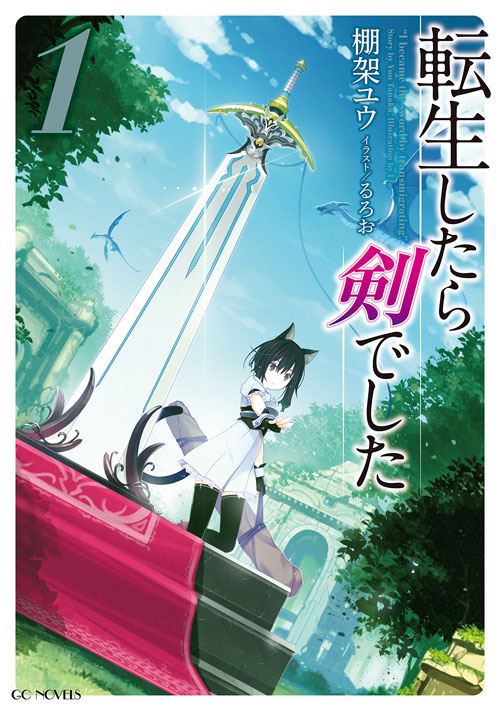
Points are given for the concept of the main character being an inanimate object. While not entirely original, it is certainly better than focusing on panties... Moving on. This approach effectively removes a significant number of overused tropes found in anime, manga, and even light novels. The most noticeable absence is the harem trope, and I am grateful for that. However, the author still includes a fair share of tropes, often acknowledging their use through the main character (as if this justifies their inclusion) and swiftly moving on to the next.
I must admit, I do enjoy some of these tropes, such as the 12-year-old cat person who is superpowered compared to her peers, causing everyone to gawk in shock. I find this scenario humorously entertaining and it never gets old. However, the frequent references to her being in the "strike zone" of some men (and women) is a trope I could do without. Despite the pervasive cultural differences, it’s refreshing that the main character (MC) is generally protective of her and other women, though this doesn’t entirely mitigate the creepy undertones that occasionally surface.
The story begins to falter, and this is where many readers might fundamentally disagree with me. It suffers from a significant identity crisis, unable to decide whether it wants to be an action fantasy or a chef battle narrative. The transitions between these genres can be jarring, disrupting the flow of whichever plot is currently unfolding. I suspect this is more a result of how these stories are typically structured rather than a deliberate choice by the author. Going into more detail would involve heavy spoilers, but suffice it to say that if you enjoy both action/fantasy and chef battles (like in *Shokugeki no Soma*), this blend will likely be a plus. For me, however, the chef battle elements tend to be boring. I get it—food is delicious. :P
Another issue is the occasional use of deus ex machina, which is common in high-magic fantasy settings. While this isn’t a major problem, it doesn’t earn any extra points for misuse and overuse. Thankfully, it’s not as prevalent as in other series I’ve read, where it becomes a recurring issue after 100+ chapters.
Lastly, the depth of the characters—or lack thereof—is a concern. At this stage, I expect more development, but the two main characters seem to have little more direction than "let’s get stronger." Fran wants to evolve, and Sensei vaguely aims to understand his situation, but these goals are often sidelined. It’s unclear what evolution entails—do they lose their tail and beast ears? Either I misunderstood something, or the translation was off on this point. Supporting characters, while numerous, often fade into the background and are only recalled when needed. Even then, they aren’t particularly deep, which makes the main characters’ shallowness more apparent.
Having read this far into my review, I feel compelled to thank you, or if you skipped to the end, I’ll congratulate you. My conclusion is that the story is uniquely enjoyable among the multitude of reincarnation narratives I’ve encountered. The two main characters are generally likable, albeit somewhat bloodthirsty and ruthless, and they tend to get angry on behalf of others rather than for themselves. The pacing is quick, which contributes to its appeal but also leads to issues with character development and direction, despite the significant progression in the story. Is it worth reading? Absolutely, especially if you dislike harem tropes and enjoy a mix of action, cooking, politics/intrigue, dungeon delving, and skill leveling.