One note first: I would recommend the Light Novels (LN) instead. They are only about 2/3 of the volumes behind the web novel (WN) story as of now, and the translation quality of the WN has noticeably declined since the previous translator left the project to avoid DMCA or C&D issues following the series' licensing by Seven Seas. Digital versions of the LN are also released three months before the print editions.
The current state of isekai is, frankly, a mess. Everywhere you look, you find either a) a power trip fantasy with no tension, filled with gratuitous violence and edginess, b) a misogynistic oversexualization fantasy featuring one male lead and multiple flat female characters with zero-dimensional development, or c) both at once.
In this chaotic landscape, *Tenkan Tensei: The Transmigrated Sword* (often referred to as *TenKen*) is a refreshing breath of fresh air. While it is not incredibly original, drawing heavily from standardized Japanese Tolkien-esque tropes and adhering to many conventions of the modern isekai genre, the story uses these tropes respectfully, and they do not detract from the overall quality.
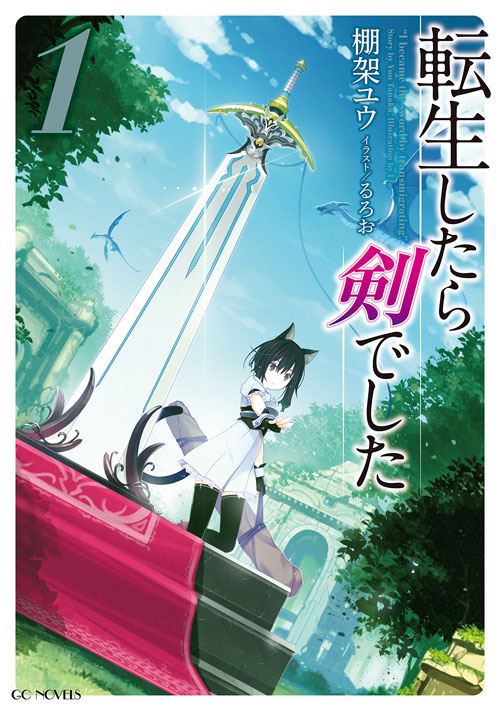
The story is a blend of slice-of-life and traditional shounen. One unique aspect is the protagonist design; while the titular sword is our perspective character, the active character driving the plot forward is the secondary protagonist, Fran, the girl featured on the cover. This doesn't mean that our point-of-view character lacks depth. At the end of Volume 1, he reflects:
> "I actually felt more alive in those five days than I ever had in my previous life... It'd only been five days, but I didn't even want to think of leaving Fran alone. If someone offered to send me back to Earth, I would reject it."
This scene, illustrated in the manga, is a masterclass in emotional storytelling, especially for a genre as often campy as light-novel isekai.
The relationship between these two characters is paternal and filial, and in a positive way. (Not like some of the incredibly creepy, quasi-pedophilic grooming stories out there. As a side note to authors, if you describe the relationship between two characters as father-daughter, you are not allowed to make it romantic.) An important point is that their relationship, despite the generational gap, is very much equal. Early on, the protagonist notes:
> "I saved her from slavery, and she saved me from the magical forest."
They are not a lopsided duo where the male character solves every problem; they are true partners.
Primarily, this story is fun and enjoyable in a healthy way. It’s a delightful ride to watch two lovable protagonists navigate a traditional fantasy world. You won’t find melodrama or romance (which is good, given that the secondary protagonist is a 12-year-old girl), and the overarching narrative is minimal. Crucially, there are no toxic polygamous relationships, as the male protagonist is an inanimate object with no sexual drive.
Despite being a slice-of-life story, there are real moments of tension. While our duo grows tremendously, they are never the most powerful group in the world. The story establishes that there is always a bigger fish; after every victory and every defeat, we encounter characters even stronger. And there are defeats; this is important because it shows that, despite being the protagonists, they can still lose. They have plot armor protecting their lives, like in almost every story, but they experience losses or partial victories more frequently than in most isekai.
All in all, I highly recommend reading this; it infuses fun into our dreary times.