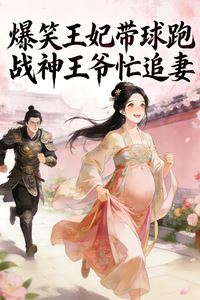
Hilarious Princess Runs Away With a Bun; War God Prince Chases After Her
Novel Info

Summary

... Read More

Genres: Transmigration • Spatial Storage • Cute Child • Comedy

“Damn it!”

“Was this outhouse built with diamonds or something? That stone nearly shattered my tailbone!”

“Come on! Seriously?”

“If I had to transmigrate, fine—but why did I get a bonus package too?”

Shen Qinghuan wanted to burst into tears. Just as she opened her mouth to wail, a torrent of unfamiliar memories suddenly flooded her mind. The searing pain made her bare her teeth as she crouched on the ground, gasping for breath.

The original owner of this body was also named Shen Qinghuan. She was the legitimate eldest daughter of Shen Cong’an, the Minister of Personnel of the Great Jing Dynasty.

Novel Items

More
Medicinal Herbs
A rare medicinal herb with deep reddish-brown caps smooth as glass mirrors and thick stems enveloped in ethereal white mist. Harvested using intent rather than hands to preserve spiritual energy. Provides a surge of potent spiritual energy that replenishes vitality depleted by pregnancy.
Pills
Water from a spiritual spring within An Ruoyan's space. After drinking a cup of diluted spiritual spring water, her injuries began to heal, though she felt dizzy and did not want to overdo it for fear of someone noticing her recovery.
Material
The miraculous fertile soil in Su Muyao's inner space where anything planted grows regardless of season. Time flows faster here, allowing crops to sprout overnight.
Materials
Palm-sized containers made of various colored jade (blue-veined, crimson) that hold seeds left by the previous owner. They emit spiritual energy and can be opened with a simple command. Contain both ordinary grains and precious medicinal herb seeds.
Item
A magical shopping space accessible through the system 007. It was upgraded to the second level, which unlocked printers (unavailable in this era) and daily necessities suitable for the current world. Chen Xi purchased the military water bottle from here.
Cultivation Methods
A unique secret skill of the spiritual space that allows seeds to be planted directly into black soil without needing a hoe. Seeds fly out of jade boxes like colored ribbons of light and the soil automatically turns to bury them perfectly.
Latest Release
DateGroupRelease
2026-08-11shanghai fantasy c10
2026-08-11shanghai fantasy c9
2026-08-11shanghai fantasy c8
2026-08-11shanghai fantasy c7
2026-08-11shanghai fantasy c6
2026-08-11shanghai fantasy c5
2026-08-11shanghai fantasy c4
2026-08-11shanghai fantasy c3
2026-08-11shanghai fantasy c2
2026-08-11shanghai fantasy c1

Community Reviews

Rating(0 / 5.0, 15votes)
5 stars
0(0%)
4 stars
0(0%)
3 stars
0(0%)
2 stars
0(0%)
1 stars
0(0%)

Popular reviews

... Read More
Let me just start by saying: the stakes in this story are *insane* and the author knows exactly how to keep them escalating. Shen Qinghuan is six months pregnant. She's been starving, tortured, and imprisoned by Mother Wang. She has no allies, no resources, and enemies who literally want her dead. And yet—she turns the tables on two armed attackers while visibly pregnant and physically weakened. The tension in the eavesdropping scene is masterful. You're reading it thinking: she can hear everything, she knows what's coming, but she's alone and vulnerable. Every word Wang Hongwei says about drugging her porridge and feeding her to wolves makes your stomach drop. And then she moves. Fast. The action sequence reads like a martial arts film—'She lunged forward like an arrow released from a bow.' One moment she's the trembling victim, the next she's breaking bones and administering poison. What makes the stakes feel real isn't just the physical danger—it's the pregnancy. Every time she touches her abdomen, the author reminds us: there's a second life at risk. When she kills Wang Hongwei and Zhao Er, she does it efficiently, without celebration. This isn't glory hunting; it's survival. And the author makes you understand that if she hadn't acted, they would have succeeded. But here's what keeps me on the edge of my seat: this was just the beginning. The Madam is still out there. Mother Wang is still scheming. The capital is still waiting. Each resolved conflict immediately opens a new, larger one. The author isn't letting up, and honestly, neither am I.
... Read More
Let me just start by saying: the stakes in this book are immediately clear and they do not mess around. Chapter 1 ends with Shen Qinghuan realizing the medicine is laced with processed aconite — a slow-acting poison that causes convulsions and death. The original owner died from it. She knows this because, y'know, she's a battlefield physician. And then Old Woman Wang comes in, grabs her chin, calls her a slut, and tries to force-feed her death. What does our girl do? She breaks her wrist. Crack. Done. In one move. No monologue, no hesitation, no "but I'm unarmed and outnumbered." She assesses the threat, neutralizes it, and moves on. That's the conflict tone this book sets right from the start: the stakes are life and death, and the protagonist treats them with the same calm efficiency she'd use to defuse a bomb. But here's what makes the tension work — it's not just about physical danger. The real stakes are existential. If she fails, she dies in a foreign body with an unborn child. Her enemies have resources (a minister father, a stepmother with connections, a half-sister being groomed for imperial consorts). She has nothing but a system space and her combat training. The power imbalance is real, and the book doesn't pretend otherwise. What I love is how the author layers the conflicts. There's the immediate threat (Old Woman Wang), the medium-term threat (the estate servants who won't stop coming), the long-term threat (the Shen family in the capital), and the personal stake (finding the man from that night and dealing with him). Each layer raises the tension without overwhelming the narrative. And that moment when she pins Old Woman Wang and ends her? "Warm blood splattered onto her shoes." She doesn't panic. She doesn't vomit. She just... moves the body into her space and tells the remaining servants to deliver a message. The casual brutality of it is terrifying and absolutely satisfying. This book understands that sometimes the only way to survive is to be more ruthless than the people trying to kill you.
... Read More
I need to talk about the emotional core of this story because it's so much deeper than the average transmigration revenge tale. Yes, there's the revenge plot. Yes, there's the space cheat. But at the center of everything is this woman who just lost her entire life and is trying to hold onto the one thing she still has. The recurring image of her touching her swollen abdomen—that's the emotional anchor of the entire narrative. In Chapter 4, after Yuanbao reveals all his abilities, she looks down at her belly and clenches her fist, vowing to rebuild and return to the capital. In Chapter 5, at dawn, she instinctively reaches out to touch the child inside her, and the text says 'the child she carried, now three or four months along, was her only solace in this lonely, bitter world, and her only true weakness.' That line. That single line contains an entire emotional universe. She's alone. The world is bitter. But she has this child, and that child is both her strength and her vulnerability. What makes this emotionally resonant is that the author never lets us forget the stakes of the pregnancy. Every action Shen Qinghuan takes is filtered through this lens of maternal protection. She's not just seeking revenge for herself—she's seeking a future for her child. The moment where Yuanbao sleeps next to her and she gently pokes its fur instead of hugging it because she's 'afraid of pressing against her belly'—that's the kind of small, intimate detail that makes the emotional writing land. It's not dramatic. It's not melodramatic. It's just a mother being careful. And that's what makes it devastating. The romance hasn't even started yet (that mysterious man is mentioned but not developed), but the maternal bond is already the strongest emotional thread in the story, and it's carrying everything else with it.
... Read More
I need to talk about the house upgrade scene because it is hands down one of the most satisfying moments I've read in any transmigration novel. Let me set the scene for you: Shen Qinghuan is living in a dilapidated wooden shack, she's pregnant, she's in the middle of nowhere, and she's been through hell. Then she harvests her first Lingzhi and the space upgrades. The description of the transformation is so vivid I could literally see it happening. The rotting beams become nanmu wood, the dirt floor becomes polished white jade tiles, the broken windows get intricate latticework with moon-white gauze curtains. And then inside—the rosewood furniture, the celadon tea set, the canopy bed with silk cushions, the bronze mirror. She touches the jade floor with trembling hands and CRIES. I cried too. This is the moment where the story stops being about survival and starts being about building a life. The spiritual spring flowing into a water feature in the courtyard, the nameless herbs with tiny white flowers swaying in the breeze—it's not just a house upgrade, it's a visual representation of her new beginning. The author also does something really clever with the spatial description. The space itself feels alive. The black soil turning when seeds land in it, the spiritual energy rushing through her body when she harvests the Lingzhi, the mechanical voice announcing upgrades—it all creates a world that feels consistent and immersive. I especially love the detail about the warehouse door being made of ancient nanmu wood with jade boxes lined up inside. That single image—dusty jade boxes leaking spiritual energy—tells you everything about the previous owner's wealth and taste without a single exposition dump. The worldbuilding is showing, not telling, and it's gorgeous.
... Read More
I need to talk about the emotional beats because this author knows exactly how to make you feel things. Let me just start with the lucky draw scene. Shen Qinghuan wins the Millennium Fleeceflower Seeds and her first reaction is tears. Not happy tears, not dramatic tears—just tears that come because she's been carrying so much weight for so long and finally, *finally*, something is going right. She kisses Yuanbao's head and says 'Our good days are truly coming!' and I felt that in my bones. Then there's the scene after the killings. She looks down at her stomach and whispers: 'Don't be afraid, little one. Mother will protect you. No one will ever hurt us again.' The baby shifts in response. That moment—where the child *reacts* to her mother's promise—is one of the most powerful I've read in this genre. It's not just plot; it's a bond. A covenant between mother and child that transcends everything. And the laughter! After killing two men, she throws her head back and laughs—'a sound crisp, bold, and resonant that echoed long and clear over the courtyard.' This isn't madness. This is liberation. She's reclaiming her power, her voice, her life. The author doesn't shy away from the complexity of it—all that violence and yet she's *free*. But what really got me was the ending image: the sun breaking through clouds, golden light wrapping around her, and that 'bold, triumphant smile.' After everything—starvation, torture, betrayal, murder—she's still capable of joy. She's still capable of hope. That's the emotional core of this story, and it's what makes me keep coming back.
... Read More
Okay so let me just say this plot structure is *chef's kiss*. The author sets up this incredibly tense sequence where Shen Qinghuan first gets the Millennium Fleeceflower Seeds through the lucky draw—this is basically her turning point, the moment she goes from surviving to actually having a fighting chance. And then immediately after, BAM, she overhears the assassination plot. The timing is not accidental, I swear. It's like the universe is saying: here are your tools, now use them. What I love is how the author doesn't give us a simple revenge fantasy. Shen Qinghuan doesn't just charge in swinging. She *listens*, she *plans*, she *performs weakness* before striking. The scene where she feigns trembling and asks Wang Hongwei to bring the porridge to her? That's not desperation—that's a trap. And the way she twists his wrist until it cracks, then forces the poison down his own throat? That's poetic justice served cold. The author really understands that the most satisfying revenge isn't just violence—it's making the enemy die by their own weapon. And then the cleanup—disposing of the bodies, washing everything with spiritual spring water, the cold calculation of it all. This woman is not having a breakdown. She's not even shaking. She just... processes it. That's when I knew she was the real deal. The plot doesn't slow down for emotional processing, which I appreciate. It moves forward like a blade. One thing that nagged at me though—the Madam is still out there. And Mother Wang. And the whole power structure in the capital. This was just the first domino. I'm curious how the author will escalate the stakes without making every encounter feel the same. But honestly, I'm hooked enough to find out.
See all reviews

Characters

See all characters

Custom lists

Oops…There is nothing here.