Summary

... Read More

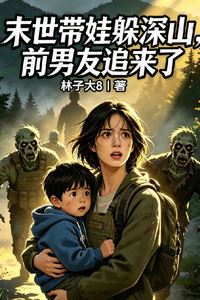
In her previous life, Su Nian held her son after he turned into a zombie, only for them to be torn apart by zombies. Reborn ten days before the apocalypse, she does only three things: sells her house to her enemy, frantically stockpiles supplies, and takes her son deep into the mountains.

An old ring from her ex-boyfriend hides a mysterious 200-square-meter storage space. She fills it with food, grain, cooking oil, medicine, weapons, clothing for every season, and other essential supplies. Believing they will never meet again in this lifetime, she hides away in an old mountain house.

On the fifteenth day of the apocalypse, someone knocks on the door.

Standing outside is her ex-boyfriend, covered in blood. His eyes redden as he stares at the child in her arms.

“Su Nian, I called you so many times…”

“This child… is mine?”

As the zombies draw closer, Su Nian must decide whether to open the door.

Novel Items

More
Jewelry
A silver ring originally Aunt Sun's wedding keepsake after her family went bankrupt and sold their valuables. Aunt Sun gave it to Xia Nanxing with hopes that she would be happy. Xia Nanxing later passes it to Lu Jiashu while packing to sell her apartment.
Item
An extra-large storage space gifted by the system to Ruan Jiaojiao, filled with 1970s supplies. She used it to retrieve a three-pound bass to show her children. The system described it as a gift to make her journey more enjoyable.
Container
A metal box kept by Xing Yu in his study cabinet, containing a stack of greeting cards from Wen Yao.
Item
Su Nian's 87-square-meter apartment in Sheng City, designated as part of a sought-after school district with access to the best elementary school. She sells it to Liu Wei for 600,000 yuan to fund her apocalypse preparations.
Item
A suspicious black sedan with no license plates that has been following Su Nian and Xingxing since the afternoon. It contains three burly men who confront Su Nian, having witnessed her supplies disappearing from the warehouse overnight, suspecting she has a secret storage ability.
Weapon
A tool produced by the tall attacker to shatter Su Nian's car window, causing glass shards to cut her face.
Latest Release
DateGroupRelease
2026-08-11shanghai fantasy c11
2026-08-11shanghai fantasy c10
2026-08-11shanghai fantasy c9
2026-08-11shanghai fantasy c8
2026-08-11shanghai fantasy c7
2026-08-11shanghai fantasy c6
2026-08-11shanghai fantasy c5
2026-08-11shanghai fantasy c4
2026-08-11shanghai fantasy c3
2026-08-11shanghai fantasy c2
2026-08-11shanghai fantasy c1

Community Reviews

Rating(0 / 5.0, 19votes)
5 stars
0(0%)
4 stars
0(0%)
3 stars
0(0%)
2 stars
0(0%)
1 stars
0(0%)

Popular reviews

... Read More
Okay so this chapter is just... devastating in the best way. The way the author builds this post-apocalyptic world isn't through exposition dumps, it's through sensory details that just hit you in the gut. Let me start with this line: "A gust of wind squeezed through the crack in the window, carrying a sickeningly sweet scent of decay." That's it. That's the whole book in one sentence. The smell of corpses described as something almost cloying, almost sweet, and Su Nian immediately rolling up the window like that's a normal thing to do. The contrast between her trying to protect Xingxing from the truth and the absolute horror outside is just chef's kiss. And the imagery throughout is cinematic. The highway blocked with "a sea of red brake lights merged into one" — I could literally see this in my head, like a wide shot from a movie. The abandoned vehicles with doors hanging open, one overturned in a ditch with wheels still spinning slowly. That detail about the spinning wheels is what got me. It's such a small thing but it implies everything: people fled in panic, abandoned their cars, and the machine just keeps going without them. The village at night with shattered windows creating "black, hollow openings" — those words just sit with you. And then the flash of light from a second-floor window, and Su Nian's reaction: "seeing another person was even more frightening than seeing a Zombie." That line recontextualizes the entire world. The zombies are predictable. Other humans? That's the real terror. The factory where they end up sleeping isn't even really a factory — "calling it a factory was generous. It was really just a few dilapidated brick buildings surrounding a courtyard, with the iron gate hanging half open." This is a world that's already been stripped bare, where nothing functions anymore. Every detail reinforces that this isn't just a disaster happening, it's a world that's already dead and slowly being consumed.
... Read More
Let me be honest — this book doesn't have a ton of dialogue, and that's actually one of its strengths. When characters do speak, it feels real. Not polished. Not literary. Just... human. The robbers are the best example. "We just want to borrow a little money." "Six hundred thousand yuan." "Two lives for six hundred thousand. That's a bargain." These aren't elaborate threats or villain monologues. They're casual, almost bored. Which makes them scarier. The scar-faced man asking "why don't you entertain the three of us" while looking at her chest — the dialogue here is disgusting in the most realistic way. This isn't a novel where villains are sophisticated. These are predators who speak like predators. But the dialogue that gets me is the quiet stuff between Su Nian and Xingxing. "Mommy, why didn't you buy clothes for Daddy? Isn't Daddy coming with us?" This eight-year-old who just wants his dad to be part of their survival. And Su Nian's response — "We'll buy some. Mommy just forgot. Thank you for reminding me, sweetheart." She lies to protect him. She says Lu Chen's measurements almost instinctively when the clerk asks for a size. These tiny moments of dialogue reveal everything about her grief, her guilt, her love. The narrative voice itself is also worth noting. It's close third person, staying almost entirely inside Su Nian's head. We get her calculations, her memories of the previous life, her fear for Xingxing. The author doesn't editorialize or explain things to us. We're just there, experiencing it alongside her. The tone shifts naturally from the methodical calm of preparation to the frantic energy of escape, and the prose matches that shift perfectly.
... Read More
Let me just say this: the pacing in these chapters is a masterclass in tension building. The first three-quarters of the text is almost meditative—Su Nian repairing cracks, cleaning the well, cutting weeds. It's slow, methodical, almost boring if you're not invested. But here's the thing: I was completely absorbed. The author makes you feel every swing of the sickle, every bubble from the chlorine tablet, every ache in her back. You're not just reading about survival—you're living it alongside her. That's skillful writing, plain and simple. But then—just when you think you're settling into a cozy rhythm of domestic prep—the author drops a landmine. "The moment she reached the second floor, she froze." Three sentences. That's all it takes to shatter the calm. Four people. A limping man. Blackout curtains. A machete. The shift from peace to paranoia is so sudden it's almost violent. And the ending? Knock. Knock. Knock. "We're not bad people." The author doesn't give us any resolution. No cliffhanger question, no dramatic reveal—just Su Nian standing behind a curtain, hand on a weapon, refusing to open the gate. It's the kind of ending that makes you immediately want to turn the page, but also sit with it for a minute. The tension isn't in action—it's in stillness. She's not running. She's not fighting. She's just... waiting. And that waiting is so much more nerve-wracking than any chase scene ever could be.
... Read More
The pacing in these chapters is absolutely ruthless and I respect it so much. Let me break down why this works so well. You've got the opening—immediate physical action. No warmup, no 'so there we were.' She's already hiking through dense shrubs, carrying her son, shoes slipping on gravel. Within the first few paragraphs you're already invested. Then the zombie chase sequence hits and the pacing accelerates to absolute maximum. Short sentences. Fragments. 'Someone in the group glanced back and screamed. Instantly, everyone broke into a run.' The author isn't wasting a single word. You feel the panic in the rhythm of the prose itself. And then—immediate pivot. She escapes, stops, catches her breath, checks the map. The pacing drops from sprint to a steady walk. This is where most authors would lose you, but the fever scene saves it. The anxiety of 'is he infected?' replaces the physical danger as the tension driver, and it works just as well because now the threat is invisible, internal, uncertain. The morning after is where the pacing really shines. Waking up, checking his temperature, cooking noodles, the quiet domesticity of it all. It's a breath of fresh air after the night of terror, and it makes the reader feel like they can finally exhale. Which is exactly when the author drops the village arrival and the smoke/explosion at the end. The structure here is essentially: crisis → escape → false safety → new crisis. Classic but executed perfectly. The transition from the frantic forest run to the quiet tent scene to the morning routine to the village discovery—each shift feels earned, not rushed. The author trusts the reader to sit with the quiet moments instead of constantly feeding them adrenaline. That's confidence in craft.
... Read More
I need to talk about how this section moves because honestly it's one of the best examples of pacing I've read in a while. The first half — the stockpiling, the buying, the methodical preparation — it has this almost meditative quality. Su Nian is buying twenty bags of glutinous rice, fifty cases of electrolyte drinks, seeds, medicine, camping gear, children's snacks, bicycles. It reads like a checklist, and that's intentional. The author is making us feel the weight of her preparation, the desperate need to get everything done before time runs out. Then BOOM. The news report. The man collapsing outside the supermarket. The screaming. The escape. All of it happens in the span of a few paragraphs and the shift is jarring in the best possible way. One moment she's a careful mother doing grocery shopping, the next she's sprinting through a burning city with her son in her arms. What's interesting is that the author doesn't slow down even after the chaos starts. The escape sequence reads like a thriller — navigation app failing, the bus blocking the road, the narrow side road she remembers from her previous life, Xingxing's quiet sobbing from the back seat. It's relentless. And then it just... stops mid-sentence with Xingxing crying and Su Nian telling him to count. No resolution. No breathing room. Just cut to black. I stayed up until 2 AM reading this section. Not because it was confusing or because I needed to understand something — but because every chapter ended at exactly the right moment to make me keep going. The author knows how to hold a reader's attention and this is proof of it.
... Read More
Let's talk about what Su Nian is willing to risk here, because the stakes are set up so clearly and so personally. This isn't just a survival story — it's a mother protecting her child, and that changes everything about how we read every decision she makes. From the very first paragraph, we know Xingxing is counting through his tears and Su Nian is pressing the accelerator harder. She's desperate. The highway is blocked, she's running out of time, and her ex-husband Lu Chen calls about Shuixi Village — someplace she needs to get to. The stakes are established immediately: get to the village or what? But the real conflict isn't just about zombies. It's about the people she meets. Those three men at the factory — the tall one with the iron pipe, the skinny one with the torch, the heavyset one with the brick. They represent the real danger in this world. The zombies are just animals. These men are calculating, patient, willing to negotiate and then threaten. When the tall man says "We don't want your life. We only want the truck," that's when you know this is worse than any zombie. Su Nian's internal conflict is what makes this section incredible. She's exhausted, she's terrified, but she's also calculating. She considers giving up the truck to save herself and her son. She even negotiates — "leave us half" — showing she's trying to find a peaceful solution. But when she realizes they won't give her a fair deal, something shifts. The text says: "Su Nian knew she couldn't afford to be softhearted anymore. They might not leave either her or her son alive." And then she pulls that machete. The violence is sudden, precise, and terrifying. She slices the heavyset man's arm open in one motion — not because she's a killer, but because she's a mother who just realized there's no other way. Afterward, her hands tremble. She's not a warrior. She's a woman who just did something terrible to keep her son safe. That's the conflict that stays with you.
See all reviews

Characters

See all characters

Custom lists

Oops…There is nothing here.