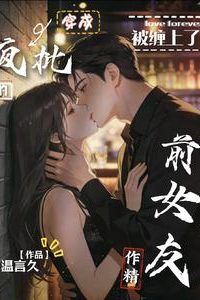
Entangled with the Madman: The Drama Queen Ex-Girlfriend
Novel Info

Summary

... Read More

Work Synopsis

[Transmigration + Socially Anxious FL + Paranoid Psycho ML + Double Virgin/Pure Romance]

In the eyes of others, Wen Chu is the quintessential “good girl.” In reality, she is deeply socially anxious. Her life takes a sharp turn when she transmigrates into a university campus novel as the “Drama Queen” ex-girlfriend of the male lead. According to the plot, this character is destined to drive her love away through relentless nagging, unreasonable tantrums, and sheer “extra” behavior, serving as the perfect foil to the sweet romance between the male and female leads.

Wen Chu initially intended to follow the script to the letter to ensure a successful breakup. However, she suddenly recalled that the male lead is a dark, paranoid madman. Not only would he scheme to take revenge on his ex-girlfriend, but in the later stages of the book, he would even subject the female lead to “forced love.”

Socially anxious Wen Chu finds herself in a dilemma: acting out the script might lead to his retaliation, but initiating a breakup might trigger his grudge and subsequent revenge.

Thus, she turned to the internet to search: How to successfully break up with a boyfriend?

She received an unexpected answer: Thermal Violence! Remain a drama queen, but practice “Thermal Violence”—be clingy, act spoiled, and become so overbearingly controlling that no man could possibly stand such a girlfriend!

Slowly, she began to feel that the male lead was actually quite good to her. Perhaps once the original female lead appeared, they could achieve a peaceful separation.

But why did the look in the male lead’s eyes grow deeper and darker? And why did he become even more clingier than her?

Wen Chu: O.O
Wait, this script is wrong!

Finally, the original female lead appeared. Wen Chu cautiously tried to bring up the breakup, but why did she get pinned down and kissed every time she mentioned it?

Novel Items

More
Strategy
A breakup strategy Wen Chu found online titled Reverse Psychology: Try Thermal Violence. It involves being clingy, message bombing, constant check-ins, and forced physical intimacy to make the boyfriend want to break up, especially effective against germaphobes or those with strong personal boundaries.
Game Prop
A dare card used during the Truth or Dare game at the KTV lounge. The dare given was that if a person of the opposite sex had the same phone battery percentage as Xi Liye, they had to try dating.
Accessory
Xi Liye's scarf that he unwound from his own neck and wrapped around Wen Chu's neck. It carried his lingering body heat and a crisp, clean scent. It was long and effectively silenced Wen Chu's planned confrontation.
Event
The pivotal coincidence where both Wen Chu and Xi Liye had exactly 47% battery on their phones during the dare game at the KTV, which led to them being forced to try dating according to the dare rules.
Item
A dish ordered from the kitchen for dinner. Jiang Mian ate two large bowls and still wanted more. Shi Jinnian also ended up eating half a bowl more while watching him eat.
Craft
Bead-crafting activity that Wen Chu and Xi Liye did together on their date at the creative arts workshop. Wen Chu chose a kitten pattern and Xi Liye chose a red fox pattern. They later fused the beads together with a small iron and parchment paper.
Latest Release
DateGroupRelease
2026-08-11shanghai fantasy c5
2026-08-11shanghai fantasy c4
2026-08-11shanghai fantasy c3
2026-08-11shanghai fantasy c2
2026-08-11shanghai fantasy c1

Community Reviews

Rating(0 / 5.0, 31votes)
5 stars
0(0%)
4 stars
0(0%)
3 stars
0(0%)
2 stars
0(0%)
1 stars
0(0%)

Popular reviews

... Read More
Here's the thing nobody talks about enough: Wen Chu is living a lie, and the lie is becoming unbearable. She transmigrated into this body with a clear mission—play the cannon fodder, maintain the bratty girlfriend act, survive, and eventually escape. The "warm violence" strategy was supposed to be a performance. A role. Something temporary. But somewhere along the way, the script stopped working and started working ON her instead. The stakes here are terrifyingly quiet. There's no villain chasing her, no life-or-death situation (well, except the original plot that she's supposedly avoiding). The conflict is internal and it's happening in real time. Every time Xi Liye does something unexpectedly kind—remembering her sandwich preference, staying up to wait for her text, showing up at her classroom with breakfast—the ground shifts under her feet. She can't maintain the emotional distance she planned because he keeps making distance impossible. And Xi Liye? His conflict is equally compelling but operates on a different frequency. He's a man who has never experienced romantic friction before, and the text makes this explicit: "This was a foreign emotion to him." The stakes for him are about control. He controls his lab, his data, his responses. He says "got it" because it's efficient. It's a shield. But Wen Chu's "Good morning, boyfriend" text cracks that shield, and now he's doing things he's never done before—showing up unannounced, skipping lab work, sitting in filler lectures. Every act of affection is also an act of surrender. The most interesting conflict layer is the one between Wen Chu's past self and her present self. Before transmigrating, she was a shut-in who watched couples and found it baffling. "Why waste time listening to a subject you have no interest in?" Now she's the one asking Xi Liye to waste time with her. The irony isn't lost on the narrative—Wen Chu is becoming the exact person she used to find confusing. But the real tension, the thing that will keep me reading, is the question of what happens when Wen Chu's original plan collides with her actual feelings. She still thinks this is temporary. She still calls it a "role." But Xi Liye is already all in, and he's not the type to wait forever. The clock is ticking on her deception, and every sweet moment between them is also a moment she's spending lying to the one person who's being genuinely real with her. How long can that sustain itself before it becomes the very thing she was trying to avoid?
... Read More
There are three objects in this text that I keep thinking about, and they're not accidental. I'm pretty sure the author placed them there on purpose. First: the scarf. Wen Chu buries her face in it the entire walk from the car to the restaurant. It's her armor against the world—her social anxiety made physical. She can't hide her face, so she hides behind fabric. And then Xi Liye wraps his arm along the back of her chair at the restaurant, creating what the text calls "an invisible barrier." He becomes the scarf. He becomes the shield. That's not subtle, but it's beautiful. Second: the black velvet dress. Her roommate calls it a "Garden Maiden" style—elegant, princely, eye-catching. But Wen Chu is someone who wants to shrink into herself. Why would someone so hypersensitive to strangers' gazes want to wear something that draws every eye? The answer is right there in her dialogue: "If I weren't out with you, I wouldn't wear this." She's performing confidence for him, even though performing is the exact thing that terrifies her. The dress is both her armor and her vulnerability—she's dressed like a princess but feels like an imposter. Third: the glass partitions at the restaurant. The text specifically mentions them. She's visible to the world but separated from it. That's literally her entire existence in this story. She's always on display (as the transmigrator who knows the plot, as the girl playing a role, as the person everyone is commenting on) but never truly connected. The deeper theme here is about performance versus authenticity. Wen Chu is constantly performing—online, in person, even to herself. And Xi Liye? He sees through every performance. Not because he's smart, but because he's honest. That's what makes him dangerous to her, and also what makes her fall for him.
... Read More
Okay so I need to talk about Pei Ye because this guy is genuinely unsettling in the best way. Here's this kid who just found out his dad is remarrying, sits through the whole family dinner with this completely flat affect, and the first thing he does is secretly investigate his future step-sister's boyfriend. That's not normal sibling energy. That's not even normal step-sibling energy. That's something else entirely. The scene where he confronts Wen Chu in the lobby is chef's kiss. He's standing by the floor-to-ceiling window, phone in hand, neon lights reflecting in his eyes but not reaching them — the author literally writes that the lights "failed to bring even a hint of warmth to them." And then he just casually drops "Xi Liye is not a simple person. You'd best stay away from him." Like he's not the guy who literally just found out they're getting married into the same family. Like he has any right to be giving relationship advice. But here's what gets me — he's not wrong, is he? He knows something. The way he says it, the urgency when his phone rings and he has to leave, the fact that he already had someone digging up info on Wen Chu and Xi Liye... Pei Ye is operating on a completely different board. And the fact that Wen Chu asks him not to tell her mom shows she's already picking up on something but choosing to ignore it because it's uncomfortable. Meanwhile Xi Liye is over here reading articles about relationship progression from his best friend and mentally mapping out physical milestones with Wen Chu like it's a strategy game. The man is calculating but in a completely different way — not suspicious, just... intensely focused on her. Which is somehow more dangerous, honestly.
... Read More
I need to talk about how this author controls the pacing because it's genuinely masterful. The chapter opens at maximum tension — a family dinner where everyone's pretending everything's fine, Pei Ye's silently investigating Wen Chu's boyfriend, and she's sitting there feeling this faint gaze on her but not knowing from where. The air is thick with unspoken things. Then — and this is where it's brilliant — Pei Ye leaves. The tension doesn't resolve, it just... shifts. Wen Chu thinks about Xi Liye, sends him a message, goes to the basketball court, and suddenly we're in this completely different tonal register. The cold air, the intense game, the whispered phone messages, the jacket exchange. The pacing here is almost leisurely, letting moments breathe — Xi Liye walking over to her, the awkward exchange about the chocolate, the nose-boop moment. And then the hug. Which is the emotional climax of the entire sequence, and it happens almost accidentally, born from a joke and bad coordination. The author doesn't build to it with dramatic music and slow motion — it just happens, and that's what makes it hit so hard. After the hug, instead of lingering on the romantic high, the author immediately pivots to Xi Liye's internal monologue about Qin Yu's relationship articles. This is such a smart structural choice — it undercuts the sweetness with humor and reveals Xi Liye's calculating nature, keeping us from getting too complacent. Then the tanghulu scene wraps everything up on a warm, almost domestic note, but that yellow light glowing in the winter darkness feels like a promise of more to come. The chapter flow is like a rollercoaster that dips and rises without you seeing it coming.
... Read More
There's a recurring motif in this section that I can't stop thinking about: hands. Not just the literal hand-holding scene, but the way hands function as symbols throughout—hands that touch, hands that type, hands that perform, hands that connect. Wen Chu watches a couple break up and thinks about using their moves. Her hands are idle, observing. Then Xi Liye's hand brushes her nape—'So slender, I could wrap my hand around it'—and suddenly her hands are the site of violation and attraction simultaneously. Then the WeChat Moments scene: his hand holds hers 'exactly like two business partners shaking hands at a high-level summit.' The hand as contract. The hand as performance. The hand as power. And then—the interlaced fingers. This is where the symbolism crystallizes. 'His knuckles were firm, wedged tightly between her fingers; their skin pressed together without a hint of a gap.' No gap. This is the antithesis of the business handshake. This is intimacy that cannot be performed, cannot be faked, cannot be un-done once it's happened. The text emphasizes that this posture brings 'a sense of intimacy and control'—two things that seem contradictory but are actually the same thing when you're Xi Liye. Then there's the screen. Every major emotional beat in this section happens through or around a phone screen. The WeChat Moments post, the Google search for couple photos, the notification bells going wild, Qin Yu's private message bombardment, Xi Liye 'liking' her post and staring at it. The phone is both barrier and bridge. It's how Wen Chu performs her role. It's how Xi Liye reveals his feelings without saying them. It's how Qin Yu warns him. It's how the entire relationship is mediated, documented, and validated. And beneath all of this is the theme of performance versus authenticity. Wen Chu is performing love for an audience (the male lead's eventual real girlfriend, her social circle, her mother). Xi Liye is performing indifference while doing everything backwards. Qin Yu is performing concern while being right. Pei Jianguo is performing warmth while offering genuine warmth. The original Wen Chu performed fear while feeling nothing. Everyone is performing something, and the question the text keeps asking is: at what point does the performance become the thing itself? The photo they take—'Under the dim light of the car cabin, it formed a picture thick with ambiguity'—that word 'ambiguity' is doing so much work. Ambiguous in every sense: is this real or not? Is it romantic or manipulative? Is Wen Chu falling for him or is she just really good at her job? The image captures everything and reveals nothing, which is exactly what this relationship is.
... Read More
This is the part that keeps me up at night. On the surface, this is a cute romance about a girl going on a date with her crush. But if you actually read between the lines—even just a little—you realize the stakes are absolutely terrifying. Wen Chu knows something. The text drops it casually, almost carelessly: "If it weren't for the plot—and the knowledge that he would eventually be the death of her—she wouldn't have minded a real relationship with him." The death of her. Not heartbreak. Not betrayal. DEATH. And she's still there. She's still playing along. She's still letting him hold her hand in the crowd and buy her dinner and look at her like she's the most beautiful girl he's ever seen. She knows the ending and she's walking toward it anyway. That's not a romance novel—that's a tragedy wearing a romance costume. The external conflict is simple: social anxiety vs. the desire for connection. She wants to be close to him but the world is too loud and too full of eyes. Xi Liye solves this conflict with one gesture—taking her hand, shielding her body, creating space. It's so simple and so effective that it makes you ache. But the internal conflict? That's the real story. Every time she lets her guard down, every time she stops performing and just... is—she's risking everything. Because the plot is moving forward, and the plot leads to her death. She's falling for the person who's supposed to kill her, and she can't stop herself. That's not just good writing. That's devastating.
See all reviews

Characters

See all characters

Custom lists

Oops…There is nothing here.