Summary

... Read More

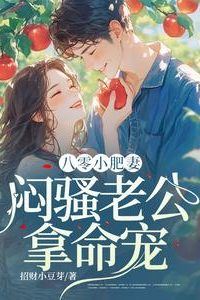
Military marriage + Marriage before love + Spoiling the wife+ Pursuing wife to the crematorium


Su Banxia, a CEO of a listed company, unexpectedly won tens of billions, only to die from a heart attack and be reborn in the 1980s, abandoned in the wilderness.


She became a married woman, burdened with a mountain of debt.


To make matters worse, the army’s number one rough and tough guy, standing 195 cm tall, immediately brought up divorce.


Fine, let’s divorce. Would CEO Su even be afraid of a divorce?

Could she not live without a man?

Men would only slow down her money-making speed!


Later, CEO Su became fair-skinned, beautiful, and long-legged, surrounded by countless suitors.


The rough guy hugged CEO Su, full of grievances: “Darling, I was wrong. Let’s not get divorced.”

Novel Items

More
Materials
A powerful drug administered by Lin Limei to both Su Xiaoyin and Yuan Songzhi to ruin the original owner's reputation. The drug caused intense desire that neither Su Xiaoyin's healing ability nor her efforts could fully counteract. Su Xiaoyin used her plant ability to purify the medicinal effects from both her own body and Yuan Songzhi's body through intimate contact.
Item
A palm-sized calendar hanging on the white wall with the year 1980 emblazoned on its cover in four bold characters. It had never been torn, marking the time period of the story.
Daily Necessity
Half a bag of laundry detergent found in the bathroom, which Su Banxia had no choice but to use as shampoo since there was no shampoo or soap available.
Clothing
A relatively clean and decent-looking floral blouse that Su Banxia picked out from the wardrobe to wear after her bath.
Food
A bundle of dried noodles found in the kitchen, which Su Banxia cooked for herself along with chili sauce and vinegar as her first meal in the new body.
Food
A half-empty jar of chili sauce found in the kitchen, used by Su Banxia to flavor her noodles.
Latest Release
DateGroupRelease
2026-08-11shanghai fantasy c56
2026-08-11shanghai fantasy c55
2026-08-11shanghai fantasy c54
2026-08-11shanghai fantasy c53
2026-08-11shanghai fantasy c52
2026-08-11shanghai fantasy c51
2026-08-11shanghai fantasy c50
2026-08-11shanghai fantasy c49
2026-08-11shanghai fantasy c48
2026-08-11shanghai fantasy c47
2026-08-11shanghai fantasy c46
2026-08-11shanghai fantasy c45

Community Reviews

Rating(0 / 5.0, 23votes)
5 stars
0(0%)
4 stars
0(0%)
3 stars
0(0%)
2 stars
0(0%)
1 stars
0(0%)

Popular reviews

... Read More
I need to process what just happened in these chapters. Jiang Guo'an comes home, finds the place spotless, discovers his wife has washed his bedsheets, and what does he do? He cooks. He makes stewed dough slices. From scratch. Kneading the dough, rolling it out, dropping pieces into boiling water like he's done this a thousand times. This man who was sleeping in the office and complaining about his wife suddenly becomes domestic, and the scene is written with such tenderness that I actually felt something in my chest. He knocks on her door—actually KNOCKS, doesn't just barge in—and says 'Food's ready.' She says she already ate. He sits down, eats his bowl, glances at her closed door, and then leaves the second bowl on the cutting board anyway. That second bowl is the most important object in this entire chapter. He doesn't force her to eat it. He doesn't demand gratitude. He just... leaves it there. Like an offering. Like he's testing whether she'll come out. And then the internal monologue where he catches himself thinking she 'wasn't entirely without merit' and immediately slaps his own brain—'Stop right there—what if this woman is just putting on an act?' This is a man who is genuinely confused by his own softening. He wants to be angry at her, but he can't stay angry when she's washing his sheets and keeping the kitchen clean. Their relationship is still so fragile. She's changed, he's suspicious, but there's this undercurrent of care that neither of them can quite name yet. And I am HERE for it.
... Read More
I have to talk about the dialogue in these chapters because it's genuinely good and I don't say that lightly. Zhang Xiaolan's voice is distinct immediately: 'Sister, just light them up. The ashes can be mixed back into the soil as fertilizer.' Direct, practical, no-nonsense. She carries matches everywhere because 'I need them to light the gas stove when I cook. It's become a habit.' This is a woman who lives by routines and doesn't apologize for them. Her dialogue never wastes words. Then there's Su Banxia's internal voice, which is where the humor lives. After Zhang Xiaolan returns with a borrowed hoe while Su Banxia is still catching her breath: 'Su Banxia: … Well, whether I want to or not, I guess I'm digging now.' That moment of silent resignation is funnier than any joke. The author trusts the reader to understand the comedy without spelling it out. Jiang Guo'an's dialogue is clipped, defensive, almost painfully brief. 'Get lost…' 'I could just sleep in the office…' 'Food's ready.' He says very little, and what he does say reveals everything about a man who has been trained to suppress emotion. Even his internal monologue is structured like orders he's giving himself—'Stop right there' is literally military language applied to his own thoughts. The most striking exchange is probably the one between Jiang and Political Commissar Liu, where the Commissar essentially tells him to fix his marriage or send his wife home. The power dynamic is clear, but so is the unexpected kindness underneath the brusque delivery: 'What couple doesn't have conflicts?'
... Read More
Okay, I need to talk about this dinner scene because it literally made me sit there staring at my screen. Su Banxia and Jiang Guo'an sitting across from each other, both trying to bring up something, and they end up saying the exact same thing at the same time. "You go first..." The awkwardness is SO palpable. It's like the author just reached into my brain and wrote my exact experience of watching a couple who clearly care about each other but have no idea how to actually BE each other. And then Liu Yan shows up with her sweet and sour ribs like she owns the place. Classic move. But the real emotional gut punch isn't even the love triangle stuff — it's Jiang Guo'an's internal monologue. He sees Su Banxia's eyes are brighter now, and he feels this pang of something he can't name. He's happy she's improving, but there's this ache underneath it too, like he's watching someone become a person he doesn't fully know yet. That's the kind of writing that makes you want to shake the characters and yell at them to just TALK to each other. The Political Commissar noticing they haven't even greeted each other and then glaring at Jiang Guo'an? Chef's kiss. He literally thinks it's all Jiang Guo'an's fault. Meanwhile Jiang Guo'an is over there thinking about finding her a job and being all formal and polite about it, which honestly made me want to scream because the man clearly has feelings but expresses them through bureaucratic favors.
... Read More
Okay so I need to talk about this scene where Su Banxia chases down the thief because Zhang Xiaolan gets mugged. Like, first of all, the author really knows how to make you feel the urgency. You have this whole setup where Zhang Xiaolan is already stressed about her empty kitchen and the bus ride, and then BAM—this suspicious-looking man appears. The way the author describes the theft is so visceral. Zhang Xiaolan stumbles, the bag is gone, and her face pales. But here's what really got me: Su Banxia doesn't hesitate. She doesn't think about it. She just sprints after the thief without a word. That's when I knew this character had completely transformed. And then the alley scene—oh my god. The thief pulls a knife and Su Banxia just LEAPS at him. A literal kick to the stomach. Jiang Guo'an watching from the alley entrance with his heart in his throat... I was genuinely on edge. This isn't the weak, gambling-addicted wife we met earlier. This is a woman who can take down a knife-wielding criminal. The emotional whiplash from chapter to chapter is incredible. But what really hit me was the aftermath. Zhang Xiaolan's gratitude, the meat buns she offers on the bus, asking Su Banxia to stop gambling. That moment where Su Banxia just chuckles and doesn't explain—she knows it's pointless since they're getting divorced anyway. There's this bittersweet acceptance in her silence. And Jiang Guo'an watching her walk away, that lingering look, the way Chen Feng notices how different she seems... The romantic tension is simmering under the surface. I kept waiting for something to happen between them but the author is playing the long game here.
... Read More
Can we talk about how distinct everyone's voice is? Jiang Guo'an's dialogue is all clipped, suspicious, loaded with unspoken accusations. "Where exactly did the money come from?" is five words that carry a lifetime of distrust. He never says what he's really thinking, which is exactly how someone who's been hurt would communicate. Su Banxia's voice is different—she's performative sometimes (the whole elegance act when eating), but when she drops the act and says "I already answered that question yesterday. In the end, you still don't believe me," that's raw and direct. The Chen Feng and He Liang exchange is comedy gold though. He Liang's entire philosophy of "one night together and everything is fine again" is so aggressively normal it's hilarious, and Chen Feng's immediate shut-down of it shows he's the voice of reason in the group. But the best dialogue moment is Zhang Xiaolan telling the thief story to Li Jianguo. She starts with genuine panic—"Did you lose your mind?"—then pivots to excitement, then to guilt, then to warmth. Her emotional range is all in her speech patterns. And Su Banxia's internal monologue when she's forced to dig the garden? "Wahhh, I really don't want to do this"—that casual, modern, almost comedic inner voice contrasts perfectly with the period setting and makes her feel like a real person rather than a novel construct. The author clearly knows each character's rhythm.
... Read More
There's a reason Su Banxia starts planting vegetables in this section and it's not just plot filler. Vegetables are about patience, about putting something in the ground and waiting for it to grow, about tending to something that can't be rushed. This is literally what her life has been missing—she was gambling, being impulsive, destroying things. Now she's digging holes, placing seedlings at equal intervals, watering them. The image of her planting 'like soldiers' is not accidental. She's bringing order to chaos, which is exactly what her life needs. The blisters are another symbol that won't let me go. They're the physical mark of her labor, the evidence that she's actually doing something with her hands instead of burning money at a gambling table. But they're also vulnerable—burst, raw, needing care. When Jiang Guo'an applies gentian violet, he's literally treating her wounds. The hands that used to hold cards now hold seedlings and get blisters. That transformation is the whole theme of the book compressed into one image. The closed door is a recurring symbol too. Her room door stays closed. His room door slams shut. They're living under the same roof but separated by wood and distance. And yet—the lunchbox appears on the table anyway. He finds a way across the threshold even when the door won't open. And then there's the Political Commissar's story about the marriage certificate being slapped on the table. That moment—public, defiant, almost aggressive—contrasts so sharply with Su Banxia's current performance of humility. She's now the one taking responsibility, defending him, saying it was all her fault. The woman who was once so reckless with their union is now carefully protecting his reputation. The theme here is about how people can change, but also about how hard it is to be seen changing.
See all reviews

Characters

See all characters

Custom lists

Oops…There is nothing here.