Double Rebirth in the Apocalypse: He Turned White-Haired for Me Twice - Reviews

Double Rebirth in the Apocalypse: He Turned White-Haired for Me Twice
+Add to Custom List
Sort
Add review
... Read More
There's something really beautiful about the jasmine pendant that Qingtang touches before entering the space. It's not just a plot device—it's her connection to her mother, to the life she lost, to the concept of HOME in a world that's lost everything. The space itself is this golden, endless agricultural paradise that contrasts so sharply with the ruined city outside. It's almost too perfect, which makes me wonder if the author is suggesting that hope and memory can create safe havens even in apocalypse. And Abai—this dog who was raised by her mother, who can sense danger and breathe fire—represents something deeper too. He's the bridge between the past and present, between loss and survival. He protects her now what her mother can't. The villa with its warm lights against the dark, dead city is another symbol—civilization as a fragile flame that people fight to keep burning. Even Rong Yuxuan standing guard across the street is symbolic: he's become part of that defense, that commitment to protecting something worth saving.
... Read More
This book is doing something really interesting with the concept of memory and identity across lifetimes, and there's this one detail that absolutely destroyed me. Rong Yuxuan extends his psychic power and detects something: "A faint, familiar scent. The same lingering fragrance that had remained on that worn pink knitted glove all those years ago." A GLOVE. That's it. That's the entire emotional anchor for two lifetimes of obsession. A pink knitted glove that she probably forgot about decades ago, and it's the thing that makes his eyes redden and his voice break. The author is saying something profound here about how love and attachment work—they don't need grand gestures or dramatic confessions. Sometimes it's just a scent on a worn-out piece of clothing from when you were fifteen, and that's enough to define an entire existence. The glove represents everything Rong Yuxuan never had the courage to say. It's the physical remnant of that single interaction at the sweet potato stall—the only real moment they shared before the apocalypse, before rebirth, before all of this. The glove is small and forgotten by her but monumental to him, and that asymmetry is the whole tragedy. There's also this incredible contrast between the dimensional space inside the villa and the ruined world outside. The space represents preservation—of food, of normalcy, of the life that was lost. But it's also a cage. Qingtang is safe inside but she's trapped, and the outside world is where Rong Yuxuan is fighting. The villa with its steel plates and electrified fence is both sanctuary and prison, and the question the book keeps asking is: can you truly be safe in a world like this, or does safety require connection to others? The ending image of Rong Yuxuan setting up across the street, watching from the shadows, is almost ghostly. He's become a guardian spirit, present but invisible, protecting someone who doesn't even know his name. That's the thematic core right there—love as silent vigilance.
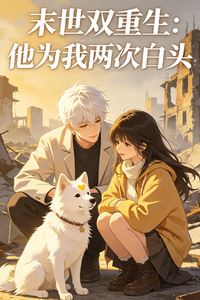
... Read More
There's a scene in this chapter that I keep coming back to. Lin Qingtang stands outside the university after leaving Long Juanli and Long Junlong, and the author writes: "Students laughed. Some hurried toward class. Others discussed what to eat for dinner. Everything looked perfectly ordinary. There were still thirty days until the acid rain that would change the world forever. None of them knew." Thirty days. Thirty days until the apocalypse. And these people are talking about dinner. This single paragraph does more worldbuilding than any exposition dump ever could. The horror isn't just in the zombie horde — it's in the gap between what the reader knows and what the characters experience. The visual contrast throughout this chapter is stunning. You have Long Juanli in her light gray cardigan, hair loosely tied, radiating kindness — and then you cut to Zhao Hongbin with his triangular eyes and thin lips, "the flesh on his face bunched together into a sinister grin." The author uses appearance as a map to moral character, and then subverts it with Long Junlong, whose innocent blushing hides complicity. The father's office scene is another standout. Lin Shaoan crouching beside his daughter, the tablet slid across the desk, the casual way he orders violence — "Find some reliable men. Teach them a lesson. Make it hurt. Just don't kill them." This is delivered with the same tone most people use for lunch orders. The contrast between his tenderness with Qingtang and his coldness to the world builds an entire power structure in a few paragraphs. And that ending image — the warm pendant, the white light, the hard ground replacing her mattress. The transition from soft bedroom to unknown terrain is so visceral. You can feel the shift. The world is expanding beyond the campus and the city into something supernatural, and the author isn't rushing it. They're letting the mystery breathe.
... Read More
Let me just quote this exchange because it's absolutely perfect: "I'm sorry… I didn't want this either…" That's what Long Juanli said while pushing Lin Qingtang to her death. And then in this chapter, she says: "We're best friends. If I introduce someone to you, you know I've already made sure he's trustworthy." The parallel is so sharp it's almost comedic if it weren't so horrifying. The same mouth that begged forgiveness while committing murder is now offering matchmaking advice with the same warm smile. The dialogue here does something incredible — it makes every sweet word feel like a threat because we know what that voice sounds like when it's lying. Long Juanli's dialogue is crafted to be almost too perfect. "You'll never know if dating is right for you unless you try it. Look at me. None of my past relationships worked out, but at least I experienced them." This is the kind of thing a genuinely caring friend might say, which is exactly why it worked on Lin Qingtang the first time. The dialogue is designed to be believable on a first listen and sinister on a second. Lin Shaoan's dialogue is a completely different animal. Short. Direct. No filler. "Tell me." "And then?" "Understood, President Lin." The man doesn't waste words and every one of them carries weight. When he says "Anyone who dares hurt my daughter… Will pay the price," it's delivered as a whisper, not a shout. That's scarier. And Lin Qingtang's internal voice — the narration of her thoughts — is where the real emotional power lives. "Either Long Juanli didn't notice anything unusual… Or she simply ignored it." This kind of analytical observation, delivered in first-person-adjacent narration, gives us access to her trauma without needing melodramatic dialogue. The author's narrative voice is restrained in the best way. Short sentences. Fragments. "Right? Right?" The repetition mirrors Lin Qingtang's spiraling thoughts. This isn't purple prose — it's precise, controlled, and every word earns its place.
... Read More
I read this in one sitting and I genuinely cannot process what just happened to me. The pacing here is absolutely masterful. Let me break down why this works so well. The chapter opens with the mirror — immediate disorientation, immediate stakes. We don't get a slow build, we drop right into the moment of realization. Lin Qingtang touches her face, feels no scar, sees no wound, and the reader thinks: okay, what happened? Then Long Juanli appears and the author starts ticking off details like a countdown clock. Every interaction is calibrated to maximize tension. The soy milk scene — 300 words of unbearable normalcy masking the worst betrayal. The WeChat message from Long Junlong — the timestamp matches perfectly, and she deletes it without replying. That one detail tells us everything about her new mindset. She's not just remembering, she's actively changing her behavior. The transition from the dorm to the car to the father's office flows like water. No jarring jumps, no filler. Each scene pushes the plot forward while revealing character. The father's office scene is where the emotional peak hits — her breakdown, his promise, the phone call ordering retribution. And then immediately after, the pendant scene. The author doesn't let you catch your breath. What's brilliant is the thirty-day deadline hanging over everything. The reader knows the apocalypse is coming, which means every casual interaction between Lin Qingtang and her "friends" is loaded with dramatic irony. We're screaming internally while she's trying to figure out her next move. The chapter structure itself mirrors her psychological state — starting fragmented and disoriented, building to a cathartic release with her father, then ending on a cliffhanger that opens the door to something entirely new. This is how you pace a rebirth novel. Every beat earns its place.
... Read More
I need to talk about Long Juanli because this character is absolutely chilling and I can't stop thinking about her. On the surface, she's everything a best friend should be. She brings soy milk from a shop all the way across campus. She remembers Lin Qingtang's favorite flavors. She worries about her friend's love life. She even sighs like a victim when Lin Qingtang pulls away. The author makes it so clear that this is the exact performance that fooled Lin Qingtang in her first life — "What a nice guy" energy but for a girl. But here's what destroys me: the moment Lin Qingtang tilts her head away from Long Juanli's touch. It's such a small, almost invisible movement. "It wasn't a dramatic movement. But Long Juanli noticed." And then her smile becomes even gentler. That's the thing that keeps me up at night — did Long Juanli notice because she's a sociopath who can't stand losing control, or because she was genuinely surprised that the script had changed? And Long Junlong! The shy boy in the plaid shirt with the red ears. In the previous life, Lin Qingtang thought his blushing proved he was harmless. "A boy who blushed so easily couldn't possibly be a bad person." God, the cruelty of that line. He watched her die and did nothing. He's not even a willing participant — he's worse, he's a bystander who chose his sister over her friend. But the real emotional core of this chapter is Lin Qingtang and her father. When she calls him and he immediately knows she's been crying — "A businessman who had built an empire was far more perceptive than most" — and he doesn't pry, he just says "Tell me." That's the kind of father every daughter dreams of. And then watching her break down in his arms, the scene where he remembers his dead wife's last words... I literally had to pause reading. The relationship between these two is so tender and it makes everything else in the story feel more dangerous by contrast. She has someone who would move mountains for her, but she's still carrying this trauma alone because how do you explain that you died?
... Read More
Can we just talk about Li An for a second because this guy is genuinely hilarious and also the reason everything goes sideways in this chapter. Let me set the scene: Rong Yuxuan is standing outside the door, being incredibly gentle and careful, trying to communicate with the girl he's spent two lifetimes searching for. He's soft-spoken, respectful, saying all the right things. And then Li An just—bursts in. "Miss Lin! Uncle Lin! Please don't be afraid! We're really good people!" Bro. No. That is not how you convince a terrified woman with a gun that you're safe. And then he goes on this absolute rant: "Brother Xuan spent seven days and seven nights searching for you! He barely slept! He checked surveillance cameras nonstop and fought his way here from the university district! He's cleared out who knows how many zombies! He has powers! He controls lightning! He's incredibly strong! He can absolutely protect you!" Every single exclamation point is doing SO much work here. This is the literary equivalent of someone whispering "I'm not a threat" while holding a flamethrower. Of COURSE she's more scared now. A stranger with lightning powers just described by his equally frantic friend. The author uses Li An's dialogue perfectly to escalate the tension when it could have gone in a completely different direction. But what's brilliant is how each character's voice is so distinct. Rong Yuxuan's dialogue is sparse, careful, almost reverent. He barely speaks and when he does it's measured. Lin Shaoan is all authority and protection—short commands, sharp warnings. "Enough!" "Get out." "Or I'll shoot." Three words, maximum impact. And Lin Qingtang? Her voice is pure fear and suspicion. "I don't know you. You've got the wrong person. Leave now, or we'll shoot." The narrative voice itself is also worth mentioning—it's got this punchy, staccato quality with a lot of short sentences and fragmented thoughts. "Too late." "Not zombies. Two living people." It creates this breathless rhythm that matches the tension perfectly.
... Read More
Okay so let me just say—this chapter is a masterclass in how to stack threats without making it feel chaotic. You've got zombies closing in from the front, thugs with weapons at the gate, AND Scarface leading the charge because Rong Yuxuan broke his wrist the day before. That's not just random bad luck, that's cause-and-effect plotting at its finest. The author didn't just throw danger at the characters; they made the danger PERSONAL. Scarface's grudge is what brought Boss Hu's crew here, and Boss Hu's cruelty raises the stakes for Qingtang specifically. And then there's the zombie horde as a secondary pressure—like the universe itself is trying to crush this villa. What I loved most was how Rong Yuxuan positioned himself between the threats and the villa. He didn't wait to be asked. He just... moved. That single action—"a black figure shot out from the villa across the street like a bolt of lightning"—tells us everything about his character without a single line of internal monologue. The plot here is tight, layered, and every threat connects back to something that happened earlier. That's good writing.
... Read More
"I warned you." "If you followed me again..." "...you'd end up just like the zombies." The chapter opens with Rong Yuxuan absolutely dismantling Long Juanli and her brother with lightning. This is pure action, high intensity, and then—cut to—what? A family eating STEAMING HOT MEALS in a villa with central air conditioning and a basement shooting range. The tonal whiplash is incredible. One moment you're reading about electricity wrapping around people's legs and the next you're reading about braised prawns and pork rib soup. And I love it. The author does this masterful pivot from the brutal outside world to this insulated bubble of normalcy inside the villa. The description of the meal is almost painful in its detail—fresh prawns from a dimensional space, vegetables picked moments earlier, rice that's freshly milled. In a world that has become hell, this ordinary dinner feels revolutionary. The backup generator humming, the crystal chandelier, the steaming food—it's all so deliberately mundane that it hits harder than any action scene could. Then the alarm goes off. Beep. Just one word and the entire atmosphere shifts again. The pacing here is surgical. You go from warm family dinner to tactical readiness in literally two sentences. Lin Shaoan doesn't hesitate—he pulls Qingtang behind him, grabs a rifle, disengages the safety. No panic, no drama, just trained response. And then the knock. Knock. Knock. Knock. The author repeats the sound four times and each one lands like a drumbeat. After all that action, all that tension building with the alarm, we get three gentle knocks. The contrast is everything. The chapter ends with Rong Yuxuan declaring he'll stay across the street and guard them, which is the perfect cliffhanger because now we're left wondering: will she trust him? Will she ever find out who he really is? The author has set up this incredible tension between two people who share a history neither of them fully understands, and I am OBSESSED with where this is going.
... Read More
Let's talk stakes because they are HIGH and the author makes sure we feel it. Rong Yuxuan is literally standing alone against more than a dozen armed thugs while zombies claw at the gate. He's got electricity powers but even he can't handle infinite enemies. When that thug circles behind him with a steel pipe, Qingtang literally shouts "Watch out!" without thinking. That's the moment the stakes became personal for her—not abstract danger, but THIS SPECIFIC PERSON she's starting to care about getting hurt. And Boss Hu's dialogue is genuinely chilling: "Leave the woman alive. We'll have our fun before dealing with her." I literally sat up straight. The author isn't playing around with the threat level here. Qingtang has her space, her dad, Abai, and now Rong Yuxuan fighting outside—but what if he falls? What if the zombies get in? What if the thugs breach the gate? Every angle of escape is being closed off simultaneously. The tension is suffocating in the best way possible. I was literally holding my breath during the fight scene.

Leave a comment

You must be logged in to leave comments. or