Summary

... Read More

[Rough Hunter + Super-strength Post-Apocalyptic Woman + Family Drama + Sweet Romance + Spatial Dimension + Business + Infrastructure + Farming + Cute Kids]

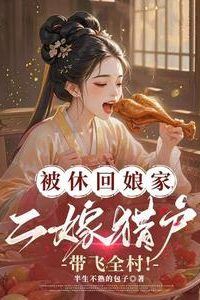
In the final battle between humans and Zombies, Zhou Xiaomai died a heroic death!

When she opened her eyes again, she had arrived in an alternate era and become a divorced woman abandoned in the countryside.

A malicious grandmother, a calculating eldest aunt, a “mama’s boy” father, and a weak mother.

This family even thought she was an embarrassment and refused to let her return home?

Fine, fine, fine. She didn’t plan on staying to dig up wild vegetables for this family anyway. She turned around and became neighbors with a hunter.

Is it impossible for a woman to survive in this world?

Non-existent!

Chopping wood in the mountains, catching fish in the river, farming, and doing business—for a woman from the apocalypse, these were just basic, easy-peasy survival skills.

As her life began to flourish, the hunter would drop by for a meal from time to time. One night of drunken passion later, she found herself pregnant.

The hunter’s family was even more chaotic than her own.

A henpecked father, a mean stepmother, a selfish younger brother, and a parasitic older sister.

Zhou Xiaomai declared: I cannot marry into such a family!

Who would have thought the hunter would chase after her every day, promising that he would sever all ties with them…

Novel Items

More
Money
The compensation paid by the Han family to Zhou Xiaomai upon her divorce, which she kept secret from her grandmother. It was ten times the original offer and enough to buy a house and land.
Money
The original dowry/betrothal payment the Han family gave for Zhou Xiaomai's chongxi marriage, which Old Mrs. Jiang accepted without consulting her granddaughter.
Document
A dreamed-about document in Yun Xiangye's nightmare where her parents-in-law demanded Gu Yan divorce her due to her lowly background. In reality, this did not happen, but the dream reflected her deep insecurities about her status.
Document
A required document for leaving the village, issued by the village and stamped by the yamen. It records detailed information including gender, age, body build, face shape, moles, companions, destination, and livestock details. Without it, one would be treated as a vagrant or spy and flogged or executed.
Item
Zhao Xiuye grabbed a broom from the side and hit Jiang Mingxia multiple times on the back after Li Shanshan called her a big bad guy. She was tired from hitting and dropped the broom.
Money
The regular wage paid to concubines in the Zhou household. Guan Xiyue's monthly pay was originally 800 large coins, but Madam Yu confiscated all three months' pay as punishment after Guan Xiyue sent the recipe to others.
Latest Release
DateGroupRelease
2026-08-11shanghai fantasy c10
2026-08-11shanghai fantasy c9
2026-08-11shanghai fantasy c8
2026-08-11shanghai fantasy c7
2026-08-11shanghai fantasy c6
2026-08-11shanghai fantasy c5
2026-08-11shanghai fantasy c4
2026-08-11shanghai fantasy c3
2026-08-11shanghai fantasy c2
2026-08-11shanghai fantasy c1

Community Reviews

Rating(0 / 5.0, 10votes)
5 stars
0(0%)
4 stars
0(0%)
3 stars
0(0%)
2 stars
0(0%)
1 stars
0(0%)

Popular reviews

... Read More
There's this one passage that I keep coming back to. Zhou Xiaomai walks toward the mountainside and the text says: "It was May, and the mountains and forests were lush and green. A gentle breeze carried the scent of earth in the air—it was a season brimming with vitality." And I just... I stopped reading for a second. Because this is a woman who came from a world where biological weapons polluted the air, land, and rivers. Where she watched her parents die in a lab. Where she grew up in a base surrounded by death and reanimated corpses. And now she's breathing air that smells like EARTH. Actual, clean, unpolluted earth. The author doesn't just tell us this world is peaceful—they make us FEEL it through contrast. The wolf howls on Kui Mountain are described as "clear and loud" but the wolves are still far away. In the apocalypse, any sound like that would mean death. Here, it's just... night atmosphere. It's background noise to a life that's actually worth living. And the village itself! The stream flowing down from Kui Mountain, the outhouse with broken planks and a starry sky above it, the ox cart carrying aunties with baskets of eggs and vegetables, the general store with iron pots at the entrance, the bank with its high counter where Zhou Xiaomai can barely see over it. Every detail grounds us in this world. It's not just a backdrop—it's a character in itself. A world that's poor but clean, backward but free, dangerous in a natural way rather than a manufactured apocalypse way. The contrast between her two lives isn't stated as a theme—it's woven into every sensory detail. The fresh air. The green mountains. The sound of wolves that don't threaten her. This is what she was fighting for back home, and now she's living it.
... Read More
Can we talk about Liu Caixia for a second? Because this woman is absolutely fascinating in the most frustrating way possible. On one hand, she's the only person in Zhou Xiaomai's natal family who showed her any kindness. The text literally says she and the two younger sisters "were, after all, the ones who had treated the original host best in this family." But then when Zhou Xiaomai offers her a lifeline — "Mother, are you willing to leave and live with me? Don't worry, I won't let you or my sisters go hungry" — and Liu Caixia's response is basically horror. She stares in shock like Zhou Xiaomai just suggested she eat a live frog. "I am a daughter-in-law of the Zhou family. How can I leave the Zhou household?" That's it. That's the line. Not "let me think about it," not "that's dangerous for you," just... duty to a family that literally threw her daughter out. Zhou Xiaomai's offer was genuine. She even thought, if Liu Caixia was willing, she wouldn't mind supporting a few more people. And Liu Caixia chose the people who cursed her at the doorstep. It's not even that Liu Caixia is evil — she's weak. The text calls her "weak to the core." But weakness that refuses to act when action is offered? That's a different kind of cruelty. Zhou Xiaomai already knew this would be the outcome — "asking was just unnecessary" — which makes it even sadder. She still asked. She still hoped, maybe, that her own mother would choose her. And that moment of hope, followed by that quiet rejection, tells you everything about why Zhou Xiaomai is truly alone now.
... Read More
I want to talk about the lotus. Not the flower itself, but the fact that it appears on Zhou Xiaomai's right index finger when she senses danger. It materializes instinctively when she sees the bear-man. This is clearly some kind of power or artifact tied to her spatial dimension abilities, and the fact that it's a LOTUS is significant. Lotus symbolism runs deep across cultures—purity rising from mud, enlightenment, spiritual awakening. Zhou Xiaomai is a woman who rose from the mud of the apocalypse, survived biological warfare and zombie hordes, and now finds herself in a world where the air is clean and the wolves are far away. The lotus on her finger is a reminder of what she carries—both power and the memory of where she came from. Then there's the two hundred taels of silver. In the apocalypse, paper money was useless. Only gold and silver mattered. The fact that she feels uneasy about the silver note—even in this peaceful world—shows how deeply the trauma of that life is embedded in her. She's physically safe now, but her mind is still in survival mode. This is the lingering effect the text explicitly mentions. And the clean air, the green mountains, the stream water—all of these are symbols of what the apocalypse destroyed and what she's now reclaiming. The world isn't just a setting; it's the physical manifestation of everything she fought for. Her parents died developing a serum to suppress the zombie virus, and now she lives in a world where that virus never existed. Every breath she takes is a victory. The recurring motif here is contrast. Past vs. present. Apocalypse vs. peace. Submission vs. defiance. The original Zhou Xiaomai was a doormat; the new one speaks her truth in a bank full of strangers. The transformation isn't just internal—it's reflected in the world around her.
... Read More
The household registration (hukou) in this story is doing so much heavy lifting as a symbol. On the surface, it's just a bureaucratic document — but it represents belonging, identity, and legal personhood in this rural Chinese setting. When Old Mrs. Jiang grabs it and "threw it right in her face," calling Zhou Xiaomai a "useless money-losing trash," that's not just an angry gesture. That's the family physically discarding their relationship with her. The registration becomes a weapon, then a trophy — Zhou Xiaomai carefully picks it up, folds it, and tucks it into her sleeve pocket. She treats it with more respect than they ever did. Later, when she places it inside her spatial dimension alongside her silver and jewelry, it's almost ceremonial. Her old identity is now stored alongside her supplies, protected but separated from her daily life. And the village chief's warning — "if you transfer your household registration out as well, I'm afraid your reputation will only suffer more" — highlights the cruel double bind she's in. Staying means being controlled by a family that hates her. Leaving means social ruin. Zhou Xiaomai's response cuts through all of it: "People will say what they want—I can't control that." There's a deeper theme here about what it means to truly belong. The Zhou family had her registration and used it to define her worth — as a chongxi bride, as free labor, as a disgrace. Taking it back and choosing to leave is an act of self-definition. She's not just changing addresses; she's rewriting who she is. The spatial ability she discovers afterward — a five-hundred-cubic-meter dimension that holds her belongings in time-stasis — feels like a metaphor for this too. She's building an inner space that no one can touch, no one can enter, no one can take away.
... Read More
The village chief's main house is such a perfect setting for where Zhou Xiaomai is in her life. Let me paint it for you: it's at the easternmost edge of the village, remote, with few families nearby. Further east is Kui Mountain. The bamboo strip fencing is rotted with gaps you could slip through. Inside, the kitchen has two empty stove platforms with no iron pots, the rooms have no cabinets — just old bed boards that can't be moved. But the roof doesn't leak, there's no dampness, and someone from the village chief's family still comes by to tidy up. It's simple, crude, but livable. And then the village chief warns her about the nights: "the sound of the wind blowing through the woods, plus the howling of wolves, can be a bit eerie." Eerie. That's the village chief being diplomatic. Zhou Xiaomai's internal response is one of the funniest lines in the whole passage — in her past life during the apocalypse, she spent all her time fighting zombies. What is a little wind and wolf howling to her? The contrast between what this world considers scary and what she's actually survived is delicious. The house itself mirrors her situation perfectly: abandoned by others, slightly rundown, but structurally sound. It's not a palace, but it's hers. And for someone who just got told she's a "useless money-losing trash" by her grandmother, having a place that's genuinely hers — not shared with people who resent you, not a cramped shed attached to your sister's room — that's everything. The village chief even says their family doesn't plan to use it, which means this space has been waiting, in a way.
... Read More
Okay so Xiao Qingshan. Let me just say this: the way this guy was introduced is EVERYTHING. Zhou Xiaomai sees a giant black bear walking like a human and her first thought isn't fear, it's "I can hunt this for money." Then the bear TRANSFORMS into a man carrying a 200-pound wild boar on his back, wearing animal skins in SUMMER, with a massive bow. And he just... walks past her like nothing happened. No words, no interaction, just this incredibly imposing physical presence. But here's what got me—the fact that he lives alone at the easternmost edge of the village, his door was locked when she arrived, and his family took their handcart to haul wheat. He's basically the village hermit. And Zhou Xiaomai, who has zero memories of him from the original host's memories, just has this vague sense of familiarity. That's a setup I am HERE FOR. Then the next day she calls him "Uncle" and he's like "I'm twenty-seven, what the hell." The fact that he looks that rugged and old at 27 tells you everything about his life. This man has been surviving out in the wilds while everyone else is in the village center. And the fact that Zhou Xiaomai's instinct was to NOT mess with him, that she had a gut feeling she couldn't defeat him even with her spatial dimension abilities—that's such a smart character write. She's not recklessly aggressive; she assesses and retreats when needed. Meanwhile he doesn't even acknowledge her properly, just says "No need, miss!" in a deep pleasant voice and keeps walking. The dynamic between these two is going to be so good. She's a transmigrator from the apocalypse who's used to killing for survival, and he's this feral mountain man who literally looks like he could wrestle a bear. Who's going to break first? I need to know.
See all reviews

Characters

See all characters

Custom lists

Oops…There is nothing here.