Summary

... Read More

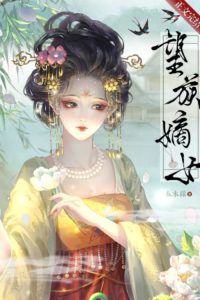
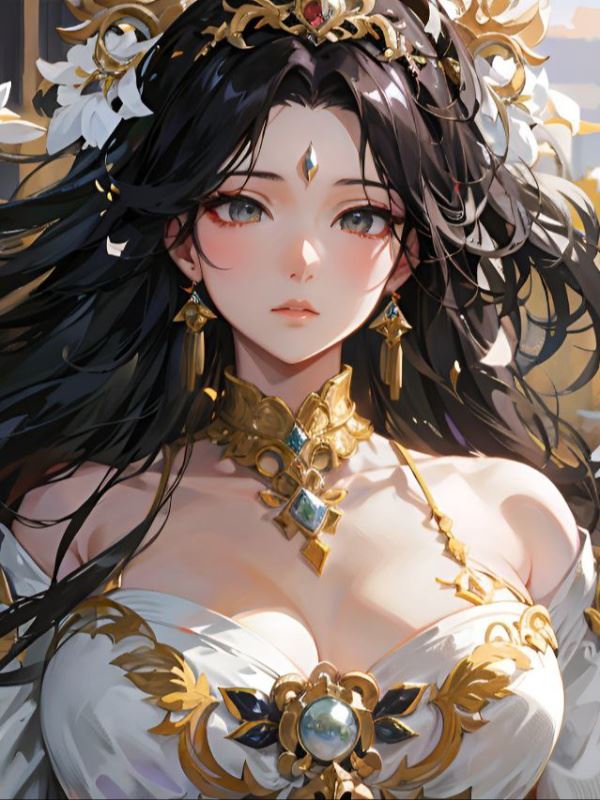
The Liu clan of Macheng is not only a top-tier family in Jinghu but also a scholarly lineage that has produced generations of imperial examination talents. Born into the main branch of such a prestigious clan, Li Shu should have been a favored daughter of heaven. However, her mother, Xiao Fu Shi, was a successor wife. It was only because she bore a fifty-percent resemblance to her late elder sister, Fu Shi, that she was able to marry into the Liu family.

After entering the household, Xiao Fu Shi finally managed to secure her position by giving birth to her only legitimate daughter, Li Shu. She suppressed the concubines and the disobedient old servants of her late sister, appearing for all the world like the winner of the house-fighting games. But the ultimate embarrassment came when the original wife, Fu Shi, turned out not to be dead—and she returned bringing a pair of legitimate children with her.

From that moment on, the status of Li Shu and her mother became incredibly awkward…

Novel Items

More
Beverage
Tea made from willow leaves plucked in spring when tender buds unfurl, dried and brewed. It dispels internal heat and dryness, refreshes the spirit, clears the mind, and improves eyesight. Brought by Concubine Ying to Minister Liu on a red lacquered tray with gilded begonia patterns.
Cultivation Method
An exercise regimen taught by Swallow Holding Branch's grandaunt to strengthen the body. It is one of the survival skills she learned at the family temple.
Event
A major corruption case involving embezzlement of river works funds by Yu Maozhong, who also murdered a censor and had entanglements with foreign states. It triggered a Joint Trial of the Three Judicial Offices during the Emperor's grand birthday when all vassal states had gathered in the capital.
Event
A special trial ordered by the Court of Judicial Review involving the Ministry of Justice, Court of Judicial Review, and Censorate. Held due to the severity of the river works corruption case potentially involving the death penalty and foreign states.
Event
The Emperor issued an imperial decree that diverted Zheng Hao from marrying Li Shu to instead marry a princess, severing contact between the Zheng and Liu families.
Event
After Great Qi's defeat in war with Wusun and Dayuan, a noblewoman from the imperial clan (Princess Pingning) with six concubine-attendants was sent for a marriage alliance to Wusun. Li Shu was one of the six attendants.
Latest Release
DateGroupRelease
2026-08-11shanghai fantasy c10
2026-08-11shanghai fantasy c9
2026-08-11shanghai fantasy c8
2026-08-11shanghai fantasy c7
2026-08-11shanghai fantasy c6
2026-08-11shanghai fantasy c5
2026-08-11shanghai fantasy c4
2026-08-11shanghai fantasy c3
2026-08-11shanghai fantasy c2
2026-08-11shanghai fantasy c1

Community Reviews

Rating(0 / 5.0, 22votes)
5 stars
0(0%)
4 stars
0(0%)
3 stars
0(0%)
2 stars
0(0%)
1 stars
0(0%)

Popular reviews

... Read More
I need to talk about the domestic sweetness in this text because it sneaks up on you. Liu Chengxu bringing back snacks for Xiao Fu Shi, knowing exactly which pastry she prefers — the jade-green bean cake, not too sweet — and then the whole family of three sitting together while she helps him wash his face. This is the kind of scene that makes you want to pause and just absorb it. "How did you know I love this jade-green bean cake the most?" — and his response, "How could I not know? You enjoy pastries but don't particularly like overly sweet ones." That's not just plot convenience, that's a man who has been paying attention. And for Xiao Fu Shi, who spent so much of her previous life being neglected, this small act of being seen and remembered is everything. But the emotional peak for me was the ending of this section. Xiao Fu Shi hugging her daughter after getting back those dough figurines, overjoyed. And Li Shu, despite being the one who orchestrated the whole thief-catching scheme, just wants to share her treat with her mother. The reciprocity in their relationship — she fights for her mother's future, and her mother dotes on her without condition — that's the kind of bond that makes you genuinely invested in both of them. It's also interesting how the romantic tension between Liu Chengxu and Xiao Fu Shi is rebuilding. He goes from pitying her to discovering a hidden treasure. That shift in his gaze — the narration literally says his gaze toward her changed instantly — is the emotional turning point of this arc. I'm not sure I've ever been this invested in a marriage recovering from neglect.
... Read More
The dialogue in this text is absolutely razor-sharp and I keep going back to certain lines because they reveal so much with so few words. Xiao Fu Shi's voice is this perfect performance of fragility. When she says "I often fall ill and don't even want to take medicine. If I were to truly pass away, it would be a relief for both you and Sister" — that's not a statement, that's a loaded gun. She's saying exactly the right thing to make Liu Chengxu feel guilty while also positioning herself as selfless. The fact that she calls Fu Shi "Sister" instead of "Elder Madam" or anything formal is a tiny detail that does enormous work — it's both genuinely affectionate and deeply manipulative. Then there's Yu Ping's internal monologue, which is basically the only honest voice in the entire text. "A counterfeit would always be a counterfeit. Today, she would learn exactly whom the master favored more." This maid is narrating the scene in real time like a Greek chorus from hell. Her bitterness is almost entertaining. Liu Chengxu's dialogue is notably sparse. He "grunted in response." He says "Your mother has finally managed to rest. Shu Jie'er, don't disturb her, alright?" He's a man who communicates through actions — carrying Xiao Fu Shi, rushing out at the sound of her cry — not words. That silence IS his voice. And the narrative voice itself deserves praise. It's omniscient but not detached. It slips into characters' thoughts seamlessly — Li Shu's observations about her mother's caution, Fu Shi's vague unease, Yu Ping's sneering judgments. The tone shifts subtly depending on whose perspective we're in, which is a skillful touch. The author isn't just telling a story about a harem; they're letting us hear the different frequencies of survival in this house.
... Read More
The dialogue in this passage is absolutely razor-sharp. Let me give you the best example: Li Shu asks her mother, 'Mother, did you tell Concubine Ding about your two-month pregnancy? She never interacts with us normally, so how could she know you were exactly two months along?' This six-year-old is delivering a forensic-level accusation in the most casual, conversational tone possible. And Xiao Fu Shi's response? She doesn't get defensive. She doesn't get angry. She just smiles and says, 'When Concubine Su asked me, I told her, and Concubine Ding was there at the time.' That's it. Three sentences. No drama, no explanation. But the reader immediately understands: Xiao Fu Shi is not stupid. She knows she was careless. She knows Concubine Ding was within earshot. She just didn't anticipate that her casual confession would be weaponized. And then there's Concubine Ding's dialogue with her maid Yiniang: 'Silly girl, how dare I make such decisions? Of course, I followed instructions. The Second Madam is pregnant now, and the child she bears will be the legitimate eldest son. Who do you think the master values more?' This is the most dangerous kind of dialogue because Concubine Ding isn't even admitting to a conspiracy. She's attributing her actions to the master's preferences. She's deflecting responsibility while simultaneously revealing her entire strategy. The author gives each character a distinct voice: Li Shu speaks with the precision of a reborn adult trapped in a child's body, Xiao Fu Shi speaks with the gentle resignation of someone who's been hurt before, Concubine Ding speaks with the polished ambiguity of a survivor. No character sounds like the author. They all sound like themselves.
... Read More
Every time I reread this section, I'm struck by how pregnancy operates as the central symbol of the entire narrative. In this household, a woman's value is measured by what she carries. Fu Shi lost her son—Liu Shuzhao, the legitimate eldest—and her world collapsed. Xiao Fu Shi is pregnant, and suddenly every servant's eyes 'blaze with fury' at her belly. Concubine Ding is managing the household, but she's also acknowledging that 'the child she bears will be the legitimate eldest son' and that's why the master values Xiao Fu Shi more. The pregnancy isn't just a biological event; it's a geopolitical one. It determines who inherits seventy percent of the family assets. It determines who gets the master's attention. It determines who lives and who dies. And then there's the Old Madam—Liu Chengxu's mother—who is being kept in the dark about her grandson's death because 'if she learns the Second Madam is with child, she would surely find some solace, and her grief might lessen somewhat.' The pregnant body becomes a tool for emotional manipulation, a bandage for old wounds, a weapon in the hands of those who understand its power. Li Shu, the reborn protagonist, understands this better than anyone because in her previous life, her mother died after a miscarriage. The cycle of pregnancy, loss, and survival is the engine of this story. But here's the deeper layer: the author keeps showing us that pregnancy alone isn't enough. Xiao Fu Shi is kind, talented at painting, and beloved by her husband—but that doesn't protect her. In this world, knowledge is more dangerous than fertility. Li Shu's awareness is what might actually save her mother. The pregnant body is the symbol, but the awakened mind is the weapon.
... Read More
Okay so let me just say this: the way this plot unfolds is absolutely masterful. You think you're reading a straightforward family drama about grief and mourning, and then BAM—Concubine Ding hands over those household keys and suddenly everything shifts. The author doesn't just throw a twist at you; they let it simmer. First, Fu Shi faints from grief over her dead son. Then Liu Chengxu casually appoints Concubine Ding to manage the household because she's 'literate and well-conducted.' Sounds harmless, right? Wrong. Because the next scene shows Nanny Rao overhearing Concubine Ding's own maid asking why the list for the Second Madam (Xiao Fu Shi) is longer than for the First Madam—and Concubine Ding's response is basically 'follow instructions, the master values the legitimate eldest son.' That's the plot twist that made me sit up straight. It's not an assassination attempt or a dramatic confrontation. It's something far more insidious: the quiet, methodical redistribution of power in a household where a pregnant concubine is already a threat. And Li Shu—this six-year-old who's been reborn—she pieces it together immediately. She asks her mother the one question that changes everything: 'How did Concubine Ding know you were exactly two months along?' That single line does so much work. It connects dots the reader might have missed. The plot here isn't about big explosions; it's about the slow, suffocating realization that everyone in this house is playing a game, and the stakes are survival.
... Read More
Can we just take a moment for the Xiushui Shaozis scene because it's the most unexpectedly tender thing I've read all week? Liu Chengxu comes back from official duties, hears Xiao Fu Shi is pregnant, and rushes to see her. Li Shu is resting her head on her mother's stomach. Liu Chengxu pulls his daughter away saying 'Don't crush your mother' and then asks 'Is it true?' And Xiao Fu Shi, shyly nodding, brings up her painting: 'By the way, was the painting I made for you last time useful?' She's asking about her PAINTING while pregnant with their child. She's still trying to earn his approval through her talents, even in this moment of personal joy. And his response? He doesn't even get to answer because Yu Ping stumbles in with the news about Liu Shuzhao. One second: pregnancy, joy, family. Next second: death, grief, chaos. But before that, there's this little moment where Xiao Fu Shi says she wants to eat Xiushui Shaozis—a local snack made from taro, sesame oil, with sweet or savory fillings. Liu Chengxu, who was 'initially reluctant to agree,' can't resist her 'sweet and gentle words' and says alright. This is a woman who used to be ignored, who was treated poorly, who was essentially a ghost in her own marriage. Now she's making DEMANDS and he's saying yes. The power dynamic has completely flipped and I'm emotionally wrecked. Meanwhile, Fu Shi is sitting by the window alone at night, wondering why her sister never left. 'I used to feel guilty toward her... Yet I know that in matters of affection, there cannot be three people.' That bitterness, that resignation—she knows she's selfish but she has no choice. 'She only has one daughter. I even thought that after Li Shu marries, my Shu Zhao could support her as well.' She's planning for a future where her sister is taken care of, even while her own marriage is falling apart. That's not villainy, that's survival.
See all reviews

Characters

See all characters

Custom lists

Oops…There is nothing here.