Summary

... Read More

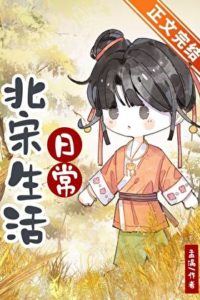
Ji Ning transmigrated into a family of nine in the Northern Song Dynasty.

With both elderly and young members in the household, the family worked all year round just to stay fed and clothed. While they had food on the table, meat was a luxury, and their clothes were made of coarse hemp, covered in layer upon layer of patches.

As a poor rural household, their future seemed set in stone from the start.

Ji Ning was not resigned to this fate. She rolled up her sleeves and decided to rely on her own two hands to change her destiny.

Making toys, working as a peddler, selling clothes—she saved up her money. With her heart set on more, she thought long and hard before taking over a small eatery in town for the family to run a little business.

Her elder brother was ambitious and passed the provincial exam to become a juren. He prepared to head to Bianjing.

Ji Ning fretted—her family had no background and absolutely no connections. Could her brother really succeed in the future?

Forget it, she would just have to work harder and figure out how to invent movable type printing!

No matter how high the sky of the Northern Song was, she was determined to lead her family to forge their own path!

Xie Luan’s parents died early, and the second branch of his family was scheming to take his inheritance, plotting to marry him off to a wife who would be easy to manipulate.

Who could have known that this man, who used to be as soft as a steamed bun, would suddenly change his face and temperament? He cursed out the neighbors, fought the second branch, and even declared that he would become a matrilocal son-in-law for another family.

What was most surprising was that he actually packed his bags and showed up at the Ji family’s door. Standing under the eaves, he asked the Ji family daughter in a low voice, “Every debit must have a credit, and debits and credits must be equal. Are you in need of a living-in husband?”

Looking at the beautiful Xie Luan, who was smiling with pure and harmless intent, Ji Ning agreed.

—It was definitely not because she wanted his large mansion and his thousand-guan dowry!

Reading Guide:

1.
Ensemble cast, slow-burn food novel. The map gradually expands from a small village to Bianjing.

2.
Semi-historical with some creative liberties. The timeline is around the Qingli Reforms. The romance plot appears later.

3.
An “economically practical” couple. The male lead is also a transmigrator. He is a genuine living-in husband; the matrilocal marriage industry (?) was quite developed in the Song Dynasty.

Novel Items

More
Weapons
A thin willow branch fetched by Xu Jiang that An Ruoyan used to hit Shi Meijiao. An Ruoyan held back her strength to avoid seriously injuring her. The hits landed on Shi Meijiao's thighs and other places.
Tax
A seasonal tax the Ji family must pay, consisting mainly of cash, cloth, or silk wadding. It is due within two months after rice planting begins. The tax burden has increased by twenty percent the previous year, adding to the family's financial crisis.
Tax
A seasonal tax collected in grain, paid alongside the Summer Tax. Combined with miscellaneous taxes and the Poll Tax, it significantly reduces the family's already meager grain surplus.
Food
Bought by Ling Yu, later given to Ye Dagen as excuse for beating; also reward from system.
Materials
Food made by Yuan Songzhi early in the morning, which Yuan Yuezhi brings to Su Xiaoyin. She invites Su Xiaoyin to come to their house for tofu at noon.
Food
Part of Third Madam's lavish morning meal at the Third Household. Third Madam nearly chokes on it when Pei Xu suddenly joins them for breakfast.
Latest Release
DateGroupRelease
2026-08-11shanghai fantasy c10
2026-08-11shanghai fantasy c9
2026-08-11shanghai fantasy c8
2026-08-11shanghai fantasy c7
2026-08-11shanghai fantasy c6
2026-08-11shanghai fantasy c5
2026-08-11shanghai fantasy c4
2026-08-11shanghai fantasy c3
2026-08-11shanghai fantasy c2
2026-08-11shanghai fantasy c1

Community Reviews

Rating(0 / 5.0, 16votes)
5 stars
0(0%)
4 stars
0(0%)
3 stars
0(0%)
2 stars
0(0%)
1 stars
0(0%)

Popular reviews

... Read More
There's something really profound about a ten-year-old girl carefully wiping each copper coin with a linen cloth. The text says she used to use mobile payments and now this — touching ancient copper coins gives her a sense of novelty. But it's not just novelty, is it? These coins represent something much bigger. They represent her agency in a world where children, especially girls, are expected to be seen and not heard. The Bamboo Joint Generals themselves are symbolic too — customizable, interchangeable, each one unique but made from the same bamboo. Just like these village children, each with different circumstances but sharing the same desire to play and dream. And the rental model? That's not just smart business — it's about access. Ji Ning understands that not everyone can afford to own, but everyone deserves a chance to experience joy, even if just for a day. The chicken incident then becomes a metaphor for the unintended consequences of innovation. When you introduce something new into a community, it doesn't just bring good — it disrupts. The speckled hen, brooding and scared, scattered eggs nearly broken — it's a beautiful image of how progress and tradition collide. And Xiao Douzi's parents calculating whether two eggs is worth the trip to apologize? That's the story's most honest moment about poverty. It's not that they're bad people — it's that two eggs is real money to them, and Ji Ning's system, however well-intentioned, assumes a level of financial flexibility they don't have.
... Read More
The stakes in this story are deceptively simple on the surface but they're building this quiet tension that keeps me hooked. Let me break it down. On the external level: this family is SO poor that a single piece of meat is a major event. Ji Ning just recovered from a serious illness, which means the family probably spent their last resources on her medical care. They have no safety net. Ji Song is a peddler with two boxes of goods—that's their entire livelihood. If he can't sell, they eat rice and cabbage. If Ji An can't pass the imperial exams, the family stays poor forever. Those are enormous stakes for a family that can barely afford to feed themselves. But the internal stakes are what really get me. Ji Ning is a transmigrator with modern knowledge but zero starting capital. She's trying to figure out how to survive in a world where her 'cheat skills' (cooking knowledge, toy-making ideas) require money she doesn't have. The conflict isn't just 'will she succeed'—it's 'can she succeed without exploiting her family or compromising her values?' And Ji An's secret struggle with the imperial exams adds another layer. He says it's 'difficult' but clearly there's more to it. Is he failing? Is he being bullied? Is he facing some kind of scandal? The author is dropping breadcrumbs and I am OBSESSED with figuring out what's going on. Every chapter ends with this sense of 'what happens next' that makes it impossible to stop reading.
... Read More
I need to talk about Grandpa Ji because this man is quietly the MVP of the entire family dynamic. Let me paint the picture: he's sitting there puffing his pipe, watching the chaos of kids and toy sales, and then when Mrs. Wang hesitates about giving Ji Ning burlap for her clay project, he just says "Find her a piece." Two words. That's it. But it means everything. He's the one who actually supports her business, who goes up the mountain to fetch bamboo and soil, who digs out his old carpenter's knife for the puppet-making. And then there's the egg custard scene—oh my god. Mrs. Xue serving Ji Ning the first spoonful? In a nine-person household with unspoken rules about who eats what? That's a character moment that says so much without any dialogue. Grandpa Ji essentially claiming those eggs as Ji Ning's: "Ning-jie has worked hard these past two days. The eggs she earned should be for her to eat." His word is final. The family hierarchy is clear but also flexible when it matters. Feng-ge'er is another gem. He's observant, loyal, and already acting like a little sales associate—remembering every kid who bought a cannon, noticing the copycat's inferior work. But the Hutou moment broke me a little. The kid who got BEATEN for wanting a toy, crying and hiccupping, and Ji Ning hardening her heart to refuse him. It shows she's not just a sweet little sister—she's learning to be ruthless when business demands it. And Mrs. Wang explaining the no-credit rule? That's generational wisdom right there.
... Read More
There's something deeply symbolic about the Bamboo Joint Puppet that I can't stop thinking about. Let me unpack this. The puppet is made from bamboo joints—natural nodes in the bamboo that create the articulation points. Ji Ning doesn't force the bamboo into a new shape; she works WITH its natural structure. This feels like a metaphor for her entire approach to survival in this world. She's not trying to become someone she's not or fight against the constraints of her time and gender and age. She's finding the joints—the natural points of leverage—and pulling the strings. And the puppet itself—motionless until someone pulls the thread, performing actions that aren't its own but are directed by another. There's something haunting about that in a story about a ten-year-old girl navigating a world where she has limited agency. She's both the puppeteer and, in some ways, the puppet—guided by family expectations, economic necessity, and the social structures of the Northern Song. The Bamboo Tube Cannon, by contrast, is simple, direct, explosive. It represents the initial burst of opportunity—the "what if" moment. The puppet is more complex, more refined, more sustainable. It represents the long game. One launches projectiles; the other performs. One is a toy; the other is art. And the clay—earth transformed through patience and filtration into something new. Ji Ning literally making the raw material from mud and water. This is alchemy. This is the idea that value isn't found, it's created. The recurring motif of transformation—bamboo to puppet, mud to clay, children's desires to commerce—suggests that the story is really about the alchemy of survival in a world that gives you almost nothing and asking you to make something anyway.
... Read More
Okay so this dinner scene where Ji An gives his piece of meat to Ji Ning?? I literally sat up straight. This is such a small moment but it does SO MUCH narrative heavy lifting. The author sets up this incredibly tense atmosphere—everyone's starving, the meat is glistening and precious, and then Ji An makes this split-second decision that reveals everything about who he is. He's supposed to be the golden child, the one studying for the imperial exams, the family's hope. But he immediately thinks of his sick younger sister first. And then Ji Ning's response? She divides that one piece of meat into FOUR portions. That's the plot twist of the chapter right there. You expect her to be grateful, maybe emotional, but instead she turns it into a family moment that diffuses all that tension. It's brilliant storytelling because it does double duty: develops the character AND moves the plot forward by showing us what kind of family they are. Also, the fact that she's a transmigrator and immediately starts calculating prices and thinking about business opportunities while everyone else is just trying to survive that meal? That's the inciting incident energy. The plot is setting up her entrepreneurial arc and I am HERE for it. She's going to make bamboo toys, right? That's the hook. I need to know if this poor kid is actually going to pull it off.
... Read More
Okay so let me just say this—Ji Ning is basically running a startup at age ten and I am HERE for it. The plot structure here is so satisfying because it follows this clear arc: she identifies a market need (kids want toys), tests it with the Bamboo Tube Cannon, sees it's easily copyable, and then pivots to something harder to replicate. That's not just a story beat, that's actual business strategy. The moment that really sold me was when she explained to Mrs. Wang why the cannon wasn't sustainable: "The Bamboo Tube Cannon is too simple. Anyone who buys one can figure out how to make it just by looking. It's not a sustainable business." Chills. Absolute chills. She's thinking three steps ahead while everyone else is just happy about the twenty-eight Wen she made in one day. And then the Bamboo Joint Puppet reveal—this is where the plot really picks up. The internal demonstration scene with Feng-ge'er and Lan-jie watching the puppet come to life? Chef's kiss. The narrative tension builds perfectly from the cannon's success to the puppet's creation to the failed sales attempt. The fact that the kids can't afford fifteen Wen each is actually a brilliant plot twist—it creates a new conflict instead of just giving her a happy ending. Now she has to figure out a new business model, which is exactly where the story is heading. I'm genuinely curious how she solves this.
See all reviews

Characters

See all characters

Custom lists

Oops…There is nothing here.