Summary

... Read More

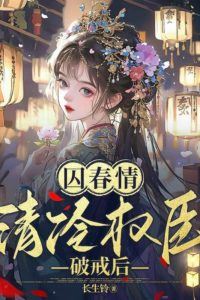
【Age Gap • Dual Purity • Runaway Pregnancy • Aloof Official Falling from Grace • She Runs, He Chases】

In the eighth year of Chengping, amidst a world of ice and snow, the entire Xie household was raided and confiscated. Xie Jinhuai, the Governor of Yangzhou, was executed, and the rest of the family suffered a similar fate.

In the blink of an eye, Xie Zhi fell from being the Governor’s daughter to a criminal slave. Just as she was about to be sold to a brothel, she gathered her courage, clutched the corner of a man’s robe, and pleaded through her tears:

“My Lord, I beg you, take me away.”

Pei Du’s features were elegant and refined, yet his gaze toward her was filled with loathing:

“Of all the people to beg, you chose the presiding judge of your case.”

Despondent, Xie Zhi intended to end her days in the brothel. But when the time came for her first client, fear overcame her, and she fled.

With guards chasing wildly behind her, Xie Zhi hurriedly hid inside a carriage by the roadside, only to tremble in terror when she saw the man inside.

“Do not be angry, My Lord. I will leave at once.”

“Are you sure?”

Initially, taking her back to his manor was merely a whim. But through an accident, Xie Zhi became his bedfellow.

Pei Du had always known this girl had devious motives, but seeing her obedient and exquisite nature, her tender and graceful demeanor, he found her quite to his liking.

He intended to give her a formal status after he married, but he never expected the girl to steal her slave registration documents and run away decisively while pregnant—and more than once.

At that moment, Pei Du realized that it had been a complete and utter ruse.

She had woven a dream for him.

Since that was the case, then no one should even think about waking up.

【Only now do I know that listening to a bird locked in a golden cage is not as good as its free song in the forest.】

Novel Items

More
Materials
Rough practice sheets made by noble young ladies during lessons at the family school. Xie Zhi secretly collected discarded drafts from over a dozen copies to reconstruct the tutor's lessons. Combined with her eavesdropping, she could grasp 70-80% of the material. Taking them was considered theft.
Item
Prayer beads made of Shoushan stone, held and continuously turned by Old Madam while she contemplated Xie Zhi's fate.
Clothing
A robe often worn by Old Madam, fetched from the cabinet by Nanny Zhou for her to wear when receiving Xie Zhi.
Jewelry
A white jade pendant idly played with by Wei Qingyi during the gathering of noblewomen in the western part of the city.
Document
A document that Pei Du held which belonged to Xie Zhi. He refused to return it to her as part of their agreement, keeping it as leverage that she must remain in Peifu as a maid to atone for her previous crimes.
Book
A book Xie Zhi was reading at Guanxuelou when Pei Du and Pei Hong arrived. She borrowed it after registering with Registrar Tong downstairs, as Guanxuelou allowed servants to borrow books.
Latest Release
DateGroupRelease
2026-08-11shanghai fantasy c10
2026-08-11shanghai fantasy c9
2026-08-11shanghai fantasy c8
2026-08-11shanghai fantasy c7
2026-08-11shanghai fantasy c6
2026-08-11shanghai fantasy c5
2026-08-11shanghai fantasy c4
2026-08-11shanghai fantasy c3
2026-08-11shanghai fantasy c2
2026-08-11shanghai fantasy c1

Community Reviews

Rating(0 / 5.0, 9votes)
5 stars
0(0%)
4 stars
0(0%)
3 stars
0(0%)
2 stars
0(0%)
1 stars
0(0%)

Popular reviews

... Read More
Let me start with this line: "Willows swayed gracefully along the river, with falling petals drifting by from time to time. Among the large clusters of blooming lotus flowers on the water, several light boats drifted leisurely — young ladies of the estate were enjoying the flowers and having fun." This is summer at its most picturesque. It's literally the most beautiful moment in these chapters. And then County Mistress Yuyang appears and ruins it. The contrast is brutal. You've got this idyllic scene — lotus flowers, swaying willows, young ladies on boats — and then Yuyang snatches the book and tosses it into Xingbohu. The same river that's painted as idyllic becomes the grave of a precious ancient text. That's not accidental writing. That's the author using the setting to underline the violence of power. And then later, Xie Zhi walks to Ninghuiyuan "with a heavy heart" — the same river, now just "calm, unrippled surface." The river doesn't care. It swallows the scroll and moves on. That image of the scroll "rippling twice before disappearing" is haunting. It's such a small detail but it sticks with you. The Ninghuiyuan scene is also worth noting. Lady Yang's hall — she's coughing, her daughters are eating, the atmosphere is tense even before Xie Zhi enters. The contrast between Lady Yang's severe appearance ("dark mole on her right cheek made her appear even more severe") and Pei Zhaoyin's warmth is striking. And then the garden at night — "this season lacked clusters of blooming flowers, but the lush greenery and winding vines offered a unique charm." Even the environment reflects the mood: not everything is pretty, but there's something alive and hidden underneath. The world feels lived-in. Every location has texture.
... Read More
I need to talk about how the pacing works here because it's genuinely impressive. Let me break it down. Chapter 6 starts with Xie Zhi already in damage control — she's salvaged the book, she's heading to Ninghuiyuan, she's already thinking three moves ahead. The chapter opens with action, not exposition. That's smart. We're dropped right into the tension. Then Chapter 7 — the reunion with Pei Hong — this is where the pacing really shines. The chapter starts with Pei Hong's injured face, which immediately raises questions. Who did this? Why? Then we get the gift scene, the walk to Guanxuelou, the hairpin moment... and then BAM. His father and brother appear. The chapter ends on a slap. Not a cliffhanger about what happens next, but a cliffhanger about what this means for Xie Zhi's plan. The structure here is essentially: threat (Yuyang) → temporary relief (Lady Yang's hall) → new opportunity (Pei Hong) → complication (father arrives). Each beat raises the stakes without ever letting the reader breathe. And the Qingyi conversation? Perfect pacing device. It's a quiet moment between two high-tension scenes, but it serves a purpose — it's where Xie Zhi's internal plan gets externalized. We learn her strategy through dialogue, not narration. That's efficient storytelling. The only thing I'd say is that the transition from Yuyang's confrontation to Ninghuiyuan feels slightly rushed. We go from "my life is over" to "let me make some book covers" pretty quickly. But honestly, it works because Xie Zhi's character is so clearly pragmatic. She doesn't have time to wallow.
... Read More
Can we talk about how the Changping Houfu is described? Like, the author takes time to paint this enormous estate—over a thousand people living there, occupying more than half of Yongxingfang, with the Princess's Manor literally connected by opened walls. That detail about the walls being opened up? Chilling in a way. It's not just worldbuilding; it's a statement about power and consolidation. The Pei family doesn't just live in the neighborhood; they ABSORB it. And then there's Yangshantai. Oh my god, Yangshantai. Xie Zhi has to climb dozens of stone steps in the summer heat to reach Pei Du's residence. The description of intersecting paths and decorative rocks hidden among lush trees—it feels like a labyrinth. A metaphor? Maybe. But also just beautifully rendered. I could literally see this in a drama adaptation. The water corridors, the pavilions, the nanmu screen carved with plum blossoms in Chunhuiyuan. These details aren't filler; they create a sense of place that feels lived-in and real. The contrast between the two spaces is also striking. Chunhuiyuan, where Xie Zhi was settled, feels like a gilded cage—Old Madame's kindness masking control. Yangshantai, where Pei Du works, is all sharp lines and cold efficiency. And the family school? That's where the real cruelty happens, under the guise of education. The summer heat described throughout these chapters isn't just weather—it's oppressive, suffocating, mirroring Xie Zhi's emotional state. Every scene feels like it's pressing down on her.
... Read More
There's so much symbolism packed into these opening chapters that I'm still unpacking. Let me start with the calligraphy drafts. Xie Zhi picking up discarded papers—these are literally the remnants of education, of knowledge, of culture. She's a fallen noblewoman reduced to scavenging scraps. But she reads them with such reverence: "Braving the wind and rain… so that is how it is written…" That line about enduring hardship—that's her life. And she's learning from the discarded words of people who once held power, just like she once held power. Then there's the ink. When Yuyang falls and ink splashes everywhere—on her neck, her clothes, a few drops on Xie Zhi's cuffs. Ink is permanent. It stains. It's the tool of writing history, of recording deeds, of creating documents that can destroy families. Xie Zhi's father was destroyed by official documents. Now ink literally marks her, connecting her to this world of power and punishment. The plum blossom carving on the nanmu screen in Chunhuiyuan is another detail that stuck with me. Plum blossoms bloom in winter—they symbolize resilience, beauty in hardship. Xie Zhi is described as "a lotus after the rain." Both are flowers that thrive in difficult conditions. Is the author telling us something about her nature? And Pei Du's claim that he saved her on his mother's death anniversary—what does that symbolize? That her survival is tied to his grief? That she's a living reminder of loss? The anniversary detail feels loaded, like it's meant to be questioned rather than accepted at face value.
... Read More
Okay so I just finished these first seven chapters and honestly my brain is still spinning. The way this story opens is *chef's kiss*. You start with this seemingly small scene—Xie Zhi picking up calligraphy drafts—and then BOOM, Yuyang shows up and everything unravels. The power dynamics are immediately clear, and I love how the author doesn't info-dump all at once. Instead, we get these little fragments about Xie Zhi's past: her father was a corrupt official, her family was destroyed, she followed Pei Du back to the capital somehow. It's like peeling an onion and each layer makes you want to read more. But here's what really got me—the flashback structure. Chapter 2 takes us back to Yangzhou, to that prison scene where Xie Zhi is about to be sent to a brothel, and Pei Du's reaction (or lack thereof) is so telling. He looked at her with disgust. DISGUST. And yet he saved her anyway. That contradiction is the whole plot right there. The author is playing with dramatic irony so well—we know Pei Du claims he only saved her because it was his mother's death anniversary, but the narrative keeps hinting there's more to it. And Xie Zhi? She's trapped between gratitude and resentment, between needing him and hating what he represents. Also, the pacing in these early chapters is suspiciously tight. Every scene ends on a note that makes you immediately want to turn the page. Yuyang slipping on that paper and getting ink all over herself? That felt like the author's way of saying 'things are about to get messier.' I have a feeling this is just the calm before the storm.
... Read More
Okay, I need to talk about Xie Zhi because this woman is absolutely terrifying in the best way possible. Let me just say it straight: she is not a victim. She is a predator playing the victim card. When Yuyang throws her book into the river and threatens to marry her off to some pockmarked groom, Xie Zhi's first reaction isn't panic or tears. It's calculation. She pulls out the coverless copy of The Classic of Navigation from her bosom — the one she'd already salvaged — and thinks about her next move. That is not the mindset of someone who's been wronged. That is the mindset of someone who's already three steps ahead. And then Qingyi drops the bomb: "With such beauty, are you willing to remain a servant for the rest of your life?" And Xie Zhi's plan crystallizes in real time. She's going to seduce Pei Hong. Not because she wants to. Not because she's fallen for him. But because he's the weak link — Pei Du's brother, someone who can be manipulated into handing over her Nuji Wenshu so she can escape. The scene where Pei Hong almost puts the hairpin in her hair is pure gold. Xie Zhi is down there thinking, "Men — they're all cut from the same cloth," completely dismissive of him, and then he reaches for her hair. She lowers her head with a soft smile, appearing utterly compliant. But inside? She's running the entire calculus of her escape plan. And when he drops the hairpin because he sees his father and brother coming? Her "inwardly crumbling" isn't about losing a romantic moment. It's about her scheme hitting an unexpected obstacle. This character is fascinating because the author never lets us forget that Xie Zhi is performing. Every smile, every bowed head, every grateful "Thank you, Young Master" is a calculated move. She's playing a role, and the tension comes from wondering how long she can keep it up.
See all reviews

Characters

See all characters

Custom lists

Oops…There is nothing here.