Bride of War: The Warlord’s Wife Is an Undercover Agent
+Add to Custom List
Genres:
Novel Info

Summary

... Read More


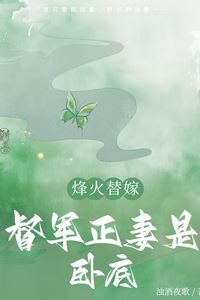
Qin Shu married into the Warlord’s residence in her younger sister’s place, only to be imprisoned in a secluded courtyard for five years and subjected to endless humiliation and torment. On that night when fireworks filled the sky, the woman her husband welcomed with a grand bridal procession of eight bearers turned out to be none other than her sister, Qin Yan!


Her childhood sweetheart risked his life to save her. “Come away with me!”


Yet she merely shook her head and let out a cold laugh. “Leave? I want them to pay their blood debt with blood!”


When her husband’s favored concubine tried to destroy her, she struck back by exposing evidence of her husband’s collusion with the enemy. Her childhood sweetheart willingly became the bait, while she staked everything on a single gamble.


“The empire and you, I want it all!”


Novel Items

More
Manuals
A worn copy of a medical/pharmacological text that Qin Shu reads in the Side Courtyard. Its pages have frayed edges softened into fuzz from years of handling. It is one of the few comforts in her imprisoned life.
Event
Jiang Qian faked her death with a cancer diagnosis and eloped, causing He Yuanzhou to drag Jiang Wu in front of guests and force her to take her sister's place as his wife. Jiang Wu is merely a disposable stand-in until Jiang Qian returns.
Events
The grand wedding celebration where Governor Xu Feng marries Qin Yan as his Fourth Concubine. An eight-man bridal sedan arrived with half the streets covered in red silk. The Governor personally escorted the procession on horseback. Fireworks exploded across the sky, music thundered, and every important figure in Linjiang City attended. The ceremony included the traditional first bow to Heaven and Earth.
Item
The magnificent bridal sedan that carried Qin Yan from the Qin Residence to the Governor's Mansion. Half the streets of Linjiang City were covered in red silk for the procession. It stopped gracefully at the Ceremonial Gate of the Main Courtyard.
Item
The brilliant wedding dress worn by Qin Yan on her wedding day. It is embroidered with golden phoenixes that perfectly outline her graceful figure. The jeweled ornaments in her hair reflect cold, dazzling light beneath the lanterns.
Item
Qin Shu's finest piece of clothing, a half-worn grayish-blue cross-collared jacket with frayed cuffs. It is the same outfit she wore when she first entered the Governor's Mansion five years ago. She chooses to wear it when going to the Front Courtyard confrontation.
Latest Release
DateGroupRelease
2026-08-11shanghai fantasy c20
2026-08-11shanghai fantasy c19
2026-08-11shanghai fantasy c18
2026-08-11shanghai fantasy c17
2026-08-11shanghai fantasy c16
2026-08-11shanghai fantasy c15
2026-08-11shanghai fantasy c14
2026-08-11shanghai fantasy c13
2026-08-11shanghai fantasy c12
2026-08-11shanghai fantasy c11
2026-08-11shanghai fantasy c10
2026-08-11shanghai fantasy c9

Community Reviews

Rating(0 / 5.0, 36votes)
5 stars
0(0%)
4 stars
0(0%)
3 stars
0(0%)
2 stars
0(0%)
1 stars
0(0%)

Popular reviews

... Read More
Okay so I need to talk about A-Fu because honestly this character showed up for like two paragraphs and completely wrecked me. Here's this woman who's been buried alive in a side courtyard for five years, surviving on mud-water porridge and hatred, and then this old mute servant just... appears. With pickled radish. And CLEAN CLOTH. Do you understand how much that detail matters? In a place where everything is dirty and decaying, he brings something spotlessly washed. It's not just kindness—it's dignity. He's another victim of this mansion, another person grinding away in the darkest corners, and he still has room in his heart to notice someone else suffering. And Qin Shu's reaction? She doesn't break down crying or anything dramatic. She just... inclines her head. A silent nod. Like recognizing another flickering light in the same abyss. That's so much more powerful than any sobbing scene could be. Then you cut to Qin Yan in her warm chamber with her sable fur and ruby hairpins, and the contrast is almost violent. She's painting her nails crimson while scheming about how to destroy Qin Shu, and the irony is suffocating. Both women are trapped in this mansion in different ways—Qin Shu literally locked away, Qin Yan imprisoned by her own jealousy and paranoia. But Qin Yan has chosen to become a predator, while Qin Shu is still holding onto something human. That A-Fu moment is what keeps her from completely hardening into just another weapon of vengeance.
... Read More
I need to talk about how every character in this passage speaks like a different person, because honestly, the dialogue writing is exceptional. Qin Yan's voice is almost comically villainous, and I mean that as a compliment. Listen to this: "Oh? Elder Sister's courtyard is truly… peaceful. No wonder the Governor said you preferred quiet and disliked excitement!" That opening line. It's dripping with false sweetness, and the ellipsis is doing so much work there. She's pausing to let the insult land, to let Qin Shu feel the judgment. And then the whole bit about the Crystal Shrimp Dumplings—"he only ate one before pushing the rest toward me, saying, 'Yan'er likes them, so they're all yours.'" She's not just showing off. She's weaponizing the Governor's affection like it's a trophy she's displaying in front of the person she's trying to destroy. But the real masterclass is in what Qin Shu DOESN'T say. "There's no need." Three words. That's all she says when Qin Yan reaches for her medicine bowl. Three words that carry the weight of someone who has already heard everything she needed to hear and has nothing left to prove. And then later, when Floating Cloud tries to speak up—"It was you! You knocked it over on purpose! You—"—and gets slapped, Qin Shu doesn't say a word. Not one. She just picks up the broken bowl. Nanny Zhang's dialogue is different entirely—her speech is fragmented, trembling, full of self-hatred. "I'm not even human! I'm useless!" She beats her own chest. Her voice is rough as sandpaper. She's not performing for anyone; she's finally unburdening years of guilt, and every sentence feels like it's being dragged out of her against her will. And Floating Cloud—oh, Floating Cloud. Her dialogue is almost entirely reactions: gasps, cries, the furious "It was you!" And that's perfect because she's the emotional barometer. She's the one who reacts the way we want to react, which makes Qin Shu's silence even more devastating by contrast. The author's narrative voice is restrained but precise. Descriptions like "honey-coated poisoned needle" and "a pair of red-hot tongs thrust into her heart" are vivid without being overwrought. This isn't purple prose—it's surgical.
... Read More
Okay, can we talk about how each character's voice is basically a weapon in this text? Let's start with the most memorable line, which also happens to be the title of one of these chapters: 'Are you trying to make the Governor catch an illness?' Qin Yan says this while pointing accusingly at Qin Shu after literally drugging Xu Feng and leading him to Qin Shu's courtyard. The sheer audacity of the performance. The way she wraps accusation in concern, violence in virtue. 'What are you trying to do?' she cries, and the reader is supposed to be outraged on her behalf. That's Qin Yan's voice—every sentence is a lie dressed as truth, and she delivers it with such conviction that even the surrounding maids look shocked. But the most chilling dialogue isn't Qin Yan's. It's Xu Feng's. 'Bad luck!' is the first thing he says to Qin Shu after kicking down her door. Two words. That's it. Two words after walking all that way, after the whole dramatic entrance, and his assessment of Qin Shu's existence is 'bad luck.' Then: 'You bitch! Get the hell away from me! Stop pretending to be some innocent ghost! Trying to seduce me? You're not worthy!' The escalation is almost impressive. He goes from dismissal to accusation to devaluation in three sentences. Each one designed to strip her of dignity. And the worst part? 'The words 'trying to seduce me' struck Qin Shu like a poisoned whip.' Not because they're true. Because they're the same words he's used a thousand times before and they've accumulated weight through repetition. Dialogue as torture. Qin Shu's voice is almost nonexistent, which is the point. She says exactly three things across these entire chapters: 'Move your hand.' 'Who is it?' and that's it. Three sentences. Her silence IS her voice. When she doesn't respond to Xu Feng's abuse, when she sits 'as motionless as a stone statue,' that's not weakness—that's the most powerful dialogue choice the author makes. Every word Xu Feng throws at her bounces off because she's refused to give him the satisfaction of a reaction. Floating Cloud's voice is all trembles and stammers. 'Madam...' her name literally means floating cloud—ethereal, barely there. She chokes on sobs, she speaks in fragments, she's always mid-sentence. But when she steps in front of Qin Shu at the door, that's her defining moment. No dialogue. Just action. She becomes a human shield with her body. Nanny Zhang's dialogue is the most heartbreaking because it's so honest. 'This old servant can only do this much!' said through tears, before she flees. No performance. No agenda. Just a old woman who couldn't save everyone and is devastated about it. Her voice is the moral center of these chapters—trembling, yes, but true. And Jiang Chen doesn't speak at all. Not a single word. His dialogue is the tin tube, the aloe vera, the foreign-language label. The author has figured out how to make a character's presence felt through absence of speech, and it's devastating. When his name appears in Qin Shu's thoughts—'Jiang Chen. His name was like a faint yet stubborn ray of light'—that's more dialogue than he gets in the entire text and it hits harder than any spoken line could. The narrative voice itself is worth discussing. It's third-person limited, locked tightly to Qin Shu's perspective, but it has this almost clinical precision when describing her pain. 'The pain was like a bucket of icy water, temporarily extinguishing the inferno consuming her heart, yet allowing the seed of hatred to root itself even deeper within the ashes.' That's not just description—that's philosophy. The narrator understands Qin Shu's emotional landscape better than she does herself, and that creates this haunting intimacy where we're inside her head but also watching her from slightly outside, like a ghost who loves her. Every character's voice serves the story's emotional architecture. No one sounds the same. No one sounds accidental. Even the silence has a distinct timbre.
... Read More
I need to talk about Cui Xi because THIS is how you write a villain through dialogue alone. Every single line she speaks is wrapped in courtesy, and every single one of them is a knife. "Oh? Madam is still here?" — The shrillness of that question. The genuine surprise that Qin Shu hasn't died or left already. It's casual cruelty disguised as concern. "Fourth Concubine treasures the affection between sisters. She couldn't bear to eat much herself before insisting they be brought here so Elder Sister could have a taste." — This is the most elaborate, carefully constructed insult I have ever read. She's describing a feast of humiliation while smiling the entire time. The author made her say "Fourth Concubine" repeatedly, each time like a little tap on Qin Shu's head, reminding her of her place. And then the pouch. The copper coins. "Patch up your clothes. So you won't embarrass the Governor's Mansion the next time you go outside." She's not just insulting Qin Shu—she's performing her cruelty for an audience, making sure Floating Cloud hears every word, making sure the message lands. But the real masterpiece is Qin Shu's response. Three words. That's it. "Enjoy them... Slowly." She doesn't raise her voice. She doesn't show anger. She DELIBERATELY draws out every syllable. The dialogue here is a masterclass in what characters DON'T say. Qin Shu's silence IS her voice, and it's louder than anything Cui Xi could throw at her. The narrative voice itself is also worth noting—cold, precise, almost clinical when describing Qin Shu's suffering, which somehow makes it hurt MORE. The author doesn't tell us how to feel; they just show us the facts and let us choke on them.
... Read More
Okay so let me just start by saying the Jiang Chen thread is doing SO MUCH work in these chapters and I need to talk about it because it's honestly the only warm thing in this entire story. Qin Shu is surrounded by people who want to hurt her—Xu Feng who imprisoned her for five years, Qin Yan who physically assaults her maid, the whole Qin family treating her like garbage. And then there's Jiang Chen, who can't even come himself, who has to send aloe vera and burn ointment through Nanny Zhang like some kind of silent supply drop. And yet—that tin tube in her hand is apparently the most precious thing she owns right now. The moment that hit me was when Floating Cloud immediately assumes it's from Young Master Jiang. She's so relieved, her face lights up. But Qin Shu? She just holds that cold metal tube and feels... something. Bitterness. Hot eyes. The text says 'such an insignificant gesture of kindness had become unimaginably precious within this freezing prison.' That's not romance, that's survival. That's someone clinging to the only proof that another human being sees her as a person and not a pawn. And then Xu Feng comes in drunk and for ONE HAZED SECOND—he looks at Qin Shu's face and sees someone from his past. Someone with eyes that 'shone with astonishing brilliance even in absolute despair.' I'm not gonna pretend I didn't notice that. That's not nothing. That's the author literally winking at us and saying 'stay tuned.' But then Qin Yan's perfume erases it. The hatred wins. Of course it wins. What I love is how Qin Shu's relationship with Floating Cloud operates on a completely different frequency. She just got slapped herself, her hand is burned, and the first thing she does is apply medicine to Floating Cloud's swollen face. No words. Just 'move your hand' and then this careful, awkward tenderness. Floating Cloud cries and Qin Shu doesn't say 'it's okay' or anything cheesy—she just keeps applying the medicine until it's done. That's their whole dynamic. They're both broken people holding onto each other in a room that's supposed to be a prison but has become something else. The Qin family dynamics are disgusting but honestly kind of fascinating in how cleanly everyone's true colors show. Qin Yan isn't even subtle about it—she literally set up the whole drunk Xu Feng scenario and then played victim. 'Are you trying to make the Governor catch an illness?' she screams like she's discovered murder. The audacity. And Xu Feng? He's just a vehicle for violence at this point, except that one moment of recognition when he looked at Qin Shu... that's the hook that's gonna keep me reading. Also can we talk about Nanny Zhang? She's trembling, scared out of her mind, and still finds the courage to sneak in and deliver the medicines. 'This old servant can only do this much!' She runs away like she's being chased by ghosts. These tiny people keeping tiny acts of kindness alive in a house full of wolves. I'm not okay. The relationship map in this story is basically: everyone who has power wants to hurt Qin Shu, everyone who doesn't have power tries to help her in the smallest ways possible, and Jiang Chen is somewhere in the middle sending ointment through the mail like a Victorian ghost of kindness. I'm here for it.
... Read More
The way this section is structured is honestly masterful. You've got Chapter 47-48 building this breathless, almost claustrophobic tension with Qin Shu hiding and eavesdropping—short sentences, fragmented thoughts, the whole thing reads like a thriller. Then Chapter 49 just... drops the bomb. "Heavy goods. Complete shipments. The abandoned warehouse at Dock Number Three. The key. Delivered to the study. Kill anyone on sight." Six sentences. Six lines. And each one hits like a hammer. The author doesn't even let you catch your breath before pivoting to the Side Courtyard, where the pace slows to this agonizing, suffocating stillness. The meal delivery scene is brutal in its simplicity. The old woman throwing the basket from a distance like she's shooing flies. Five years. More than eighteen hundred meals. That single line—"The anger she had once felt had long since been worn away, leaving only cold numbness"—and you're suddenly sitting with the weight of nearly two thousand days of degradation. No drama, no outburst. Just numbness. Which is somehow worse. Then A-Fu arrives and the whole emotional temperature shifts again. And just when you think the chapter is about to open up into something hopeful, BAM—cut to Qin Yan's chamber, and the warmth and luxury and venom of it all creates this jarring tonal whiplash that keeps you completely off-balance. The author knows exactly when to speed up and when to make you sit in discomfort.
See all reviews

Characters

See all characters

Custom lists

Oops…There is nothing here.