Summary

... Read More

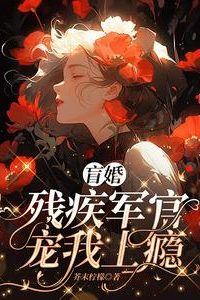
Qiao Huan, a forensic doctor from a post-apocalyptic world, unexpectedly travels back to the 1970s with her loyal dog. Drawn to a steadfast military officer, she faces new challenges when her family is schemed against and sent down to the countryside.

Determined to choose her own future, Qiao Huan refuses an arranged marriage and begins life in the rural village. Her skills soon make her a barefoot doctor and a special-appointed forensic expert. In her second year, she reunites with the officer she admires and starts life as a military wife.

Set against the backdrop of the 1970s, this story weaves together military family life, career struggles, humor, and a touch of the extraordinary—following Qiao Huan as she builds love, family, and hope in an unfamiliar era.

Novel Items

More
Item
A bicycle owned by Qiao Huan, stored in her space. She uses it for transportation between the crime scene and Shitunzi Brigade. Leiting jumps onto the back seat riding with her.
Item
Qiao Huan's forensic medical kit that she carries when responding to cases. Contains tools for examination and special mask for handling corpses.
Item
A mask worn by Qiao Huan when examining corpses, used to collect soil residue from the body without contamination.
Event
A swollen corpse was found floating in the river by Yang Dazhi while fetching water. The body was later determined to have been buried first and then thrown into the river. Investigation revealed it was likely an educated youth woman who married into Old Lin's family and fell off a cliff.
Event
Qiao Huan, Lu Shijing, and the police team investigated the back mountain crime scene. They found a pit measuring 1.67m long, 50cm wide, 40cm deep, with dragging marks 50 meters from the cliff. Willow leaves on the body matched trees near the pit.
Event
Qiao Huan used painting techniques to draw a rough outline of the deceased's appearance since she lacked the restoration agent for gigantism. She completed the portrait by sunset and handed it to Lu Shijing.
Latest Release
DateGroupRelease
2026-08-11shanghai fantasy c46
2026-08-11shanghai fantasy c45
2026-08-11shanghai fantasy c44
2026-08-11shanghai fantasy c43
2026-08-11shanghai fantasy c42
2026-08-11shanghai fantasy c41
2026-08-11shanghai fantasy c40
2026-08-11shanghai fantasy c39
2026-08-11shanghai fantasy c38
2026-08-11shanghai fantasy c37
2026-08-11shanghai fantasy c36
2026-08-11shanghai fantasy c35

Community Reviews

Rating(0 / 5.0, 40votes)
5 stars
0(0%)
4 stars
0(0%)
3 stars
0(0%)
2 stars
0(0%)
1 stars
0(0%)

Popular reviews

... Read More
The way this author describes cooking scenes is actually insane. Let me just — the pig intestine sequence alone is like five paragraphs of step-by-step preparation and I was HUNGRY by the end of it. Flour to clean it, boiling with onion ginger and cooking wine, skimming the foam, braising for an hour, simmering for another half hour. This isn't just worldbuilding, this is a recipe and I need to know where to buy the same cooking wine. But beyond the food, the whole atmosphere of these chapters feels so grounded and lived-in. The Ye family home with the kang, the rules about men washing dishes and no lying down after meals — you can feel the weight of tradition and family structure in every detail. Qiao Huan's place with the hand-cranked spin dryer in the yard, the bicycle she pulls from her space, the way she introduces Jian Ying to shampoo and shower gel like they're exotic artifacts. It's these small domestic moments that make the setting feel real. The Public Security Bureau scenes are a different kind of atmosphere though — fluorescent lights, Type 74 uniforms, the smell of the cafeteria, Lei Ting waiting outside because dogs aren't allowed. It creates this contrast between the warmth of home life and the cold professionalism of Qiao Huan's forensic work. And the mountain scenes where she teaches Jian Ying — green leaves, fresh air, the sound of her humming while they walk. Each location has its own texture. The author doesn't just tell you where they are, you can smell the braised intestines and feel the morning dew on the grass.
... Read More
I've been thinking about this book on a deeper level than I expected to, and two symbols keep coming back to me: the scar on Zhou Fang's face and Lei Ting the dog. On the surface, the scar is just a physical detail that creates comedic moments—Zhou Jian using it as an excuse not to marry his daughter to his grandson, the crowd being intimidated by it, Zhou Fang being self-conscious about it. But I think it represents something bigger about how this society values appearance and how trauma is visible versus invisible. Zhou Fang's scar is a "glory of killing enemies in the battlefield" according to his grandfather, but the villagers see it as something frightening. That tension between how you see yourself and how others see you is a really rich theme. And Lei Ting—the dog who can find herbs, hunt pheasants, understand human speech, and basically serve as a bridge between the rural world and the military world—feels symbolic too. He represents competence without pretense. He doesn't care about social status or appearances; he just does what he's good at. The fact that Old Man Zhou wants to take him to the military dog base suggests a crossing of worlds, a merging of the rural and the institutional. There's also this recurring theme of people being reassigned or moving between social roles—Tang Yue going from spoiled young lady to grass-picking helper, the educated youth from Kyoto who can't do farm work, Qiao Huan moving between being a village doctor and someone who will join the army. The marriage between Qiao Huan and Ye Yunzhou represents another kind of crossing: a civilian doctor and a soldier, someone with a scar and someone recovering from injuries, two people who've both been through something and are choosing to build something together. The dried herbs in Qiao Huan's yard, the vegetables she grows—it's all about transformation, about taking raw materials and making them useful. That's what these characters are doing with their lives.
... Read More
Okay, I need to talk about Lei Ting because this dog is honestly the MVP of the entire chapter. Like, think about it—a dog who runs mountain trails at dawn, catches pheasants and rabbits, knows how to wash fertilizer off rapeseed (don't ask me how), and still finds time to bring eggs to the table. This isn't just a pet. This is a full-fledged family member with opinions, dignity, and apparently a very active social life with Qiao Huan. But the real character moment for me was Lei Ting's reaction when Qiao Huan casually drops the bomb about kissing her future husband. The dog just... stops. Buried its head in its nest. No more tail wagging. It was hit so hard it went into shock. I literally laughed out loud. The author wrote: "Life is sad for a dog. Don't disturb me when I'm sleeping!" and I was wheezing. Then there's the Jian Ying dynamic. She's fifteen, an orphan, and the first time she really opens up is on the walk home with Lei Ting escorting her. She talks non-stop to the dog about her grandma. When she gets home, she's a chatterbox. But at Qiao Huan's place? Silent. That contrast tells you everything about her—she's guarded, used to being an outsider, but she's slowly letting people in. And Qiao Huan notices all of it. She sees Jian Ying's shyness, her guilt about wanting to play with other kids, her desire to earn her keep. The way Qiao Huan hands her two chicken legs and says "before you can become stronger, you must first learn to accept your own weakness"—that's not just a cooking lesson. That's life advice wrapped in a threat. I love it.
... Read More
Okay can we just talk about Lei Ting for a second because THIS DOG is honestly the best character in the entire book and I am not even being dramatic. The way Qiao Huan treats her—feeding her the chicken thigh, letting her sit at the table, giving her a muzzle because she cares about how others perceive her—is just genuinely heartwarming. And Lei Ting's internal monologue?? "Woof~ Sister Huan, I don't have any electric abilities, how can I drive away mosquitoes for you?" I literally screamed. This dog has more personality than half the human characters. But what really got me was the scene where Qiao Huan buys all that meat and tells Lei Ting to guard the basket. The dog catches the old lady red-handed. And then later, when they're at the restaurant and Jian Ying offers to split the buns three ways, Qiao Huan says "Half each, we'll both eat the same amount, so Lei Ting won't have any complaints." She's thinking about the dog's feelings while sharing food with a human. That's just— that's the kind of character who loves unconditionally. And don't even get me started on the ending where Lei Ting says "Sister Huan, don't show your affection to single guys, I will be jealous." Jealous of a HUMAN?? This dog is so done with being a dog sometimes and I love it. Who's the real main character here honestly?
... Read More
"She studied forensic medicine before the end of the world." - this line hit me like a truck. The whole setting of this novel is just so vividly rendered. We've got state-owned restaurants where you buy meat buns with cash, tractors as transportation, barefoot doctors, educated youth being sent to the countryside, military special operations teams... it's a whole world. But what really makes it breathe is the small details. Qiao Huan riding her bicycle with Lei Ting on her back to buy food. The old man Zhou Jian wolfing down two large bowls of noodles because he's penniless. Zhou Zhiqing demanding a penny before giving someone a ride on his tractor. These tiny moments of daily life make the setting feel lived-in, not just a backdrop. The scene where Qiao Huan saves the fainting old man on the street - you can hear all the bystanders shouting: "Little comrade, is this useful for you?" "Don't let him get scammed." "Do you have a medical license?" This is such a specific cultural moment, this fear of being trapped by helping strangers. It's universal but also deeply rooted in this particular time and place. And the mountain herb collecting, the acupuncture treatments, the plaster casts... every detail grounds us in this world. I feel like I could walk through these scenes.
... Read More
Let me just say this upfront: this chapter moves at the pace of someone slowly brewing tea on a wood fire. And I am HERE for it. The author could have rushed the Jian Ying introduction—meet the kid, teach her stuff, move on. Instead we get the whole sequence: the feather-plucking negotiation, the half-chicken gift, the walk home with Lei Ting as escort, the grandmother scene, the next morning's training, the herb-gathering trip. Each beat breathes. Each moment earns its place. What I love most is how the author uses silence and small actions instead of big dramatic events. The fertilizer scene—Lei Ting getting caught, having to wash his own mess, then jumping around like a madman when it's done—is pure comedic relief that also builds the world. It's not filler. It's texture. The transition from the warm domestic scenes to Lu Shijing's visit is handled so smoothly. One moment Qiao Huan is eating dinner with her dog, the next there's a knock at the door and the emotional temperature shifts. No jarring chapter break, no dramatic pause—just life continuing, just like that. And the ending? People gathering at the gate wanting their kids to learn medicine too, and Qiao Huan politely but firmly saying Jian Ying is the only one. It's a perfect button. It reinforces her commitment, shows her growing reputation, and hints at the future without rushing it. The pacing here is confident. The author knows the story doesn't need explosions to be compelling. Sometimes a chicken being cut into pieces and a dog eating a raw egg is enough.
See all reviews

Characters

See all characters

Custom lists

Oops…There is nothing here.