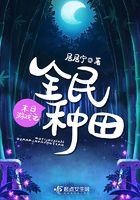
Summary

... Read More

“Ding! Congratulations! Earth has entered a new chapter. The Doomsday Game will help Earth select the new humans. Players, survive and stay alive until the end~”

Suddenly, a game system appears, dividing Earth into trial zones and safe zones.
Trial zones are full of natural and man-made disasters, while safe zones are for buying houses and settling down.

This completely new lifestyle makes An Ranran feel a bit overwhelmed.
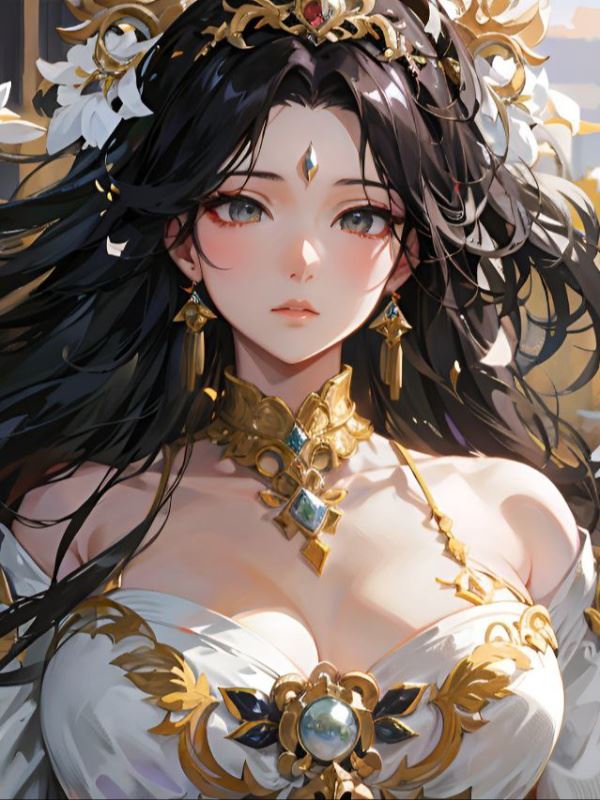
But as a female college student majoring in martial arts—fair-skinned, beautiful, and extremely strong—survival isn’t much of a problem for her.

The only mystery is why she keeps bumping into this man named Huo Ze.

Novel Items

More
Game
A global survival game that fell from the sky, forcing everyone on Earth to participate. Each player has one 12-hour session per night at 8 PM. After the official start, external machinery decays in spring, food spoils in summer, daily necessities expire in autumn, and blizzards destroy houses in winter. The game world merges with reality one year later. Players are ranked A to E after the open beta, determining their starting conditions.
Equipment
A pair of well-made handmade cloth shoes awarded for being the first to successfully fertilize in the beta. Provides Agility +2 attribute boost. Moke Moke considers them top quality with perfect fit and light steps.
Equipment
A reward for firing pottery for the first time in the beta. Contains one kitchen knife, one cutting board, one soup pot, one steamer, and one large iron pot. Simple but complete set.
Item
A reward for successfully creating fire by friction for the first time in the beta. Moke Moke stores it carefully in her backpack as a valuable treasure.
Item
A reward for creating a fire source for the first time in the beta. Awarded to an anonymous veteran player who kept a low profile.
Item
A reward for taking the first bath in the beta. Moke Moke receives it after restoring her cleanliness to 100/100 by bathing in the stream.
Latest Release
DateGroupRelease
2026-08-11shanghai fantasy c188
2026-08-11shanghai fantasy c187
2026-08-11shanghai fantasy c186
2026-08-11shanghai fantasy c185
2026-08-11shanghai fantasy c184
2026-08-11shanghai fantasy c183
2026-08-11shanghai fantasy c182
2026-08-11shanghai fantasy c181
2026-08-11shanghai fantasy c180
2026-08-11shanghai fantasy c179
2026-08-11shanghai fantasy c178
2026-08-11shanghai fantasy c177

Community Reviews

Rating(0 / 5.0, 13votes)
5 stars
0(0%)
4 stars
0(0%)
3 stars
0(0%)
2 stars
0(0%)
1 stars
0(0%)

Popular reviews

... Read More
This book keeps coming back to the idea of rebirth and I think it's using it as this really interesting symbol for privilege and knowledge as power. Moke Moke knows what's coming. She knows the phone will lose data, she knows the heating will fail, she knows food will become scarce. But here's the thing — her knowledge has limits. She says 'If anything went wrong, her knowledge from her past life might no longer be accurate.' That moment of doubt is everything. It's the book quietly admitting that knowing the future doesn't guarantee you can control it. The gold coins are another symbol I can't stop thinking about. Two thousand gold for a workstation. Lin Bubai has 600 and thinks 'robbing a girl's money would be shameless.' The fact that he considers it and then rejects it says more about his character than any monologue could. Money in this world isn't just currency — it's survival, and the fact that wealthy players 'bankrupted themselves just to play a game' is this dark joke about how the apocalypse rewards the already-rich. And the warehouse. Moke Moke building a warehouse on day three — it's such a small thing but it represents this desperate human need to create permanence in a world that's actively falling apart. 'After being reborn, she felt oddly proud to have a warehouse up so quickly.' Pride in a storage building. That's the tragedy and the beauty of it all.
... Read More
There's this one line that hit me harder than it should have: 'Moke Moke's phone finally reached the end of its short life.' It's such a small moment, but the author uses it to isolate Moke Moke in this really specific way. She's not just losing a device — she's losing the easy social connection that kept her anchored to other players. After that, she's alone with her manor, her crops, and her thoughts. And then Bai Qingwan's messages pile up. Each one is a little thread of connection that Moke Moke deliberately pulls away from. 'My dear, what are you doing?' 'I'm about to collapse here.' 'How about... you teach me?!!!' The desperation in that last one — the triple exclamation marks, the ellipsis — it's not just friendship. It's admiration mixed with something else. Bai Qingwan sees Moke Moke as someone who has figured out the game, and that's terrifying for someone who's still struggling. But the emotional core of this batch is Moke Moke's relationship with her own ambition. She's excited about her radishes ripening. She's impatient about the sweet potatoes taking up space. She hums a cheerful tune when she thinks about Milk Ice Cream. These are small joys, but they're real. The author doesn't romanticize her isolation — Moke Moke is lonely, but she's also thriving. There's a tension there that I find really compelling. And Lin Bubai... he's not lonely in the same way. He has no friends, he says, but he doesn't seem to want them. When he threatens to 'kill her whole family' over a business deal, it's almost playful. He's operating on a different emotional frequency. The contrast between Moke Moke's careful social navigation and Lin Bubai's complete disregard for social consequences is what makes their partnership work. She keeps him grounded; he keeps her from overthinking.
... Read More
This book has a voice, and I love it. It's not formal or literary—it's the kind of narration that feels like a friend telling you a story while you're both lying in bed at 2 AM. Moke Moke's internal monologue is full of casual asides and self-deprecating humor that make her feel like someone I'd actually want to hang out with. Take this moment: "Honestly, Moke Moke thought the worst part of this game was that everything had to be done manually. I mean, it's a doomsday game for saving all of humanity—why not some high-tech tools?" That's not just exposition—that's a character reacting to her world with genuine annoyance, and it's funny because it's so relatable. Who hasn't complained about manual labor in a game? The dialogue between Moke Moke and Bai Qingwan is short but effective. Bai Qingwan's reply—"I know my charisma is huge, but little princess Keke, my schedule is full today. Can I favor you tomorrow instead?"—establishes her personality in one line: confident, playful, slightly dramatic. You immediately understand their dynamic without any exposition. And the system announcements are a nice counterpoint to all the casual narration. They're stiff and formal, which makes Moke Moke's reactions to them funnier. She's out here living her best doomsday life and the system is just going "Ding! Congratulations!" like a robotic game show host. The contrast works.
... Read More
I keep coming back to the worldbuilding details because the author doesn't just say "apocalypse happened"—they give you a whole calendar of doom, and it's surprisingly visceral. Month by month: January the game appears, spring machinery decays, summer food spoils, autumn daily necessities expire, winter the blizzard collapses houses. Then a year later, the game world MERGES with reality. That last part is the one that gave me chills. It's not just that the game is real—it's that the game world physically replaces the old one. Your house from the game IS your house now. The manor you built in the beta? That's what you're living in when the real world falls apart. The newbie world itself is painted in these simple, almost cozy strokes. A thatched hut, two patches of black soil, a winding stream, a small forest. It feels like a farming sim on the surface, but underneath there's this constant awareness that every action has survival weight. When Moke Moke checks her stamina at 30/80 and decides not to enter the forest, that's not just game mechanics—that's a girl who knows exactly how fragile her body is. The scene where she's washing in the stream, completely naked but still self-conscious because it's a single-player beta, is one of those small humanizing details that makes the world feel lived-in. Even in a doomsday game, you still feel awkward being naked. The author gets that.
... Read More
What I love about this section is how the stakes keep escalating without any dramatic battles. The conflict is always simmering just below the surface. Lin Bubai is a professional killer who instinctively tightens his grip on his dagger when Moke Moke smiles at him. 'subconsciously rejecting the girl's silent friendliness.' That single detail — a trained killer's body reacting before his mind — tells you everything about what kind of world this is. Trust is a liability. Then there's the whole dynamic with Cheng Shijia. Moke Moke invites Bai Qingwan to the Grade-A forest, and when Bai Bai suggests coming to get her, Moke Moke's immediate thought is 'Good thing she was already prepared.' She crafted extra stone axes. She anticipated that Cheng Shijia might come. She's always three steps ahead, but the reader can see the effort it takes. The stakes aren't just about surviving monsters — they're about surviving other players who see you as a resource to exploit. And the server-wide announcement about the forum launching? That's not just worldbuilding — it's the moment the game opens the door to human conflict on a whole new level. 'More importantly, the forum allowed players to conduct preliminary bartering.' Bartering. That's a polite word for the beginning of a black market. Moke Moke says she has 'no intention of engaging in trades without system involvement' because 'she was a novice at fighting people.' The implication is clear: the monsters in the forest are the easy part.
... Read More
Okay so this batch is really about the moment Moke Moke stops being a lone wolf farmer and actually enters the big leagues. The negotiation scene with Lin Bubai is genuinely well-constructed — you can feel the power dynamic shifting with every line. She comes in wanting recipes, he comes in wanting seeds, and somehow they end up with a sixty-forty split that actually makes sense given the manor tier math. The author doesn't just handwave it; we get the actual numbers — Grade A is 100%, Grade B is 50%, Grade C is 30%, Grade D is 10%, and his Grade E is basically nothing. That's when it clicks: Lin Bubai isn't getting ripped off, and Moke Moke isn't being greedy. She's making a rational choice. But the real plot twist here isn't the deal itself — it's what happens AFTER. The phone breaking on day seven. This is such a clever narrative device. The author drops this detail almost casually, but it completely isolates Moke Moke from the social web of the game. No phone means no easy communication, no impromptu group invites, no falling back on her usual social strategy. And look at Bai Qingwan's messages — she's trying so hard to include Moke, but Moke keeps deflecting. The plot is quietly building toward something where Moke will have to face people on her own terms. Then there's the porcupine incident at the end. Three players show up, accuse her of stealing a kill, and suddenly we're in full conflict mode. The author sets this up perfectly — Moke had every reason to walk away (she noticed the bloodstains, she knew it was injured), but the other party won't let it go. This is classic escalation. The floral-dressed girl with the bodyguards is already painted as someone entitled, and Moke's refusal to back down sets up a rivalry that's going to pay off later. I'm genuinely curious how this resolves.
See all reviews

Characters

See all characters

Custom lists

Oops…There is nothing here.