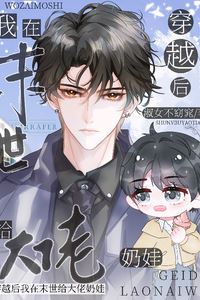
After Transmigration, I Became a Babysitter for a Big Shot in the Apocalypse
Novel Info

Summary

... Read More

[Apocalypse + Double Male Leads + Transmigration + Superpowers + Sweet Pampering + Baby]

A first-time dad, an overwhelmingly powerful big shot (top) × a transmigrated, cheerful babysitter and drama-king (bottom)


On the very day the apocalypse arrived, Ji Heng personally witnessed the ancient phoenix egg fossil—an artifact he had spent two billion to acquire for his grandfather’s birthday—beginning to crack inch by inch.


A baby, no bigger than a fist, fell out from the crack and landed on the egg stand.


“Daddy~ hug.”


Ji Heng was holding his phone, giving instructions to his subordinates. For the first time in over twenty years, his trademark cold expression finally changed—it cracked.


When Tian Le woke up, he discovered that he had transmigrated into the apocalypse—the very ancient Earth apocalypse era he had been researching just the day before.


Just as he was feeling excited about being able to conduct on-site archaeological research and learn more firsthand, he received a call from his superior, President Ji.


“Right now. Immediately. Come here.”


The moment he entered, he saw President Ji standing stiffly, holding a loudly crying baby with both arms raised?


“President Ji, even in the apocalypse, there’s no need to be this cruel and harm a small life, right?”


“Come here and take a look at why my son keeps crying.”


Tian Le patted his chest: as long as they weren’t eating the child, it was fine.


“Is it possible that he’s just hungry?”


After being soaked all over by Ji Tianyi’s baby pee, cracks on Ji Heng’s face kept increasing.


“From now on, you’re in charge of the baby.”


……


Tian Le: Who isn’t a first-time dad? Why should I be the one to nurse your son?


Ji Heng: I’ll guarantee your survival in the apocalypse.


Tian Le: I’m willing to take responsibility.


Ji Tianyi: Daddy, why does Papa always hog you? You’re Tianyi’s daddy, not his daddy.


Ji Heng: ……

Novel Items

More
Device
An optical brain with serial number XJGN008 that accompanied Tian Le during transmigration. It powers on after his arrival, scans the environment, and attempts to contact the Transmigration Alliance but fails due to incompatible signal channels. It provides analysis that this is a parallel spacetime of the Ancient Earth apocalypse era and promises to accompany Tian Le until his death.
Artifact
A fossil purchased by Ji Heng as a birthday gift for Grandpa Ji, rumored to be an ancient phoenix egg. It cracks open in Ji Heng's study, hatching a baby that grows to 55 centimeters when touched. Its origin is mysterious, and it is the source of Ji Tianyi's existence.
Item
A comfortable mattress Jiang Rao mentions wanting since the current hard bed makes her waist ache. Lu Shen promises to buy one for her after earning money from farming and night business.
Household Item
A pale blue mosquito net in Tian Le's apartment, treated as a priceless antique. Even the Interstellar Museum has only one set on display. Tian Le carefully unzips it, marveling at its antiquity.
Item
Fu Chuan's basic phone that can only make calls and send texts, provided by his sisters under the excuse of keeping him focused for senior year.
Item
A newly unlocked item after the town upgrade, to be sold in the supermarket starting the next day. Miao Suisui brought a bottle to the hot pot gathering where it was warmly welcomed.
Latest Release
DateGroupRelease
2026-08-11shanghai fantasy c36
2026-08-11shanghai fantasy c35
2026-08-11shanghai fantasy c34
2026-08-11shanghai fantasy c33
2026-08-11shanghai fantasy c32
2026-08-11shanghai fantasy c31
2026-08-11shanghai fantasy c30
2026-08-11shanghai fantasy c29
2026-08-11shanghai fantasy c28
2026-08-11shanghai fantasy c27
2026-08-11shanghai fantasy c26
2026-08-11shanghai fantasy c25

Community Reviews

Rating(0 / 5.0, 28votes)
5 stars
0(0%)
4 stars
0(0%)
3 stars
0(0%)
2 stars
0(0%)
1 stars
0(0%)

Popular reviews

... Read More
Let me just say — the way this author introduces conflict is *impeccable*. You've got the team resting, everything's calm, Ji Tianyi is being cute, and then BOOM. Banging at the gate. Zhou Run and his crew showing up like 'hey we heard there are supplies here.' Classic apocalypse trope but executed so well because the author gives us a FULL backstory on Wu Youde before the confrontation even happens. We learn he was a warehouse worker, he barely survived looting on his own, he nearly got punched by Zhou Run, and now he's serving as a guide out of pure necessity. That's not just worldbuilding — that's making us understand WHY this threat exists before we even see the conflict. And the lock scene! Ji Heng upgraded the security level, requires daily authorization, and Wu Youde is sweating trying the correct password. The tension builds through sound — clicking, banging, the lock denting — and Tian Le's reaction (hugging the baby) keeps it personal. Then Cai Yan just appears at the door with 'what are you looking at?' and unleashes ice shards. One moment they're desperate looters, the next they're getting humiliated by a teenager with a cold ability. The departure of Zhou Run's group felt slightly rushed but honestly it worked — these aren't the final villains, they're a warm-up. And ending on Li Yang's group appearing at the convenience store doorway?? Perfect cliffhanger. Two hostile groups, both with ability users, both wanting the same resources, and our protagonists are caught between them. The pacing is like a rollercoaster that never lets you catch your breath and I am HERE for it.
... Read More
The stakes in this story are layered in a really smart way. On the surface, it's a survival apocalypse — food, water, shelter, the usual. But the author keeps raising the bar. Tian Le's personal stake is immediate: he has no resources, no allies, and no idea how to live in this era. He's a corporate assistant, not a prepper. His only advantage is his knowledge of the apocalypse timeline and an optical brain that can't even send signals. That's not much, and the story makes that clear. Ji Heng's stakes are different but equally high. He's prepared supplies, he has bodyguards, he has a corporation behind him. But now he has a baby — a baby that hatched from a fossil egg, which means this child is clearly not ordinary. What is it? Where did it come from? And how does he protect it while the world falls apart around him? The external conflict is the apocalypse itself — mutating viruses, extreme weather, societal breakdown. But the internal conflict is what keeps me hooked. Ji Heng is a man who controls everything in his business life, and he's completely powerless against a crying infant. Tian Le is a transmigrator who thought he'd be sent back home, and now he's responsible for another person's survival. "Apocalypse is coming; survival is necessary to secure the future of the Ji Family." That line from Big Brother Ji sets up the central tension perfectly. It's not just about living — it's about what you live for. And right now, both protagonists have suddenly acquired something to protect that goes beyond themselves.
... Read More
Okay so I need to talk about this group because honestly it's rare to see a post-apocalyptic team that doesn't immediately turn on each other. Ji Heng is clearly the leader but he's not some tyrannical boss—he's genuinely protective. The way he carries Ji Tianyi everywhere, pats his bottom, tells him to behave... it's not just boss energy, it's dad energy. And Tian Le? He's the soft heart of the group. Feeding Baby, bringing out food from his space, making sure everyone's comfortable. Meanwhile Ji Tianyi is this tiny little fireball-throwing menace who's also just... sweet? He shares his bread with that random little girl even though he's hungry, and when she gives it back to her mom, he's like 'okay I guess I grew up a little' and just lies there upset. The dynamic between these three is everything. Ji Heng and Tian Le have this quiet understanding—they sleep in the same bed, hold Baby together, communicate without words. But what really got me was how Ji Heng handles the warehouse confrontation. He doesn't even throw a punch himself. Just coldly tells Lu Jingze to handle it while he finds a clean spot to sit with the kid. That's not weakness, that's confidence. He knows his people have his back.
... Read More
I have to appreciate how distinct every character sounds in this text. Let me just... list some moments that made me laugh out loud. Lu Jingze: "This is polite first, then force. If you don't open, I have plenty of ways." — This guy is aggressively direct and it's hilarious. He's not even trying to be charming about threatening to break down a door. Then Wang Jin going from fierce guard to obsequious pushover in one sentence: "Haha, brothers, my apologies. It's late at night, let's understand each other." The speed of that transformation is comedy gold. Sun Ye: "Tian Le, you're a super babysitter." And Tian Le's correction: "Not at all, he's Daddy, not Dad." The kid then chiming in: "Yes, Boss is your Dad." and Tian Le: "Mhm, Uncle Sun is a bit smart after all." This exchange is so natural it could be real life. The humor comes from the situation, not from any forced joke. Zhao Ximeng's dialogue is perfect for a small-time bully who just discovered he has powers: "This is my territory. You just show up uninvited?" He sounds exactly like someone who's been eating too much hot and fast. And then his collapse into "Brother, spare us! Spare us!" is the punchline to his own arrogance. Ji Heng barely says anything and yet he dominates every scene. "What will you give in exchange?" — two lines from Lu Jingze and one from Ji Heng, and the power dynamic is completely established. The author knows that sometimes the least dialogue is the most powerful dialogue. The narrative voice itself is also worth noting — it's observant without being pretentious, it catches details like Tian Le's dimples or Ji Heng's CEO aura, and it doesn't over-explain emotions. It trusts the reader to feel things.
... Read More
Let me just say this warehouse confrontation was directed like a movie and I am HERE for it. The setup is perfect—you drive up to this farmhouse inn, see zombie corpses everywhere, signboards half-broken, and you immediately know something went wrong. Then Lu Jingze looks through the glass and sees these people sitting in corners with vacant eyes. Not dead, not zombie, just... broken. Numb. That single detail tells you everything about how long this apocalypse has been going on. And then the door opens, Brother Wang's voice echoes, and suddenly you've got two groups facing off in this dusty warehouse with sunlight streaming through cracks. The visual of Ji Heng in his suit walking in holding a child while Lu Jingze stands behind him like a shadow—it's such a striking image. But what really made the scene pop was the contrast. You've got these survivors who've been hoarding and demanding ten jin of food per person, acting like they're the law, and then Ji Heng just... doesn't even care. He's not threatened. He's not intimidated. The power dynamic shifts so smoothly from Brother Wang's wind blast to Baby's fireball to Lu Jingze dismantling him like it's nothing. And Tian Le immediately pulling out tables and chairs from his space to set up a feast? That's the kind of worldbuilding detail that makes me believe in this universe. It's not just about fighting zombies—it's about who controls resources, who builds community, who survives by being cruel versus who survives by being generous.
... Read More
There's this one detail that keeps haunting me—Ji Heng looking out the window at the zombies and realizing they're becoming more agile, more flexible, evolving alongside the ability users. It's not just worldbuilding flavor text. It's a metaphor for the whole story. As the survivors get stronger, the threats get stronger too. Progress and danger are locked in this endless spiral. But I think the deeper symbol is in Ji Tianyi himself. He's a child who's growing faster than normal, whose power is increasing while his body stays small. He represents this idea that the new world is producing new kinds of humans—beings who don't fit the old categories. The bread scene ties into this too. That little girl handing the bread back to her mom instead of eating it herself—it's a tiny moment but it shows how the old world's manners and social rules still persist even in apocalypse. Civilization isn't gone, it's just... thin. And Ji Heng's group, with their shared meals and protective dynamics, is trying to build something thicker. The warehouse confrontation isn't just a fight—it's a clash between two visions of survival. Brother Wang's group hoards and demands tribute, recreating the power structures of the old world. Ji Heng's group shares food freely and defeats enemies without cruelty. One is surviving by becoming what they fought against, the other is trying to survive while staying human. And that's really what the whole story is asking—can you keep your humanity when the world has ended?
See all reviews

Characters

See all characters

Custom lists

Oops…There is nothing here.