Summary

... Read More

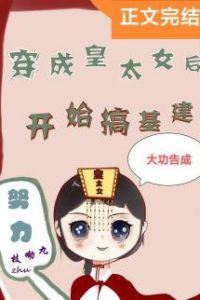
Zhe Qing died from overwork in her previous life.

Once she transmigrated to ancient times as a princess and was bound to a laptop with an internet connection, she became a “salted fish.”

She spent every day just idling about. The only use for the computer was to read novels, watch movies, and occasionally post online about her “decadent life as a slave owner in ancient times.”

That was until all her older brothers died, and she, as the sole remaining heir of the imperial family, became the Crown Princess.

Zhe Qing: “…”

#S.O.S.: How is wool made into yarn?#

#Asking on my knees: How exactly does rice-fish farming work?#

#Steps to set up a newspaper office#

#Feasibility of implementing food delivery in ancient times#

#Ancient animal husbandry#

#Is it easy to make money from ancient women?#

#How steel is refine-failed (crossed out) refined#

Short Theater:

When the words 【Medical Genius】 suddenly appeared above the head of Imperial Physician Yu, who was checking her pulse, she knew her Golden Finger might have arrived.

Zhe Qing: “Lord Yu, I see that you have an extraordinary constitution; you are a rare medical genius in this world. I happen to have a copy of the 《Great Method of Penicillin Extraction》 here…”

Warnings:

1.
A Zhi Youjiu production—guaranteed to be full of roasting, comedy, and silliness.

2.
The Golden Finger is massive! People with words over their heads have talent that is absurdly high!

Novel Items

More
Software
A mysterious software that appeared on Zhe Qing's mental computer after her transmigration. It contains a document titled Character Collection Progress and displays golden character tags above certain people's heads, identifying them as geniuses in their respective fields. So far only Imperial Physician Yu has been identified as a Medical Genius.
Manual
A formula/method for extracting penicillin that Zhe Qing wrote down using Baidu and gave to Imperial Physician Yu. The method involves grinding millet and taro into juice, mixing them, adding blue mold, and collecting urine. If successfully produced, it could save thousands of soldiers' lives on the battlefield.
Elixir
An anesthesia formula from Chinese history that Zhe Qing planned to give to Imperial Physician Yu after the success of penicillin. It had not yet been invented in this era. Zhe Qing also mentioned bone-scraping treatments as another medical advancement she wanted to introduce.
Manual
A systematic medical text referenced by Zhe Qing as absent in this era. Its absence shocked her, along with the lack of other unified medical knowledge.
Manual
A book owned by Doctor Cui that records more than three hundred kinds of herbs, including their names, properties, and uses. It is considered perfect for beginners. The book was kept in the inner residence of Cui Shantang.
Document
A record where those who achieve great accomplishments are recorded for eternity. Zhe Qing told Imperial Physician Yu that if penicillin is successfully created, his name would be recorded in this book.
Latest Release
DateGroupRelease
2026-08-11shanghai fantasy c10
2026-08-11shanghai fantasy c9
2026-08-11shanghai fantasy c8
2026-08-11shanghai fantasy c7
2026-08-11shanghai fantasy c6
2026-08-11shanghai fantasy c5
2026-08-11shanghai fantasy c4
2026-08-11shanghai fantasy c3
2026-08-11shanghai fantasy c2
2026-08-11shanghai fantasy c1

Community Reviews

Rating(0 / 5.0, 16votes)
5 stars
0(0%)
4 stars
0(0%)
3 stars
0(0%)
2 stars
0(0%)
1 stars
0(0%)

Popular reviews

... Read More
I need to talk about this moment with Emperor Yu because it hit me differently than I expected. Here's this ruthless emperor who threatened to strip ministers' skins, who brought in study companions like they were commodities, and yet the text says: "In his lifetime, aside from becoming emperor, nothing else could truly be considered fortunate." The emotional weight of that line is insane. He lost his father early, ascended at six, grew up in hardship, lost his favorite empress young, lost all three sons, and has only one daughter left. Three great misfortunes of life. Three. And in three years of her transmigration, she's never seen him show weakness. Not once. But then penicillin happens, and for the first time, he laughs heartily. The text says: "When his sons died, he immediately began preparing for her to become the Imperial Crown Princess... When life is bitter to a certain extent, sweetness is rarely felt. But now, Emperor Yu truly felt a thread of sweetness in his heart." That's it. That's the emotional core. She's not just a political player; she's his last remaining child, and she's giving him something to feel happy about. I found myself genuinely emotional reading that. Also, the study companions—Qin Kuan specifically is already smitten. He's thinking about studying by candlelight with her. The romantic tension is simmering but the father-daughter bond between Zhe Qing and Emperor Yu is what really anchored this section for me.
... Read More
Let me just say this: the opening of Zhang Yushu's first class is one of the most vividly rendered scenes I've read in a while. Fifteen students in a room, all watching this nervous first-time teacher who's holding a bamboo tube like it's Excalibur. The detail about the Princess assigning a minor official from the Ministry of Works to help with measurements — that's worldbuilding through implication, not exposition. You immediately understand the institutional support behind this invention without being told directly. And the classroom itself! Two-hour classes with fifteen-minute breaks, a format the students are "unaccustomed to" but gradually find logical. This is a medical school with modern pedagogy transplanted into an ancient setting, and the author never stops to explain it — we just see it happening, students raising hands, rushing to try the stethoscope, the genuine excitement when they hear a heartbeat for the first time. The sensory detail of the bamboo tube transmitting that clear, rhythmic pulse must have been something to experience in real time. Then there's the contrast of the stifling June heat in the palace garden, Zhe Qing reviewing notes in a pavilion, spotting a girl passing by with floating text above her head — "Genius in Biology, Physics, and Chemistry." The visual of her chasing after the girl, running until she's out of breath, ordering guards to stop her, and then personally helping the trembling twelve-year-old up instead of intimidating her. That sequence moves from comedic to tender in three sentences. The world feels alive because every location has its own temperature, its own mood, its own people moving through it with purpose.
... Read More
Okay, I need to talk about General Qin and his son Qin Kuan because THIS father-son dynamic is absolutely unhinged and I cannot stop thinking about it. The man is literally sweating through political crises while his youngest son is over there rubbing his face against his father's fist like a cat begging for pets. "Go ahead, hit me! Aim for the face! Tomorrow I'll still be going to the palace to study!" — bro, what kind of person are you, honestly. And General Qin's internal monologue about how if he beats his son his own mother will come beat him and his wife will skin him alive is the most relatable thing I've ever read. But then the father actually drops some serious political philosophy on him, right? The whole argument about why a woman can't rule in times of chaos — and the text explicitly notes "this argument couldn't withstand close scrutiny" but it still shut Qin Kuan up. That's the thing about toxic family dynamics, the people in power don't need logic, they just need volume. Qin Kuan standing there stammering with his face red is simultaneously pathetic and kind of funny because he genuinely doesn't understand why his father won't just let him pine after the princess in peace. And then General Qin picks up a piece of paper that says RESUME and suddenly the whole political chess game shifts. This man went from yelling at his son to immediately consulting his strategist about the princess's innovations. The man is a walking contradiction — he opposes the princess publicly but is clearly fascinated by her methods. I love that the strategist shows up uninvited like "I was already on my way" with that mysterious beard-stroking energy. The political intrigue is simmering under every scene and I'm here for it.
... Read More
"For an ordinary family, having a doctor among them is like a blessing from the ancestors." I need to just sit with that line for a second. That's not just dialogue—that's the entire emotional weight of Yun Zhou compressed into one sentence. These people have been suffering in silence for generations. A night illness meant death. Now someone is offering to teach them basic medicine, to leave behind a doctor who will stay. The village chief nearly cried when Zhang Hu told him about the princess's vision: "the young are nurtured, the elderly are cared for, and the sick receive treatment." And then there's the mother at the tavern. "My little radish—Little Radish, open your eyes and look at your mother one more time." I literally had to pause the chapter. That raw, desperate grief in a public street, the crowd murmuring, the sheer helplessness of it all. It's one thing to read about suffering in a distant land—it's another to hear a mother beg her dying child to look at her one more time. But here's what got me—the contrast. Right after that heart-wrenching scene, the two physicians descend like angels of mercy. Their movements are "precise and coordinated," the crowd falls silent in awe, and when the girl's hand twitches, Imperial Physician Yu smiles. That smile! After all that dread, that one small smile from a man who just saved a child's life—it's so understated but so powerful. And Zhang Hu's moment with the village chief, his eyes growing warm as he promises better days ahead. These aren't grand romantic gestures or dramatic confessions. They're quiet, human moments of connection between people who see suffering and choose to act. That's the emotional core of this whole arc—benevolence as an active force, not just a feeling. The princess herself is fascinating emotionally too. She mutters to herself about cotton and Huang Daopo and corn, her mind racing with possibilities, then suddenly her eyes light up: "That's right, there's also wool!" She's not just a ruler implementing policy—she's a person whose passion is so genuine it's almost contagious. You can feel her excitement, her frustration, her relentless drive to fix everything. I keep coming back to that image of the mother and Little Radish. It haunts me. Why does fiction do this to me?
... Read More
There's a recurring motif here that I can't stop turning over: the idea of reading people's potential through their bodies. Zhe Qing tells Zhang Yushu, Imperial Physician Yu, AND the palace maid Xuesheng that they all have an "extraordinary skeletal structure." She covers it up with a fake Bone-Reading Art and pages of the Book of Changes, but the pattern is deliberate. This is a woman who has built her power on knowing things others don't — modern science disguised as ancient wisdom, meritocracy disguised as divine favor. The resume General Qin is staring at is another symbol of this theme. It's a modern concept — a document that claims to distill a person's entire worth into structured information — appearing in an ancient court. The strategist calls it "extraordinary" and immediately connects it to interviews, number tags, bunk beds, hearing aids. These are all systems designed to evaluate and organize human potential, to replace bloodline and birthright with measurable merit. That's the whole project of Zhe Qing's reign, isn't it? She's not just inventing medicines and steel — she's building an entire infrastructure where talent can be recognized regardless of where you come from. And then there's the Emperor, who takes Zhe Qing's scribbled Book of Changes pages and says "I'll see if I can learn it too." He wants the tool of recognition without understanding the philosophy behind it. That tension — between the system and the person who created it — is where the real drama lives. The story keeps asking: who gets to be seen, who gets to be valued, and who gets to decide?
... Read More
The dialogue in this section is genuinely funny and I need to highlight a few lines because they're so good. First, Qin Kuan saying: "To serve as the Fourth Princess's study companion is an honor that would make my Qin ancestors' graves smoke with joy. I imagine our forebears in the underworld would happily burn a few more sticks of incense in celebration." This man is a FLATTERER and I respect it. Emperor Yu's response is peak comedy: "You are nothing like that old scoundrel father of yours. You definitely aren't his biological son but picked up from the streets. How about this—I'll change your surname and find you a new father." Qin Kuan: "..." His smile vanished. Zhe Qing: "..." Truly something her imperial father would say. The deadpan delivery here is everything. And then later, when Emperor Yu is threatening ministers, he says "strip them of their skins" and the text notes he meant it literally because he's done it before. The contrast between the humorous court banter and the underlying menace is what makes the dialogue so distinctive. Zhe Qing's voice is also well-defined—she's direct, strategic, occasionally dry. When she says "Father, medicine used for the people is a virtue that heaven and earth can attest to. Used for commerce, it becomes a significant source of revenue for the national treasury," she's speaking two languages at once: the moral language her father wants to hear and the practical language he understands. The dialogue carries subtext like a freight train.
See all reviews

Characters

See all characters

Custom lists

Oops…There is nothing here.