Summary

... Read More

【No Golden Finger + For the Country and the People + Strong Male Lead, Stronger Female Lead】

【No Rustication, No Black Market, No Clinging, No Female Abuse, No “Delicate Wife” Trope】

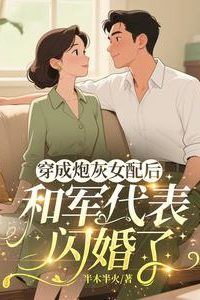
Xia Baozhu, who held a stable “iron rice bowl” job, was reborn into the year 1963.

To reclaim her leisurely life of drinking tea and reading the newspaper, she worked her way up from a state-owned factory to the capital, and from the capital back to the province, inadvertently embarking on a path of rapid political promotion.

Reading Guide:

① Please do not project this onto reality! This is a purely alternate history setting.

② No child-rearing. To readers who enjoy stories about raising children, perhaps we will meet again if fate allows.

③ Transmigration into a book. The original book and its male lead are merely background elements with very little presence.

④ Romantic content is concentrated in the early stages. The female lead only follows her own will; her career is her top priority.

⑤ The female lead doesn’t like meddling in others’ business. She will help those she finds agreeable and stay on the sidelines for those she doesn’t, including her family members.

⑥ The annoying second brother and his wife will become “orphans” (cut off from the family). Family matters are handled without being overly hysterical.

Novel Items

More
Event
A government program in 1963 China pairing state-owned factories with impoverished communes for mutual support. Unlike the later educated youth movement, this was a factory-commune partnership where workers would go to the countryside to work. The factory provided funds and equipment while the commune supplied land and labor. Workers also cleared land near facilities like pig farms to grow fruits and vegetables. The original Xia Baozhu had been sent with a large group to work in the countryside.
Event
The upcoming engagement banquet of Zhu Yan and Meng Chu, which Zhu Yan invites Tao Wanxing to attend.
Item
A male harem novel (Zhongmawen) that Meng Shuting was reading, which became the world Xia Baozhu transmigrated into. The novel features a male protagonist who accumulates countless women, rises in politics and business, and becomes the nation's richest man. Xia Baozhu transmigrated into the body of the cannon-fodder female supporting character who shares her name. The novel's plot includes the male lead eventually fighting the cannon-fodder female character for custody of her son.
Item
A shop registered in Xia Baozhu's name and managed by her. It was established before her transmigration and provides her with a source of income. This is part of her modern-life legacy that carries over into her transmigrated existence.
Arcane Treasures
A bracelet that Zhao Ran instinctively took. It is the key to activating the Kongjian. In the novel, it originally belonged to the female lead's family and was picked up by Old Mrs. Yang during turbulent years. The bracelet recognizes bloodlines, which is why Zhao Ran's Kongjian activated differently than the female lead's.
Arcane_treasure
A star mecha that transformed into a small white kitten due to low energy. It communicates with Yun Shu, accumulates favor points, and serves as her companion. It can only meow to others but Yun Shu understands its words. It feeds on favor points rather than conventional food.
Latest Release
DateGroupRelease
2026-08-11shanghai fantasy c10
2026-08-11shanghai fantasy c9
2026-08-11shanghai fantasy c8
2026-08-11shanghai fantasy c7
2026-08-11shanghai fantasy c6
2026-08-11shanghai fantasy c5
2026-08-11shanghai fantasy c4
2026-08-11shanghai fantasy c3
2026-08-11shanghai fantasy c2
2026-08-11shanghai fantasy c1

Community Reviews

Rating(0 / 5.0, 13votes)
5 stars
0(0%)
4 stars
0(0%)
3 stars
0(0%)
2 stars
0(0%)
1 stars
0(0%)

Popular reviews

... Read More
I need to talk about Xia Chang'an because this character is genuinely hilarious and I think he might be my favorite in the entire book so far. The dialogue in this section is sharp and each character has a distinct voice, which is rare. Grandmother Xia has that high-pitched, performative sweetness—'Dear granddaughter, don't worry about me. I'm just relieved to see you safe and sound. Now I can finally sleep peacefully tonight.' But then she's also the same woman who's criticizing her daughter-in-law for not contributing enough while simultaneously being manipulated into pushing marriage arrangements. Xia Baozhu's internal voice is the real star though. She's got this dry, modern, slightly sarcastic tone that comes through even in translation. When she discovers there's no system, no space, no golden finger: 'To send her through time travel without giving her a Jinshouzhi! How ruthless! Time travel is one thing, but at least provide the supporting facilities! Truly fitting for a Paohui Nüpei in a Zhongmawen... Her hotpot, her barbecue, her house, her car, her bank account balance—all had left her in such a dramatic way.' This is comedy gold. A woman who transmigrated and her first concern is that the universe didn't even give her a inventory space. And Xia Chang'an! 'What can I do? My wife has a soft heart. You'd better go now. Your dear granddaughter needs to sleep. Take care on your way back—don't trip!' The casual cruelty wrapped in fake concern. He's not even angry about being called bewitched by a temptress—he just leisurely crosses his legs and sways them. This is a man who has fully accepted his role as the family disappointment and is thriving in it. The narrative voice itself is this perfect blend of wry observation and genuine warmth. Xia Baozhu can be brutally honest ('What a level of filial piety and devotion!') one sentence and then genuinely tender the next when she's thinking about the original host's suffering. The author's voice shapes the reading experience in a way that makes this feel less like a generic transmigration novel and more like a character study wrapped in historical fiction.
... Read More
There's this one line that I've been turning over in my head since I finished reading: "Her late grandmother used to say she was like a copper pea—unsteamed, uncooked, and unflattened." And then Xia Baozhu reinterprets it for herself: "She thought of herself more as a fully inflated rubber ball: the more pressure applied, the higher she bounced; the harder she was slapped down, the faster she rebounded." This is the entire thesis of the novel right here. The copper pea is the old generation's metaphor—someone who hasn't been processed, hasn't been made useful by the system. But the rubber ball? That's her own philosophy. Pressure doesn't destroy her—it makes her bounce back harder. And this connects to something deeper in the text. The parents' generation survived Japanese forced labor, lost children to illness, worked themselves to the bone building a new nation. Their metaphor for survival was endurance—gritting teeth, persevering. But Xia Baozhu's metaphor is resilience with agency. She's not just enduring; she's actively choosing how to respond. The novel keeps coming back to this tension between fate and choice. The original plot was written like fate—she was supposed to marry Teng Fei, suffer, get abandoned. But the transmigrated consciousness introduces the variable of awareness, and awareness changes everything. Even small moments carry this weight: the factory hospital suggesting she rest, the military rep who was supposed to be a background character now genuinely concerned, the gossipy female colleagues whose sneering comments actually reveal the social pressures that shaped the original Xia Baozhu's personality. This isn't just a transmigration romance. It's about how the next generation reinterprets the sacrifices of the previous one—not to repeat them, but to transcend them.
... Read More
Okay so let me just say this engagement-breaking subplot is genuinely fascinating because it's not your typical dramatic confrontation scene. The Xia family shows up to break off the engagement, but the TENG family has been trying to quietly kill the relationship for TWO YEARS and can't figure out how to do it politely. I love this setup because it creates this delicious dramatic irony where both families are playing different games and neither knows the other's full hand. The Teng parents' scheme is actually kind of diabolical in a mundane way. They wanted to let things cool off naturally while their son Teng Fei courts Deputy Factory Director Zhang's daughter. Their plan was to make Xia Baozhu reject THEM so they wouldn't look like the bad guys. Classic face-saving maneuver. And now here comes the Xia family, demanding a formal engagement banquet to properly break it off, which completely derails their whole strategy. "If it weren't for the life-saving favor, if it weren't for the fact that this engagement was strongly pushed by the old man, they wouldn't even need to formally break it off." That line hit me because it reveals how the entire engagement was built on a debt of gratitude rather than genuine family alliance. The grandfather Teng Gaowang pushed it, the parents are uncomfortable with it, and Teng Fei himself is just going along with it because he's a nineteen-year-old who hasn't figured out he's supposed to have opinions about his own life. The plot tension here isn't about will-they-won't-they romance drama. It's about social survival in 1963 China, where a damaged reputation could literally destroy your family's future. Xia Baozhu understands this better than anyone in either family, which is why she's the one quietly strategizing with her mother about how to execute this without leaving loose ends.
... Read More
Let me just say this upfront: chapter 4 is basically one giant exposition dump and I was supposed to hate it. Instead, I couldn't stop reading. Here's why it works. The author could have just dumped all this worldbuilding at once—ration system, salary structure, black market prices, the famine history—and bored me to death. But instead, it's filtered through Xia Baozhu's practical, slightly cynical brain as she's trying to figure out her actual situation. She's calculating: monthly salary twenty-six yuan, ten cents per bath, three yuan a month if she bathes daily—that's a significant chunk. Her mother earns seventy-six, her father forty-two, but after subsidizing their respective families, they're down to eighty-eight yuan. 'What a level of filial piety and devotion!' she thinks, and I was cackling. The pacing here is clever because every piece of information serves a dual purpose: worldbuilding AND character development. We learn about the famine rations (42 jin fine grains dropped to 32 jin mixed grains, cooking oil from 500ml to 200ml), but we also learn that Xia Baozhu is the type of person who immediately starts calculating how to survive in this economy. She's not panicking. She's making a spreadsheet in her head. Then there's the flashback structure—we get the original host's backstory woven in naturally as Xia Baozhu processes the memories, and it creates this really effective emotional counterweight to the dry economic details. One moment you're reading about black market pork prices (ten yuan per jin!), the next you're reading about a girl who died from a fever because her coworkers wouldn't talk to her. The chapter ends mid-thought actually, with Grandmother Xia talking about meat distribution changing from once a year to once every few months, and the text just trails off. It's a cliffhanger of sorts—not dramatic, but it creates this sense that the world is slowly opening up, that things are improving, and Xia Baozhu is about to step into that improving world with her modern skills and zero sentimentality.
... Read More
I keep coming back to this one passage and I can't shake it. The original host's breakdown wasn't some dramatic overreaction—it was the collapse of someone who had nothing left. She discovered Teng Fei's ambiguity with another woman. She overheard his parents plotting to match him with someone more useful. She felt she'd fallen behind academically while Zhang Minjun and Teng Fei both got into university. And then during those two weeks of rural support labor, she could neither eat nor sleep. The text says it plainly: 'The shattering of her pride, her dread of the future, and her deep regret left her in constant turmoil.' She was running a fever for days and the female workers in the workshop had never been on speaking terms with her. So she endured it alone. And it cost her her life. Xia Baozhu's reaction to all this is what makes it hit different though. She doesn't feel guilty about taking over this body. She literally thinks: 'She hadn't caused the original host's death. She hadn't stolen or robbed anyone... Who was going to feel sorry for her?' And honestly? I can't blame her. The original host was a somewhat proud, self-important, highly sensitive young girl who had been blinded by illusions and trapped in love. But she was also just a kid who had rarely faced hardship since childhood and couldn't bear the weight of it all. There's this moment where Xia Baozhu sighs and rests her forehead in her hand and just... processes it. 'What a mess this was.' She had worked hard for seven years after university to build a peaceful life where her main job was passing time and her side hustle filled her pockets. Her life had only just begun. And now she's here, in a famine-era body, with no system, no space, no hotpot, no barbecue, no bank account. The emotional core of this book isn't the romance—it's the survival instinct of a woman who refuses to let the original host's mistakes become her own.
... Read More
This opening section about Xia Baozhu's first night back in the Xia family home is one of the most vividly uncomfortable domestic scenes I've read. Let me just paint it for you: she's sharing a room with her sister Xia Baozhen, the parents and younger brother are in the outer room, and the DOORS AND WINDOWS AREN'T SOUNDPROOF AT ALL. So she's lying there listening to Old Xia's snoring and babies crying, unable to escape any of it. "Last night, accompanied by Old Xia's snoring and the cries of her little nephew and niece, she felt utterly hopeless." Hopeless. Not tired. Not annoyed. HOPELESS. And then the bathroom crisis hits — she needs to go at night but won't go alone to the public toilet, so she has to shake awake her sleeping sister and cling to her arm. This is such a specific, grounded detail that tells you everything about what life was like for women in this era. The fear isn't abstract; it's about walking to a communal toilet in the dark. The residential area's toilet was "passable" at least. I keep thinking about how the author uses these small environmental details to build a world without ever stopping to explain the historical context. We know it's 1963. We know about class struggle intensifying. We know about the political labels that could stick to entire families. But we also know about the snoring father and the sister who wakes up to accompany you to the bathroom. The worldbuilding works because it's in the margins, not in the exposition.
See all reviews

Characters

See all characters

Custom lists

Oops…There is nothing here.