Summary

... Read More

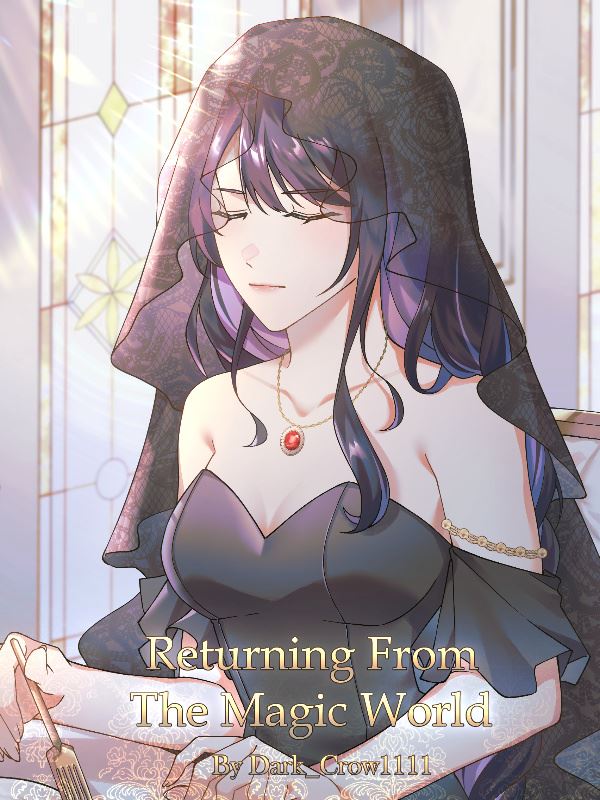
In her past life, Yun Juan was swapped with her elder sister and became the wife of the second son of the Marquis of Yingchuan. Her husband favored her elder sister and treated her coldly. Her mother-in-law scolded and beat her, making things difficult for her every day. Yun Juan toiled half her life to gain her husband’s family’s approval. Who knew that when she opened her eyes, she would be back to square one! Her elder sister had also been reborn. She abandoned the short-lived heir of her previous life and obediently married the second son.

She thought she had picked up a great deal, but Yun Juan knew in her heart that a rotten person couldn’t be helped and would eventually die. – Xiao Lanting was the heir of the Marquis of Yingchuan, a lackey of the royal family, a hypocritical and violent madman. People feared him and cursed him, but the little wife he casually married believed he was a good person.

Xiao Lanting scoffed at her, playing along, and betrayed her deep affection. Yun Juan was nothing more than air, dispensable. But when she truly disappeared from his life, Xiao Lanting realized that he couldn’t live without air. “Swap marriage, male lead chases after wife in a hellish situation” “Calm, composed, and sometimes crazy female lead x arrogant, ruthless, and profit-driven male lead.

Novel Items

More
Event
The central incident where the two sisters' bridal sedans entered the wrong grooms' chambers. Yun Xiu deliberately knocked off her veil to expose the swap and frame Yun Juan. In the original timeline, Yun Juan married Xiao Mingyu and Yun Xiu married Xiao Lanting.
Item
The red bridal veil used in the wedding ceremony. Yun Xiu deliberately knocked it off before the ceremony to prevent the marriage from proceeding. Later, Yun Juan uses it to perform the wedding bows with Xiao Lanting.
Item
Red nuptial candles burning in Xiao Lanting's bridal chamber, visible through the lattice window.
Item
Treasures from the Yun family treasury that Li Xuan replaced with counterfeits and sold for silver to fund his gambling addiction. The exact amount stolen is used by Yun Juan to blackmail his father Li Wang.
Event
On their wedding night, Yun Juan confronted Xiao Lanting in his study demanding he fulfill his marital duties. He then lifted her onto the desk and they consummated their marriage. The next morning, a blood-stained robe was used as proof.
Event
The central plot event where the two brides (Yu Mu'an and Yu Lin) were switched during the wedding. Yu Lin, also apparently reborn, insisted on the swap so she could marry Xie Jinghong (the man she loved) instead of the mad Xie Jingyan. Yu Mu'an pretended to go along with it but actually welcomed the swap, as it freed her from marrying the scumbag Xie Jinghong.
Latest Release
DateGroupRelease
2026-08-11shanghai fantasy c20
2026-08-11shanghai fantasy c19
2026-08-11shanghai fantasy c18
2026-08-11shanghai fantasy c17
2026-08-11shanghai fantasy c16
2026-08-11shanghai fantasy c15
2026-08-11shanghai fantasy c14
2026-08-11shanghai fantasy c13
2026-08-11shanghai fantasy c12
2026-08-11shanghai fantasy c11
2026-08-11shanghai fantasy c10
2026-08-11shanghai fantasy c9

Community Reviews

Rating(0 / 5.0, 10votes)
5 stars
0(0%)
4 stars
0(0%)
3 stars
0(0%)
2 stars
0(0%)
1 stars
0(0%)

Popular reviews

... Read More
I need to just sit with that line for a moment. Xiao Lanting says it almost casually, do you know how many people in Shengjing want me dead? And Yun Juan's response is this perfectly honest, I didn't know marrying you was this dangerous. The stakes in this novel are not abstract, they're woven into every relationship, every conversation, every moment of intimacy. The external conflict is clear, political enemies, assassination attempts, the Crown Prince's faction versus everyone else. But the internal conflict is what really keeps me up at night, because Yun Juan is falling for a man who could get her killed, and she knows it, and she goes anyway. The princess subplot adds another layer of danger, Xiao Nanzhi isn't just a jealous rival, she's a princess with connections to the Empress and the Sixth Prince, and she's already plotting to invite Yun Juan's sister for tea, which in this world is never just tea. The spanking scene is where all these conflicts converge, Yun Juan's danger isn't just from outside enemies, it's from the very person she married, and yet he's also the only one protecting her from it. That contradiction is the engine of the entire story. Every scene raises the stakes, the tea party shows the political danger, the princess confrontation shows the personal danger, the home scene shows the domestic danger, and somehow all of them feel real and immediate and urgent. I'm genuinely worried for this woman and that's rare for me to feel about a fictional character.
... Read More
I need to talk about Xiao Lanting because this chapter completely reframes him. Up until now, he's been this cold, calculating figure — sharp-tongued, intimidating, clearly playing a long game. But there's something underneath all of that. When he hands Yun Juan his chopsticks at the dinner table and tells her to eat first, he's not just being dramatic for show. He's making a point. In a household where Yun Juan has been treated as inferior her entire life, he publicly elevates her to the position of honor. And when he says "Let's go home" and walks out with her, leaving the Yun family in ruins? That's not just strategy. That's devotion. But here's what really got me — the dress. He had Yun Xiu mend it, yes, as revenge. But then he tosses it aside and says "If you like this style, I'll have a couple more made for you." He's not just punishing Yun Xiu. He's telling Yun Juan that she deserves better. That her comfort matters. And Yun Juan's reaction? "The first time anyone had treated her this kindly... the first time someone had stood up for her again and again." Oof. That hit hard. Meanwhile, Xiao Mingyu's entire worldview shatters when he learns Yun Xiu wanted to marry his brother instead. His reaction — "Get lost!" — is brutal but honestly? Fair. The man was deceived into a marriage built on lies. His green glow moment is pathetic but also tragic. And then there's Crown Prince Xiao He showing up at the end, inviting Yun Juan to dinner. Who is this man? Why does he have imperial guards? What's his relationship with Xiao Lanting really like? I need to know more.
... Read More
This batch of chapters moves like a rollercoaster and I genuinely didn't expect it to. You start with what seems like a relatively calm tea gathering, right? People chatting, drinking tea, a bit of polite tension. But the author is quietly building something underneath the surface and by the time Xiao Nanzhi smashes that teacup, you realize this was never going to stay calm. The structure here is interesting because it mirrors the political world of the story, everything looks peaceful on the surface but the fault lines are everywhere. Then you get the carriage scene which is almost comedic in its domesticity, the hawthorn negotiation, the sweet exchange that's actually a power struggle. And then BAM, back to danger with the spanking scene. The chapter ending with Yun Juan's shoulders trembling as she holds back tears, that's a proper cliffhanger emotionally even if there's no action happening. What really works is how the author controls the tempo between scenes. The tea party is slow and layered, every sentence carries weight. The alley confrontation with the princess is sharp and fast, all cold words and sharp edges. The home scene drags deliberately, making you feel Yun Juan's humiliation second by second. It's not just about what happens, it's about how long the author makes you wait for each beat. The transition from the comedic hawthorn scene to the intense punishment scene is jarring in the best way possible, it catches you off guard and that's exactly what keeps you reading.
... Read More
The tea gathering scene is absolutely dripping with atmosphere and I want to just sit in it for a moment. You've got this room full of distinguished people, the maids serving tea, the decorative screen that becomes the accidental victim of the Eighth Princess's tantrum. The image of porcelain shards and hot tea scattering across that screen is so vivid it's almost cinematic. And then right after that chaos, Xiao Lanting strides in and the room goes deathly silent. The contrast between the noisy smashing and the sudden quiet is masterful. What I love about this scene is how the author uses the setting to map out the power structure. The Crown Prince sits elevated, watching everything with a smile like he's enjoying a show. The princess seizes the chair meant for Yun Juan, trying to position herself next to Xiao Lanting. And he walks straight past her. The physical blocking of the scene tells you everything about who holds power and who doesn't. Later, the alley scene with the carriage is so different in mood, dimmer, more private, the curtain Yun Juan keeps lifting and lowering like she can't decide whether to watch or not. It's a small domestic space that feels enormous with tension. And the final scene in their room, the door closing, the heat, the table—every sensory detail pulls you into Yun Juan's panic and confusion. The author doesn't need grand descriptions of palaces or battlefields to make the world feel alive. It's in the steam of tea, the sourness of hawthorns, the trembling of a curtain.
... Read More
The Mansong tea metaphor is everything and I'm not even being dramatic about it. Yun Juan explains that the tea leaves stand upright instead of sinking, and she connects it to the rivers and mountains of Great Zhou, saying they stand firm and never fall. This is the thesis statement of the entire novel disguised as a tea tasting note. Everyone in that room is playing a political game, floating on the surface, sinking or swimming based on convenience. But Yun Juan, who claims to be simple and obedient, is the one who understands what it means to stand firm. And the candied hawthorns, oh god the hawthorns. They look sweet on the outside, red and glossy and inviting, but they're actually sour. Yun Juan knows this, she eats them slowly, savoring the surprise. Xiao Lanting pretends he doesn't notice the sourness because he doesn't want to embarrass her, or maybe because he's already accustomed to sour things in his life. There's also the recurring motif of doors and curtains, the way Yun Juan keeps lifting and lowering the carriage curtain, never quite committing to watching or not watching. She's always half-hidden, half-visible, which is exactly how she exists in this world, never fully seen, never fully safe. And the folding screen from that first dinner, separating her from the negotiations, becomes a symbol of her entire position, present but divided, participating but not involved. The author keeps returning to these images of partial visibility and hidden truths, and it all comes back to that tea, standing upright in hot water, refusing to sink.
... Read More
Okay so the candied hawthorn scene is genuinely one of the most interesting relationship moments I've read in a while and I need to talk about it. On the surface it's just Yun Juan wanting street snacks and Xiao Lanting being reluctant, but underneath it's this whole dance of testing each other. She offers him one hawthorn, he says give me the rest, she hands it over and secretly sighs with relief because they're actually sour. Meanwhile he takes a bite, his expression freezes, but he swallows it anyway and pretends not to notice. Both of them are performing obedience and both of them are secretly plotting. That's the whole marriage in a nutshell, isn't it? Two people playing roles for each other while genuinely figuring out if they can trust the performance. And then there's the carriage conversation where she asks why he married her and he says because you're honest. But then he immediately qualifies it by saying you're obedient and that's your greatest virtue. Which is it? Is he saying her honesty is what attracted him, or is he reframing honesty as a form of obedience because that's more comfortable for him to admit? I keep coming back to that moment where he lifts her over the table and spans her. It's terrifying and domestic at the same time, which is exactly the tone this relationship operates in. She's furious and humiliated but she also doesn't actually hate him for it, does she? That's the thing that gets me about emotional lines in novels, when the power dynamic is this skewed but there's still something real underneath it all.
See all reviews

Characters

See all characters

Custom lists

Oops…There is nothing here.