Summary

... Read More

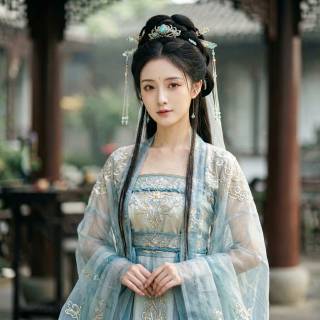
Xia Xing’er, the legitimate daughter of the Changxin Marquisate, married Helian Zhi, the son of a general, on her mother’s orders.
On their wedding day, news of war arrived from the border: Nan Yi had invaded. Helian Zhi was ordered to lead troops to reinforce the front, leaving for three years. At home, Xia Xing’er dutifully served her in-laws and cared for her younger siblings-in-law.

What she awaited, however, was not a lifetime of devotion from one man, but a letter of divorce and the entire Changxin Marquisate being confiscated and exiled…

Novel Items

More
Document
A detailed record of Xia Xing'er's dowry brought by Chunliu. Shows that over three years, 45,843 taels, 2 mace, and 45 wen in cash alone were used to subsidize the General's Manor. The shops, estates, and items her parents privately gave her remain untouched. Xia Xing'er uses this to plan reclaiming her belongings.
Document
An imperial decree that Xia Xing'er plans to obtain from the Empress Dowager to legally dissolve her marriage with Helian Zhi. Since the original marriage was bestowed by the Empress Dowager, she believes she can get an imperial divorce decree to leave with dignity.
Item
A string of keys belonging to the eldest branch of the Chi family, covering the kitchen, cabinets, and cellar. Chi Qiao handed them to Liu Lingling when transferring household management duties.
Document
An imperial decree for Shen Zhaoli's political marriage to the King of Beiliang, given to her by Emperor Shen Zhijin. The Emperor also provided it as a way out, saying if she ever regrets the decision, the edict is her escape.
Item
Li Muyan's dress from the previous day, hanging in the wardrobe. Lu Yunchi checked it to reassure himself that she had not left.
Document
A list of betrothal gifts for Ye Qingyu prepared by Old Madam, including ten thousand taels of silver, two pairs of jade bracelets, one pair of mutton-fat jade bracelets, one set of red gold hair ornaments, two pairs of gold bracelets, and fifty bolts of silk and satin. It was drawn up by Ye Qingyu herself.
Latest Release
DateGroupRelease
2026-08-11shanghai fantasy c23
2026-08-11shanghai fantasy c22
2026-08-11shanghai fantasy c21
2026-08-11shanghai fantasy c20
2026-08-11shanghai fantasy c19
2026-08-11shanghai fantasy c18
2026-08-11shanghai fantasy c17
2026-08-11shanghai fantasy c16
2026-08-11shanghai fantasy c15
2026-08-11shanghai fantasy c14
2026-08-11shanghai fantasy c13
2026-08-11shanghai fantasy c12

Community Reviews

Rating(0 / 5.0, 14votes)
5 stars
0(0%)
4 stars
0(0%)
3 stars
0(0%)
2 stars
0(0%)
1 stars
0(0%)

Popular reviews

... Read More
There's so much rich symbolism in this section that I think deserves real attention. Let me start with the butterfly. When Xia Xing'er sees the butterfly dancing among the flowers and thinks about her childhood freedom, it's not just a pretty image. The butterfly represents everything she's lost—her carefree state of mind, her autonomy, her ability to choose her own path. In a story where women are constantly being maneuvered by powerful men (her stepmother drugging Bai Wan'er, the emperor forcing marriages, Helian Zhi using military merit to marry another woman), the butterfly becomes a symbol of fragile freedom that can be crushed at any moment. The military tally is another powerful symbol. It represents ultimate power—the ability to command 400,000 troops, to shape the fate of an empire. But Xuanyuan Yi brings it to the emperor not as a threat, but as a bargaining chip for love. The tally becomes a symbol of how power and affection are inextricably linked in this world. Even the most powerful man cannot simply have what he wants—he must negotiate, bargain, and risk everything. The imperial marriage decree itself is deeply symbolic. It represents the emperor's absolute control over every aspect of his subjects' lives, even their romantic futures. But here's the irony: the emperor thinks he's using Xia Xing'er as a tool to humiliate Zhennan Wang, when in reality he's enabling the very union he wanted to prevent. The decree becomes a symbol of how political schemes often backfire because they underestimate human emotion. The recurring theme of 'choice' is everywhere. Xia Xing'er chose to petition for divorce. Bai Wan'er chose to resist her stepmother's plans. Xuanyuan Yi chose to go to the borderlands rather than accept a political marriage. But the emperor keeps removing their choices. The story asks: in a world where power determines fate, can anyone truly choose their own destiny?
... Read More
This chapter completely redefined who Xia Xing'er is for me. She's not just some wronged woman seeking revenge—she's a full-on force of nature who operates by her own moral code. Let me break down what makes her character so fascinating. First, there's this incredible duality. She's brutal—she shaved half a woman's head into a yin-yang style and drew turtles on her face, left a corrupt official peeing himself with terror. But she's also strangely principled. She left the Empress Dowager's concubines one set of clothes each. She left the Grand Tutor a quilt but not the vicious woman. She even left Lin Yuanfeng a blanket despite the... well, you know what happened. This isn't random cruelty. This is someone who has calculated exactly how much suffering each person deserves. And then there's the Empress Dowager relationship, which is where things get really complicated. Three years ago, the Empress Dowager granted her the imperial marriage decree without hesitation. Yesterday, she granted the divorce decree. But in the previous life, when Xia Xing'er's family was destroyed, the Empress Dowager did nothing—and may have even been involved. So was the kindness real? Was it manipulation? Or was it something in between? The portrait Xia Xing'er finds in the secret chamber suggests the Empress Dowager is hiding something huge, and I have a feeling it's connected to Xia Xing'er's own family. This relationship is going to explode.
... Read More
Okay so let me just say—this section is absolutely loaded with plot twists and I am HERE for it. The whole rebirth setup is fascinating because it's not just a simple 'I died and came back' trope. Xia Xing'er actually USES her foreknowledge strategically, which is so much more interesting than most rebirth novels where the protagonist just sits around knowing things. The biggest plot development here is obviously the imperial marriage decree coming in right after the divorce decree. Like, the emperor literally cannot let a moment of peace stand. One day she's free from Helian Zhi, the next day she's being forcibly betrothed to Zhennan Wang. And the genius of it is that the emperor thinks he's being clever by using a divorced woman to humiliate the war prince—but he's actually walking right into his own trap because Zhennan Wang genuinely wants her. I also love how the subplot with Xia Qingfeng and Bai Wan'er mirrors the main romance. Bai Wan'er was drugged and forced into a compromising situation, escaped, and was rescued by Xia Qingfeng. Now she's fiercely protective of Xia Xing'er because she sees her sister suffering. It's a beautiful parallel that shows how women in this story are constantly at the mercy of powerful men's schemes. The revelation that Zhennan Wang petitioned the emperor overnight, bringing the military tally with him as leverage—that's such a bold plot move. He essentially held the empire's military authority hostage to get what he wanted. And the emperor's reaction? Pure political calculation. This is a story where love and power are inextricably linked, and that makes every romantic moment feel dangerous and electric.
... Read More
Okay so let me just process what I just read because my brain is literally vibrating. The emperor is playing 4D chess and everyone else is still learning checkers. Lin Yuanfeng literally made the treason evidence himself alongside Grand Tutor Liu Yuan—so this whole thing is a setup, a frame job on the most spectacular scale. And the imperial marriage decree? That's not a blessing, that's a noose. He's forcing Xia Xing'er into a political trap while simultaneously destroying Xuanyuan Yi. But here's what really got me: the three-year promise. Xuanyuan Yi knelt in the mud, probably straight from the battlefield, and asked for THREE YEARS to win special permission to marry only one woman. No concubines. Just her. And Liu Youran rejected him anyway. Rejected the man who would've given her daughter an honest life, because the imperial harem was too complicated. Irony is a cruel mistress. And now the emperor is using that exact marriage decree as a weapon. The timeline is beautiful in its cruelty—he proposed three years ago, fought his way to the border, came back, and the emperor is now using the marriage as the final blow. This plot is so tightly wound I can barely breathe. Every thread connects. Every character's past decision is about to collide with the present disaster.
... Read More
Can we just appreciate the absolute COMEDY GOLD that is Xuanyuan Yi's proposal scene? Because the narrative literally tells us he came straight from the battlefield, still in his armor, covered in sweat, and what does he do? He drops to his knees. Not a graceful kneel. A THUD. And then he's 'grinning like a fool.' The man is a god of war. The common folk tell children 'if you keep crying, Zhan Wang will come' to make them stop. Noble ladies get thrown out by his guards for trying to engineer chance encounters. He's supposed to be untouchable, distant, terrifying. And yet here he is, scrambling to his feet in an 'ungainly manner,' sheepishly rubbing the back of his head, looking 'rather embarrassed.' His dialogue is surprisingly earnest for someone who clearly has zero practice at this. 'Could you tell me, Marchioness, why I am unsuitable?' Not 'I will have her.' Not 'You dare refuse me?' He ASKS. He negotiates. He offers three years. This is a man who commands armies but has never been rejected by a mother-in-law and he is handling it with the dignity of someone who is internally panicking. Meanwhile Liu Youran's internal monologue is pure deadpan: 'Knowing it's abrupt, yet you still came!' The contrast between his earnest desperation and her cold, calculating rejection is hilarious. And then later when Xia Xing'er uses 'Third Brother' as an excuse for zoning out and Xia Qingyu's pastry suddenly loses all flavor—this is the author's voice shining through. The humor is sharp, the dialogue has personality, and nobody sounds the same. I can tell who's speaking without looking at the tags.
... Read More
I need to talk about Liu Youran because this woman is a whole emotional earthquake and I am here for it. Three chapters ago her daughter hadn't called her 'mother' in what felt like forever—always formal, always distant, like they were strangers sharing a roof. And then in this chapter, Xia Xing'er gets startled and literally blurts out 'Mother, what are you doing?' and Liu Youran is internally SCREAMING with joy. She's suppressing her excitement like a woman who just won the emotional lottery. This detail alone tells you everything about how broken their relationship was and how desperately Liu Youran wanted to fix it. But then—then she offers the divorce decrees. To BOTH daughters-in-law. At a time when the family is about to be exiled, she's trying to SEND THEM AWAY to protect them. Zhuge Pei could go back to her real family. Bai Wan'er's stepmother would probably sell her. Liu Youran would rather face exile alone than drag innocent people down with her. And the daughters-in-law refuse. Not out of duty. Not out of obligation. Zhuge Pei says she won't abandon her husband and children. Bai Wan'er says this mansion IS her home now. These women chose to stay. That is the most beautiful character moment in the entire passage. Meanwhile Xia Qingyu is just sitting there eating pastries and suddenly his life is on the line because his sister was teasing him about getting a sister-in-law. Bro didn't even finish his snack in peace.
See all reviews

Characters

See all characters

Custom lists

Oops…There is nothing here.