After Splitting from the Family, The Wardrobe Became a Portal to Modern Times
Novel Info

Summary

... Read More

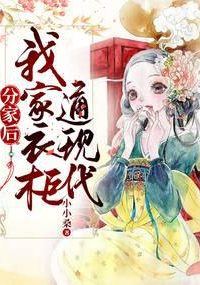
After an earthquake followed by a drought, Lin Xiaoman and her younger brother were cast out by their paternal grandparents to fend for themselves, moving into an old house that had mostly collapsed.


But how did their wardrobe turn into a portal to the modern world?


With abundant supplies and easy money in modern times, why did everyone have a craving for the wild vegetables and mushrooms that, back in their world, only got foraged during famines?


The siblings had a stroke of inspiration and embarked on a path of buying low and selling high—a business of arbitrage.


They planted corn, grew potatoes, and promoted cotton, ensuring that the common people across the land could have enough to eat and warm clothes to wear!


They cultivated chili peppers, grew fruits, and crafted delicious foods, amassing vast fortunes as gold and silver rolled in!


Their fame grew too great, their abilities too formidable—they became the apple of the emperor’s eye, with princes and princesses theirs for the picking.


Oh my, how did that good-for-nothing, freeloading little county magistrate, who lazed around their home all day, dare to storm the imperial palace to snatch someone away?


Lin Erhu was frantic with worry, but the little county magistrate suddenly transformed—donning a python robe and a purple-gold crown, now addressed as “Little Imperial Uncle” by even the princes and princesses…

Novel Items

More
Document
A list of dowry items from when Lin Xiaoman's mother married into the Lin family. It includes eight palanquins' worth of items, a silver hairpin, a ring, bracelets, and thirty acres of paddy field. Lin Xiaoman uses this list to claim her rightful inheritance.
Furniture
The bed where Xue Ning rested and recovered from her fever, nestled in embroidered quilts.
Item
A hidden silver hairpin belonging to Miss Xie. Chun Cao exchanged it to obtain information about Wang Ping from Zhang Ma's nephew.
Document
The legal document formalizing the split between Lin Xiaoman, Lin Erhu, and the old Lin family. Both sides pressed their handprints on it, officially separating the siblings from the family with no obligation to care for their grandparents.
Arcane Treasures
A mysterious wardrobe that transforms when Lin Xiaoman's blood touches its door. Inside, it reveals a portal to another world with colorful patterned walls, manicured lawns, deciduous cypress trees, a flower-covered pond, playground equipment, and strange people in odd clothing. The portal only appears for those whose blood touches it.
Materials
The amount of grain Lin Xiaoman and Lin Erhu receive during the family split. Lin Xiaoman negotiated this amount after initially being offered only two portions. This grain is not enough to last until the New Year.
Latest Release
DateGroupRelease
2026-08-11shanghai fantasy c44
2026-08-11shanghai fantasy c43
2026-08-11shanghai fantasy c42
2026-08-11shanghai fantasy c41
2026-08-11shanghai fantasy c40
2026-08-11shanghai fantasy c39
2026-08-11shanghai fantasy c38
2026-08-11shanghai fantasy c37
2026-08-11shanghai fantasy c36
2026-08-11shanghai fantasy c35
2026-08-11shanghai fantasy c34
2026-08-11shanghai fantasy c33

Community Reviews

Rating(0 / 5.0, 20votes)
5 stars
0(0%)
4 stars
0(0%)
3 stars
0(0%)
2 stars
0(0%)
1 stars
0(0%)

Popular reviews

... Read More
"That Fang family is despicable!" — and honestly, who could blame Shen Guihua for losing it? The Fang Mingcheng reveal is basically a masterclass in dramatic irony. We see him openly flirting with a brothel woman, and the text doesn't even try to hide it. The author just drops this information like a brick: he has diseases, he's harassing his stepmother, and apparently there's a mystery baby in Madam Fang's belly. It's so blatant that the only real tension is whether Lin Xingxing's family will actually listen in time. And thank goodness they do — the engagement isn't finalized yet. Phew. But what I found more interesting is how the plot splits into two parallel tracks. On one side, you've got the matchmaking drama with the Fang family, which plays out almost like a thriller — will they make it in time? On the other side, you've got the siblings discovering their parents' abandoned shop and deciding to turn it into a business. These two threads are thematically linked (both about survival and making smart choices) but they never really intersect, which I think is a deliberate structural choice. The author is building two separate arcs of tension: one emotional (avoiding a terrible marriage) and one practical (building a livelihood from nothing). The plot feels coherent because every scene serves a purpose. Even the seemingly mundane details — like the neighboring shop owners explaining that the location is terrible and the shop has changed hands three times in five years — feed directly into the siblings' motivation. They're not just opening a shop; they're proving that their parents' dream wasn't wasted. That's a nice narrative layer that elevates it above a simple business story.
... Read More
The pacing in this section is actually really clever, and I want to talk about how the author controls the rhythm. It starts with high tension — the Fang family match is on the line, Shen Guihua is furious, and there's a ticking clock (the engagement hasn't been finalized yet, but it could be). This is classic urgency pacing. Then, almost immediately, the story pivots to the siblings finding their parents' shop. The tempo drops. We get descriptions of the locked door, the rammed-earth houses, the torn paper windows. It's slower, more observational. But here's the thing — this slowdown isn't boring. It's necessary. The reader needs to breathe after the Fang family drama, and the shop discovery gives us a new kind of tension: can these two actually make this work? Then the pacing picks up again with the clam oil sales. This is where the author really shows their skill. The scene moves from the wholesale market (efficient, transactional) to the shop (chaotic, energetic). Lin Erhu's sales pitch, the crowd gathering, the "buy five get one free" deal — it all happens in a blur of activity. The prose itself speeds up. Shorter sentences. More action. You can feel the money coming in. But the author doesn't let it run too long. Just when the clam oil scene could drag, we get the plasterer's intervention, which adds a human beat before the scene transitions to Lin Xiaoman's second wholesale run. The structure feels like a series of waves — tension rises, crests, recedes, then rises again with a different flavor. No section lingers too long, and no section feels rushed. The chapter breaks (indicated by the ellipses) also serve as natural breathing points, giving the reader just enough space to reset before the next beat.
... Read More
At its core, this passage is about innovation meeting tradition—and the tension between them. The clam oil represents something entirely new in this world. It's a product that doesn't exist here, something Lin Xiaoman has brought from “the other side” (presumably her original world or a modern context). The fact that it sells so well—“new and novel”—speaks to a universal truth: people crave novelty, even when they don't understand it. The iron pots they're saving for are symbolic of a threshold. Three taels of silver is the goal, and every jar of clam oil, every wen earned, is a step toward it. The pots represent security, capability, the ability to cook properly—to truly start their business. It's a classic underdog narrative: small earnings accumulating toward a larger dream. The hotpot itself is a powerful symbol. It's communal—people gather around a single pot, sharing food, sharing the experience of spice. The bamboo skewers, the clay stoves, the shared tables—this is food as social glue. The fact that the first reaction to spice is pain (“It burns!”) followed by delight (“It's so fragrant!”) mirrors the broader theme: innovation is uncomfortable at first, but those who push through are rewarded. Old Lady Lin represents the old order—cruel, dismissive, but ultimately powerless. The siblings' success is their rebellion. And the cold-faced young man in blue? He's a symbol of the unknown future—someone who will presumably become important, someone whose presence suggests the story is about to expand beyond the local marketplace.
... Read More
I have to talk about the dialogue in these chapters because the author has given almost every character a distinct voice and it's impressive. Lin Erhu's dialogue is perfect for a younger brother who's proud but also easily pleased. "Sis, these instant noodles are really tasty and so easy to make. Let's just eat these from now on." Then when Xiaoman suggests trying different foods: "I do! Then how about we try a different one each day?" He's eager, simple, genuine. You can hear him swaying his head proudly. Lin Xiaoman's voice is more measured, more strategic. When she's negotiating with Fourth Grandma: "I don't trust anyone else, so I came to ask you for help, Fourth Grandma. I'll pay you for the work." She's direct but respectful. When she lies about the salt price — "private salt trading isn't allowed by the court, so we had to keep it quiet. It wasn't that expensive—about thirty wen per jar" — she's smooth, quick-thinking, already calculating how to protect her secret while maintaining the relationship. Grandma Liu is warm and gossipy in the best way. "You two are way too honest. Giving away a ginseng root that big like it's nothing!" She speaks like an actual grandmother — affectionate, slightly exasperated, genuinely caring. Yao is where it gets interesting. Her dialogue is minimal but loaded with subtext. When she whispers to her son: "Don't argue with Grandma. If she gets angry at you, you're dead!" That's not just advice — that's a survival instruction in a house full of danger. And then her reaction to hearing about the second aunt's death: she doesn't say anything. She just becomes quieter, more submissive. The dialogue here is in what she DOESN'T say. The old lady's dialogue is equally telling. "What a wonderful daughter! After all these years of marriage, she still cares about her maiden family. I'm not so blessed!" On the surface it's a complaint about family loyalty. But coming from someone who murdered her daughter-in-law, it's dripping with ironic self-awareness she'd never admit to. And the narrator's voice — sometimes it slips in with lines like "Who would have thought that the bones they looked down on back home could be made so delicious?" That's Xiaoman's voice bleeding into the narration, which creates this nice intimacy.
... Read More
Lin Erhu is my favorite character now and it's because of one line: 'Sis, are you trying to kill your favorite brother?' After Xiaoman accidentally slaps him face-down into straw because she got too excited about the kang idea, he just... rolls with it. That's not just humor, that's a relationship built on trust and affection. They can take physical mishaps and turn them into jokes instead of arguments. That's rare in fiction. The dialogue throughout these chapters feels incredibly natural, especially between the siblings. There's no over-explanation, no 'as you know, Bob' exposition disguised as conversation. When Erhu says 'Sis, come in here for a moment' and then beckons her mysteriously to look at the stone slab, you immediately understand their dynamic—he's the curious one, she's the protective one, and they move together. Aunt Wang's voice is equally distinct. Her dialogue shifts on a dime from fake sweetness to sneering hostility in the span of two sentences. 'Xiaoman, I came today to ask where you bought your salt' versus 'Hmph! You're so stingy!'—that's a character who can't regulate her emotions and doesn't care who sees it. The narrative doesn't need to tell us she's nasty; her words do the work. And the tea stall ending? The woman's smile stiffening, glancing around to make sure no one was listening, her eyes sweeping over the girls—this is dialogue through action. She doesn't say a word but the entire scene shifts. The author knows how to let silence and physical description carry the weight of what's unsaid. That's craft.
... Read More
The worldbuilding in this passage is exceptional because it's almost entirely sensory. We don't get exposition dumps about the town or the economy—we experience it through smell, sound, taste, and sight. The opening scene with the laundry woman is small but vivid: the clam oil, the thirty jars, the extras thrown in as a bonus. It establishes a marketplace where word-of-mouth and personal relationships drive commerce. The journey to town is a masterclass in practical worldbuilding. The horse-drawn cart is “fast but extremely bumpy”—a detail that matters because it explains why they need the flatbed cart instead. The clay bowls, clay pots, clay stoves—half would break on the cart. This isn't just atmosphere; it's logistics that shape the plot. The carpenter's shop, the bamboo trays, the wooden chopsticks—every detail grounds us in a pre-industrial setting where everything is handmade and bought from specific tradespeople. But the real centerpiece is the hotpot scene. The lard melting in the pot—“With that much lard, those chickens are bound to be fragrant!”—the pungent spicy aroma spreading “halfway down the street,” the sneezing onlookers, the first customer's face twisting as he bites into the radish, the “ha chi, ha chi” sounds of people discovering spice for the first time. This is cinema. You can see the steam rising, hear the sizzle, feel the heat on your own tongue. The cold-faced young man in blue is described with just enough visual detail to be memorable—“artound twenty, tall and lean, with strikingly handsome features”—but his icy expression creates mystery. Who is he? Why is he here? The author knows exactly what they're doing.
See all reviews

Characters

See all characters

Custom lists

Oops…There is nothing here.