Summary

... Read More

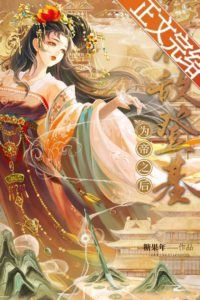
The Eastern Palace was deposed, and Prince Zhao ascended the throne. In an instant, the imperial court was turned upside down.

As the officials bowed their heads, they speculated on how the new Emperor would purge the remnants of the former Crown Prince’s faction—especially the exceptionally brilliant second young master of the Gu family, Gu Ningxi.

Setting aside the fact that Gu Ningxi was a trusted confidant of the deposed Crown Prince, there was also the matter of the Emperor’s exile to Jizhou years ago: that imperial decree had been written by Gu Ningxi’s own hand when she was a junior compiler in the Hanlin Academy.

Inside the Imperial Study, Gu Ningxi arrived upon being summoned.

The Emperor, now holding absolute power, carelessly toyed with a resignation letter. “You are requesting a regional posting?”

Gu Ningxi pursed her lips. “This official is of limited talent and shallow learning. I hope Your Majesty will grant it.”

Lu Jing’s tone was indifferent. “It seems Yuanle is only willing to be loyal to my elder brother.”

Gu Ningxi lowered her eyes. “I would not dare.”

The Gu family was a prestigious clan of illustrious lineage. Because they had once supported the deposed Crown Prince, they were treated with cold neglect by the new dynasty.

The sons of the Gu family were walking on thin ice in the court. After much deliberation, the family decided to sacrifice Gu Ningxi as a chess piece to slightly appease the Emperor’s wrath and signal the clan’s submission.

Her father coldly informed her of the family’s decision. Her mother, the only one who doted on her, could only comfort her in private: “It will only be a death in name. When the time comes, we will bring you back, restore your identity as a woman, and find a good marriage for you.”

Gu Ningxi did not say a word. She locked herself in her room for three whole days.

As the sun rose on the fourth day, she felt just as she had when the Gu family first sent her to be the Crown Prince’s study companion—her life had never been her own.

“Lord Gu, please enter.”

The doors of the Imperial Study closed behind her. Gu Ningxi knelt in the center of the hall and submitted her request.

“I wish to remain in the imperial court.”

The young monarch looked down at her from his high vantage point. Beneath the crimson official robes, a jade belt traced a waist so slender it seemed a single hand could encircle it.

“Oh? Then I suppose everything else is for me to dispose of as I wish?”

Male Lead’s Perspective:

“A childhood friend, yet you supported my brother and became my enemy.”

“The person I have set my eyes on naturally belongs to me.”

“If she wants power, I can give it all to her.”

In the end, the Emperor joked with his friends: “I am nothing more than the Empress’s General of the North.”

Reading Guide:

1.
A non-typical rebirth story. The female lead’s dreams are scenes from her past life; she will gradually regain some of those memories.

2.
1v1, both leads are “pure” (virgin).

Novel Items

More
Document
The imperial edict that exiled Prince Zhao (Lu Jing) from the capital years ago, written by Gu Ningxi in her capacity as Senior Compiler of the Hanlin Academy. It was eloquently composed and its lines are still recalled by those who paid attention. This decree is the source of tension between Gu Ningxi and Prince Zhao.
Treasure
A half-broken jade pendant that was found by Wang Cuihua when she adopted baby Lin Kexin. It was hung around Lin Kexin's neck for over a decade. Lin Tianci stole it as a gift for a girl, was rejected, and threw it at Lin Kexin's face, breaking it into two pieces. When Lin Kexin's blood touched the jagged edge, it activated a Spatial Spirit Spring mystical space.
Document
The official certificate obtained by Xi Xingye and Shen Qinci at the Civil Affairs Bureau. Shen Qinci later tosses it into a toolbox beside her motorcycle, showing her disregard for it.
Event
A sudden palace coup that occurred in the capital, resulting in Prince Zhao's victory and the change of power. The traces were completely erased afterward. Gu Ningxi had been imprisoned in Prince Zhao's manor for four days during the coup and was cut off from all outside news. The coup has thrown the political situation into volatility.
Document
An imperial edict ordering the expansion of Prince Zhao's manor by thirty percent, with all expenses paid from the Emperor's private treasury without limit. The expansion would make it nearly equal in scale to the Eastern Palace, representing a significant overstepping of regulations that no official dared to object to.
Incense
Incense burned by Su Zhuoguang in an incense burner after intimacy with Qiao Shilian to create a calming atmosphere.
Latest Release
DateGroupRelease
2026-08-11shanghai fantasy c10
2026-08-11shanghai fantasy c9
2026-08-11shanghai fantasy c8
2026-08-11shanghai fantasy c7
2026-08-11shanghai fantasy c6
2026-08-11shanghai fantasy c5
2026-08-11shanghai fantasy c4
2026-08-11shanghai fantasy c3
2026-08-11shanghai fantasy c2
2026-08-11shanghai fantasy c1

Community Reviews

Rating(0 / 5.0, 39votes)
5 stars
0(0%)
4 stars
0(0%)
3 stars
0(0%)
2 stars
0(0%)
1 stars
0(0%)

Popular reviews

... Read More
Let me just appreciate how the author uses objects to do emotional heavy lifting here. The study scene is a masterclass in environmental storytelling. "Near the corner of the desk, close to the curio cabinet, stood a three-color appliqué double-fish vase. Although its craftsmanship was extraordinary—a treasure among porcelain—it wasn't particularly eye-catching amidst the understated luxury of the room." Then Gu Ningxi can't stop looking at it. The narration doesn't tell us WHY she's fixated on this vase. It just says she's "struggling to suppress the emotions in her eyes." We're left to connect the dots: this vase belongs to Prince Zhao's study, it's valuable but understated, and it clearly means something personal to her. The fact that it's a DOUBLE-FISH vase (双鱼) is probably not accidental symbolism—duality, pairs, things that belong together. The training ground scene is similarly rich in sensory detail. The spring breeze nudging her arrow off course. The whistling sound of Xie Qian's arrows. The sunlight making her feel exposed. These aren't just decorative descriptions—they're doing work. The breeze isn't just weather; it's the universe conspiring to remind her she's out of her depth. The sunlight isn't just lighting; it's the gaze of every person in that room watching her fail. And the residence itself—"the environment of Prince Zhao's residence felt familiar to her"—this is the ghost of past visits haunting the present. Every corridor, every door, every study is a trigger for memory while she's trying to maintain her cover. The worldbuilding here isn't about maps and politics; it's about how SPACE holds MEMORY.
... Read More
The dream sequence is one of the most beautifully written passages I've read in this novel. Let me just... let me just appreciate the imagery for a moment. "Sandalwood beams supported the ceiling, while golden bricks paved the floor. Night pearls in the corners of the hall emitted a soft glow." This isn't just a room description—this is a POWER statement. The author is telling us that Gu Ningxi's dream-self has access to spaces that rival the emperor's own quarters. A nine-paneled green jade screen. A mutton-fat jade plum vase. A "River and Mountain Landscape" by the former painting sage Li Sidao. Every object in that room is a symbol of wealth, taste, and political significance. And then the contrast—she wakes up to bare feet on cold floors, no silk carpets, just blue official robes and chest-binding cloth. The chill that seeps through bringing clarity. The author is using temperature as emotional metaphor here and I'm HERE for it. The banquet scene too—"The moon rose above the willow branches" and then later "Moonlight filtered through the leaves as Gu Ningxi leaned her hands on the white marble railing." Moonlight is the recurring motif for her liminal state, that space between dream and reality, between who she was and who she is. And Prince Zhao appearing "like the moon among stars"—the imagery is so deliberate. He's luminous, untouchable, surrounded by people but looking directly at her. The visual composition of that scene is pure cinema.
... Read More
Lizheng Hall. That's the symbol that's been haunting me since I finished these chapters. Prince Zhao goes to his mother's former residence — a hall that has been preserved exactly as she left it, eleven years after her death. Every item in its place. Spotlessly clean. Completely empty of life. The text tells us he has few memories of this place because his mother only lived there for half a month. She married at seventeen, gave birth at twenty-nine, was already dying two years before her husband became emperor, and died three days after being crowned. Eleven years of preservation for a woman who was only present for a fraction of that time. And Prince Zhao? He sits in this perfectly maintained empty space because he "simply wanted to find a quiet place in the palace to sit for a while." The parallel to Gu Ningxi's situation is almost too sharp to ignore. She is also preserving something — her true identity, her sense of self — in a space that isn't really hers. The marquis household, the court, the Crown Prince's faction: these are all rooms she's been assigned to occupy, maintained according to someone else's design, while her actual self remains hidden beneath the surface. And like Lizheng Hall, her preservation is fragile. The dream shows us what happens when the preservation fails — when the truth is discovered and the consequences are violent. The crispy cakes scene operates as a counter-symbol: something preserved through active, loving practice rather than frozen in place. Gu Ningxi's mother kept the memory alive by continuing to eat the cakes, and now Gu Ningxi continues it. One is preservation as stasis (Lizheng Hall). The other is preservation as practice (the cakes). The novel seems to be asking which one actually survives, and more importantly, which one is worth surviving for.
... Read More
I need a minute. The Gu Ningxi flashback about her mother and those jadeite bracelets is the kind of quiet devastation that sneaks up on you. "Mother was very fond of this pair of bracelets, initially reluctant to wear them. In the Gu family's inner household, two wives stood side by side: Madam Shen, born into a marquis' household with a generous dowry and in charge of household affairs, while Mother had only the common allowances." This is one sentence and it contains an entire universe of injustice. The author doesn't even need to say "her mother was treated unfairly"—we SEE it. The servants gossiping, the mother feeling guilty about her background, the daughter watching all of this and deciding: I will fix this. I will give her something that can't be taken away. "The day Mother received the bracelets, the surprise and comfort in her eyes, Gu Ningxi still remembers to this day." Still remembers. Past tense used for something that lives in the present. This is the emotional core of who Gu Ningxi is—she's not just a secret identity or a civil official or a pawn in court politics. She's a daughter who turned gold ingots from archery prizes into something her mother deserved but never had. And then the narrative cuts to her sitting by the lake, smiling faintly, and the contrast with everything happening NOW is just... devastating. She's sitting in Prince Zhao's residence, wearing a disguise, about to discuss renovation plans with the man she has feelings for, while carrying memories of a mother who probably doesn't even know what her daughter is really doing. The tenderness of that memory makes everything else feel more dangerous, not less.
... Read More
Okay so this dream subplot is actually genius. Gu Ningxi has these visions of a future where Prince Zhao discovers her female identity and imprisons her after a palace coup. And the way the author uses it as a narrative device? Chef's kiss. It's not just some random prophetic dream trope — it actively drives her decisions. She's suddenly walking on eggshells around Prince Zhao, trying to avoid any entanglement with his faction, all because of something that may or may not happen. The uncertainty is what makes it so good. Is the dream real? Is it a warning? Or is it something else entirely? And here's the thing that got me — she's already on the Crown Prince's side politically, which means her dream-self would be Prince Zhao's enemy. The factional conflict between the Crown Prince and Prince Zhao is the main political spine of this story, and the dream adds this delicious layer of personal stakes on top. She's not just navigating court politics — she's trying to survive a future where she personally offends the most dangerous man in the empire. That's tight plotting. The author doesn't just dump the dream and move on; every encounter between Gu Ningxi and Prince Zhao afterwards is filtered through this new anxiety. When she bumps into him on the street and her mind immediately goes to romantic scenes from the dream? That's not just tension for tension's sake — it's the plot actively reshaping character behavior.
... Read More
Okay, can we just talk about Xie Qian's face when Wei Fan drops that bombshell? "Lord Gu's archery skills were taught by His Highness himself, hand in hand." I literally gasped out loud. This man never willingly instructed anyone in the army, and yet he personally trained THIS person? The implications are EVERYTHING. And then there's the power dynamic shift that happens AFTER the training ground scene. Gu Ningxi walks beside him for a long time afterward, stammering out this half-apology about being a civil official, and Lu Jing just says "Hmm." Not dismissive, not cold—just... attentive? The way he immediately pivots to "Let's go to the study" feels like he's giving her an out, a way to normalize the moment instead of letting it hang there awkwardly. But the real character moment for me is Xie Qian's internal monologue at the end: "Minister Gu's archery skills posed no threat to His Highness on the battlefield, but if word spread, it could tarnish Prince Zhao's reputation throughout the entire realm." This man is thinking THREE MOVES AHEAD. He's not just a martial guy—he's politically astute enough to understand that personal history is a liability in their world. And yet he says NOTHING to Gu Ningxi's face. That's either loyalty or fear, probably both. Meanwhile Gu Ningxi is walking back to her duty room like nothing happened, but I bet her hands were shaking. She just publicly failed at archery in front of the one person whose opinion actually matters, and she's been carrying this secret identity like a loaded weapon.
See all reviews

Characters

See all characters

Custom lists

Oops…There is nothing here.