Summary

... Read More

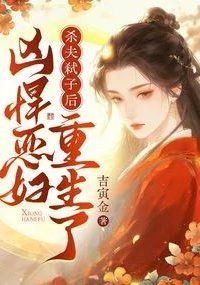
[Vicious Woman’s Rebirth, Marriage First Love Later, Famine Survival, Face-Slapping Revenge]

In her previous life, Ji Jinyu was demoted from wife to concubine, and then to a slave, by her matrilocal scumbag husband, Dou Shichang. After discovering that her young son and daughter had been sent to a Marquis’s manor as playthings by their scumbag father and tormented to death, she killed her husband and son, then stormed the Marquis’s manor to die with them all.

When she opened her eyes again, Ji Jinyu had been reborn to the time before the natural and man-made disasters began in her hometown. At this moment, Dou Shichang—who had been missing for fifteen years, become an official in the capital, and married a noblewoman—had just sent a letter. He intended to demote his wife to a concubine and ordered Ji Jinyu to bring their children and his parents to the capital.

Looking at her ungrateful eldest son, who was using his life to threaten her into going north, Ji Jinyu divorced her husband and abandoned her son, kicking him out of the house with nothing to his name to let him rot. In this life, she only wants to protect her parents and children, saving them from the tragic fate of dying during the famine as they did in her previous life. She will repay every kindness and settle every grudge.

But who can tell her why the handsome husband who insisted on marrying into her family during their flight from the famine turned out to be a scion of a prestigious family and a scheming high official? And how did the adopted son she picked up become the current Crown Grandson?

It is known to all that the all-powerful Chancellor Lin Qingcang has a fierce wife. She personally executed her high-ranking ex-husband, crushed the extravagant Marquis’s manor, and would throw a punch at the slightest disagreement. She is the number one tigress in the capital. Yet, this very tigress is the Emperor’s adoptive mother, the biological mother of both the wealthiest merchant and a powerful official, and the woman the Chancellor adores with all his heart.

Novel Items

More
Weapon
Ji Jinyu's signature weapon, a large blade used for butchering. She carried it while kneeling in snow for three days. Used it to kill Dou Yingliang (stabbed through chest), Dou Shichang (severed legs, tortured), and Marquis Kangle (plunged into heart). Also used a short sharp ventilation knife for torture.
Materials
A homemade drug provided by Yu Huilan. Ji Jinyu took two pounds of it and mixed it into the Kangle Marquis Mansion's water supply, causing everyone inside the waterside pavilion to become paralyzed yet fully conscious, unable to move but able to watch in terror.
Weapon
A roll of knives carried at Ji Jinyu's waist. Contained gleaming sharp blades and long sharp skewers. She used it to extract knives for slaughtering Marquis Kangle and his son, and drove skewers into their shoulders and necks to nail them to pillars.
Cultivation Methods
A traditional doctrine Dou Yingliang cited: a woman obeys her father before marriage, her husband after marriage, and her son after her husband's death. Used as moral justification to pressure Ji Jinyu into submission.
Artwork
Jiang Sesè's painting that was identical in composition, color palette, and brushstrokes to Lu Zhenzhu's Metamorphosis. Jiang Sesè claimed it as her original work and used Gu Group sponsorship for its solo exhibition.
Item
A simple wooden box used by Wu Liu to store and present his gifts to An Ruoyan, containing a jade bracelet, two gold bracelets, and a gold ring.
Latest Release
DateGroupRelease
2026-08-11shanghai fantasy c10
2026-08-11shanghai fantasy c9
2026-08-11shanghai fantasy c8
2026-08-11shanghai fantasy c7
2026-08-11shanghai fantasy c6
2026-08-11shanghai fantasy c5
2026-08-11shanghai fantasy c4
2026-08-11shanghai fantasy c3
2026-08-11shanghai fantasy c2
2026-08-11shanghai fantasy c1

Community Reviews

Rating(0 / 5.0, 15votes)
5 stars
0(0%)
4 stars
0(0%)
3 stars
0(0%)
2 stars
0(0%)
1 stars
0(0%)

Popular reviews

... Read More
Let me just say this scene is CINEMATIC. I can see every frame. The Dou family storming into the Ji family courtyard, Dou Shitian pointing and cursing, and Ji Jinyu just casually picking up a nearby cleaver like she's about to chop pork instead of threaten a man's life. The contrast between her identity as a butcher woman and the fact that she's holding a weapon in her own home—it's such a vivid image. "Ji Jinyu twirled the cleaver in her hand, sending Dou Shiqian and the others scrambling backward in fear." I need the author to write more scenes like this. The visual of her smiling while holding a gleaming silver knife, saying things like "I wish I could tear him apart limb from limb and scatter his remains"—this is the kind of scene that stays with you. It's not just dialogue; it's physicality, it's setting, it's the whole atmosphere of a woman who has nothing left to lose and a kitchen full of sharp objects. The courtyard setting itself matters too. This is her space, her home, and she's defending it. The Dou family are the intruders, and the power dynamic flips the moment she picks up that cleaver. Even Mrs. Zhang, trying to play peacemaker, gets shut down by children who refuse to perform gratitude for an absent father. The scene is layered with visual symbolism—the weapons, the doorway, the positioning of characters—and it all serves the story.
... Read More
I need to talk about Ji Yingcai because this character is dangerously good. On paper, he's the selfish one—the guy who's been secretly profiting from his father's shady dealings, the one who fanned the flames when his mother was wronged, the one who calculated his way into staying with the family instead of chasing officialdom. But here's the thing: he's also the only son who actually chose to stay. When Dou Yingliang was busy grandstanding about his 'loyalty' to their father, Ji Yingcai was the one who looked at the reality of the situation and decided his mother, the woman who raised him, was worth more than a title in the capital. And that scene where he hands over his eight hundred taels? His voice was literally trembling. The author wrote it so perfectly—'though he was still smiling, he looked as if he were about to cry.' That's not greed. That's a man who loves money but loves his family slightly less selfishly than he appears. Meanwhile, Fang Yourong's reaction to losing the money is hilarious and tragic in equal measure. She's so blinded by the dream of becoming an official's wife that she can't see the trap. Ji Jinyu even reveals in her head that in the previous life, Fang Yourong ended up demoted to a concubine within six months. The tragedy is that she's walking into it willingly. And Ji Yingcai knows it—he actually smiles at his brother as he leaves, thinking 'when you succeed, don't forget your younger brother,' while internally knowing their penniless brother is completely screwed. The cruelty and the warmth in that moment are so perfectly balanced.
... Read More
Let me just say this upfront: the dialogue in this novel doesn't read like everyone's speaking the same voice. Each character has a distinct way of talking, and that's genuinely impressive. Ji Shan's dialogue is loud and unfiltered. 'That shameless son of a bitch Dou Shichang, why didn't he just die on the battlefield back then...' and 'I would have made the Dou family spit out every last piece of my pork!' This is a man who doesn't filter his thoughts through social decorum. He's angry, he's frustrated, and he's not going to pretend otherwise. The pork line is almost comedic in its specificity — it's such a vivid, character-revealing detail. Ji Jinyu's voice is different. She's more measured, more strategic. When she says 'I'll make them spit out everything they swallowed,' there's a coldness underneath the words that contrasts with her father's hot anger. She's calculating, not just reacting. Yu Huilan is the quiet observer who drops the most important information. 'And there's a chance it could trigger a plague' — said almost casually, but it changes everything. Her dialogue is sparse but weighted, which makes sense given her background as a physician's daughter. The narrative voice itself is interesting too. It's close third-person, staying mostly in Ji Jinyu's perspective, but it doesn't shy away from showing her internal state. When she recalls the plague scene from her past life, the narration becomes almost cinematic: 'The flames consumed those who were not yet dead, and the agonized screams seemed to echo in Ji Jinyu's ears once more.' That's not just dialogue — that's the author's voice stepping in to create atmosphere. One thing I appreciate: the dialogue doesn't over-explain. Characters don't monologue to fill in backstory. Information comes through naturally — like when Yu Huilan explains the plague risk by referencing her father's stories, or when Ji Jinyu reveals her dream without it feeling like an exposition dump. The banter between family members also feels authentic. The twins saying 'Us too!' in unison, Ji Yingcai's eager 'Yes, ma'am!' — these small moments of dialogue make the household feel lived-in.
... Read More
I started reading this chapter at 11 PM and I am not mad about it. The pacing is absolutely ruthless. It opens with Ji Yingcai discovering his mother's plan, which immediately raises the question: why is she doing this? Then the Dou family arrives, tensions escalate, and within the span of a few paragraphs we go from verbal confrontation to thrown daggers to a financial demand that changes everything. The author knows exactly when to speed up and when to slow down. The confrontation with Dou Shitian and Dou Shiqian moves fast—quick dialogue, quick reactions, quick violence when the dagger flies. But then it slows for Ji Yingming's declaration and Mrs. Zhang's plea, giving us a moment to breathe before the final pivot to Tan Youlin and the five thousand taels. What really gets me is the ending. She demands five thousand taels and says "before tonight." That deadline creates this ticking clock that makes you immediately want to read the next chapter. How will they gather that money? Will they even try? What happens if they can't? The chapter ends on a note that's both a resolution and a new problem, which is exactly the kind of pacing that makes novels impossible to put down. Also, the transition from the previous chapter into this one is seamless. We pick up right in the action with no exposition dumps or recap paragraphs. Just straight into Ji Yingcai's confusion and the Dou family's arrival. Efficient storytelling at its finest.
... Read More
I need to talk about Ji Yingming and Ji Yingjun because these two children absolutely stole the scene. When Mrs. Zhang tries to guilt-trip them into keeping their father around for the connections, the kids don't even hesitate. "We don't have a father. We only have a mother." That's it. That's the whole argument. They've never benefited from Dou Shichang, they don't want to, and they're not about to let some grandmother they barely know convince them otherwise. And then Ji Yingming drops the mic with "I can become an official myself, and I will earn the imperial noble title for my mother." The kid is a xiucai at a young age—the first in their city—and he's already thinking about how to use his success to elevate his mother. Meanwhile, Dou Shitian is over there yelling about how Yingming should go find his father for career connections. The irony is so thick you could cut it with a cleaver. Which, honestly, is exactly what Ji Jinyu does right after. The relationship between Ji Jinyu and her children is the emotional core of this entire chapter. She's been slaughtering pigs and selling meat to support them, and they know it. They see it. And when the Dou family shows up treating them like property to be negotiated over, the kids shut it down immediately. This isn't a family that's falling apart—it's a family that's already chosen its side and it's not the father's side.
... Read More
I need to talk about how this author handles family relationships because honestly, it's refreshing. Most rebirth novels treat the family as either cartoonishly evil or cartoonishly perfect. Here, everyone is complicated. Ji Jinyu is the obvious centerpiece — she's fierce, she's grieving her past life, and she's clearly carrying trauma. But what I love is that she's not a perfect leader. She has moments of vulnerability, like when she buries her face in her mother's arms and just cries. That scene hit me hard. She's been through hell in her previous life and here she is, finally allowed to be a child again. Ji Shan is fascinating. He's impulsive, loud, curses constantly — but he's also deeply loving. His reaction to the Dou family news is pure father energy: 'I wish I could drag every member of the Dou family over and beat them up.' It's funny and touching at the same time. Wang Sijin is the quiet anchor. She doesn't have grand speeches, but her actions speak volumes. Dividing the gold into five portions for safekeeping, handling the household finances with her youngest son — she's competent and steady. Then there's Ji Yingcai, the second son, who I find deeply suspicious. His sudden devotion to his mother feels performative. Is he genuinely trying to make amends for past mistakes, or does he have his own agenda? The text says 'He had his own selfish motives, but he knew what was important.' That line is doing a LOT of work. It suggests he's calculating, not just loyal. And the granddaughter subplot with Ji Nianshu — the silent two-and-a-half-year-old who only speaks when forced — that's heartbreaking. Fang Yourong's abuse of her own daughter, and how Ji Jinyu stepped in to protect her. This is the kind of detail that makes the family feel like a real household with real problems, not just plot devices. The relationship between Ji Jinyu and her parents is the emotional core, and it's handled with genuine warmth. The scene where her father gives her the gold box and she says 'Thank you' — and he's genuinely surprised — that's a character moment that reveals everything about how much she's changed.
See all reviews

Characters

See all characters

Custom lists

Oops…There is nothing here.