After Becoming the Villainous Supporting Female Character, I Saved Every Main Character in the Story
Novel Info

Summary

... Read More

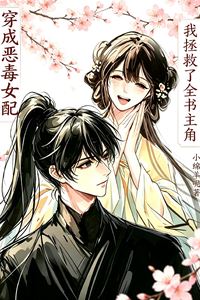
Who would’ve thought? It was bad enough that Su Wan transmigrated into the body of a vicious supporting female character—but she also got bound to a world-collapse warning system with one terrifying rule:

If the protagonists aren’t saved, everyone dies.

To stay alive, Su Wan decides to turn over a new leaf.

To her senior martial brother, Ling Chen, she says, “Senior Brother, I’ll go cultivate first. I won’t get in the way of your romance.”

To the original novel’s heroine, Luo Qingyuan, she promises, “Senior Sister, don’t be afraid. I’ll never hurt you again.”

And to the darkening future villain, Xie Yanci, she pleads, “Don’t give in to darkness. There are countless women in the world—why obsess over just one?”

Novel Items

More
Food
A healing porridge made by Luo Qingyuan that contains a gentle stream of spiritual energy. It is good for healing injuries and was brought to Su Wan as a gesture of kindness, helping to strengthen Su Wan's resolve to change her fate.
Item
A mode of transportation used by cultivators. Ding Li mentioned she cannot ride a flying sword, implying she lacks this ability.
Cultivation Methods
A complex cultivation technique recited by Lingyazi in an incomprehensible language that Lu Qizhou desperately memorized inside his sea of consciousness. The more techniques he memorized, the faster he absorbed power. The golden beads in his head and lower abdomen grew larger as they absorbed energy.
Medicine
Medicine used by a healer from Herb Peak to stabilize Su Wan's severe chest wound. The spiritual medicine helped ease her pain and begin the healing process before she resumed her own cultivation.
Medicinal Herb
One of the Qingyun Sect's most common medicinal herbs with excellent healing properties. Su Wan harvested it to give to Luo Qingyuan as a gift since Luo Qingyuan frequently returned from missions injured.
Cultivation Method
A technique Su Wan used to conceal her presence while sneaking into the bamboo forest to investigate the demonic energy trace.
Latest Release
DateGroupRelease
2026-08-11shanghai fantasy c10
2026-08-11shanghai fantasy c9
2026-08-11shanghai fantasy c8
2026-08-11shanghai fantasy c7
2026-08-11shanghai fantasy c6
2026-08-11shanghai fantasy c5
2026-08-11shanghai fantasy c4
2026-08-11shanghai fantasy c3
2026-08-11shanghai fantasy c2
2026-08-11shanghai fantasy c1

Community Reviews

Rating(0 / 5.0, 9votes)
5 stars
0(0%)
4 stars
0(0%)
3 stars
0(0%)
2 stars
0(0%)
1 stars
0(0%)

Popular reviews

... Read More
The bamboo forest scene is everything. Let me just say that. The way the author describes it—'the moon slowly drifted across the sky, stretching the bamboo shadows longer and longer. The cool night breeze carried the scent of bamboo leaves, brushing across her sweat-soaked back and sending shivers through her exhausted body'—I could feel that. The damp cold, the shadows growing, the isolation. It's claustrophobic and beautiful at the same time. And then there's the contrast with the next morning. Su Wan walking to Elder Li's swordsmanship class, seeing Xie Yanci among the disciples looking 'elegant as polished jade,' completely normal, completely composed. 'It was impossible to connect him with the cold, bloodstained man she had encountered in the bamboo forest the previous night.' That duality is so well done. The same man, two completely different worlds. Her courtyard is such a cozy little detail—the apricot tree her master planted just for her, the bronze mirror she checks herself in, the lattice windows letting in warm sunlight. It feels lived-in and real. The contrast between the dark bamboo forest and her sunny courtyard with green apricots on the table is striking. One is danger, the other is domesticity, and she's trying to hold onto both. The scene where Xie Yanci vaults through her window is cinematic. 'A cool night breeze carrying the scent of grass and trees drifted into the room as a figure dressed in black vaulted effortlessly through the window. His movements were so light that they made almost no sound.' I literally pictured this like a wuxia movie. The way the lighting shifts, the sudden intrusion of danger into her safe space, the apricot suspended halfway to her mouth—it's a perfect visual beat. What I love is how the world feels layered. The sect has training grounds, dining halls, courtyard residences, spiritual herb gardens. There are lanterns lighting up at dusk, disciples greeting each other, Elder Li giving lectures. It's not just a backdrop, it's a functioning community. And the demonic aura concept adds this underlying tension to everything—even in broad daylight, Xie Yanci is hiding something dangerous inside him. The world feels alive because danger can appear anywhere, even in sunlight.
... Read More
'Senior Brother... Do you happen to know any mosquito-repelling spells? If you have time today... Could you help me?' She's standing right next to the guy who literally tried to kill her hours ago, using the most casual, almost flirtatious tone, and pointing at his handiwork on her neck while calling it mosquito bites. The layering here is incredible. Xie Yanci's response is pure him: 'I'm very busy. I don't have time to catch mosquitoes for you.' He doesn't even look at her. But then—here's the thing—he watches her from the corner of his eye the entire time. The dialogue between them is this constant game of what's said versus what's meant. Every line has two layers. The opening oath scene is also fantastic dialogue. Su Wan just rapid-fires promises like she's trying to out-talk her own fear: 'I swear I won't tell anyone what happened tonight. I'll pretend I never saw anything. If I break my promise, may heaven strike me down! May I die a miserable death!' It's frantic, it's desperate, and it's completely human. She's not being clever, she's just trying to survive, and the dialogue captures that panic perfectly. Xie Yanci's voice is so distinct—cold, mocking, always with that edge. 'Anyone can make an oath. The dead keep secrets much better.' Chilling. And then later: 'Su Wan. What are you plotting this time?' He can't even accept kindness without suspecting a trap. That's not just dialogue, that's character psychology in three words. The narrative voice is also really good at switching between Su Wan's internal panic and her external composure. Like when she's kneeling in the bamboo forest and her heart is pounding, but then she's walking back to her residence 'forcing a faint smile, nodding politely' while disciples greet her. The contrast between what she feels and what she shows is captured so well in the prose. And that line—'Hehe... I'm not asking you to catch mosquitoes this time.' The little laugh, the sheepish tone, the way she deliberately drops the act to be sincere. The author knows exactly how to make dialogue feel natural while still advancing the plot. No exposition dumps, no forced conversations. Just two people who are completely wrong for each other trying to figure out if they can trust each other.
... Read More
Okay so I need to talk about this dynamic because WOW. The way Su Wan just looks at Xie Yanci and says 'if you kill me today, there'll be another witness tomorrow'—I literally gasped. She's not even trying to be brave, she's just stating facts like 'hey I have a plan.' That's the kind of quiet desperation that gets under your skin. And then the poison thing. Half-Month Devourer. Every fifteen days she has to go to him for the antidote. Every fifteen days she has to look into those cold eyes and pretend everything's fine. That's not just a plot device, that's a whole relationship framework disguised as a curse. They're literally bound together now, and neither of them can escape it. But what really wrecked me was the apricot scene. She's sitting in her room, eating apricots, waiting for him to show up with healing herbs and medicine. She actually prepared it! She was ready to help him despite everything he put her through. And when he shows up at her window and makes that snarky comment about mosquitoes—she just plays along. 'They bit my neck all over. Look, it's still red.' She's pointing at his bruises and calling them mosquito bites while he's right there. The audacity. I love her. And then she cuts her own arm to prove the medicine isn't poisoned. She just—does it. No hesitation. 'I still need to come to you every half month for the antidote. So I'll never try to harm you.' That line hit me like a truck. She's essentially saying: my survival depends on you, so I choose to trust you anyway. That's not naive, that's strategic vulnerability, and it's gorgeous. Xie Yanci's reaction though—'For the first time, Xie Yanci found himself at a loss for words'—I SCREAMED. This guy who has answers for everything, who can sneer and threaten and manipulate his way through any situation, gets completely thrown off by someone who's just... honest? It's the most satisfying moment in these chapters. The CP tension is simmering so well. It's not romantic yet, not even close, but there's this underlying current of 'I see you and I'm not afraid' that's building between them. And Su Wan's internal monologue about helping him let go of Luo Qingyuan—she's trying to save him from himself while he's literally holding her life in his hands. That's not a typical romance setup, it's something way more interesting.
... Read More
The stakes in this book are NOT subtle and I am HERE for it. Let me just list what's on the line: the entire cultivation world's existence, the lives of the male and female leads, the soul of the future Demon Lord, and Su Wan's own life—which is literally the first to go in the original timeline. That's not a small threat—that's cosmic-level stakes wrapped around a personal survival story. What makes the conflict so gripping is that Su Wan has knowledge but not power. She knows exactly how everything goes wrong, but she's currently a gravely injured cultivator with a chest wound who can barely walk. She's trying to prevent an apocalypse while barely being able to prevent her own death. The external conflict is clear—stop Xie Yanci from falling to darkness, protect Luo Qingyuan and Ling Chen, survive the upcoming expedition. But the INTERNAL conflict is where this really shines. Su Wan is fighting against the original owner's personality, against ingrained habits, against a world that already sees her as a villain. Every interaction is a minefield. When Xie Yanci watches her with that scrutinizing gaze, when Luo Qingyuan still carries wariness in her eyes—these aren't just obstacles, they're reminders that trust is earned slowly and lost instantly. The suspense is maintained masterfully because we know the timeline. We know the expedition is coming, we know Su Wan is supposed to try framing Luo Qingyuan again, and we know Xie Yanci is supposed to kill her. Every chapter is a question: will she break the pattern, or is the plot's momentum too strong to resist?
... Read More
Let me just say—the dialogue in this book is *impeccable*, and I especially want to talk about Xie Yanci because the man barely says anything and yet his presence is EVERYWHERE. His one line in Chapter 1 is perfect: "So? You're not going to claim that Senior Sister pushed you this time?" That's it. That's all he says. But the mockery, the challenge, the sheer cold assessment of Su Wan's situation—it's delivered in a single sentence and it tells you everything you need to know about this character. He's watching her like she's entertainment, like he's already three steps ahead, waiting for her to fail. And Su Wan's dialogue is equally well-crafted. When she says to Ling Chen, "I simply wasn't skilled enough. It had nothing to do with Senior Sister," it's so different from what the original Su Wan would have said. The original would've burst into tears and called Luo Qingyuan vicious. This Su Wan is calm, measured, almost eerily self-aware. The narrative voice itself is also really interesting—it's third-person limited, mostly following Su Wan's perspective, and the author does a great job of letting us hear her internal monologue without it feeling forced. Lines like "What kind of ridiculous situation is this?" and "Don't tell me I actually died from staying up all night..." give her such a relatable, modern voice that contrasts beautifully with the cultivation setting. The contrast between Su Wan's internal panic and her external calm is where the real voice shines. She's a modern girl who stayed up reading a novel now trapped inside it, and that dissonance comes through in every thought she has.
... Read More
Half-Month Devourer. Think about what that name means. It's not just a plot device to keep Su Wan obedient—it's a symbol of how trauma bonds people together. Every fifteen days, she has to return to the person who threatened her life. The poison creates a dependency that mirrors the emotional dependency she's trying to navigate. She needs him to survive, but she's also trying to save him from himself. That's not a victim relationship, that's a twisted form of partnership. The finger marks on her neck are another layer. They're described as 'a brand she could never erase—a constant reminder of how close she had come to death.' But by the next morning, they're fading. 'The finger marks around her neck had faded considerably, but they were still visible.' The physical marks fade, but the experience doesn't. That's the theme right there—survival leaves invisible scars even when the visible ones heal. The apricot tree is interesting too. It was planted by her master specifically for her because she loved apricots. It's a symbol of care, of someone wanting to nurture her. And yet she's eating those apricots while waiting for the man who represents danger in her life. The juxtaposition of nourishment and threat, safety and peril, existing in the same space—that's the whole novel in miniature. Xie Yanci's demonic aura is the central metaphor. He's 'elegant as polished jade' on the surface but something dangerous and unstable underneath. The novel keeps asking: can someone who's been corrupted from the inside ever truly be saved? And Su Wan's answer seems to be yes—but not through love or obsession (like his fixation on Luo Qingyuan), but through genuine human connection. 'Sometimes... loving someone also meant letting them go.' That line is the thesis statement of the entire story. The poison, the marks, the apricots, the demonic aura—they're all symbols of the same question: what does it mean to survive when you're bound to someone dangerous? And the answer the novel seems to be building toward is that survival isn't about escaping danger, it's about finding someone who makes the danger worth navigating.
See all reviews

Characters

See all characters

Custom lists

Oops…There is nothing here.