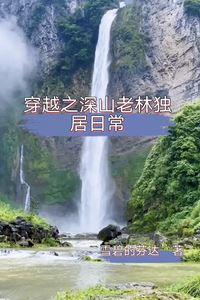
A Transmigrator's Daily Life Living Alone in the Deep Mountains and Forests
+Add to Custom List
Novel Info

Summary

... Read More

(Transmigration) + (Alternate World) + (Cheat/Golden Finger) + (Farming) + (Hibernation) + (Stockpiling) + (Slice-of-Life)

Author: Xiao Bai.

After reading enough novels that start with farming but end up in palace politics, I decided to write a farming story set entirely in the mountains and forests, focusing on hibernation and stockpiling. There is a CP, but only at the very end!

If you were told that in a month you’d transmigrate to a remote mountain forest, what would you do? You also get a small golden finger to help you prepare in advance.

Too cold in winter? No problem—there’s a heated kang bed, and you can even raise a couple of cute little pets.

No palace scheming, no household intrigue, no sudden wealth. Nothing ever happens outside the forest; life is spent farming, stockpiling, and hibernating. If that bothers you, avoid this story. If you like it, please show support with votes!

Novel Items

More
Mysterious Item
A stone that looked like obsidian found by Yan Qing among pebbles at a stream during a picnic. When held up to sunlight, it seemed to contain a flowing color within and flashed for a moment. After Yan Qing's nosebleed blood dripped onto it, the stone grew smaller and smaller until it disappeared completely, granting Yan Qing a spatial ability.
Mysterious Item
A sheet of white paper with black text that read 'Countdown to transmigrating into the deep mountains: 30 days.' It appeared on the coffee table replacing the stone. Later it showed 20 days remaining. This paper serves as the transmigration countdown notice.
Food
10 jin reward from system for gaining favorability with Ye Wuyou.
Materials
Dropped by Milk Buns as random loot. Moke Moke collects 64 bags, each weighing about a kilogram. In summer, it becomes a precious commodity. She hopes to create a pastry recipe and sell it at the market.
Crop
Another crop planted in the Pocket Dimension alongside sorghum, also sprouted and expected to be ready for harvest in about a month.
Materials
Brought by Zhou Chacha in a bag as part of her luggage for the variety show. It is one of the items she enthusiastically showed to Jiang Xuxu during unpacking.
Latest Release
DateGroupRelease
2026-08-11shanghai fantasy c31
2026-08-11shanghai fantasy c30
2026-08-11shanghai fantasy c29
2026-08-11shanghai fantasy c28
2026-08-11shanghai fantasy c27
2026-08-11shanghai fantasy c26
2026-08-11shanghai fantasy c25
2026-08-11shanghai fantasy c24
2026-08-11shanghai fantasy c23
2026-08-11shanghai fantasy c22
2026-08-11shanghai fantasy c21
2026-08-11shanghai fantasy c20

Community Reviews

Rating(0 / 5.0, 23votes)
5 stars
0(0%)
4 stars
0(0%)
3 stars
0(0%)
2 stars
0(0%)
1 stars
0(0%)

Popular reviews

... Read More
I'm not even going to pretend I'm being analytical here. I just... I want to live in this valley. That's the problem. The scene where she's making the cold corn dish — you can literally see it. The steam rising from the pot, the slotted spoon dripping the translucent mixture into cold water, the sound of it hitting the basin. I swear to god I could smell that. And then she eats two large bowls herself and gives the rest to the bears like it's totally normal. Which, honestly, fair. Two bears living with you change your definition of normal pretty fast. But the real moment for me was the grape scene. "The grapes had ripened fully—small, black, and shiny, with intense sweetness." That's all. Four sentences about wild grapes and I'm over here emotionally compromised. The fact that they're not as big as Kyoho grapes but taste better? That's the kind of detail that makes a world feel lived-in. This isn't a fantasy world with magic fruits. This is a world where nature does its own thing and you work with it. And the watermelons! "When tapped, produced a crisp 'bonk bonk bonk.' She selected two and submerged them in the pond to cool." I need that sound effect in my life. I need pond-chilled watermelon. The whole setup — the creek, the cave, the big tree, the vegetable garden, the fruit trees — it all exists in my head now as a place I've actually been. That's terrifying and wonderful. The dried vegetables for winter? "When winter came, soaking them in water and cooking with meat would make them far more flavorful than fresh vegetables—easily a hundred times better!" She's already thinking about winter. She's already planning for a season that hasn't arrived yet. That's the kind of forward-thinking that makes a setting feel expansive, not confined.
... Read More
I need to talk about the fruit wine. Not because it's plot-relevant — it's not — but because I think it's the single most important symbol in this entire passage. Yan Qing takes plums and sea buckthorn, layers them with sugar, pours in grain liquor, seals the jar, and stores it in a cool, shady spot. Then she does it again. And again. Four barrels total. She empties her entire storage to make them. Every piece of fruit she has goes into these jars, and in return, she gets nothing — not yet. The wine won't be ready for months. Maybe longer. This is the story's thesis statement, wrapped in a glass jar: patience as an active practice, not a passive waiting. She's not just hoping things will work out. She's investing everything she has now for a reward she won't taste for a very long time. That's faith. That's commitment. That's the opposite of the instant-gratification mindset that dominates so much of modern life. And then there's the corn dish. She makes it once, eats two bowls, gives the rest to the bears. It's a small, temporary pleasure — refreshing, light, summery. But the dried vegetables? Those are for winter. "Easily a hundred times better" than fresh, she believes. She's trading summer's immediate abundance for winter's concentrated depth. That's not just food preservation. That's a philosophy. The bears catching fish in the creek on their own? That's another layer. They don't need her anymore. The ecosystem is self-sustaining. She's not the center of this world — she's a participant in it. The whole passage is about finding your place in a system larger than yourself, and contributing to it without expecting immediate return. The wine ferments in the dark. The vegetables dry in the sun. The seeds wait underground. Everything has its own timing.
... Read More
Okay so let me just say—this countdown structure is GENIUS. I know it's a common trope in transmigration novels but the way the author uses it here is different. It's not just a ticking clock for survival; it's a ticking clock for SAYING GOODBYE. Every chapter heading drops you right into the panic of "we still have SO MUCH to do and not enough time." The plot has two distinct halves and the pivot is devastating. Chapters 6-8 are basically a shopping list novel and I mean that as a compliment—there's something oddly satisfying about watching Yan Qing methodically check off items. Carpets, quilts, Luosifen, pork, coal, medicine. But then Chapter 8 hits and suddenly it's not about supplies anymore. It's about Fenfen's red eyes. It's about the crayfish and the beer and the unspoken everything. "You silly girl… don't ever come looking for me. Stay here and live well for me." — I literally had to put the book down after reading that. And then Chapter 9 just… drops her into a forest like nothing happened. No dramatic transformation scene, no system announcement, just a headache and some trees. That anti-climax IS the point. She didn't get a choice. She just woke up there. The plot doesn't waste time either. No unnecessary exposition dumps about HOW or WHY she transmigrated. We get the forest, the stream, the deer, the chainsaw. Action first, questions later. And honestly? That's how I want my survival stories. Show me she can survive, then worry about the mystery later.
... Read More
What I love about this section is how the plot doesn't rely on dramatic twists or external threats—it runs entirely on the engine of 'will she survive the winter?' And that's somehow more tense than any action sequence could be. Look at the structure: Chapter 28 establishes food (fish), Chapter 29 introduces a vulnerability (her period, physical weakness), Chapter 30 is about preparation (weaving baskets, planting more crops), Chapter 31 is about infrastructure (the bathroom, the compost pit), and Chapter 32 is about reward (the braised pork feast). It's a rhythm of struggle and payoff that keeps you turning pages even though nothing 'explosive' is happening. The mushroom foraging scene in Chapter 29 is a great example of the author building tension through scarcity. After her period leaves her weak, she still pushes herself into the pine forest. The text says 'her steps felt lighter with anticipation'—but we know she's physically compromised. Every mushroom she finds is a small victory against the looming threat of winter. And when she finds more morels and wood ear mushrooms on a dead tree, it's not just plot convenience, it's the story rewarding her persistence. The subplot of expanding farmland is also doing heavy lifting. In Chapter 30, after watching the bears eat, she thinks: 'With the current stockpile, it wouldn't be enough to feed them all. Summer had just begun, and winter was still several months away.' This is the ticking clock. The plot isn't about whether she'll meet a villain—it's about whether she'll outwork the calendar. And honestly? That's more gripping than a lot of action novels I've read.
... Read More
Let me be honest with you—the pacing in these chapters is a masterclass in tension management, and I want to break down why. Chapters 12 and 13 are deliberately slow. Rain. Cooking. Eating. Reading a book. It's almost meditative. And that's the point. The author lets us settle into Yan Qing's routine, makes us feel the mundanity of survival. This is important because without those quiet moments, the action that follows wouldn't hit as hard. The rain chapters are the calm before the storm—literally and figuratively. Then chapter 14 hits like a truck. Tiger roar. Yan Qing running. Hiding on boulders. The standoff between the tiger and bear. The bear limping away wounded. Her decision to follow it. The forest holding its breath. This sequence is paced like a thriller—short paragraphs, quick sentences, escalating danger. The author doesn't let up for a single moment. But here's where it gets really smart: the pacing shift when she finds the cubs. The tension doesn't disappear—it transforms. From "will I survive" to "can I handle this responsibility." The whimpering sound that makes her raise her crossbow, then the realization that it's just babies. That beat of false alarm is pure pacing genius. It gives the reader a moment to exhale before the next wave of emotion hits. Chapter 16 brings the pace back down, but it's a different kind of calm than the rain chapters. This isn't boredom—it's satisfaction. Yan Qing has won. She has a safe cave, food, a beer, and two cubs. The author lets us linger in this moment of peace because we've earned it alongside her. The transition at the end—spotting peach trees—acts as both a reward and a hook. The journey isn't over, but for now, things are good. That's how you keep readers turning pages: give them satisfaction, then remind them there's more ahead.
... Read More
Okay so I need to talk about this one moment in Chapter 28 where Yan Qing and the two bears are eating under the locust tree. The text literally says: 'with its branches shading them from the sun and a gentle breeze occasionally passing by—a perfect, relaxed scene.' And I just... stopped reading for a second. Like, this is the kind of passage that makes you close your eyes and imagine it. The way the author describes the fish soup simmering, the milky white broth, the wild scallions sprinkled on top, then cutting to this wide shot of them eating under a tree with a breeze coming through—it's cinematic. You can practically hear the bears chewing. And then later in Chapter 31, when she finishes the bathroom and looks around at the valley, the text says: 'For a moment, Yan Qing forgot about being in another world.' That line hit me so hard. The whole valley—the mountains, the waterfall, the stream with flowers growing along the banks, the roses and hibiscus at the bamboo bridge—it's painted like a watercolor that slowly comes into focus. You go from this survival-mode tension (will she have enough food? will the cave hold?) to this almost dreamy sense of belonging, and the setting is what bridges that gap. The author doesn't just describe places, they describe how it FEELS to be in those places. The damp cave air before the rain, the mud on her shoes after the light rain, the way the pine forest glows after a storm with mushrooms everywhere. It's not overwrought but it's deliberate. Every sensory detail serves the mood. I kept wanting to just... live in this valley for a bit.
See all reviews

Characters

See all characters

Custom lists

Oops…There is nothing here.