Summary

... Read More

[Era + Military Marriage + Sweet Pet + Marriage First, Love Later + No Goldfinger] [Hermine pretending to be stupid VS the inhumane officer, the hero only has feelings for the heroine]


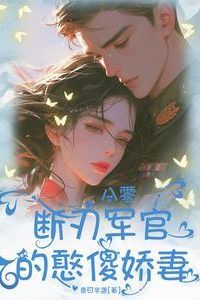
Modern-day renowned painter Li Mumian unexpectedly transmigrates into a vintage-era novel and becomes a “replacement bride” labeled as a fool. She cleverly decides to play along and marries the seemingly ruthless, single-father Lu Tingbai.

“Dad, she’s a fool.”
“Lu Yunchi! Call her Auntie!”

Li Mumian initially plans to tame the mischievous little boy, but in a twist of fate, her act is exposed.
“You’re not really a fool, are you?”
“Lu Xiaochi, you’re dead!”
“Li Mumian, be careful—I’ll tell my dad you were pretending all along.”

Despite the constant teasing and chaotic family moments:
“Tingbai~ Mumian can’t walk, pick me up~”
“Dad, Xiaochi wants a hug too!”

Li Mumian navigates life in this unfamiliar era, balancing her clever schemes, growing feelings, and the warmth of a makeshift family, all while keeping her true identity a secret.

Novel Items

More
Item
A rough scrap of cloth used to cover Li Mumian's face during the wedding procession. It was more like a rag than a festive veil, deliberately chosen by Zhang Guizhi to make Li Mumian lose face. Li Mumian later removed it upon arriving at Lu Tingbai's home.
Item
Assorted candies bought at the supply and marketing cooperative and given to the photo studio owner and civil affairs office staff as a gesture of celebration and goodwill.
Item
Red decorative characters pasted on the walls of Lu Tingbai's home to signify the wedding celebration. They gave the simple home the air of a wedding venue.
Item
A stick made from firewood that Li Mumian used to draw on the ground. She used it to sketch a complete landscape and a lifelike portrait of Lu Tingbai, demonstrating her artistic talent despite her feigned foolishness.
Vehicle
Waiting outside the station with orderly Liu Xiaofei to drive them to the military district.
Item
Garish, clownish makeup deliberately applied by Zhang Guizhi to Li Mumian's face to make her look ridiculous and prevent Lu Tingbai from seeing through the deception. Li Mumian later washed it off in the washroom, revealing her delicate and pretty face underneath.
Latest Release
DateGroupRelease
2026-08-11shanghai fantasy c64
2026-08-11shanghai fantasy c63
2026-08-11shanghai fantasy c62
2026-08-11shanghai fantasy c61
2026-08-11shanghai fantasy c60
2026-08-11shanghai fantasy c59
2026-08-11shanghai fantasy c58
2026-08-11shanghai fantasy c57
2026-08-11shanghai fantasy c56
2026-08-11shanghai fantasy c55
2026-08-11shanghai fantasy c54
2026-08-11shanghai fantasy c53

Community Reviews

Rating(0 / 5.0, 15votes)
5 stars
0(0%)
4 stars
0(0%)
3 stars
0(0%)
2 stars
0(0%)
1 stars
0(0%)

Popular reviews

... Read More
Okay, I have to talk about this chase scene because WOW. The way the plot pivots from a quiet, almost idyllic moment of Li Mian selling comics to children into a full-blown survival sequence is masterful. One second she's having a nice interaction with a teacher-type guy who actually gives her useful advice, and the next—bam! Red armbands, furious shouting, life-or-death sprinting. The author doesn't waste a single beat. She rolls up her comics, hugs them to her chest, and runs. Not a single hesitation. That detail about her clutching the comics even while fleeing tells you everything about who she is. And then the rescue! This boy just appears out of nowhere—gaunt, sallow-faced, with a deep gash on his arm—and single-handedly intimidates a whole group of enforcers. His line 'I said let her go' is delivered with such quiet authority that you can practically feel the woman shivering. But here's what got me: he's injured himself while saving her, and his first concern isn't his own wound—it's making sure she doesn't get caught again. That's not just plot convenience, that's character revelation through action. The whole sequence from chase to ruined temple to the naming ceremony feels like a complete narrative arc compressed into these chapters. Li Mian goes from desperate fugitive to someone who finds a brother. The plot doesn't just move forward—it deepens. Every beat earns its place. And that ending where she hides her intelligence behind the 'fool' persona while giving him a name and a future? That's the kind of twist that makes you want to immediately turn the page. How many stories give you a complete emotional transformation in just a few chapters?
... Read More
I've been thinking about this passage where Li Mian compares Ajian to one of the statues in the temple—'weathered by the world's indifference, yet still guarding a compassionate heart.' That comparison isn't accidental. It's the key to everything. The headless Buddha. The ruined hall. The faded murals. These aren't just atmospheric details—they're symbols of a world that has been broken, forgotten, eroded by time and hardship. And yet, something still lives inside them. The Buddha may be headless, but it still stands. The murals may be faded, but Li Mian can still read their stories. The temple may be in ruins, but it still provides shelter. Ajian is exactly this. Abandoned. Nameless. Called 'the picked-up one' like it's nothing. But he has a compassionate heart. He saves a stranger. He shares his last bit of food. He gives her a stone he's been carrying. He is a living ruin that still guards something precious. And the naming! 'From now on, your name will be Li Jian.' This is so much more than giving someone a label. A name is identity. A name is belonging. A name is saying 'you matter, you are part of something.' When Li Mian teaches him to write, when she gives him a surname, she's doing something sacred. She's rebuilding a person. The Teng Snake is another layer—mythical beast, controls wind and rain and lightning, rides the clouds. A creature of power hidden in faded paint, almost forgotten. Like Ajian. Like Li Mian herself, pretending to be a fool while being brilliant. The snake beneath the surface. Everything connects. Everything means something.
... Read More
I need to just sit with this image for a second. The ruined temple. Mahavira Hall. A headless Buddha covered in moss, broken beams holding up a collapsing roof, cobwebs and dust everywhere, rotten sutras scattered across the floor. And then—the sunset. The setting sun streaming through broken windows, casting a golden sheen over everything, faintly illuminating those faded murals. This is cinema. This is pure cinema. The author doesn't just describe a location, they build an entire atmosphere. The damp, chill air that makes Li Mian shiver. The mottled, peeling walls of the alley she hides in. The reek of dampness and mildew. These sensory details don't feel decorative—they feel essential. You can smell this place. You can feel the cold seeping into your bones. And the murals! Li Mian tracing her finger over faded brushwork, trying to piece together stories from fragments. The Teng Snake she identifies, the battlefield scene, the banner with the character Qin—these aren't just set dressing. They're windows into a world that once was, now reduced to whispers on cracked walls. It mirrors Ajian himself: weathered by time and indifference, but still guarding something precious. The contrast between the brutal outside world—the red armbands, the persecution of small-time vendors, the danger everywhere—and this hidden sanctuary is striking. The temple is broken, yes, but it's also the only place where someone like Ajian can exist without being crushed. It's a character in its own right. A silent witness to centuries of stories, now sheltering two lost souls who found each other in its ruins.
... Read More
Okay so I need to talk about this scene where Lu Yunchi throws himself to the ground and it turns out he was totally faking it. Like, the author sets this up perfectly — you see him fall, Li Mian rushes to comfort him, he buries his face in her chest like a scared little animal, and then BAM, he pops up all proud saying 'If I didn't fall, how could I help chase them away?' I literally shouted at my phone. This kid is a tactical genius at five years old. But honestly, the whole plot thread of Zhang Guizhi and Li Jiaojiao showing up uninvited is such a classic move and the author handles it well. They come in playing the victim, Li Jiaojiao does her fake-tears routine, and Li Mian just absolutely dismantles them. The line 'I'm already crazy' when Zhang Guizhi tells her to let go — chef's kiss. It's satisfying revenge content done right. What I love is how the plot connects Li Mian's arc with the child's arc. She was pretending to be a fool, he was pretending to be scared — two performers on the same stage, and they end up protecting each other. That's not just plot convenience, that's actually clever writing. The only thing I'd question is whether Li Jiaojiao's panic when Li Mian calls her out feels a tiny bit too quick, like the author needed her to fold fast. But overall, this sequence is tight.
... Read More
The nested story structure in these chapters is so clever and I can't believe how well it works. Li Mian tells Yunchi a fairy tale about a little tiger and a little rabbit, and on the surface it's just a cute bedtime story, but it's literally a mirror of their entire relationship. The tiger who looks mighty but is shy and lonely inside? That's Yunchi. The rabbit who teases him but stays by his side no matter what? That's Li Mian. And the plot twist within the story — the big snake that wants to eat the rabbit, and the tiger fighting it to save her — it's foreshadowing something bigger. What's the snake? Is it danger from the outside world? Some threat coming for them? The author is planting seeds and I'm HERE for it. The chapter structure itself is also interesting. It starts intimate and domestic (the bed scene), moves to playful family dynamics (breakfast with Yunchi), then deepens into emotional territory (the story session), and ends on a hook with the rabbit market. The pacing of revelations is slow but deliberate — we learn about Yunchi's loneliness through his actions, not exposition. We understand Tingbai's internal conflict through his physical reactions. The plot isn't just moving forward, it's building layers. One thing that stood out: Auntie Li's arrival feels like a deliberate narrative choice. She represents the community warmth that surrounds them, and her observation that "it's good he has someone to keep him company" is basically the author's thesis statement for the whole arc.
... Read More
'I don't have a name.' That's it. That's the line that destroyed me. Three words, delivered flatly, without a hint of sorrow or resentment, and I was completely wrecked. This is dialogue at its most powerful—where what a character says (or doesn't say) reveals everything about who they are. Ajian's voice is remarkable. He speaks in short, direct sentences. 'Let her go.' 'Don't move!' 'I'm used to it.' There's no flourish, no drama, just raw efficiency. But beneath that flat exterior, you can read everything in what the narration tells us: 'his tightly pressed lips betrayed the tension within him,' 'his face tightened in pain,' 'his dark eyes brimming with sincerity.' The dialogue is sparse, but the subtext is enormous. Li Mian's voice is completely different. She's warm, chatty, persistent. 'You must also remember your own name.' 'So smart!' 'Nonsense. You're so skinny, like a monkey.' She fills silences. She pushes gifts. She negotiates. Her dialogue reveals her nature—she's the kind of person who can't let someone suffer quietly. She has to act, to speak, to connect. The teacher's warning is perfectly calibrated too—formal but kind, authoritative but not cruel. 'Comrade, you can't set up a stall at the school gate.' The enforcers' dialogue is equally distinct: 'So young, and already up to no good!' 'Damn, she gave us quite the chase.' Each character has a voice that feels lived-in and real. And that moment when Li Mian writes their names in the dirt—'Sister Mian, I can write your name now!'—the joy in his voice is so genuine it aches. The dialogue in these chapters doesn't just move the plot forward. It builds people.
See all reviews

Characters

See all characters

Custom lists

Oops…There is nothing here.