Summary

... Read More

1980s | Marriage Before Love | Age Gap | Daily Life | Joining the Army | Gourmet Food

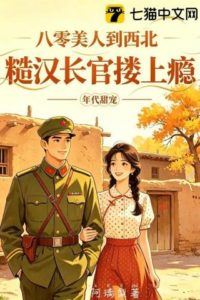
She opened her eyes and found herself transmigrated into the 1980s as a lazy wife who hadn’t seen her husband for three years since their marriage. One moment, she was living for free on the allowance her husband sent home, and the next, she was demanding a divorce after being deceived by a scumbag? Thinking about the original host’s fate in the book—losing everything and freezing to death on the streets after the divorce—Meng Ying felt that she had been courting death.

But the divorce letter had already been sent! Meng Ying’s eyes darted around, and she immediately slapped the table. She couldn’t get a divorce; she couldn’t lose her long-term meal ticket. She was going to join the army!

Thus, she traveled thousands of miles to the Great Northwest, only to discover that this rugged military officer was tall, handsome, and exactly her type.

Everyone in the military district was waiting for Lu Tingzhou to abandon her. Instead, they watched as the cold and stern Regiment Commander’s gaze grew increasingly passionate. If she wanted to go east, he would never go west; if she wanted to beat someone up, he would provide cover.

The residents of the family compound were stunned, and her love rivals were bewildered.

Weren’t they supposed to have a broken relationship? What happened to the divorce? How did she suddenly become the Regiment Commander’s darling?

From then on, Meng Ying lived in the Great Northwest, building her career by day and flirting with her man, snuggling under the covers, and making babies by night. Her life became increasingly prosperous as she built her own business on that arid land!

The only thing was, there was always a certain “ascetic” military officer seducing her: “Yingying, let’s keep making babies tonight!”

[Radiant, Money-loving Little Drama Queen vs. Cold, Stern, Wife-Doting Rugged Officer]

Novel Items

More
Document
A registered letter from Lu Tingzhou containing only two short lines: Letter received. I will submit the divorce report as soon as possible. No need to write back. This letter prompts Meng Ying to decide to join the base.
Food
Candy that Meng Ying gives to her two young nephews when she visits her maiden home. The children are delighted.
Food
A nutritional drink in a can that became a source of playful conflict between Jiang Wanwan and Xu Huipeng. Jiang Wanwan had drunk most of one can and tried to pass off the remaining cocoa-flavored portion to the boy, claiming it was saved for their sick mother.
Money
Cash and coupons given by Sister Peng (actually from Lu Yuchuan) to Xu Zhizhi for emergencies since her salary wouldn't be paid for another half month. She promised to return them later.
Money
Money given by Mother Meng to Meng Ying for the journey. Meng Ying resolves to send money home once she makes a fortune.
Weapon
The tool used by the pickpocket at Gansu-Ningxia Station to cut open a woman's leather bag.
Latest Release
DateGroupRelease
2026-08-11shanghai fantasy c10
2026-08-11shanghai fantasy c9
2026-08-11shanghai fantasy c8
2026-08-11shanghai fantasy c7
2026-08-11shanghai fantasy c6
2026-08-11shanghai fantasy c5
2026-08-11shanghai fantasy c4
2026-08-11shanghai fantasy c3
2026-08-11shanghai fantasy c2
2026-08-11shanghai fantasy c1

Community Reviews

Rating(0 / 5.0, 15votes)
5 stars
0(0%)
4 stars
0(0%)
3 stars
0(0%)
2 stars
0(0%)
1 stars
0(0%)

Popular reviews

... Read More
I keep coming back to the imagery of growing things in this chapter. Meng Ying planted seeds at home that won't sprout for a month. Sister-in-law Liu brings vegetables from her own yard because she has 'plenty more than she could eat herself.' The cooperative is making wine from grapes that are sweet because of the extreme temperature swings. And the core wine-making techniques are kept secret, hidden from outsiders. There's something really beautiful about this pattern. These people are all in different stages of growth and cultivation — some things take time (her seeds), some things are shared generously (Liu's vegetables), some things are communal labor (the wine), and some things are guarded (the secret techniques). It's like a metaphor for how relationships work too. Lu Tingzhou and Meng Ying are in that early stage where they're planting something and have to wait for it to grow. The neighborly bond with Liu is already bearing fruit. And the antagonists — well, Wang Guifen at the end feels like someone who wants to hoard the secret techniques for herself. The soap scent on Lu Tingzhou's chest, the clean domesticity of it all — this story is about building something real, not just romantic sparks. The romance is part of a larger picture of rootedness.
... Read More
The dialogue in this book is genuinely one of its strongest assets. Meng Ying's voice is so distinct—she's bossy, coquettish, unapologetically demanding, and absolutely hilarious about it. Her line "Or are you tired of me already, unwilling to live together?" followed immediately by the threat "I'd like to see you try" is the kind of manipulative cuteness that should come with a warning label. She's weaponizing her tears and then immediately revealing she was never actually crying. Lu Tingzhou has no defense against this. And his responses! He's this man of few words who communicates through actions and occasional grunts, which makes every sentence he does speak carry so much weight. "Alright." That's it. That's his entire personality in one word. He's been completely outmaneuvered by a woman who cried for approximately four seconds and then immediately started giving him orders about household matters. The neighbor interaction is also gold. Lin Qiuying (Sister-in-law Liu) is such a vivid character through dialogue alone—her cheerful, chatty energy contrasts perfectly with Meng Ying's more calculated warmth. When Meng Ying showers her with compliments and thanks, it's clear she's being strategic, but the author writes it so naturally you almost forget it's strategy. "You're such a kind person" delivered with those crinkling eyes—Meng Ying knows exactly what she's doing. The narrative voice itself has this wonderful rhythm too. It's close third person, mostly anchored in Meng Ying's perspective, and it captures her internal monologue with such specificity. When she's observing Lu Tingzhou in his sleeveless shirt and swallowing hard, or when she's pouting about his lack of romantic sensibility—the narration never judges her, it just lets us experience her thoughts exactly as they come. The humor is dry and observational, never forced.
... Read More
Okay so I need to talk about this ONE moment because it completely ruined me in the best way possible. Everything builds up to it and then BAM—Lu Tingzhou just reaches out and wipes mud off her face. Like. He's this rigid, by-the-book military guy who has no concept of romance whatsoever, and yet in this one gesture he's being the most tender thing ever. Meng Ying was all like "you have no sense of romance" and he's over here silently showing her he cares in his own awkward way. And before that, the whole hand-holding scene? She literally demands it like it's a transaction—"Here. Hold my hand." And he's just standing there like a confused golden retriever but he does it anyway. His throat gets dry when he touches her hand. She's all soft and delicate like cotton in his grip and he's a mess. I love that he's this stoic commander who can handle anything on the battlefield but a simple handhold makes him short-circuit. The sleeping arrangement was also peak tension. She climbs into bed all nervous and curious because apparently in her previous life she'd never experienced the touch of a man—three years of marriage and they're both awkward about this—and he just lies flat on his back, hands folded neatly over his abdomen, and falls asleep. She's over there studying his profile like "is my charm nonexistent?" but then she notices how handsome he is and suddenly her feelings are all complicated again. Ugh I love this couple. The way she teases him and he just quietly gives in every time—it's not traditional romance novel chemistry at all. It's more like two people who are genuinely trying to figure each other out, and the fact that he's willing to be put in charge of watering her ivy and carry all her shopping bags and walk slower so she can keep up? That's love language for you.
... Read More
I have to start with Lu Tingzhou's letter because it's one of the most effective pieces of dialogue I've read in a while. Two lines: "Letter received. I will submit the divorce report as soon as possible. No need to write back." That's it. And it tells us everything we need to know about this man. He's not angry. He's not hurt. He's not even curious. He's efficient. He received a divorce request from a wife he hasn't seen in three years, and his response is purely procedural. No emotional reaction, no attempt to understand, no hesitation. This is a man who operates on duty and protocol, not feelings. The contrast with Meng Ying's internal monologue is delicious. She's over here having full emotional crises—panic about losing her stipend, determination to save her future, warmth toward her family—and Lu Tingzhou is out there sending two-line letters like he's processing paperwork. It sets up this incredible tension between them. She's all feeling and impulse; he's all restraint and action. The family dialogue is also really well done. Each character has a distinct voice. The father is impulsive and protective—"That scoundrel Lu Tingzhou!" and immediately grabbing his hoe to go settle the score. The mother is warm but anxious, constantly worrying and preparing. The brother is casual and supportive, delivering his compliment about the cooking with zero drama. Even the nephews have personality in their single exclamation of "Wow!" Meng Ying's own voice is the most complex. She has this modern, slightly sarcastic internal monologue—"begging for food while holding a golden bowl, she must have been kicked in the head by a donkey"—but her external dialogue is more measured and respectful, especially with her parents. The gap between what she thinks and what she says is where the humor and tension live. The author's narrative voice is also worth noting. It's warm without being saccharine, observant without being clinical. Descriptions like "her eyes looked like peach blossoms soaking in warm water" are lyrical but not overwrought. There's a confidence in the prose that makes me want to keep reading.
... Read More
The pacing here is surprisingly well-controlled for an opening arc. Chapter 1 hits hard and fast—transmigration, backstory, the divorce letter, the decision to go to the Northwest. All in one chapter. That's a lot of ground to cover, and the author doesn't bog it down with unnecessary detail. We get the essential information and we move. Chapter 2 shifts gears into the family dynamics, which could have dragged if the author wasn't careful. But it doesn't. The conversation with her parents is efficient—every line of dialogue reveals something about character or advances the plot. The father's impulsiveness, the mother's worry, the practical discussion about the journey. And then the rabbit dinner, which serves as both emotional beat and character moment. No filler. Chapter 3 opens with the train journey summary—"two days and one night of bumpy travel"—and then immediately drops us into action on the platform. A pickpocket! A woman in a floral dress! A razor blade! This is how you transition from domestic warmth to danger. The pacing accelerates right when it needs to. I also notice the author uses chapter endings effectively. Chapter 1 ends with Meng Ying's decision. Chapter 2 ends with her waving goodbye to her family. Chapter 3 ends with danger on the platform. Each chapter has a clear turning point that makes you want to keep reading. No lazy cliffhangers, no artificial pauses. One thing I'd note: the transmigration exposition in Chapter 1 is dense, but it's delivered through Meng Ying's own thoughts and reactions, which keeps it feeling natural rather than like an info-dump. She's processing this information in real time, and so are we. The author trusts the reader to keep up, which I respect. The structure overall feels like a well-built rollercoaster—fast drops, smooth transitions, and moments of breathlessness that keep you leaning forward.
... Read More
I have to appreciate how the author paints this world because it's not just a generic historical backdrop—it actually feels alive and harsh and real. The opening detail about the kitchen being stripped down to basic pots and pans with no clay pot? That's worldbuilding through absence. You immediately understand what kind of place this is just by what's MISSING. Meng Ying's dream of making lamb paomo and lotus root soup is basically her imagination trying to escape the barren reality around her. And then there's the ivy. Sister-in-law Liu's yard has this lush ivy covering the wall and Meng Ying's eyes immediately light up—she's surrounded by desert and this tiny green thing represents hope, domesticity, the possibility of making this harsh place feel like home. The author keeps coming back to these small visual anchors: the muddy smudge on Meng Ying's fair cheek as she plants, the green jeep pulling into the compound, the yellow dress making her look like a movie star against this dusty backdrop. The department store scene is also wonderfully rendered. The farmers' market with seed sellers operating out of old plastic sheets and worn burlap sacks, using a bamboo scoop to measure seeds wrapped in newspaper—that's such a specific, tactile detail that transports you right there. And the military compound at the end of the workday, bustling with people, the whispers and stares following Meng Ying like she's some kind of celestial being who wandered into the wrong genre of novel. The contrast between the harsh desert environment and Meng Ying's delicate, refined presence is almost comedic but also deeply moving. She's this city woman who wants to grow vegetables in barren land and the author never lets us forget how difficult that is. Every tomato and cucumber Sister-in-law Liu brings is a small victory against the odds.
See all reviews

Characters

See all characters

Custom lists

Oops…There is nothing here.