Summary

... Read More

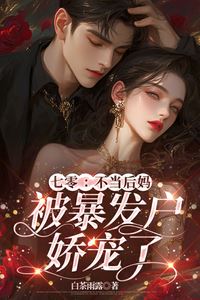
[1970s Setting + Clever, Self-Interested Female Lead + Cunning Male Lead + Reincarnation + Family Drama + Revenge & Gossip]
[In the first forty chapters, the heroine is a sent-down youth; later, the couple moves to the city.]

Song Wanyue has transmigrated—entering a novel set in the 1970s, inhabiting the body of a woman who shares her name. Unfortunately, she’s not the heroine; she’s the male lead’s second wife, drugged and manipulated into becoming a stepmother, a disposable pawn whose role is to provide the heroine with opportunities and fund the male lead’s ventures.

Song Wanyue decides: this stepmother role? Not for her!

Those who try to take over the original family’s wealth? Dream on.

From the very beginning, when faced with being humiliated, Song Wanyue fights back with her own cunning, turning the tables on those who plotted against her. Before returning to the city, Song…

Novel Items

More
Treasure
A jade pendant hanging around Song Wanyue's neck that contains a spatial ability. It was stolen from the original Song Wanyue and given to Zhou Shanshan. As long as it remains with Song Wanyue, she feels at ease.
Pills
A pill provided by the system as part of the newbie starter pack. Once taken, all depression vanishes. Song Wanyue took it to overcome her depressive emotions after learning about the original host's tragic fate.
Pill
A pill sold in the space mall for ten yuan each. The effect lasts one day, increases with seven consecutive days of use, and becomes permanent after a full month of use. Chen Xi bought this to help with farming.
Item
A drink made by Zhang Shufen for Song Wanyue, laced with half a packet of potent aphrodisiac. Song Wanyue faked drinking it and later dumped it out the window.
Materials
A potent drug hidden by Zhang Shufen in the brown sugar water meant for Song Wanyue. Half a packet was used initially, and the remaining half was found by Song Wanyue on Zhang Shufen. Song Wanyue redistributed it to Zhou Shanshan and Gu Dahai as part of her revenge plan.
Materials
A drug purchased from the system that Song Wanyue used to knock out Zhang Shufen, Gu Dahai, and Zhou Shanshan. She tapped their necks to administer it. She also fed some to Zhang Shufen and a little to Zhou Shanshan to prevent them from waking up mid-plan.
Latest Release
DateGroupRelease
2026-08-11shanghai fantasy c4
2026-08-11shanghai fantasy c3
2026-08-11shanghai fantasy c2
2026-08-11shanghai fantasy c1

Community Reviews

Rating(0 / 5.0, 16votes)
5 stars
0(0%)
4 stars
0(0%)
3 stars
0(0%)
2 stars
0(0%)
1 stars
0(0%)

Popular reviews

... Read More
I stayed up way too late reading these chapters and I have no regrets. The pacing is absolutely relentless in the best way. Let me walk through why this works so well. Chapter 47-54 opens with Song Wanyue already in motion—she's not waking up and figuring things out, she's already executing a plan. The robbery sequence moves fast but never feels rushed. She checks one room, finds money, checks another room, finds more money, digs up the jar. Each discovery is a mini-climax. Then she leaves, avoids the dogs, gets buns, goes to sleep. Quick breath. Then dawn breaks and the village assembly hits like a wave. The party secretary's announcement, the Gu family's devastation, the election, the new policies—all of it flows in one long, energized scene that builds and builds. And just when you think the chapter is winding down with the rapeseed planting and the friendly conversation between Song Wanyue and Li Jiaojiao about universities? No. The Gu family returns with Zhang Shufen paralyzed. Another punch. Then the Jiang Ze scene drops like a bomb at the very end. The author is a master of the cliffhanger. The transition from the warm, almost nostalgic conversation about agricultural university to Jiang Dazhuang demanding money, to Jiang Ze revealing the kidnapping truth—that whiplash is intentional and it works. Every section ends on a note that makes you immediately want the next section.
... Read More
The atmosphere in these chapters is so vivid I could practically smell the corn porridge. The author doesn't just describe settings—they make you feel the texture of this world. Let me give you the scene where Song Wanyue returns to the dormitory after her nighttime expedition. She takes a detour to avoid the party secretary's and hunter's dogs, making her round trip an hour long. That single detail tells you everything about rural village life—who has dogs, who doesn't, how people navigate their world. And then she orders two buns and eats alone in her personal space. The loneliness of it hit me. The threshing ground gathering at dawn, nearly 6:30 AM, with everyone still half-asleep, the loudspeaker crackling to life—that's such an authentic period detail. You can picture it: the gray morning light, the anxious faces, the Gu family looking wrecked while everyone else is just trying to figure out what's happening. The rapeseed field scene where they're digging pits and turning soil, working through the morning, then the Gu family returns from the county hospital with Zhang Shufen paralyzed and drooling. The visual of Zhang Shufen's twisted mouth, drooling at Cui Hehua, unable to speak clearly—it's almost cinematic. And then the final image of Jiang Ze and Jiang Dazhuang crouching in a corner, the basket still on Jiang Ze's back, the tension between them crackling. These scenes don't just happen—they breathe.
... Read More
I need to talk about how the author manages to raise the stakes in every single scene without making it feel forced or melodramatic. Let's start with the Zhou Shanshan confrontation. On the surface, it's about ten yuan. That's it. Ten yuan. But the author makes it feel like the most important conversation in the world because she layers the stakes. First, there's the money—Song Wanyue needs it for her survival. Then there's the betrayal—Zhou Shanshan stole her friendship, her reputation, and tried to steal her future. Then there's the secret—the unwed pregnancy that could destroy Zhou Shanshan's life. Each revelation raises the stakes higher. By the time Song Wanyue says 'I learned it from you. I have to say, the trick works well,' the reader understands that this isn't just about money anymore. It's about justice. It's about the original host finally getting the protection she never had. And then you pivot to the Gu family, where the stakes are even higher. This isn't just a family argument—this is a fight for survival. Gu Weimin has lost his position as brigade leader, which means he's lost his power, his income, his status. Now he's trying to force his adult sons to give up their share of the property so he can live with his mistress and her children. The sons aren't just fighting for money—they're fighting for shelter. 'Where do you expect us to go? This is my home.' That line hits because it's true. In this era, if you don't have a house, you don't have a life. Zhang Shufen's dramatic collapse adds another layer of stakes—she's not just throwing a tantrum, she's using her body as a weapon. By faking a near-death experience, she's forcing the family to intervene, buying time for her husband to scheme. The conflict here is multi-layered: husband vs. wife, father vs. sons, legitimate vs. illegitimate children, tradition vs. ambition. And through it all, Song Wanyue is this outside force who sees everything clearly. She's not involved in the Gu family drama, but she's using it to her advantage. The stakes for her are different—she's not fighting for property or reputation, she's fighting for her future. She needs to complete her tasks, build her funds, and return to the city. Every yuan she collects, every secret she uncovers, is a step toward that goal. What makes the conflict so compelling is that the author never lets you forget what's at stake. When Song Wanyue walks away from Zhou Shanshan and thinks about making chicken soup, it's not a trivial detail—it's a reminder that survival is always the baseline conflict. In this world, if you're not careful, you starve. You lose your reputation. You lose your home. And Song Wanyue has seen all of that happen to the original host. She's not just fighting for herself—she's fighting for the ghost of the girl who trusted the wrong person.
... Read More
I've been thinking about the symbolism in these chapters and there are some really rich layers I want to unpack. The most obvious one is the clay jar buried underground. Song Wanyue digs it up from under the bed—five minutes of digging and she finds gold bangles and a jade bracelet. This is literally the family's hidden wealth, their secrets, their corruption, all buried and then unearthed. The Gu family thought they were safe, but the ground gave up their secrets. And then there's the parallel with Jiang Ze himself—he's the buried truth of the Jiang family. Hidden away, treated as an outsider, doing all the worst chores while the biological children got doted on. His entire identity was literally buried, and now he's digging it up, one painful revelation at a time. The restored college entrance exam is another powerful symbol. It represents a doorway, a chance to escape the village, to rewrite your fate. Song Wanyue wants to study accounting and become wealthy. Li Jiaojiao wants to study agronomy so no one goes hungry. Both are valid dreams, both are pathways out of the circumstances they were born into. The exam is the great equalizer in this world. And then there's the imagery of paralysis—Zhang Shufen, who spent so much energy scheming and plotting, now literally unable to move. Her anger made her collapse. The body becoming a prison for a mind that was always full of poison. I keep thinking about that final line that got cut off: "No family..." It hangs there unfinished, like Jiang Ze's sense of belonging itself.
... Read More
The setting in these chapters is doing so much heavy lifting and I need to appreciate it. The cornfield by the river where Zhou Lanhua and Jiang Wenqiang have their affairs—this isn't just backdrop, it's practically a character. 'Cornfields were perfect for affairs—hidden from view, adding to the thrill.' The author understands that in a small village where everyone knows everyone's business, the only place to hide is in plain sight. And then there's the abandoned house of the former landlord where the main confrontation happens. This is a space that belongs to no one now, a relic of a class system that's been overturned but whose physical remnants still shape the landscape. Jiang Ze and Wang Qiang planning their ambush there feels symbolically perfect—using the ruins of the old order to dismantle the new one. But my favorite scene is the riverside encounter itself. The drug taking effect, Chen Jiefang's body heating up, Zhou Shanshan stirring awake beside him, the hazy boundary between dream and reality—it reads like a film sequence. You can see it: the moonlight, the river sounds, the disoriented lovers reaching for each other in the dark. And then Gu Dahai bursting in like a storm, fists flying, the whole thing collapsing into chaos. The author never over-describes; every detail serves the mood. The village, the river, the abandoned house—they're all stages for human drama, and they feel lived-in and real.
... Read More
I need to talk about Jiang Ze because this character absolutely wrecked me in the best way. When he first appears, he's this cold, calculating figure—revenge-driven, focused on exposing the Jiang family. But watch how he changes across these chapters. The moment Song Wanyue leans in close to whisper her plan, the author gives us this tiny, devastating detail: Jiang Ze feels embarrassed because it's the first time he's been this near a girl. His ears turn pink. His heart pounds. And then—bam—he starts imagining a whole future with her. A wife. A daughter. Three people living happily together. This isn't just attraction; this is a complete identity shift. He goes from 'I don't need a degree' to 'if I want to marry Wanyue, won't her family object if I have no education?' The man who was content hunting and running black market operations suddenly sees the college entrance exam as a means to an end—marriage. Meanwhile, Song Wanyue is equally fascinating in her complexity. She's manipulative, yes, but she genuinely cares about Yang Liu. When Yang Liu cries, Wanyue panics because 'girls should be soft and smiling.' She's not a villain; she's a survivor who learned to weaponize everyone around her, and now she's finding someone who matches her energy without being destroyed by it. Their dynamic is electric because neither of them is pretending to be anyone other than who they are.
See all reviews

Characters

See all characters

Custom lists

Oops…There is nothing here.